The Solidarity Assembly for Imprisoned Fugitives and Persecuted Combatants
:An Interview on Repression and Resistance in Greece


For June 11, the day of International Solidarity with Long-Term Anarchist Prisoners, we want to offer a glimpse of the repression that the anarchist movement is facing in Greece and the ways that people are resisting it. For that purpose, we present interviews with members of two groups, the Solidarity Assembly for Imprisoned Fugitives and Persecuted Combatants and the Squatted Community of Koukaki.
The neoliberal immiseration of Greece is taking its toll. The descendants of those who collaborated with the Nazis are in power once again here.
They are out of touch with the lives that most of us lead in these precarious lands. They imitate the fascist narratives that are at work in the United States, pushing for the same “quality of life policing” and “law and order” doctrines while enjoying corruption and excess at our expense.
This is taking place all across the world, and everywhere, relentless judicial repression plays an integral part.
Because of this, for the sake of our integrity, it is critical that we engage in solidarity, learning from each other’s struggles and preserving our revolutionary communities and bonds. These are victories in and of themselves that we can grasp, even if they don’t always leave us smiling.
Solidarity is not just a means of self-preservation, but a thread connecting everyone across the world who seeks liberation rather than settling for a society dictated by domination, exploitation, and an unrelenting death cult.
Solidarity is our weapon!
All we have is us!
—Anarchists
Solidarity Assembly for Imprisoned Fugitives and Persecuted Combatants
Introduce the project you’re involved with.
We are members of the “Solidarity Assembly for Imprisoned Fugitives and Persecuted Combatants.” Our group is an anarchist assembly, in the sense that it functions according to the principles of self-organization and without hierarchy. We are also open and have met publicly every week for the past seven years.
Our aim is to provide political support to comrades who find themselves in the hands of the state and to elevate the various battles that take place in the courts and prisons against false indictments, abuses from the guards, or for general political solidarity.
We strive to make the demands of those inside the prisons known and to show the inherent connections they have with struggles that take place in other spheres of society. We also try to put a stop to the repressive mechanisms that the state uses against the anarchist movement. We do this by distributing political texts, fliers, and posters, but also by planning direct actions and demonstrations.
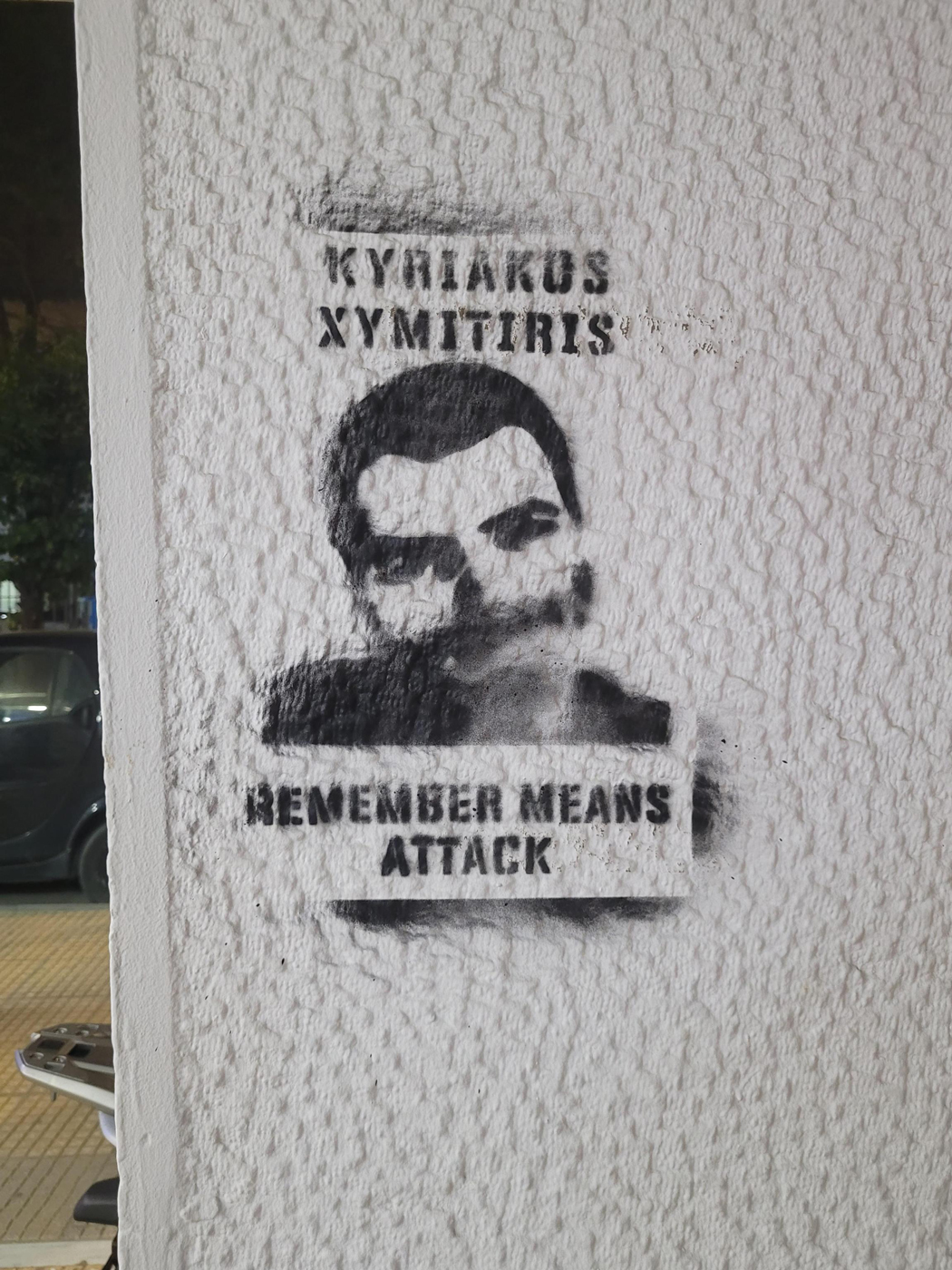
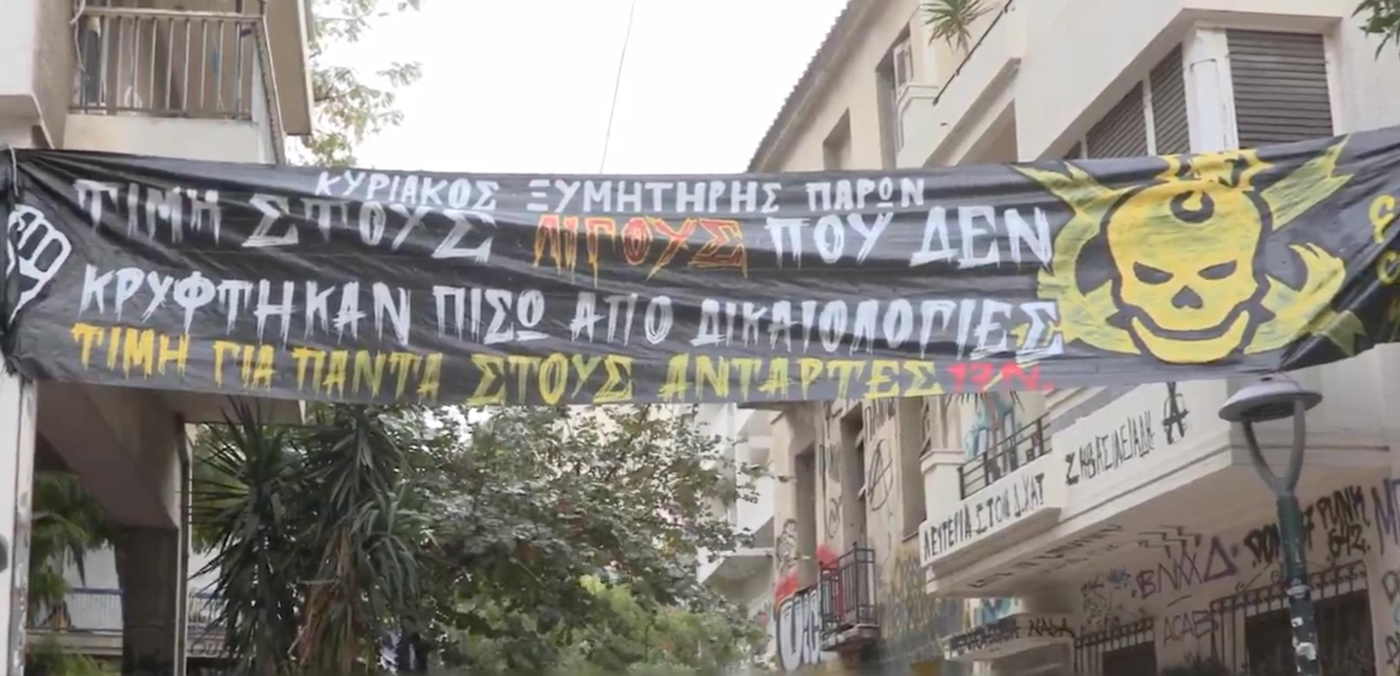
In 2024, Kyriakos Ximitiris passed away due to a tragic accident in Athens. This also resulted in the arrests of others, who now have been taken to trial. The trial has become known in local media and by many around the world as the “Ampelokipoi case,” with some of the defendants recently being acquitted and released and others convicted and sentenced to many years in prison. Could you explore what this case was about, what happened with the loss of Kyriakos, and the arrests, prosecution, and recent verdicts that followed?
The Solidarity Assembly was one of the main support structures that was involved in the “Ampelokipoi case,” with Kyriakos being a member of the assembly up to the point of his death and Marianna Manoura and Dimitra Zarafeta continuing to be members to this day from inside prison.
cdn.crimethinc.com/assets/articles/2026/06/11/2.jpg
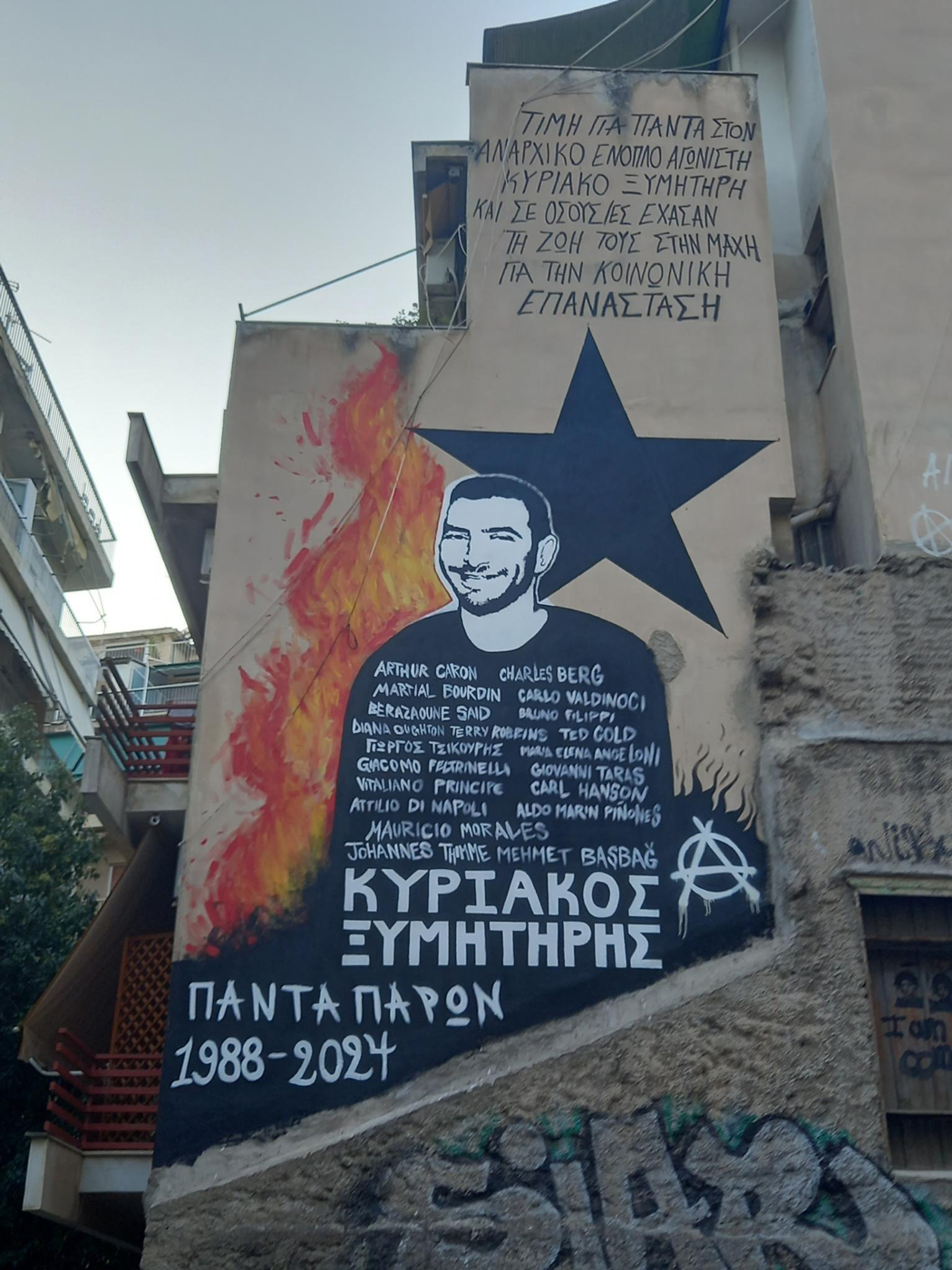
Consequently, it was very important for us to preserve the memory of Kyriakos Ximitiris, show solidarity to all the prosecuted comrades, and build a general political wall of solidarity for struggle, armed struggle, and the choices some of our comrades made and continue to make.
Kyriakos was a dear comrade and friend. He was active in many parts of the movement. He actively demonstrated revolutionary solidarity with political prisoners, engaged in anti-imperialist and pro-Palestinian demonstrations, and was active in the anti-gentrification movement in Exarchia as well as the anti-fascist movement in general.
He had also chosen to participate in armed revolutionary struggle. It was this choice that led to his tragic death at an apartment in Ampelokipoi (a neighborhood in Athens), where an explosion took place under unknown circumstances. This explosion seriously injured his comrade in the movement and in life, Marianna Manoura, and prompted the anti-terrorist unit to devise a non-existent terrorist group, arresting Marianna Manoura, their friend and comrade Dimitra Zarafeta, and three other comrades: Nikos Romanos, Dimitris, and A.K.
The loss of Kyriakos and the subsequent hospitalization and imprisonment of Marianna Manoura were grave incidents for the anarchist movement in Greece and abroad. The deeply divided anarchist movement of Athens came together, after many years, to grieve our fallen comrade Kyriakos, and to support Marianna Manoura, Dimitra Zarafeta, and the other three arrested in the case.
The movement tried to deal both with the difficult issue of the political defense of armed revolutionary struggle and with critically intensifying state repression. There is a discussion to be had about what went right and wrong in all this, but as the daily mass solidarity gatherings at the courts showed, Kyriakos’ death and the Ampelokipoi case in general remain issues that deeply concern us all.
From the beginning, Marianna Manoura assumed responsibility for helping Kyriakos find a place to process explosive materials that would be used for the revolutionary cause. She made clear there was no terrorist organization and that the other four detained people had nothing to do with the case. Dimitra Zarafeta declared that the accusations by the state against her were false and that she was being persecuted politically, as an anarchist, as a comrade of Kyriakos and Marianna Manoura, and as a person who ideologically supports the choices and actions of Kyriakos. Dimitris, Nikos Romanos, and A.K. all declared their innocence and repudiated any connection with the case.
The actual information that the state presented as evidence was either false or completely insufficient even by their own standards. There was none supporting the existence of a terrorist organization. The state presented some normal exchanges of apartment keys and phones between friends and partners relating to Dimitra Zarafeta and Dimitris, and claimed that partial fingerprints of Nikos and A.K. were discovered, among many others, on a plastic bag containing a gun.
Nevertheless, all the accused were detained for 17 months and in the end, Marianna Manoura and Dimitra Zarafeta were convicted, resulting in a 19-year prison sentence for Marianna Manoura and 8 years for Dimitra Zarafeta. The large sentences, especially for Marianna Manoura, were chiefly due to the application of anti-terrorist legislation. Dimitris, Nikos Romanos, and A.K. were declared innocent and released.
cdn.crimethinc.com/assets/articles/2026/06/11/3.jpg
Is there an appeal? Will the sentences be served in full?
Marianna Manoura and Dimitra Zarafeta were recently transferred to the women’s prison of Thiva, since Korydallos prison, where they were held during their pre-trial detention, is only for those awaiting trial. This is an expected but bad development, as they are now much further away from the movement, their families, and their friends.
An appeal has already been made, but the second-degree court is not expected to take place any sooner than one to two years from now. Depending on how the secondary court goes, we will then be able to make a better guess as to how much actual time our comrades will have to serve in prison. In general, it is standard that three- to four-fifths of the actual sentence will be served, but there are many legal factors that could affect both the actual sentence and the percentage of it that they will need to serve in prison.
The main factor that makes these computations difficult is that since the final days of the SYRIZA administration in 2019, the penal and correctional codes have been constantly changed, making it confusing to determine how each law will affect each individual case.
Why did Greek media report differently on Nikos Romanos than on the other defendants in this trial?
We do not know if there was a clear intention or plan from the state in this. The comrade, Nikos Romanos, is an important figure not only for the anarchist movement but for large parts of the Greek left as well. His close friendship with Alexis Grigoropoulos, whose murder by a cop in 2008 inspired the biggest insurrection in recent Greek history, and his hunger strike in 2014 made him a point of reference for the broader “progressive” movement. This creates a social pressure that the state takes into consideration, for better or worse.
Another aspect that makes his situation different is, in our view, the fact that he proclaimed his innocence, in contrast with the positions that Marianna Manoura and Dimitra Zarafeta expressed in court. This enabled some parts of the left, which long ago lost its ability to affirm any political choice and stance that the state deems illegal, to support him. In conjunction with the lack of evidence against him, that forced some of the more left-leaning media to try to be a bit more “objective” or considerate of his case.
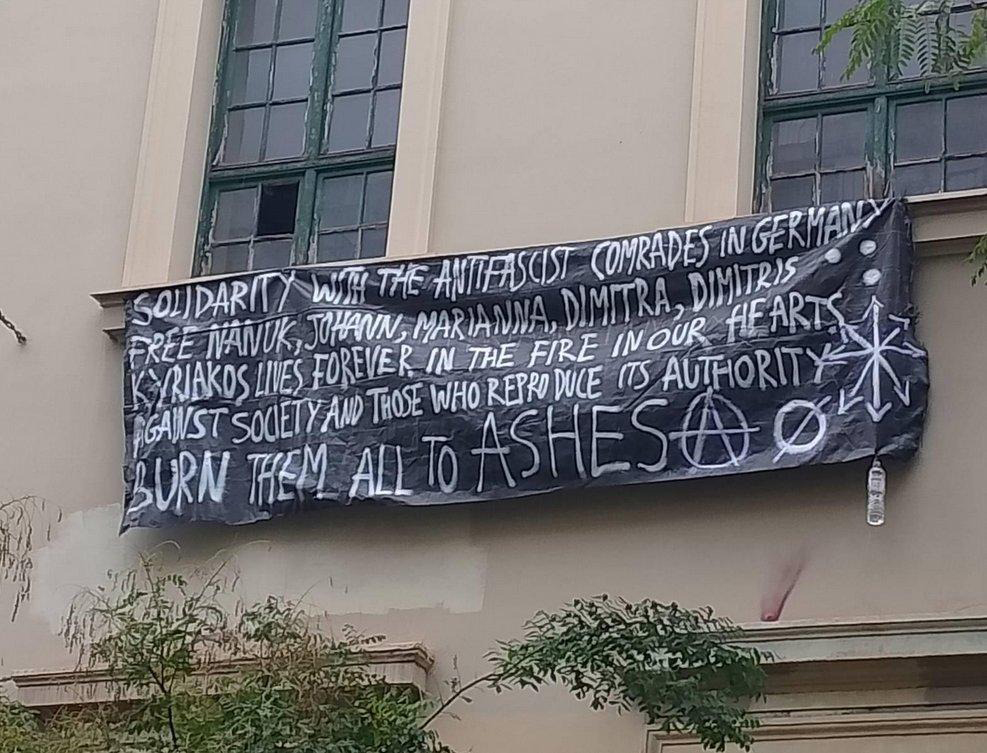
An action in solidarity with the defendants in the Ampelokipoi case.
Does this case have broader implications regarding the Greek state’s approach to repression?
We do not think that there was anything really new in how the Greek state handled this case, considering the recent years of escalated repression. Solely because there was an explosion and there were two anarchists in the place where it happened, the Greek state concluded that there was a “terrorist organization.” A pure fabrication. To invent the other members of the supposed “terrorist organization,” they accused the close comrades of the deceased or known individuals in the movement.
This is a common method of the Greek anti-terrorist unit, with the courts following suit and engaging in an almost routine pattern: the first-degree court is usually harsher, convicting at least some of the accused for terrorism with lengthy sentences—at least by Greek standards—and the second-degree courts refine the sentences or acquit. There are, of course, notable exceptions.
One thing of particular importance in this case are the very high sentences the court handed down, especially for Marianna. This was a direct result of the court convicting both Marianna Manoura and Dimitra Zarafeta for all the charges, including the one concerning “the supply of a terrorist organization with arms and explosives.”
This is an accusation that even the prosecutor argued could not logically be proven for a member of this supposed “organization.” This will be a very important legal and political battle for the second-degree court, in order to shorten our comrades’ sentences.
What is the 187a law? We have seen the Greek state fabricating narratives and creating groups, as they did with the “comrades” case which was recently dropped after five years in the courts. Is this law enabling the state to engage in more repression without evidence?
First of all, the essence of this law is political. It is the law that the state uses to repress the armed struggle movement as much as possible. Using specialized courts with no jurors, harsher sentences, and an ever-growing list of crimes that can be prosecuted under the 187a law, the state aims to suppress and silence the “internal enemy.”
With this goal in mind, the anti-terrorist law is intentionally vague, giving both the anti-terror unit and the courts enough leeway to adjust it for each case and fabricate evidence as needed.
The law was a direct byproduct of the attacks of September 11, 2001 in the United States. Infamously, it was first used against an accused member of the N17 (November 17th) revolutionary organization. Since then, the Greek state continuously revises and expands it according to the European anti-terror law standards, just like the 129b law in Germany.
Although it began as a law targeting those who enter armed revolutionary struggle, over the last few years, it is used more and more to target a wide range of practices.
Are many of these cases postponed, or are charges fabricated, in order to drain the movement of resources and time or use trauma and pre-trial detention as a means of punishment without conviction?
First of all, the postponement of cases has been a reality in Greece for as long as anyone can remember. Many times, the defendants choose this, so that the trial will take place long after the event it concerns, in order to make it more difficult for the state to use the trial in a retaliatory way.
Other times, trials are postponed because the prosecution does not wish for them to happen. In general, the courts are overburdened with cases, and even though the ruling New Democracy party (ND) has taken measures to force the courts to close up cases faster—at the expense of course of what the state calls “due process” and the “rights” of the accused—this is not always feasible for the judges.
However, it is undoubtedly true that the state uses a number of other tools to make life difficult for the accused, with pre-trial detention, restrictive pre-trial conditions, and court bonds being the most prominent of these. And it is also true that since ND returned to power, these are becoming stricter and are used more often.
As for fabricated cases, this strategy has been used to target people of interest to the authorities; Nikos Romanos’ involvement in the Ampelokipoi trial is a case in point. We cannot say whether this indicates a broader plan to deplete the movement’s resources; there is certainly a difference of opinions regarding how organized the state and the police are, as well as how much interest they have in long-term operations against the anarchist movement. But again, what is certain is that the legal consequences of both political activism and low-level crime are becoming harsher by the day—thanks to the new repressive laws that ND passed, which are more aligned with European standards, and the “zero-tolerance for crime” slogan that brought ND to power.
We have comrades accused of forming a criminal organization to throw paint at government buildings, people appearing many times a month at the police department because they were arrested at a demonstration, and, at the same time, the prison population is at a breaking point due to petty theft and small debts in broader Greek society.
An action in Heraklion in memory of Kyriakos Ximitiris.
Two comrades are on hunger strike to defend Prosfygika, a large squatted complex in the center of Athens. Can you explain these hunger strikes? We have usually seen hunger strikes as a last resort. Are these hunger strikes a sign of critical times and heightened repression?
We are not the appropriate assembly to discuss this issue, as there are open assemblies to stop the eviction of the Prosfygika community. For our part, we see the squatting movement as an integral part of the anarchist and anti-authoritarian movement; this is why the state has become fixated on destroying it with ever increasing intensity over this past decade.
Aristos and Souzon, the two hunger-strikers acting to resist the demolition and development of the Prosfygika squat complex, know this better than anybody. That’s why they put their lives and their bodies on the line, so it is shown in every perspective that they mean what they say, what they believe, and what the community means to them. As an assembly, we support the struggle to defend Prosfygika and we stand in solidarity with our comrades.
Have surveillance and repression increased in recent years? Has the state readjusted its priorities? Did the COVID-19 lockdown play a role in this, or is it simply a reflection of the times?
As we said, repression has increased swiftly over the last decade, coming to keep pace with the European standards. Cameras, drones, and cops are everywhere, with new divisions of police appearing all the time—for public transportation, courts, universities, immigration, and more. Low-level crime and political activism are also punished harshly, and the scope of the anti-terrorist laws expands with every new piece of legislation. Not to mention the additional repressive capabilities that the AI frenzy may provide in a future just around the corner.
COVID-19 is one of the big issues that divided our movement. Despite the different takes on how this whole issue was perceived, which we cannot get into here, it is evident that the lockdown was at the very least, a perfect opportunity for the state to take complete control of public space and to accustom society at large to a broad scale of repression. The safety of the population has supposedly become the number one priority, with the police always somehow being the answer to every question.
The discourse that was emerged in the COVID period, enhanced by the far-right and aggressively neo-liberal government of ND, seeks to overcome the historically deep mistrust with which Greek society regards the state. At the same time, the pace of economic and legal scandals has risen to an extreme. The state presents itself as the only thing standing between the population and chaos—demonizing anyone who disagrees or “poses a threat to the society.” In the new era of warfare that we have entered, these same arguments are used more and more to justify military equipment upgrades and the direct involvement of the Greek state in the NATO-Israel mass killings and bombings in Palestine, Lebanon, and Iran.
cdn.crimethinc.com/assets/articles/2026/06/11/1.jpg
House raids for small charges seems to be frequently be in the news. Are they occurring more often in Greece? How should we understand this?
House raids have always been a tool in the hands of the state, and for good reason. The pressure and fear that they inflict on the people whose privacy is attacked, along with whatever circumstantial evidence and intelligence they can collect inside our houses, are obviously beneficial for the police. They also exert financial pressure on the movement, since in most house raids, the police steal our electronic devices. Again, it is a matter of discussion how well planned or thought out these raids are, especially when they are not organized by the anti-terrorist unit.
Nevertheless, we should mention some recent developments that, if they are permitted to become normalized, will certainly have a grave impact on the movement. On one hand, we have seven comrades who are suspected of “forming a criminal organization that destroys government property” due to some paint that had been thrown many months ago at a government building in Kipseli, a neighborhood in Athens. Usually, when you are a suspect, the cops call you to the General Police Department of Athens to give a statement, under threat that if you do not comply, they will charge you. This is usually an empty threat. This time, however, the cops decided to enter our comrades’ houses, in some cases by force.
In another case, three comrades are accused of attacking a court building with hammers and paint. Again, even though there was evidence collected at the scene which, by the cops’ standards, would be more than sufficient to proceed to trial, the cops decided to raid to their houses.
What do you think is behind the Greek state shifting so many resources towards repression, including pushing to expand the Greek military and tighten conscription laws? Is this a broader tendency in the European Union?
You answer the question by pointing out that these are issues in modern societies all over the world. War is everywhere, closer to us (as “Europeans”) than it has been since the Second World War, and it seems that will continue. All Europe is re-arming, as the program informs us.
In Greece, this is constantly present due to the construction of tension between Greece and Turkey at the eastern borders and the Aegean Sea. That’s how Greece has ended up being one of the countries that contributes the most to NATO financially. [Greece is one of the top defense spenders in NATO, consistently spending around 3.1% of its GDP on defense, which is among the highest in the alliance.] The goal of the Greek state, and every state, is to construct a society that believes in it and is ready to fight for the nation and the bosses. Maybe this also explains the repression directed at many parts of the movement in Greece.
It is obvious that Greece is still in an economic crisis (although the government pretends otherwise), so the large amount of money that is spent on the military and police does not address other social needs that are not as interesting to those in power. For example, we have understaffed hospitals and universities, lacking basic provisions and in many cases closing; we have deteriorating public transport infrastructure that is causing more and more “accidents,” with the worst one in recent times being the Tempi train crash.
There is also a serious problem with the cost of housing, as well as with the costs of basic needs and products. Life in Greece is difficult, and it will continue to be so unless we come together to fight back.
It has been seven years since New Democracy abolished the university asylum policy that originated after the fall of the Junta in the 1970s. How has this impacted the anarchist movement and broader radical communities in Greece?
Again, this is a subject regarding which political opinions vary. On one hand, it is true that now it is easier for police to enter university grounds to hunt for people after clashes at a demonstration or to break up a university occupation established by students or political groups. But there is an argument that this is a more general issue that is only exacerbated by the end of the asylum policy.
Since the right-wing government of New Democracy came to power in 2019, the state has been carrying out an attack on the movement and its symbols; this is much broader than the anarchist movement. The remnants of the left have proven themselves to be completely incapable of defending the political and symbolic ground they won after the fall of the Junta in 1974. To put things in perspective, anarchists always threw Molotov cocktails from inside the universities and the police always had the legal right to enter the universities when this happened, even with the asylum policy in place.
One can argue that the main thing that kept police from entering the universities was not a public misconception about a piece of legislation (that obviously would never cover Molotov cocktails being thrown at government workers), but rather what strong and broad political and ideological support there was for the clashes with the police, which was merely represented and symbolized in the idea of the university asylum. It is that support that the New Democracy government has successfully put into question.
Regardless of how we analyze this subject, this has caused a big problem for the anarchist and student movements. Apart from taking a powerful political tool—university occupations—from the students’ hands, this enabled police to apply repressive measures inside the universities with ease, taking advantage of the cameras, barriers, and private security already in place. Now, discussions about a special police force for the universities are advancing, even though the first attempt to put them in place failed.
This also impacts the anarchist movement, which uses universities for assemblies and various kinds of political events, such as events to raise money for persecuted comrades and various political causes.
Last year, the Trump administration placed multiple revolutionary groups allegedly in the European Union on its terror watch lists, equating anti-fascists and anarchists with fundamentalist groups such as the Islamic State. Two of these alleged groups allegedly originate in Greece. Has that had any effect in Greece?
These moves haven’t made a noticeable impact here in Greece until now. Of course, the United States has always offered the Greek state a paradigm for repression, but for now, only extreme far-right groups make these analogies.
cdn.crimethinc.com/assets/articles/2026/06/11/4.jpg
Are there any other cases that you would like to mention?
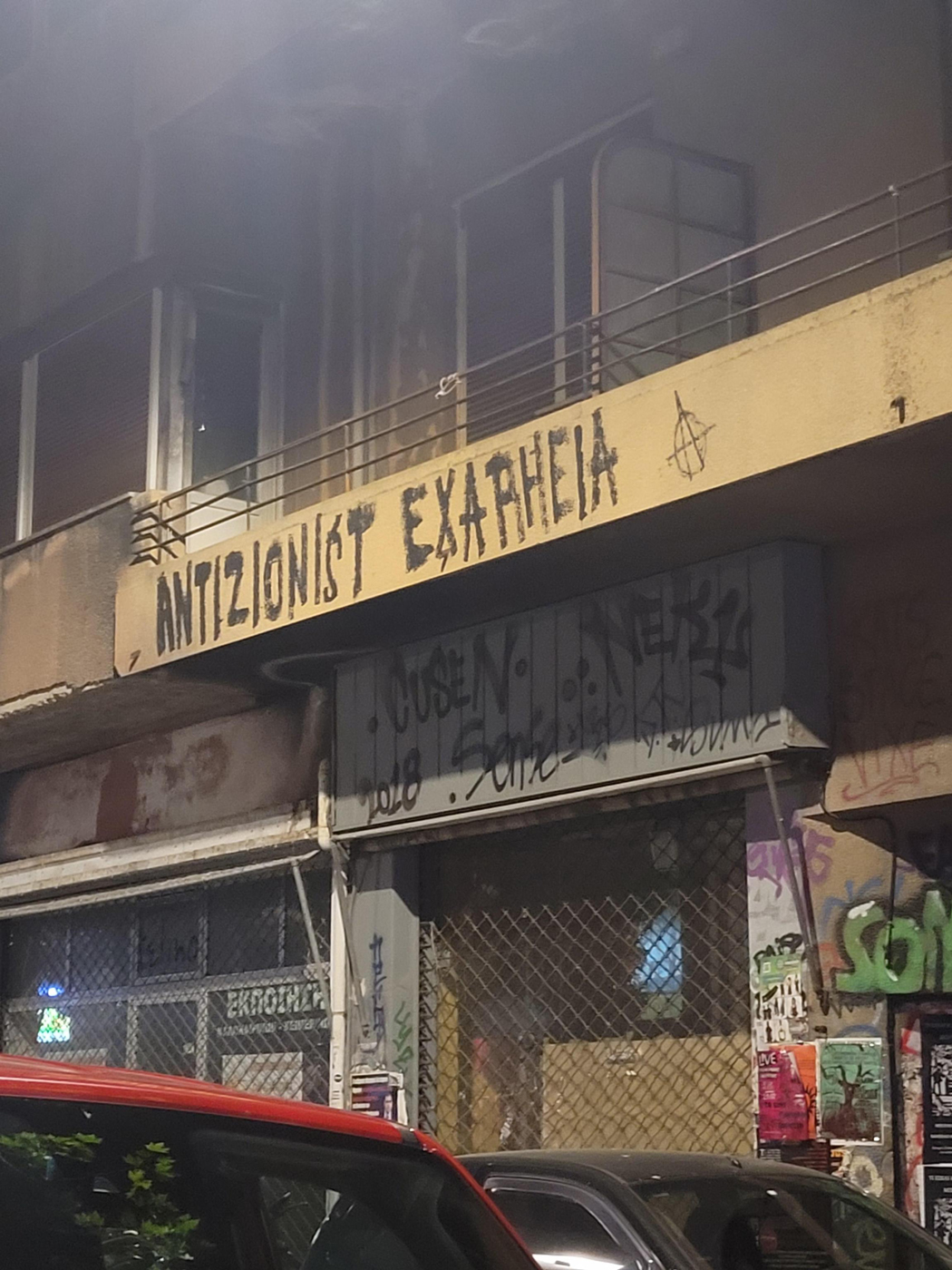
There are a number of cases affecting many comrades, relating to defending squats, solidarity actions with imprisoned comrades, and clashes with the police in demonstrations or in Exarchia. Here, we select, almost at random, a few that have or might have a serious impact on the comrades involved.
The newest big case involves eight arrests that took place on May 11, 2026, with the arrestees being accused of various robberies. The case is still open, so the charges—and perhaps the list of defendants, as well—are not finalized. Six of the eight comrades are in pre-trial detention in various prisons in Greece, while two were let out under restrictive provisions.
There is also the case of the comrades Yannis Karatsolis and Sofoklis Toutziarakis. The state accused them of forming a criminal organization with five other people in order to perform robberies. Even though the allegations of criminal organization did not stand up in court, as the other defendants were acquitted, Yannis Karatsolis and Sofoklis Toutziarakis received extreme sentences—21 and 23 years, respectively. The aim is now to pressure the second-degree court to reduce these vindictive sentences when it hears the case in October.
Finally, there are the arrests from the first big demonstration in response to the mass murder of immigrants by the state, when the Greek coast guard sank a boat transporting more than 500 immigrants close to the town of Pylos. The trial was set to take place in May, but was postponed until spring 2027.
How can people outside Greece express international solidarity?
Every move, intervention, text, poster, or post could make people here feel the solidarity. The continuation of political struggle in every place is inspiring for everyone. And of course, even though the Greek state is not a big one, there are related targets of economic or political interest in many countries, which is a traditional way of showing international solidarity in this movement.
For financial support, the main fund is Tameio, which provides economic support to political prisoners on a monthly basis. Over the years, it has become one of the most important structures of the anarchist movement in Greece. In addition, there are many specialized funds for specific cases, usually to cover the legal costs of arrested comrades. These funds can be found on websites like Athens Indymedia and Firefund.
One active Firefund campaign concerns the appeal trial for an act of solidarity during the last hunger strike of our anarchist comrade G. Michailidis.
Finally, to stay up to date with what is happening in Greece, the counter-information options are sadly not very good. The main website that the anarchist movement uses to publish its positions and actions is Athens Indymedia, which is in Greek and does not formally offer non-Greek translation, though you can use a translation-friendly browser to navigate it. The best way to keep in touch is probably by establishing direct contact with the assemblies and individual comrades that participate in the movement.
cdn.crimethinc.com/assets/articles/2026/06/11/6.jpg
Appendix: Defendants of Koukaki Squatted Community
In addition, we spoke with one of the “Koukaki Squatted Community” defendants about their situation.
Around the same time as the conclusion of the Ampelokipoi case, members of the “Koukaki Squatted Community” were also facing trial; however, it was postponed. Could you explain the case and its implications for the broader anarchist movement?
Our project consisted of three anarchist squats that acted as a revolutionary community in the Koukaki neighborhood of Athens. The reclaimed spaces helped to foster multiple assemblies, various organizing efforts towards the broader anarchist movement, and local mutual aid projects. Our community also offered housing to members of the squat’s assembly and comrades and also to houseless individuals, refugees, struggling migrants, trans people rejected by their communities, and those who are deemed “excluded” by capitalist society.
The houses acted as a sort of intentional community, eliminating the need to work to pay rent, so that we could direct all our efforts to resistance and organizing. This brought together an array of revolutionary individuals who were committed to rejecting property and ensuring that having “free housing” via liberated space would enable us to further the struggle for liberation.
Unfortunately, one comrade was lost in 2018 while hanging a banner in solidarity with political prisoner Marios Seisidis. His death resulted from the general commitment that defined many of those involved in the Koukaki squats. But while we all still face trial and the endless bureaucracy and opportunism of the state, I want to mention our lost comrade, Dimitris, who was an incredible and passionate comrade, to give recognition that his struggle lives on in our commitments and actions today.
The Greek state violently evicted the squats in a coordinated assault. One of the three spaces, “Panaitoliou,” was resquatted twice, and “Matrozou” was resquatted three times.
Three of my comrades and I have been convicted for the defense of the Panaitoliou squat, but will likely not face jail time. We continue to have court obligations, and the constant stress of not knowing our fate takes its toll. At the same time, as the final defense of the Matrozou squat involved a more intense defense effort, multiple comrades remain on trial facing small charges that could potentially add up to years in prison if the state gets its way.
This escalation of repression is the result of our efforts to defend our revolutionary community, while having sought, through our actions, to inspire the broader anarchist movement at a time when the state was attempting to destroy all the squats. The state wants to make an example of us in order to discourage the militant defense of occupied spaces. They are trying to break our will. They are dragging us through the courts with charges of using less extreme resistance than that which brought imprisonment prior to the escalated campaign against the squats that the New Democracy administration started when they came to power in 2019.
Five comrades on trial for militantly defending Matrozou were convicted of two misdemeanors each and originally sentenced to 77 months in prison. However, the sentence was suspended, and imprisonment will depend on the outcome of the current appeal. The prosecution is demanding that that the defendants serve the full sentence. Facing such a sentence for two misdemeanors is legally unprecedented in Greece. The reality is that the two misdemeanors would typically not bring imprisonment. However, because this is related to defending a squat, they will try to make an example of the comrades to demonstrate that the action itself is not what the prosecution seeks to repress, but rather the motivations and revolutionary desires behind the actions—criminalizing their goals and ideas.
In the lead up to the most recent trial, multiple demonstrations took place across Greece to support the Matrozou defendants. However, the appeals trial was postponed until November 9. This is the second postponement of the second trial of the appeal.
Not only is postponing the trial a way of exhausting the defendants, they also hope that it will make the waves of solidarity leading up to the trial fizzle out. The state seeks to isolate the defendants, outwaiting solidarity and public attention, and then to prosecute to the fullest extent possible. They are waiting for a moment when the movement is quieter, when repression is out of the headlines, when people are overwhelmed responding to other repression.
The momentum building up to trial was substantial, and this type of solidarity organizing does not come without effort. They aim to continue to force the defendants and the movement supporting them to constantly act in a defensive anti-repressive approach rather than engage in offensive revolutionary organizing, in order to drain our resources and consume our energy.
The two misdemeanors are related to paint that was thrown on police officers, damaging their uniforms and allegedly inflicted bodily harm against police. Yet the police did not even bother to show up to the first trial, in December 2025; that is why it was postponed. All the Matrozou defendants face the same charges, accused by eight officers.
This case is of political interest to the New Democracy regime. The original prosecutor is a member of New Democracy and in the law firm of Plevris; she also unsuccessfully ran for parliament as an aspiring ND politician. After the original trial, she wasn’t able to continue in the appeals court due to bureaucratic reasons. Yet she continues to escort the police who show up as witnesses and guide them as to what to say—free of charge, and without a formal legal position. She also defended the cops who faced neglect charges for doing nothing to save the queer activist Zackie Oh from being murdered. She even went on television, on a mainstream national morning talk show, and claimed that the defendants went straight from court to prison, despite the fact that the appeal actually prevented imprisonment. Once again, the point of this case is to make an example.
However, the hearts and revolutionary integrity of the defendants remain intact. While we lost our housing years ago, our community lives on in our revolutionary relations and committed support to one another as we overcome repression.