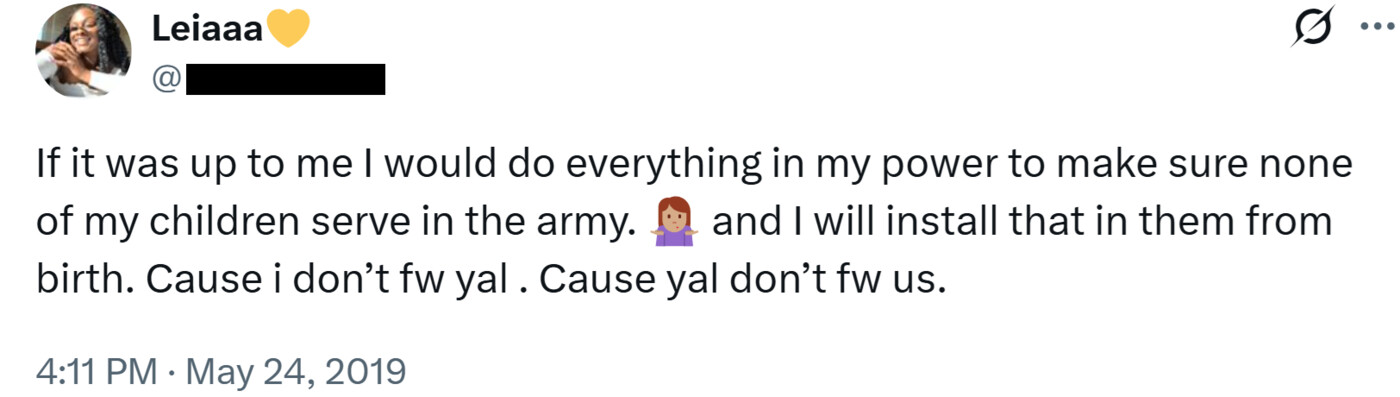
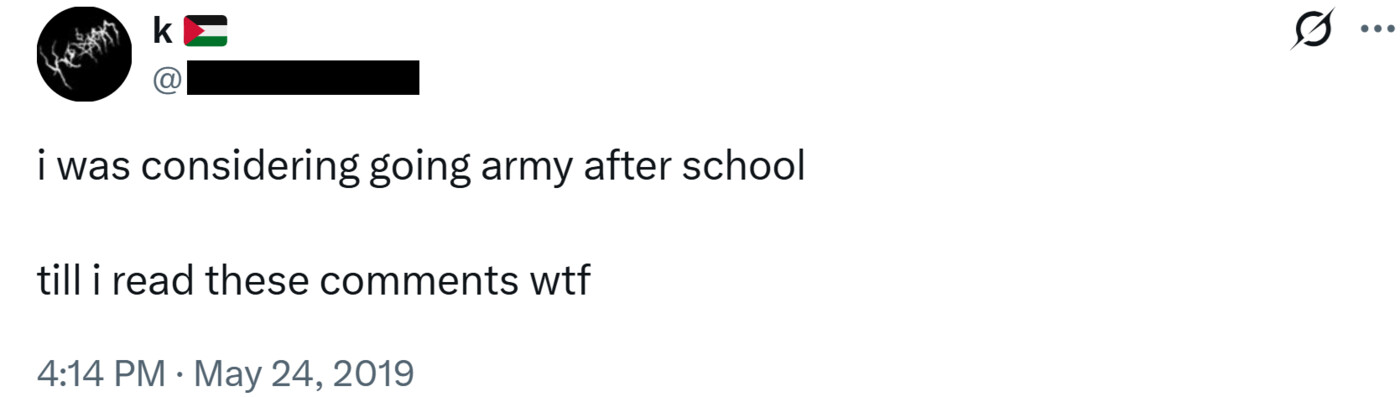
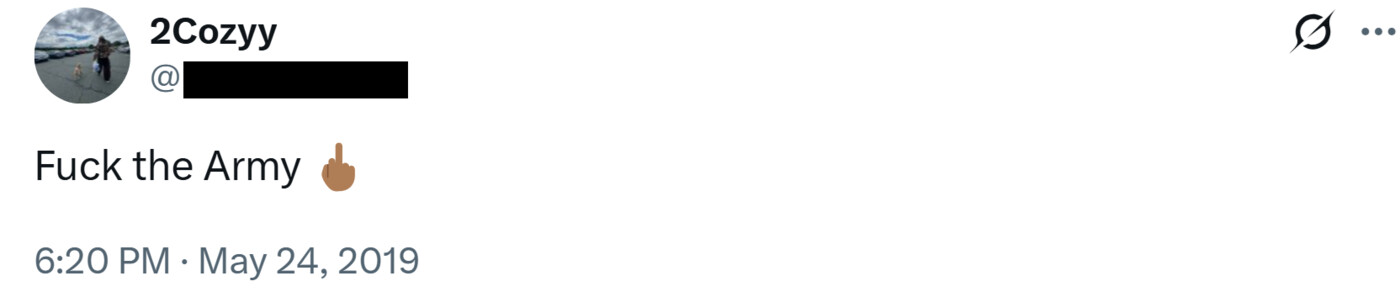
“How Has Serving Impacted You?”
:Veterans of the US Military in Their Own Words

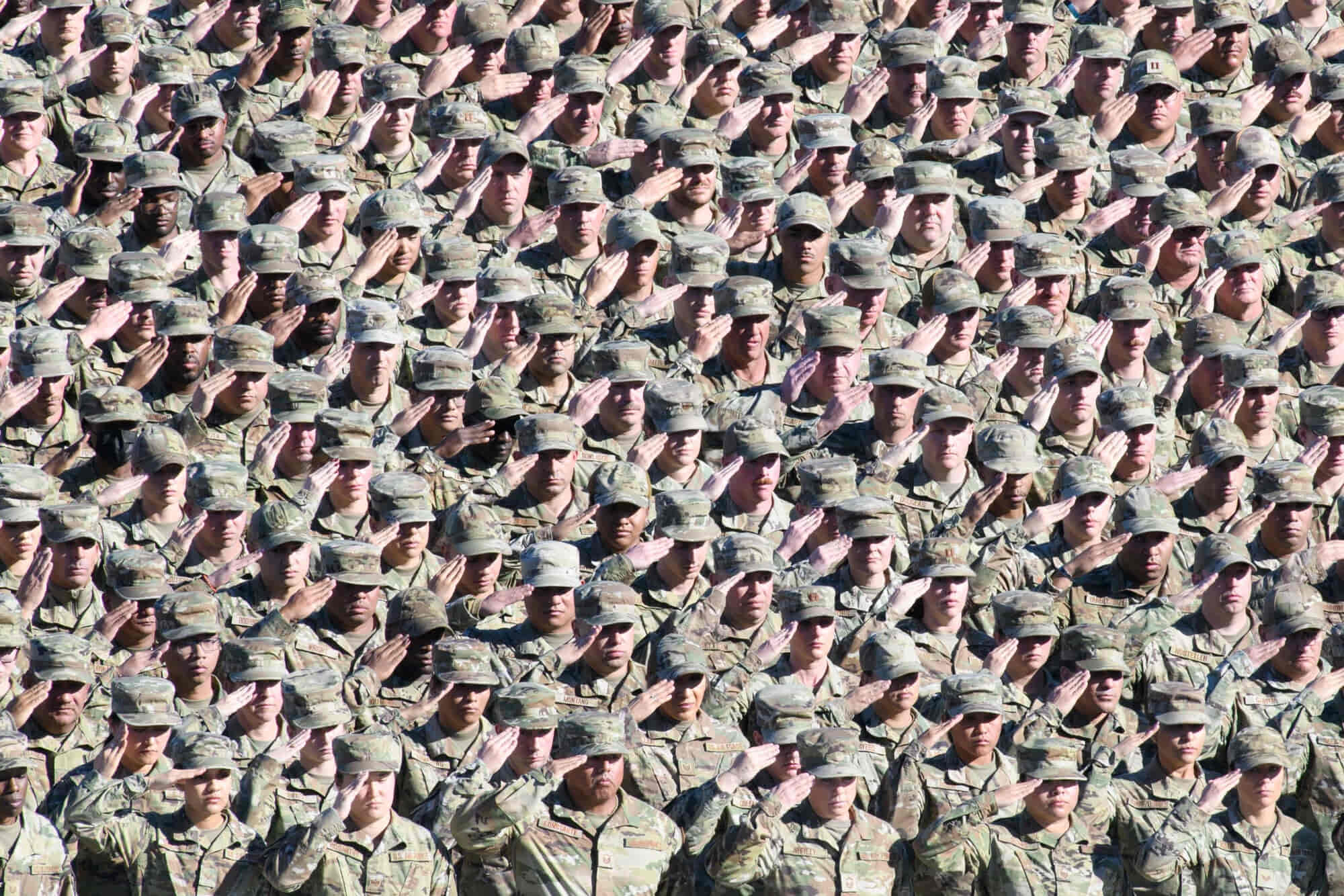
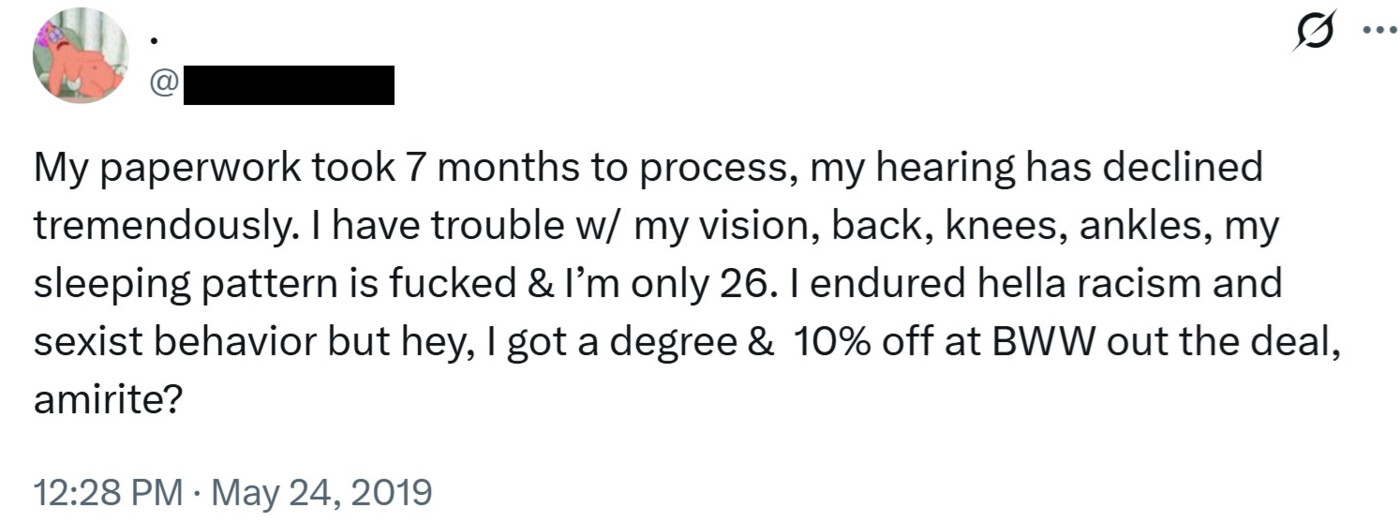
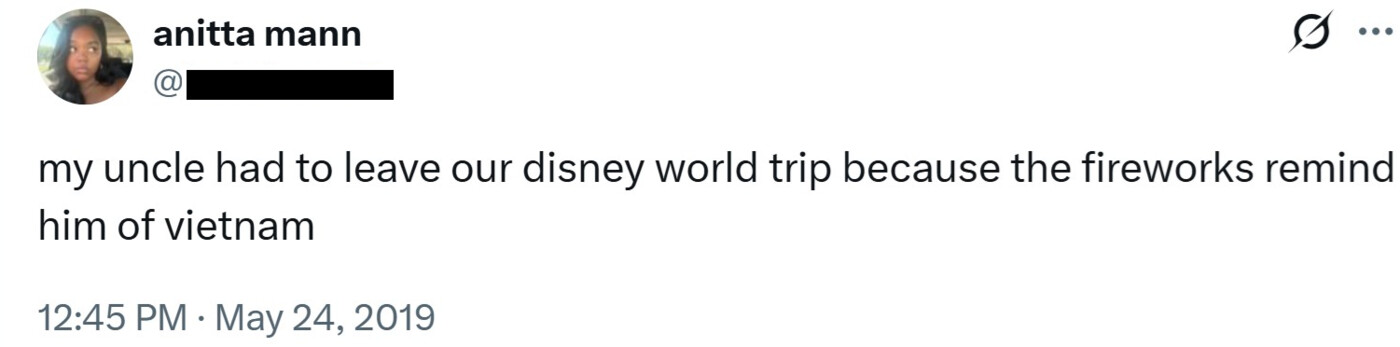
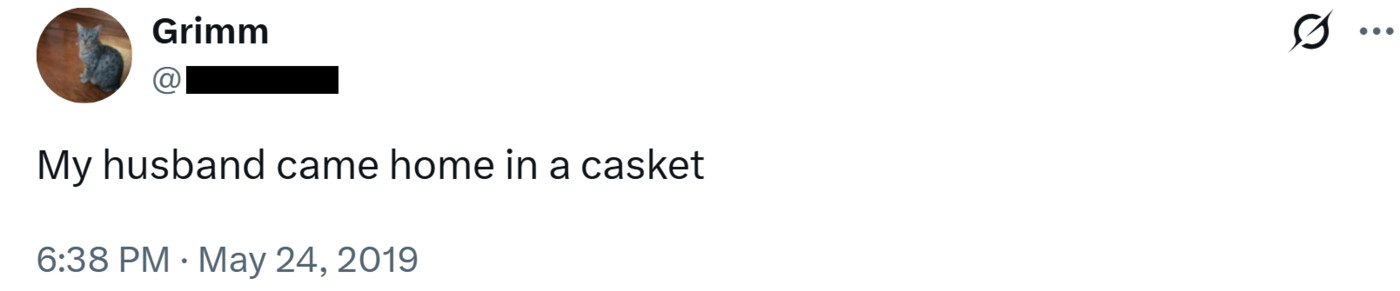
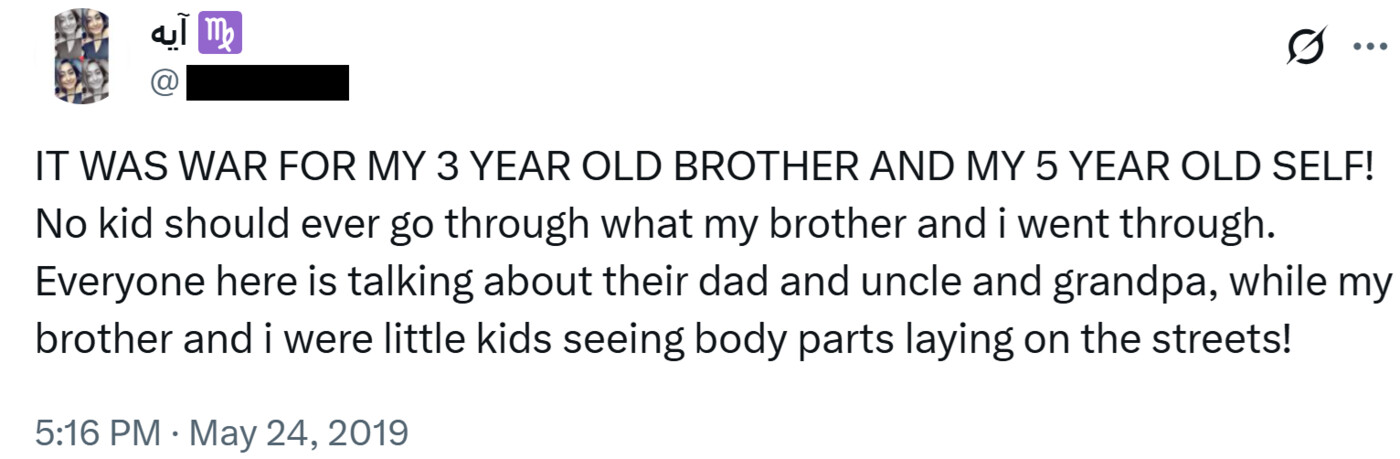
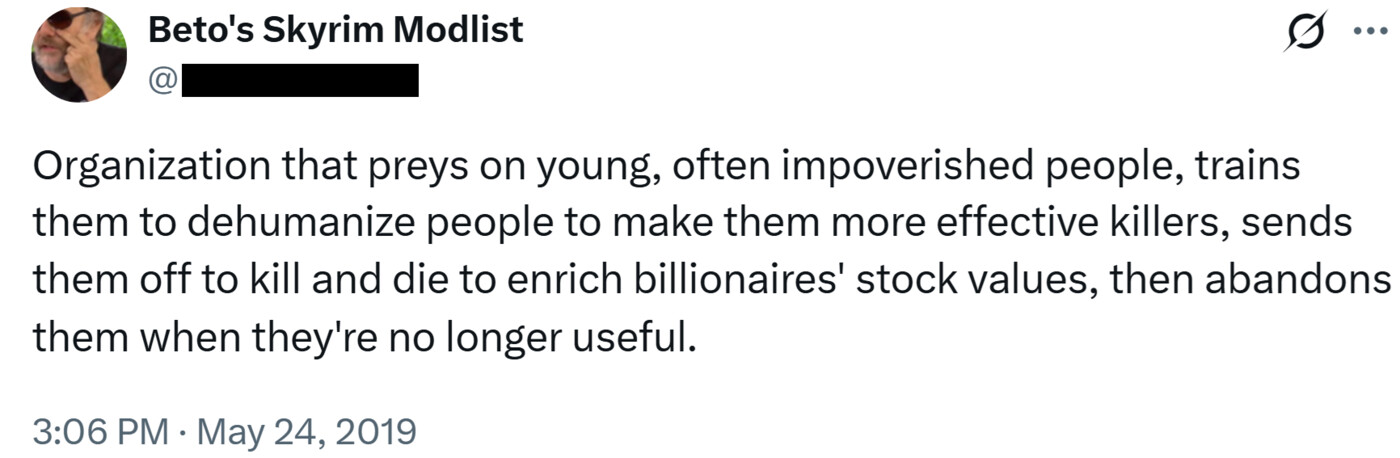
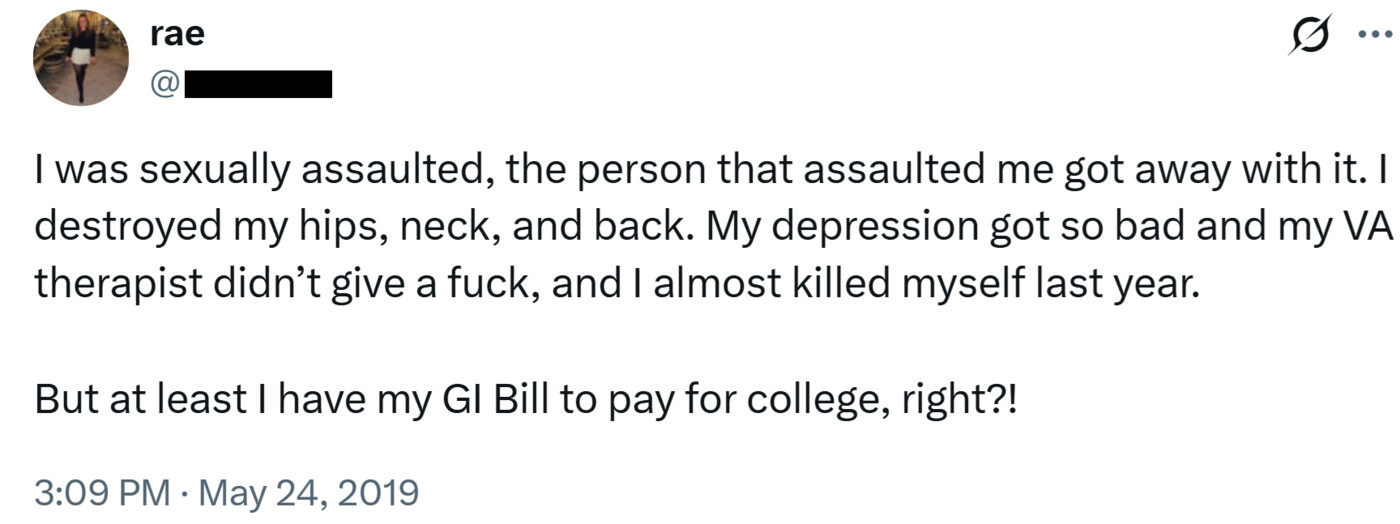
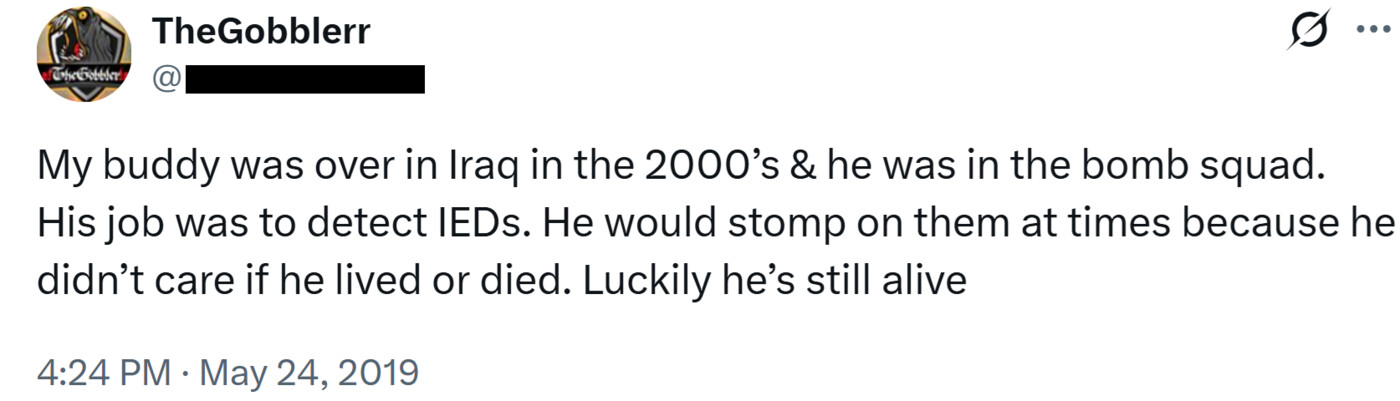
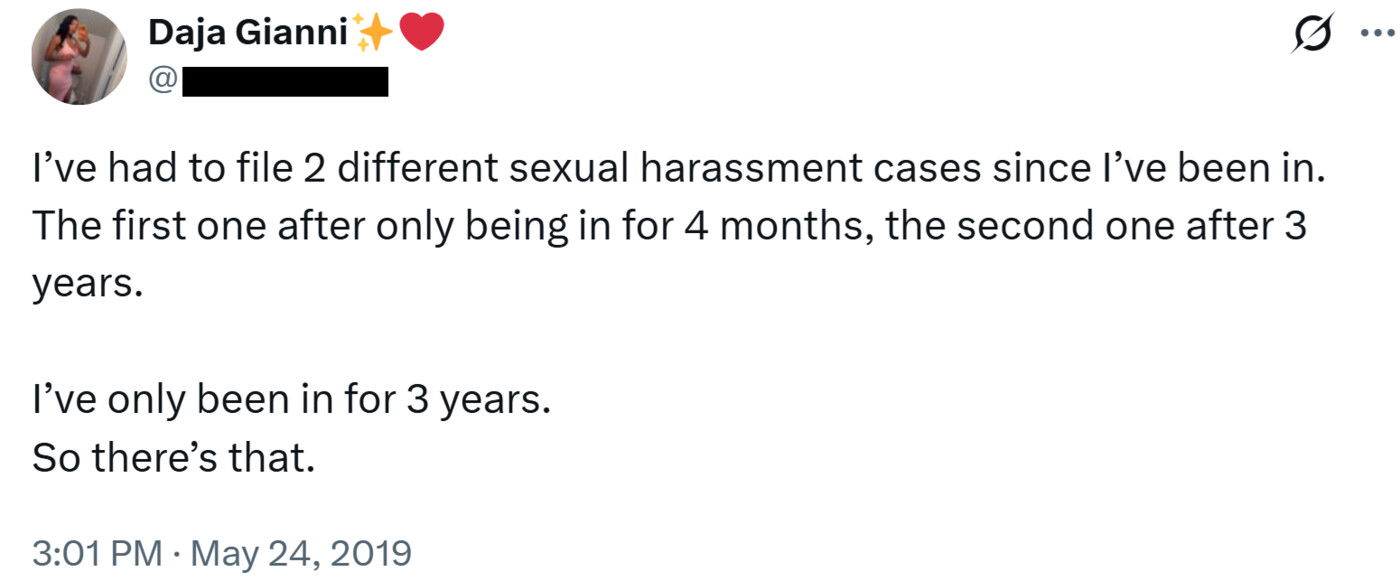
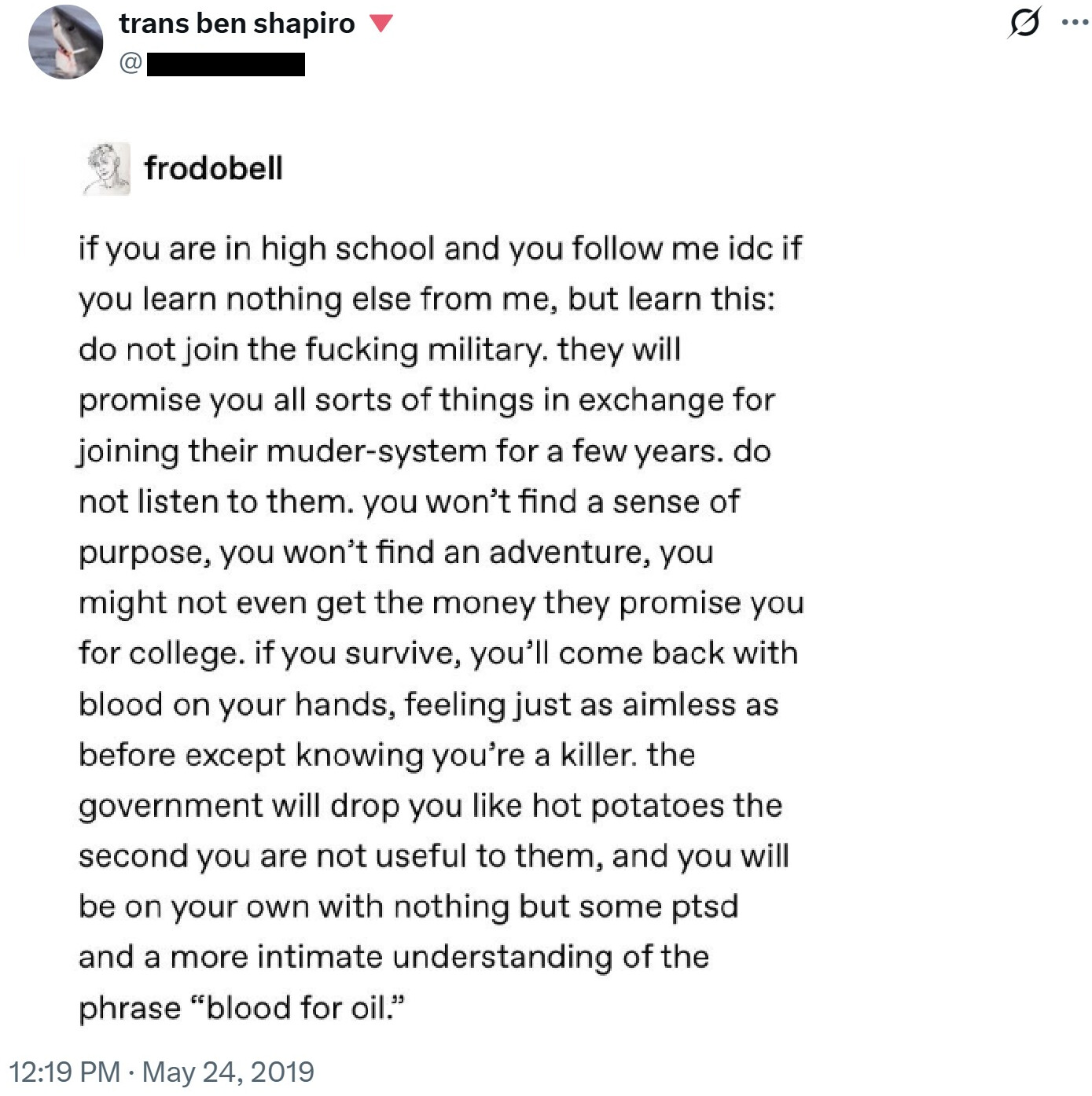
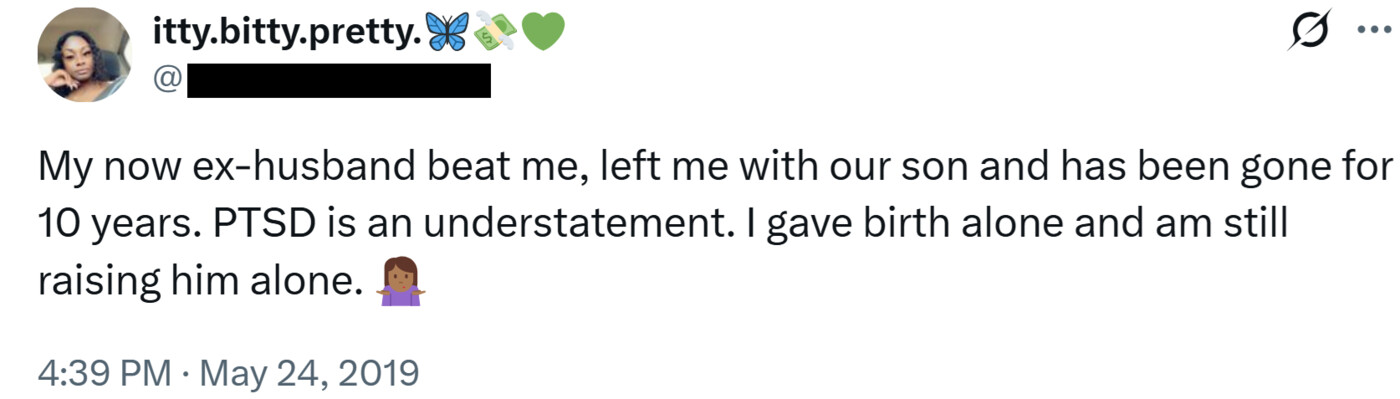
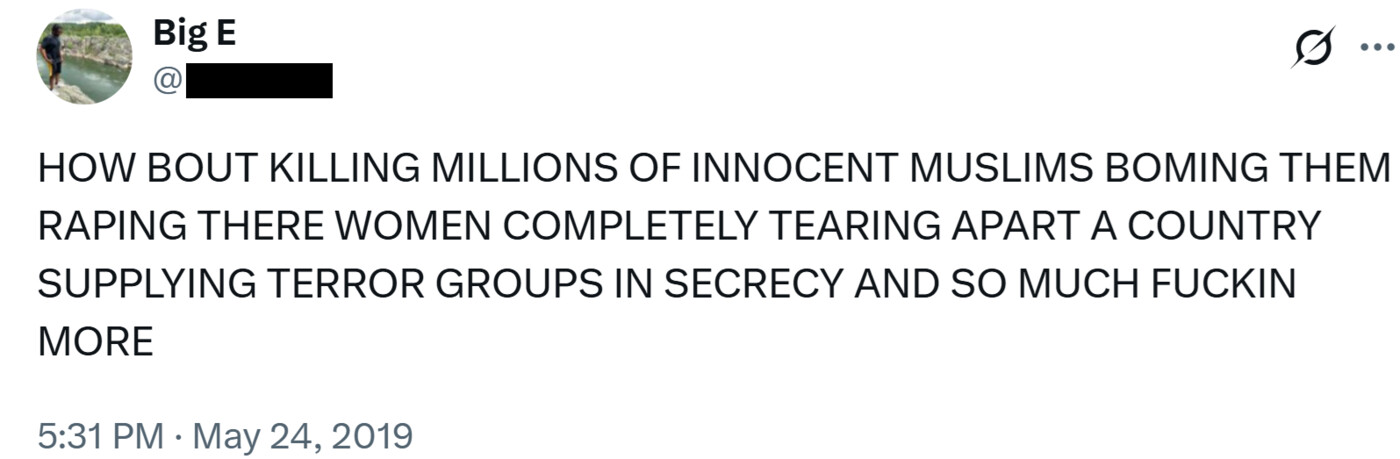
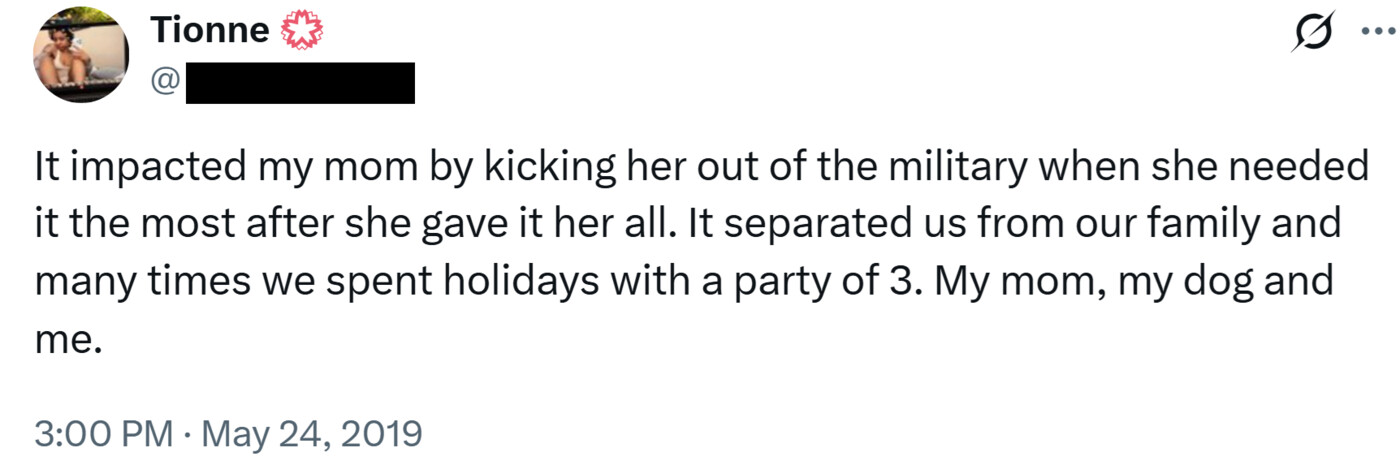
What is it like to serve in the United States military? If only it were possible for those who are considering enlisting to learn the unvarnished truth. In 2019, a viral tweet from the official US Army twitter account unexpectedly drew over 11,000 candid replies in the course of 48 hours. These responses offer a rare window into the real experiences of servicemembers and veterans. We present a selection of them here for the benefit of anyone who is thinking about joining the military.
This is a document of an earlier era of social media, captured here before it vanishes. You can obtain a book collecting the first twenty-four hours of responses here.
Just before Memorial Day in 2019, the United States Army made a strategic blunder almost on par with invading Vietnam. They posted this inquiry on their official Twitter account:
cdn.crimethinc.com/assets/articles/2026/11/11/1.jpg
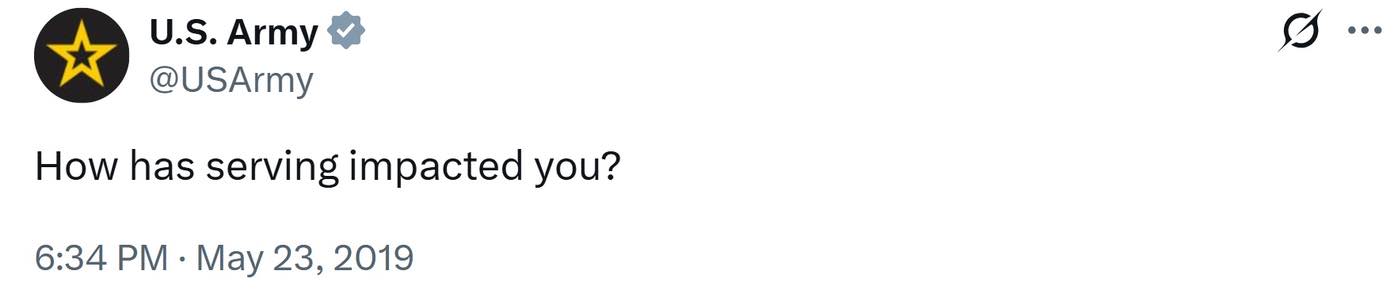
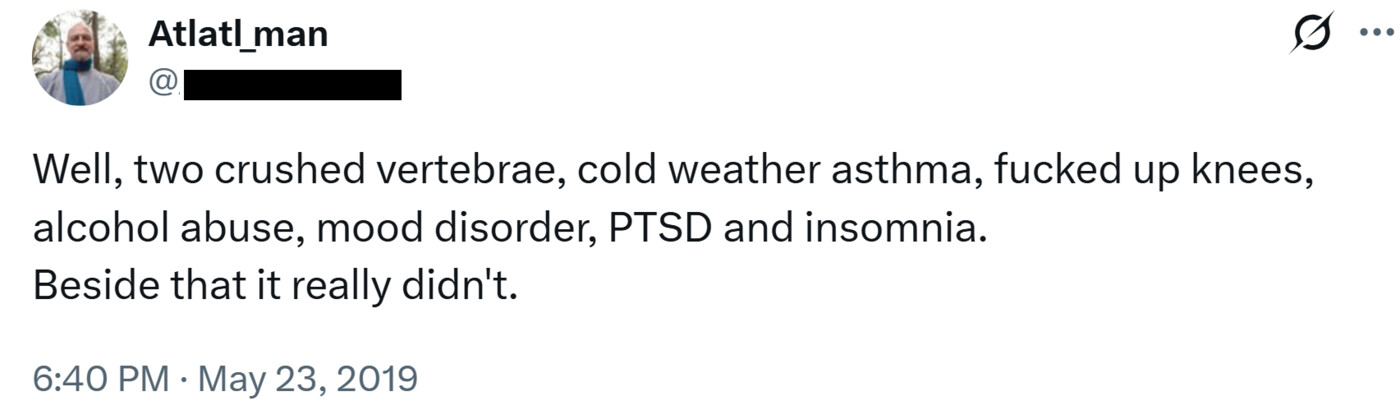
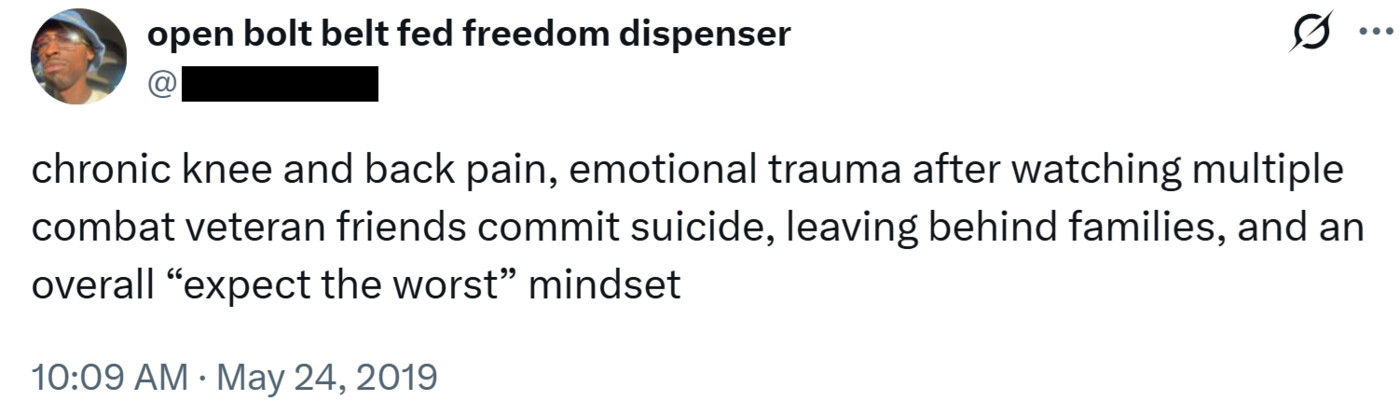
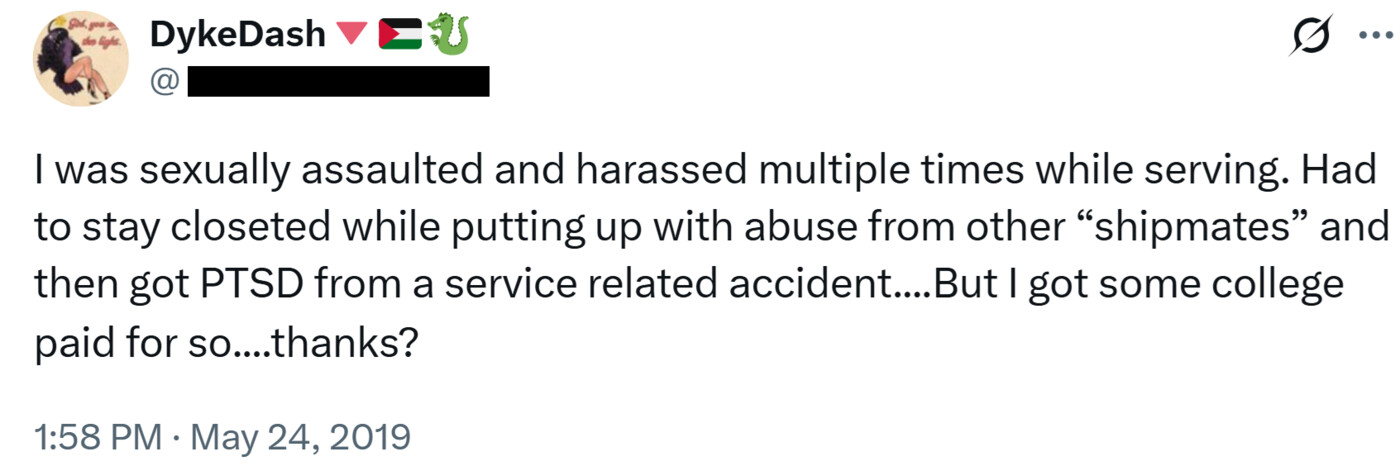
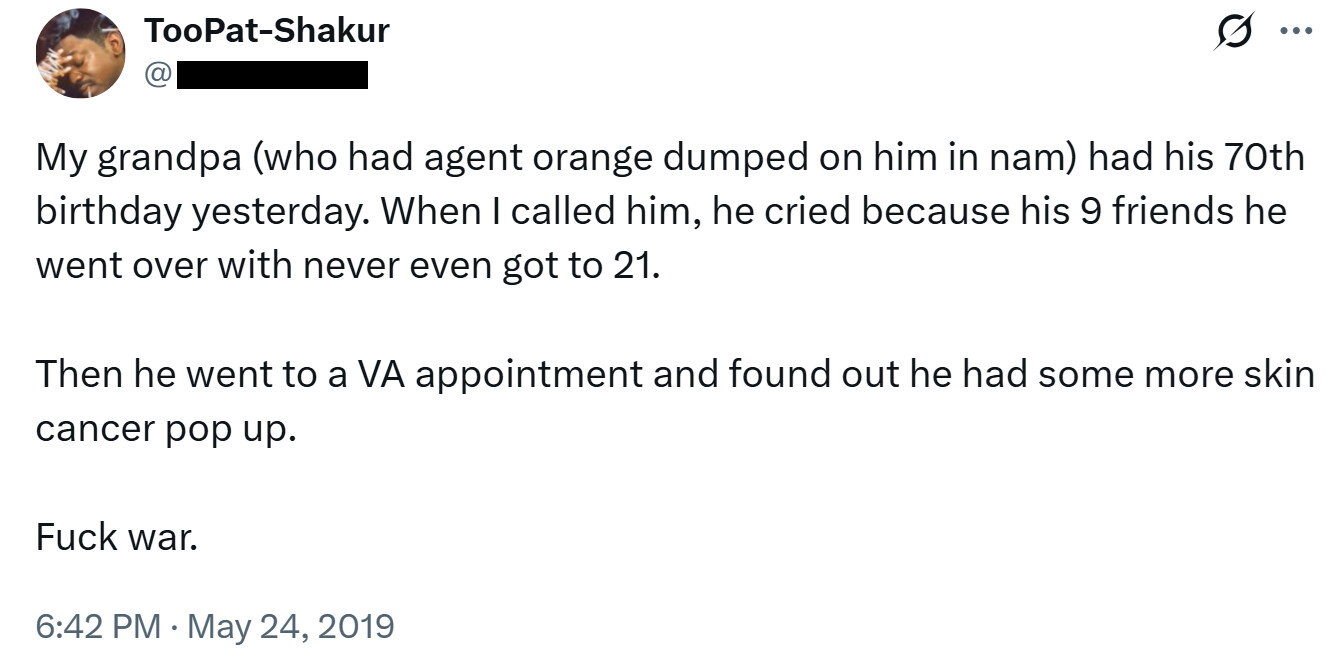
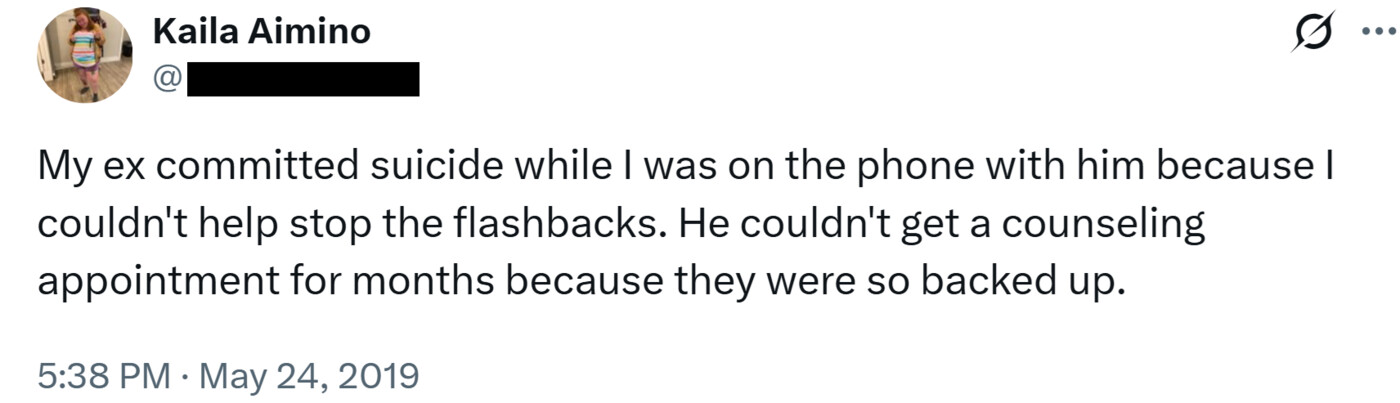
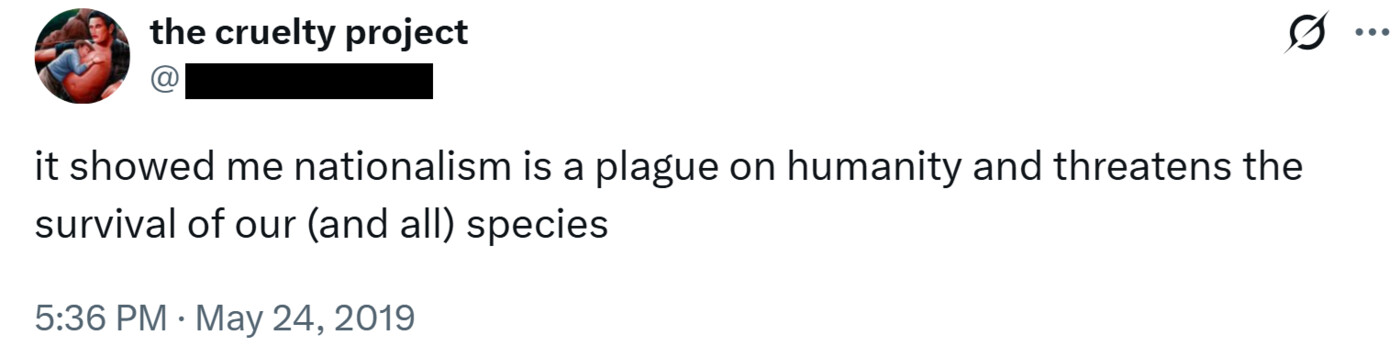
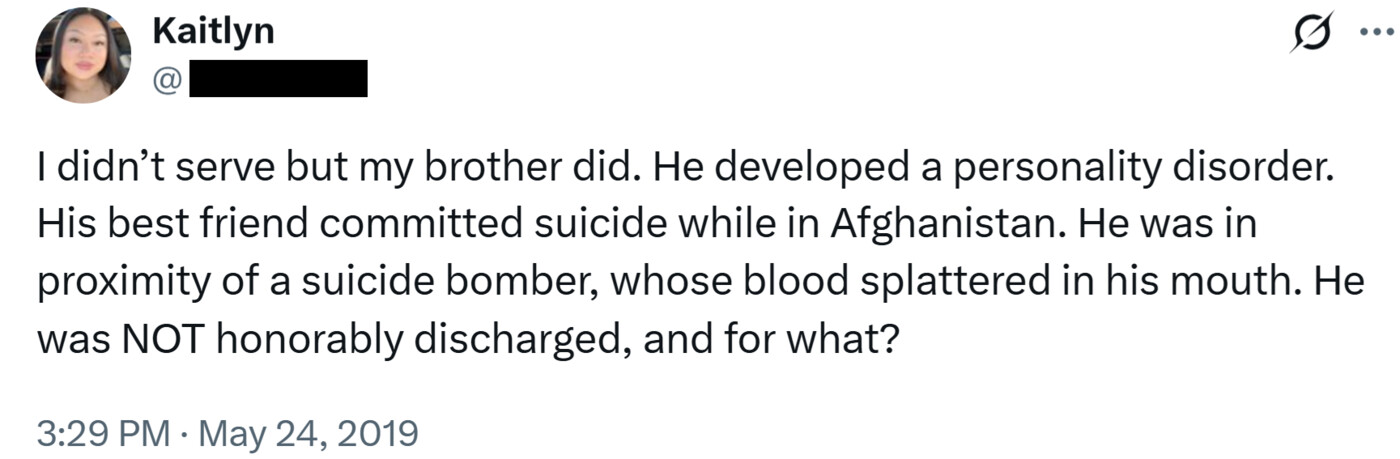
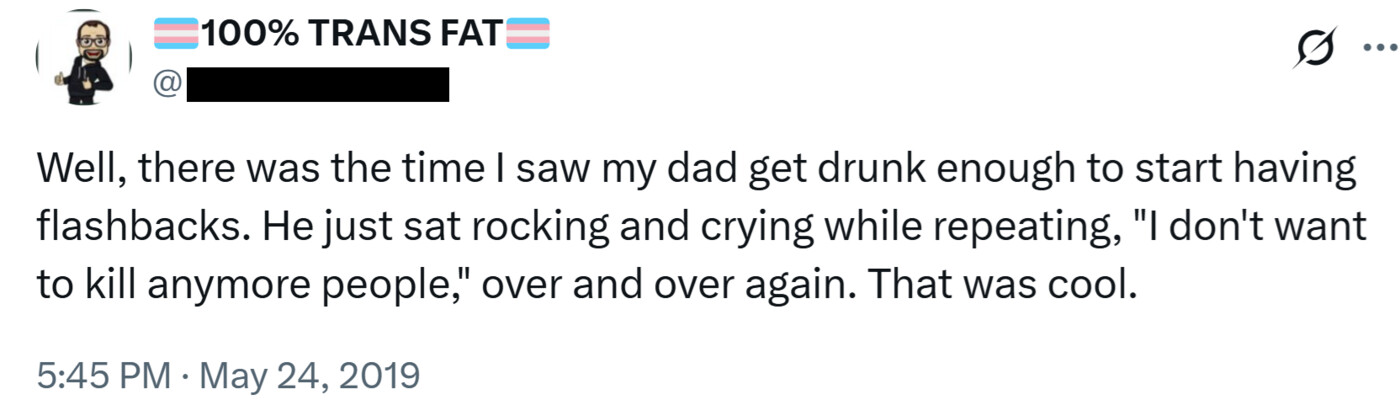
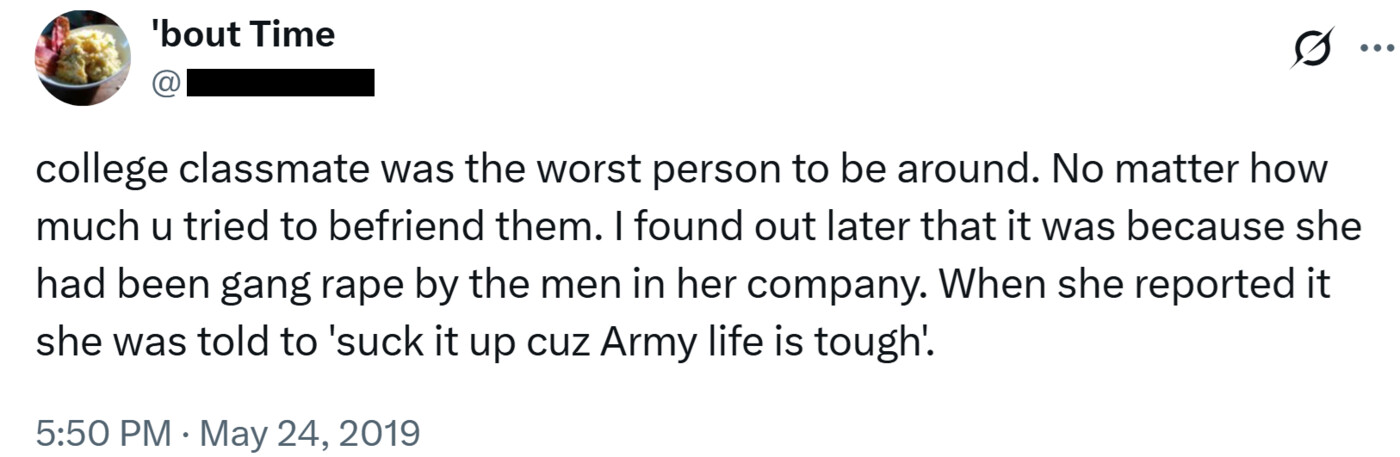
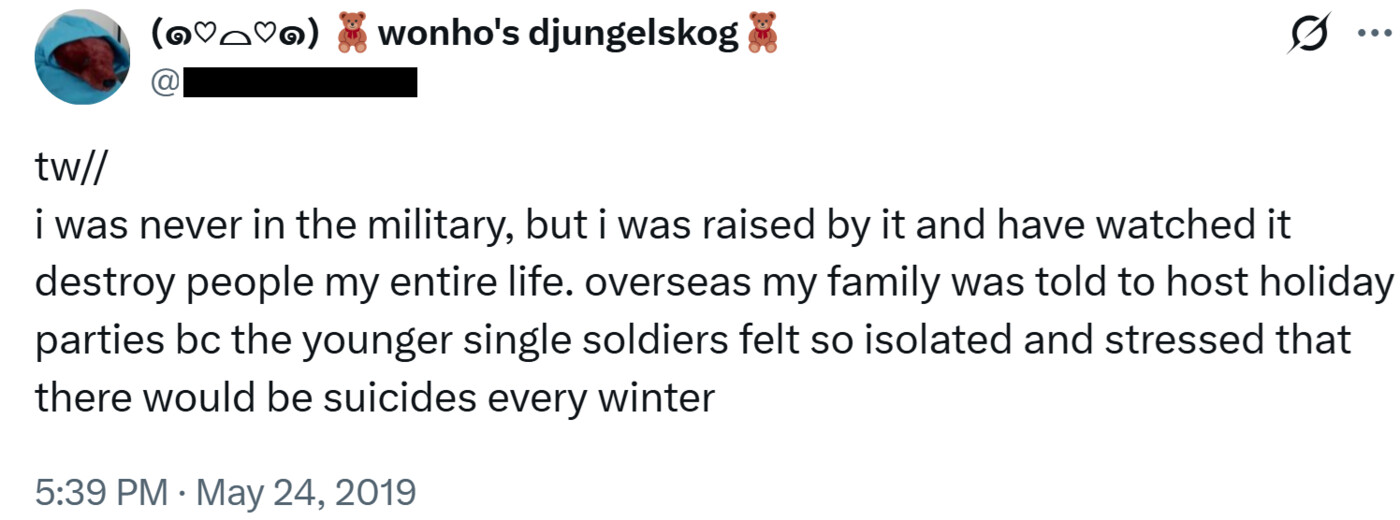
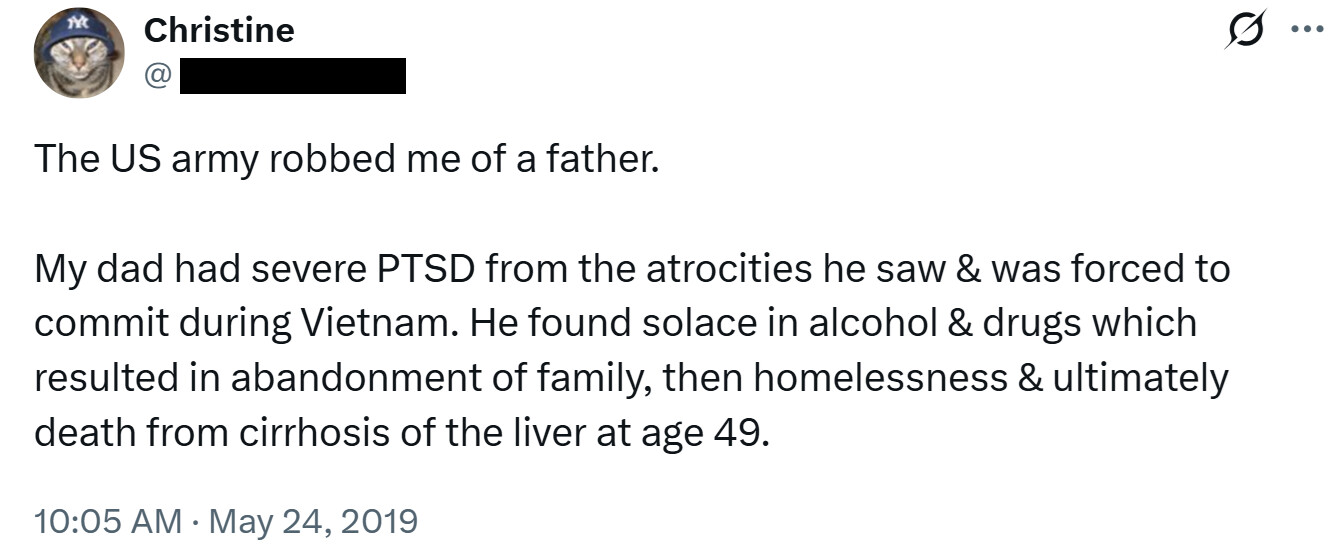
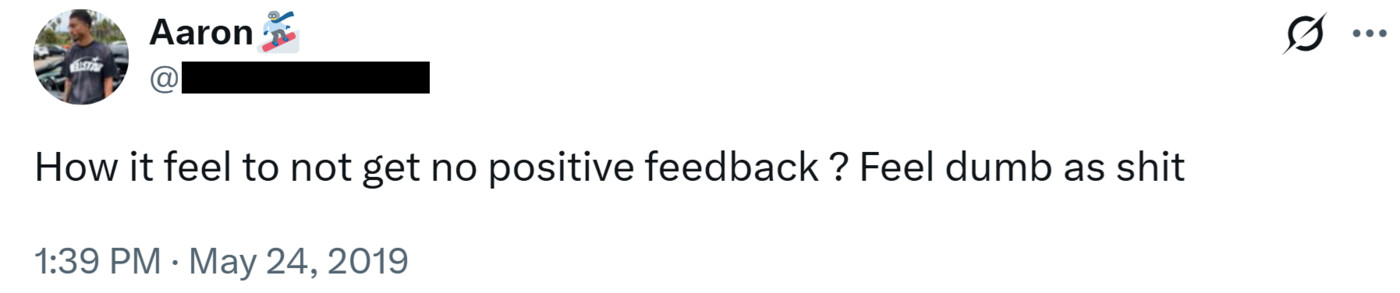
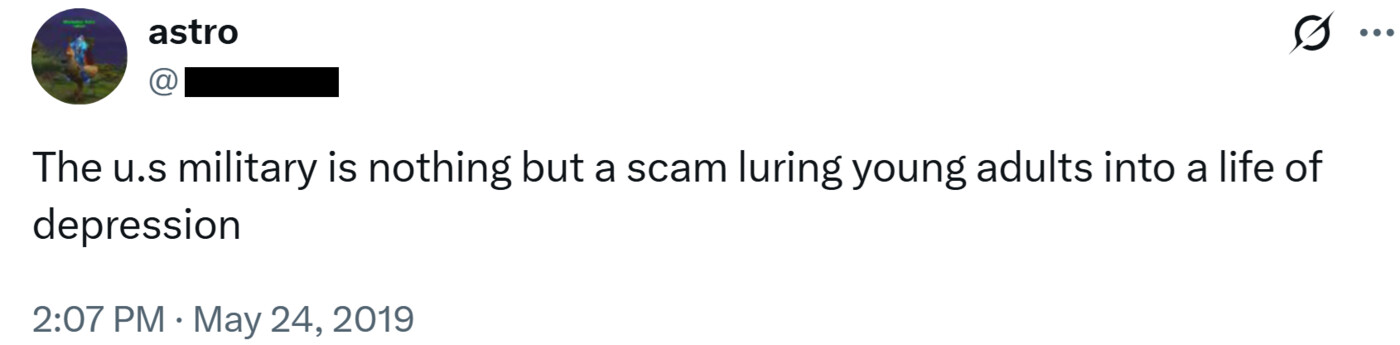
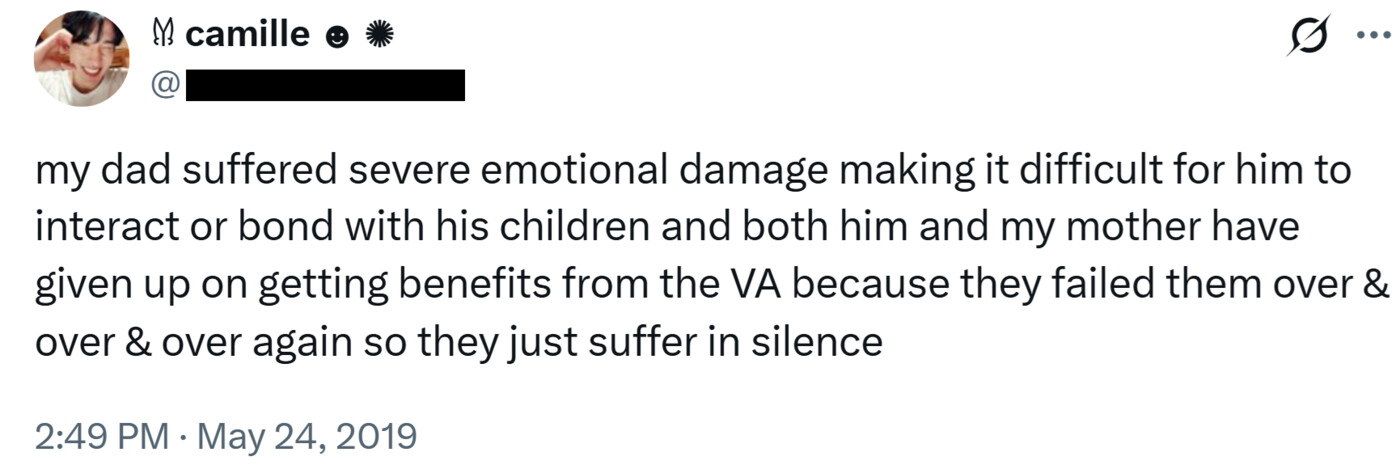
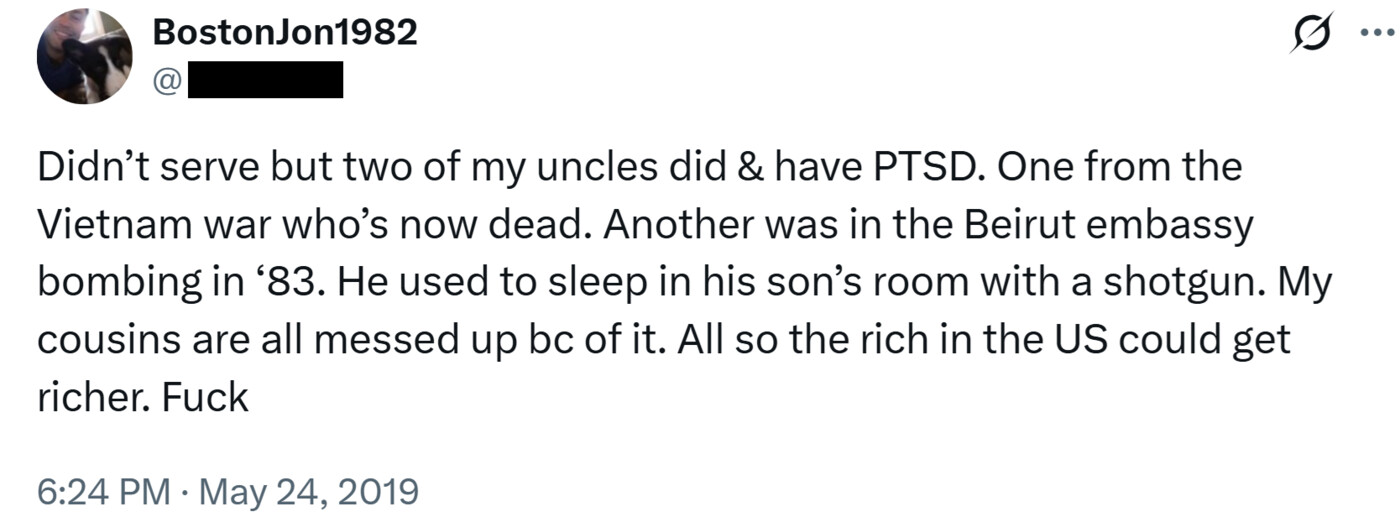
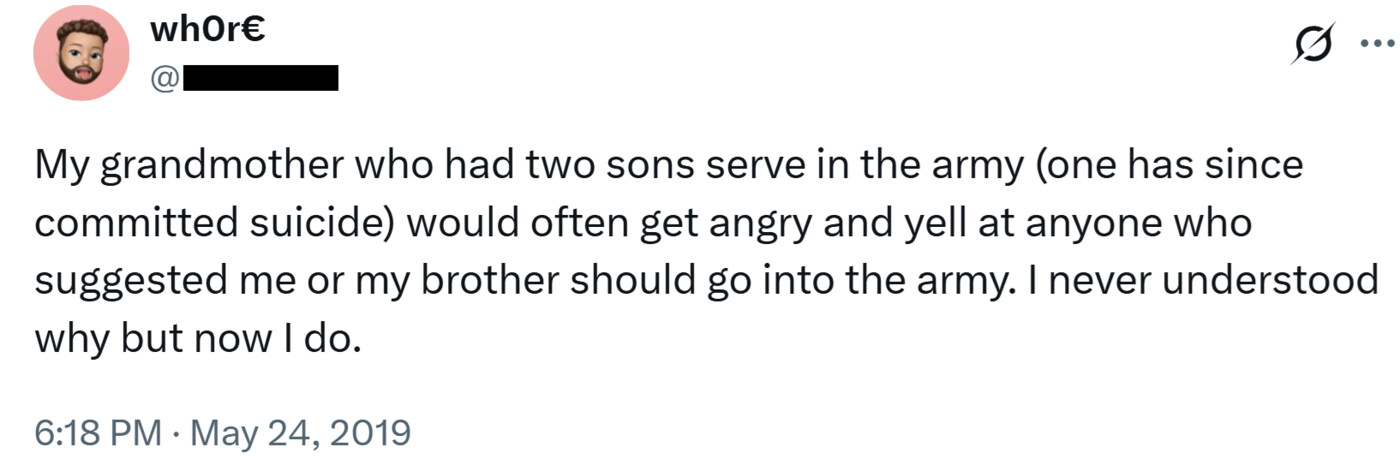
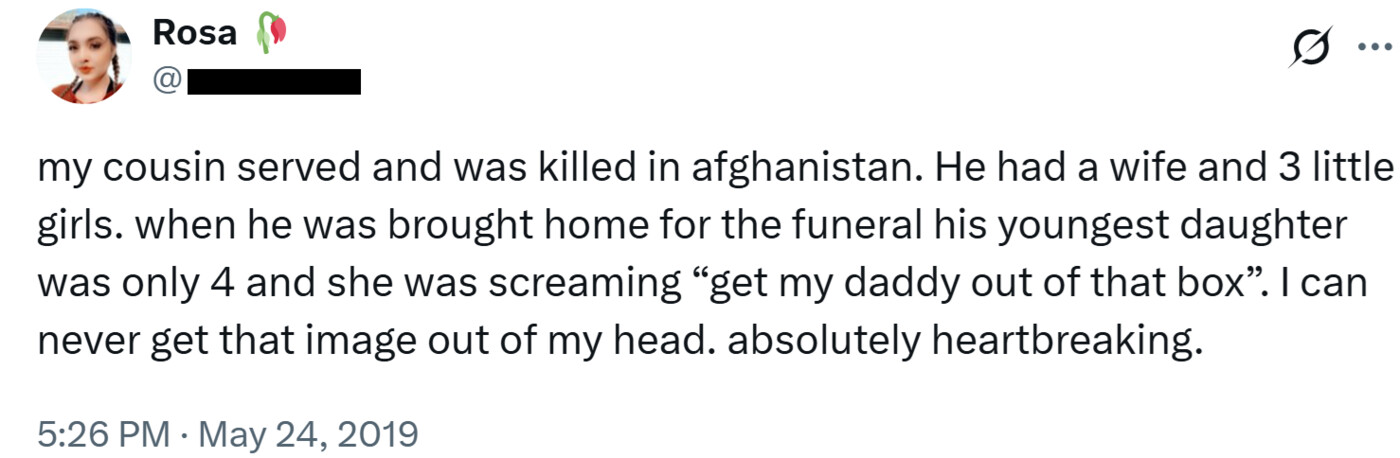
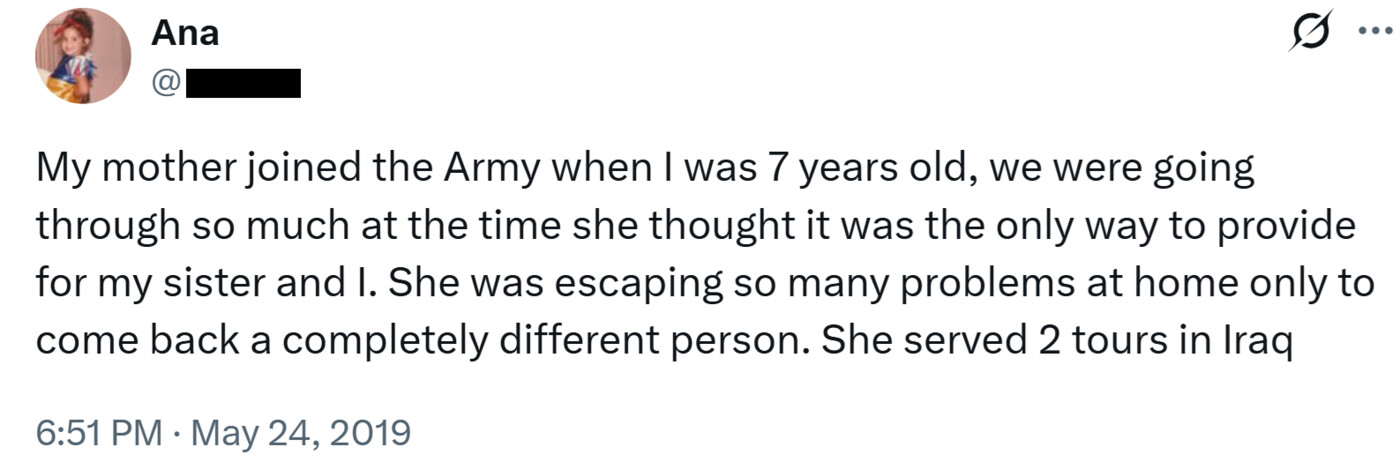
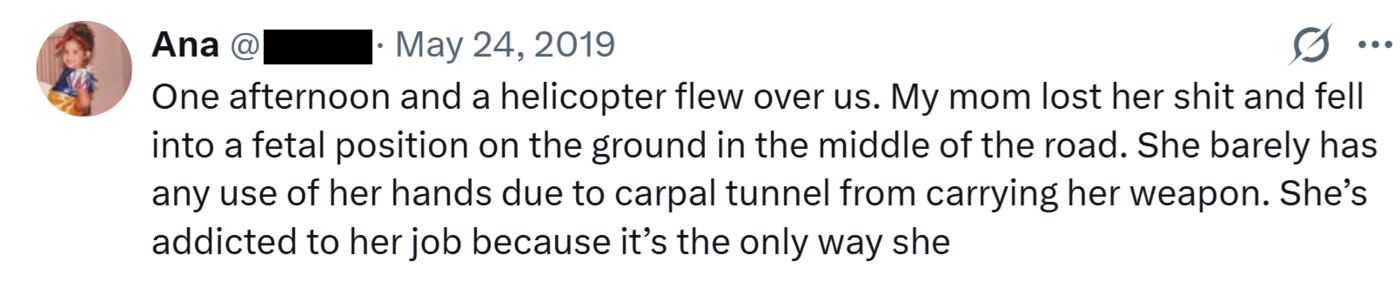
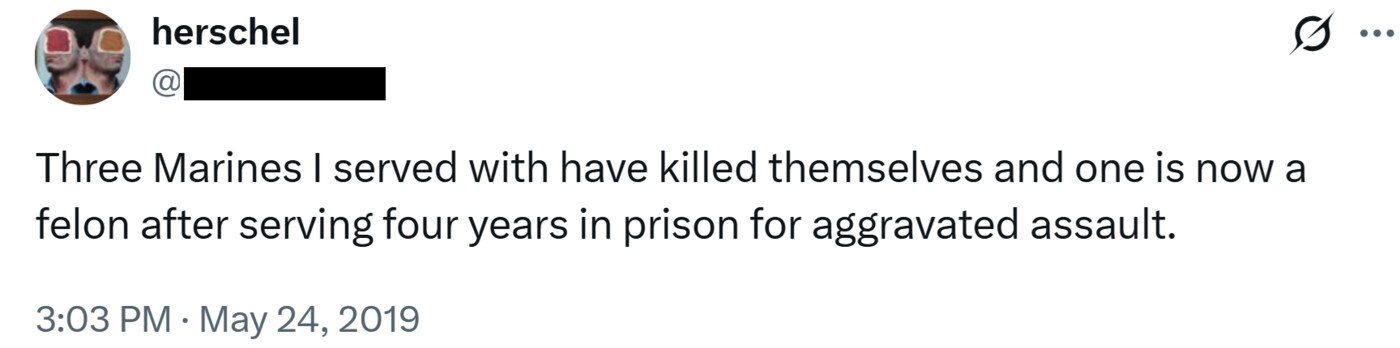
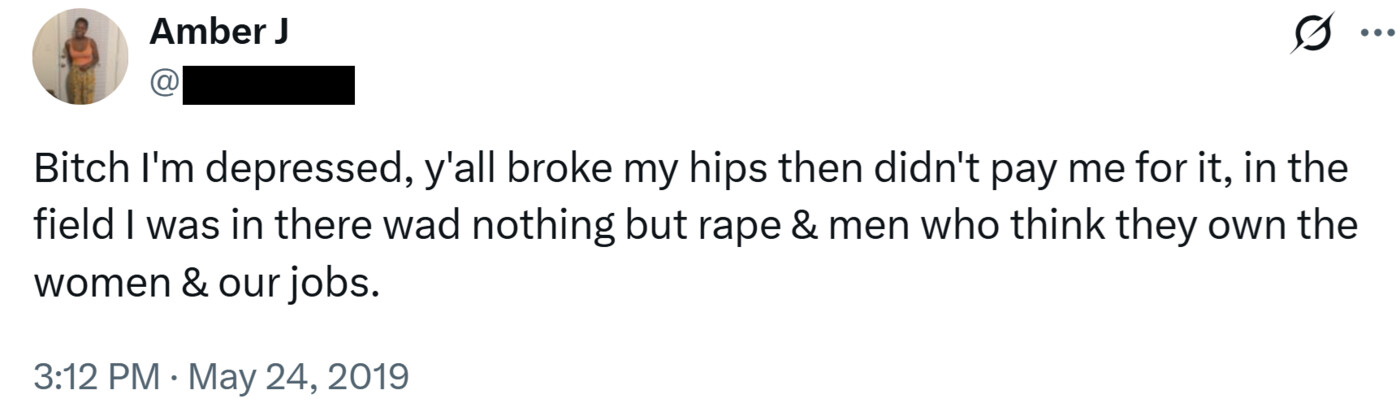
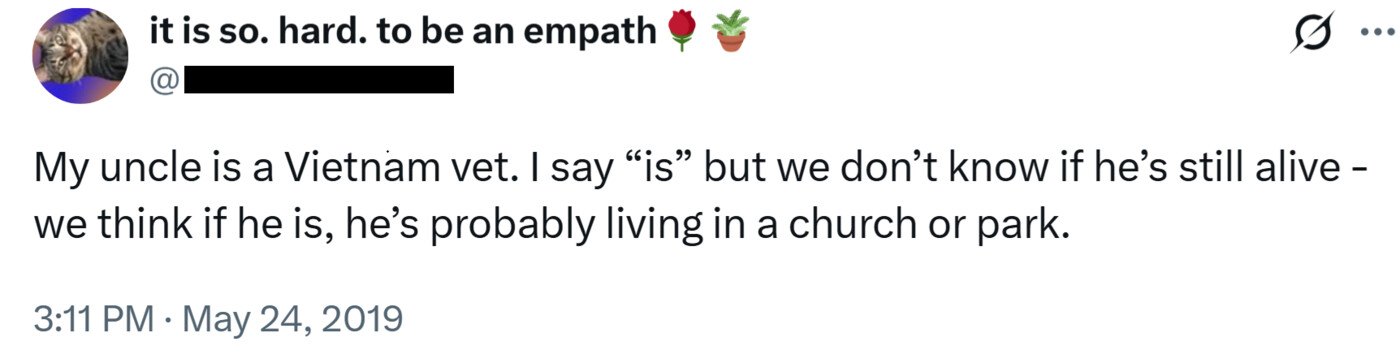
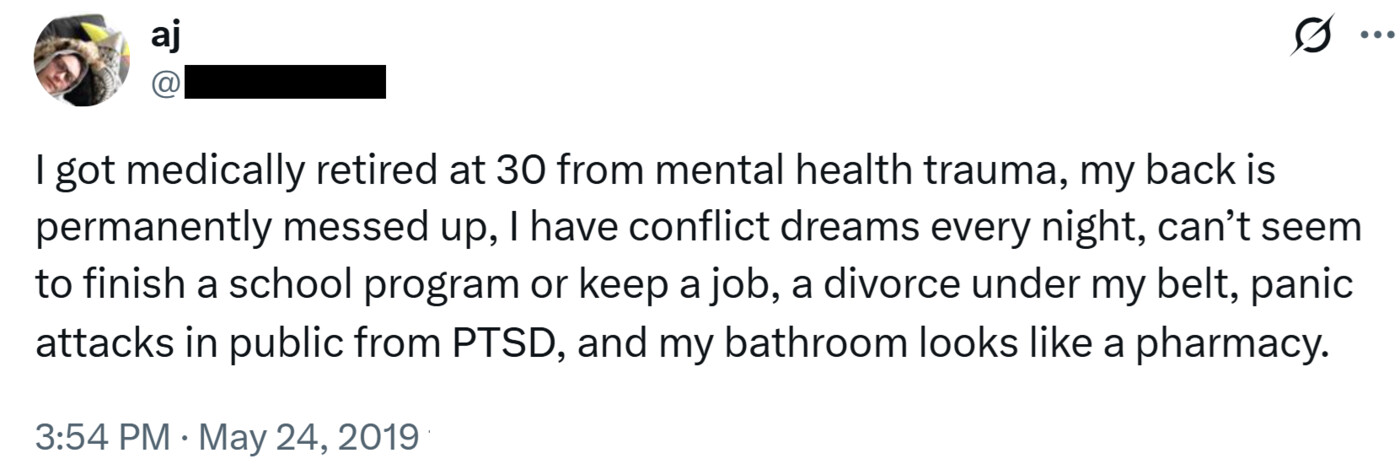
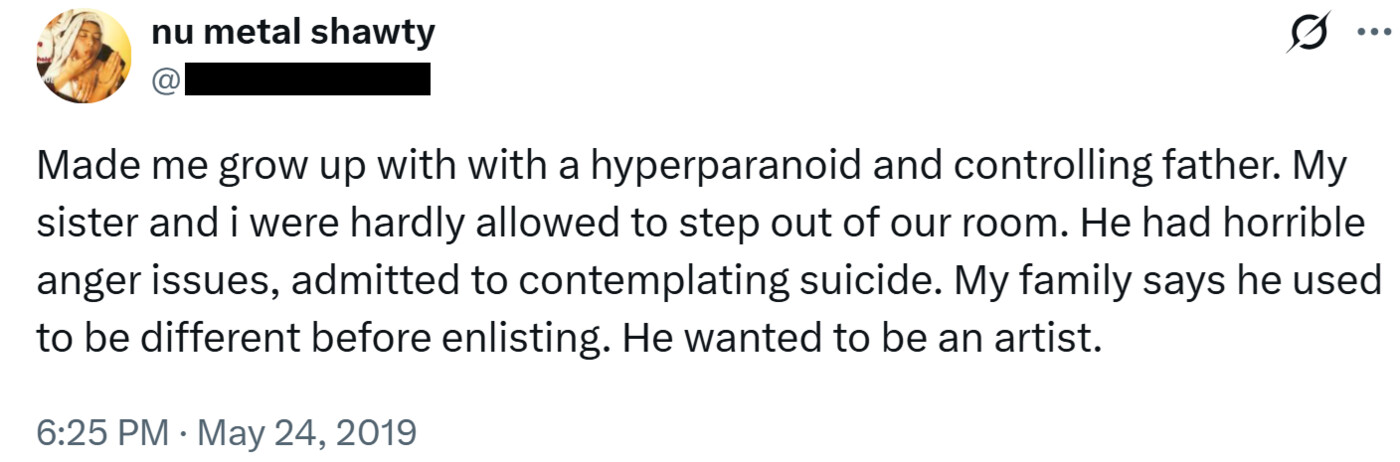
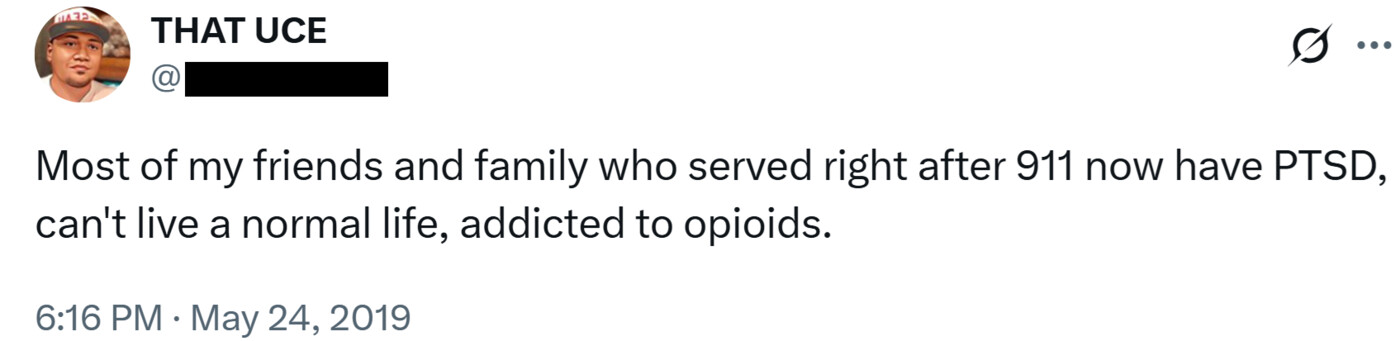
In response, veterans and their family and friends posted thousands upon thousands of tweets recounting broken promises and broken people. They described cancer, PTSD, domestic abuse, unpaid college and housing loans, Gulf War syndrome, insomnia, sexual abuse, poverty, Agent Orange, racism, nightmare disorder, unemployment, burying loved ones, misogyny, orphaned children, burn pit syndrome, homelessness, debilitating injuries, divorce, alcoholism, disappearances, a Veterans Affairs department that was unwilling or unable to help, and suicide, suicide, suicide.
cdn.crimethinc.com/assets/articles/2026/11/11/a1.jpg
cdn.crimethinc.com/assets/articles/2026/11/11/a2.jpg
cdn.crimethinc.com/assets/articles/2026/11/11/a3.jpg
cdn.crimethinc.com/assets/articles/2026/11/11/a4.jpg
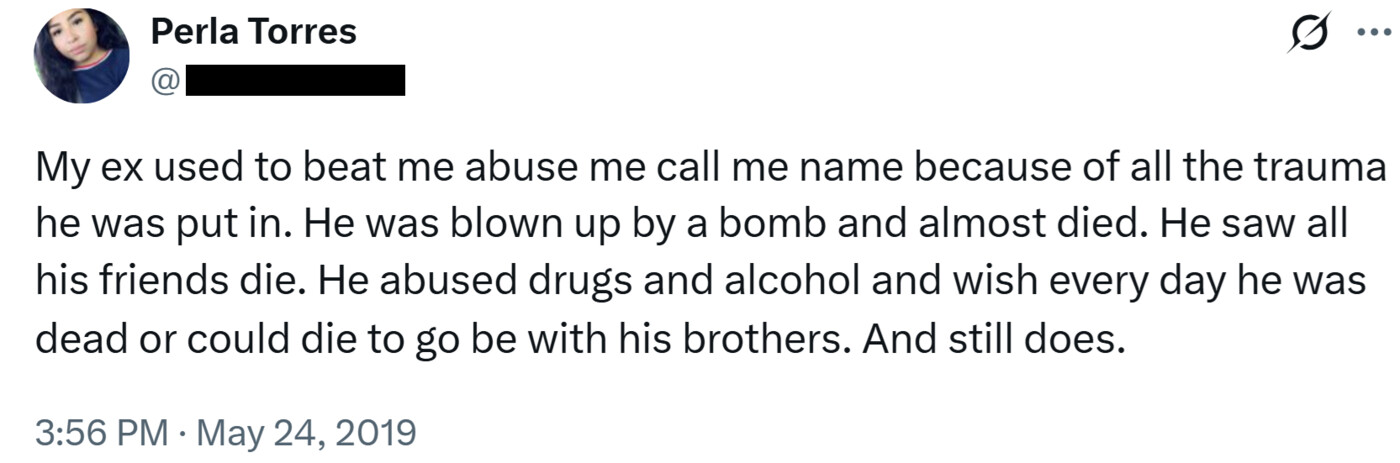
cdn.crimethinc.com/assets/articles/2026/11/11/a5.jpg
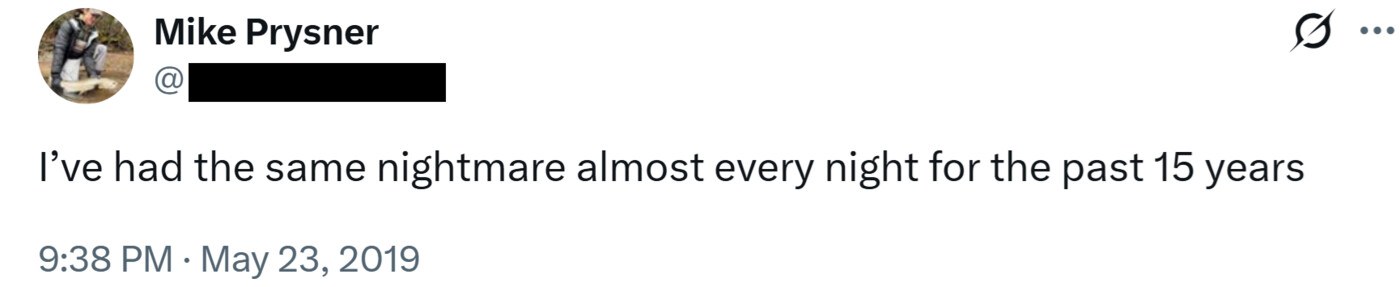
cdn.crimethinc.com/assets/articles/2026/11/11/a6.jpg
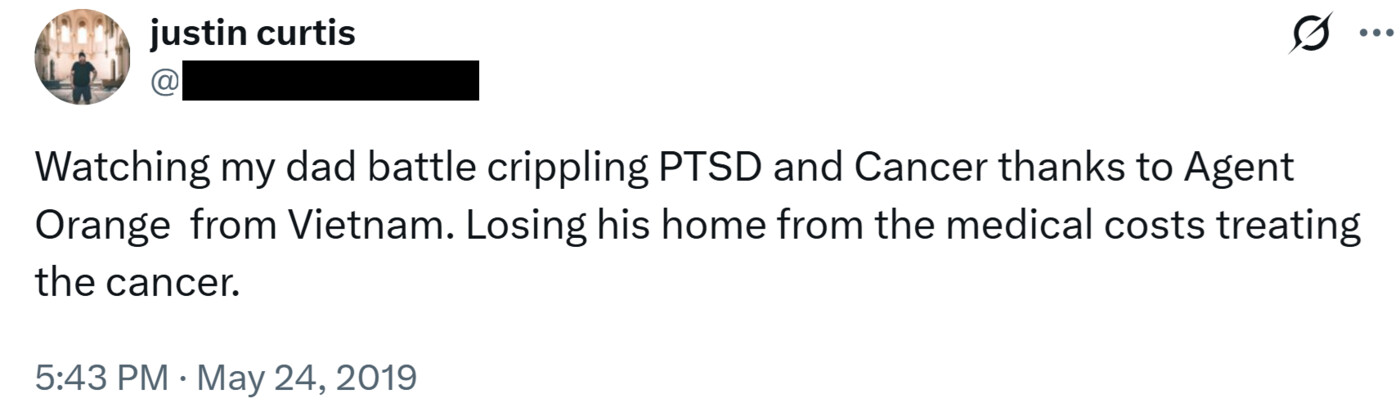
cdn.crimethinc.com/assets/articles/2026/11/11/a8.jpg
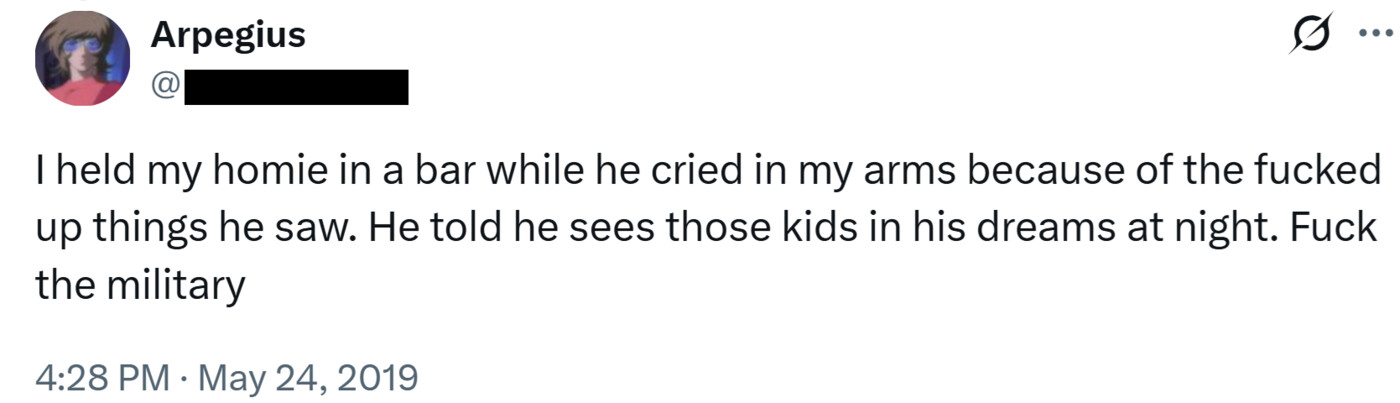
cdn.crimethinc.com/assets/articles/2026/11/11/a9.jpg
cdn.crimethinc.com/assets/articles/2026/11/11/a10.jpg
cdn.crimethinc.com/assets/articles/2026/11/11/a11.jpg
cdn.crimethinc.com/assets/articles/2026/11/11/a12.jpg
cdn.crimethinc.com/assets/articles/2026/11/11/a13.jpg
cdn.crimethinc.com/assets/articles/2026/11/11/a14.jpg
cdn.crimethinc.com/assets/articles/2026/11/11/a15.jpg
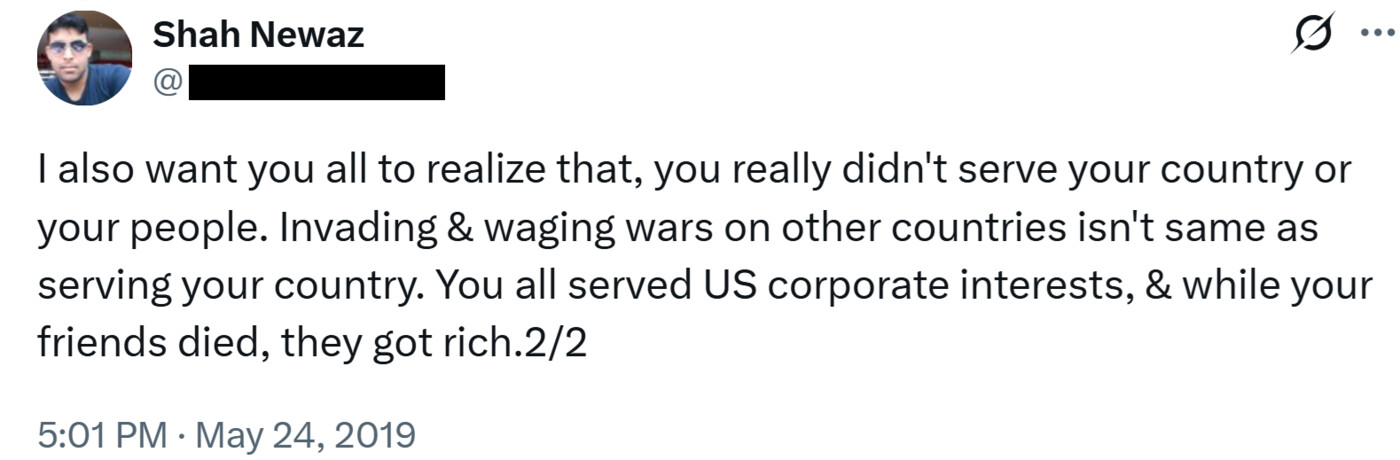
The United States military is one of the largest concentrations of power in the world. With tens of thousands of missiles, millions of firearms, and over 5000 nuclear weapons—about 40% of all the nuclear weapons in the world—the US military can hold the entire world hostage.
cdn.crimethinc.com/assets/articles/2026/11/11/b1.jpg
cdn.crimethinc.com/assets/articles/2026/11/11/b2.jpg
cdn.crimethinc.com/assets/articles/2026/11/11/b3.jpg
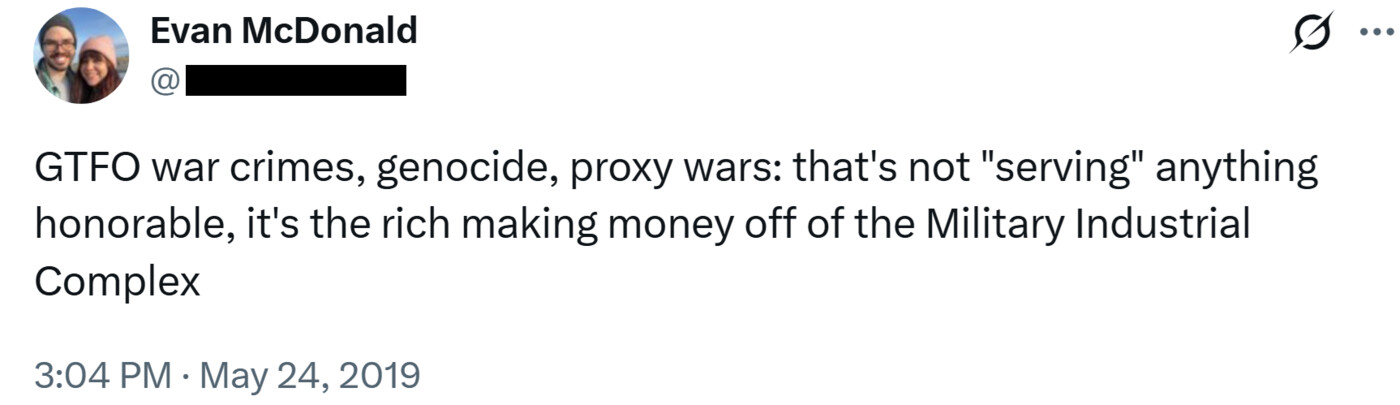
The US military is also the largest employer in the United States, employing almost 2,900,000 workers—roughly 17 out of every 2000 people. If we add private military contractors like Blackwater (250,000 workers), the employees of non-combat support companies like Halliburton who build military infrastructure, provide food, and the like (150,000-250,000), US-based war manufacturers like Lockheed Martin and Boeing (1,500,000), and veterans who receive disability or pension payments (2,000,000), we find that roughly 1 out of every 50 Americans is economically dependent on US militarism.
As in all industries, without this workforce, the military would grind to a halt. It especially depends on regular transfusions of young blood—young people sold stories about adventure, duty, and upward mobility.
cdn.crimethinc.com/assets/articles/2026/11/11/c1.jpg
cdn.crimethinc.com/assets/articles/2026/11/11/c2.jpg
cdn.crimethinc.com/assets/articles/2026/11/11/c3.jpg
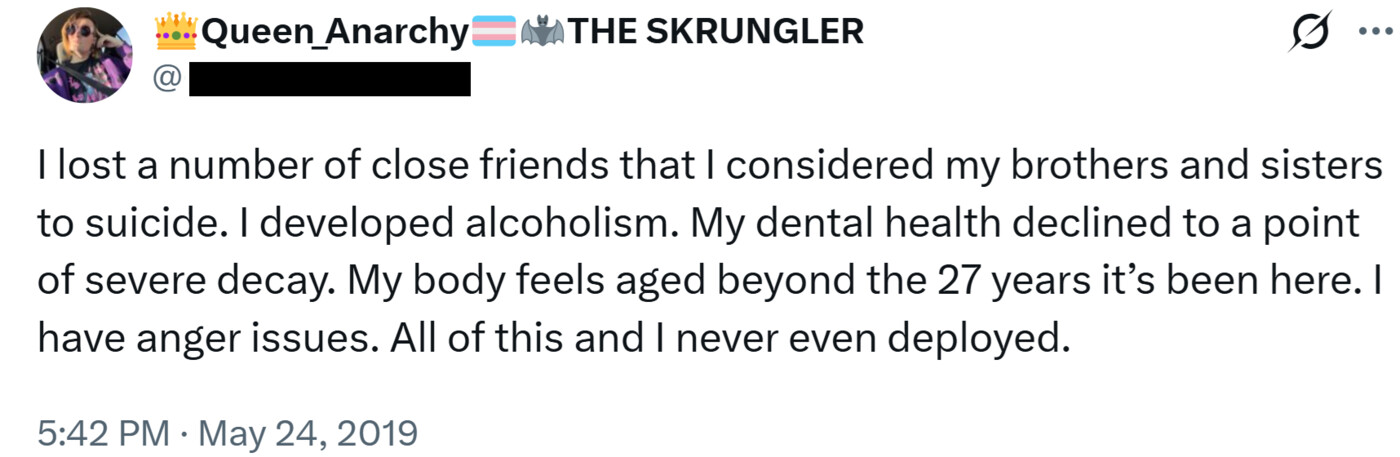
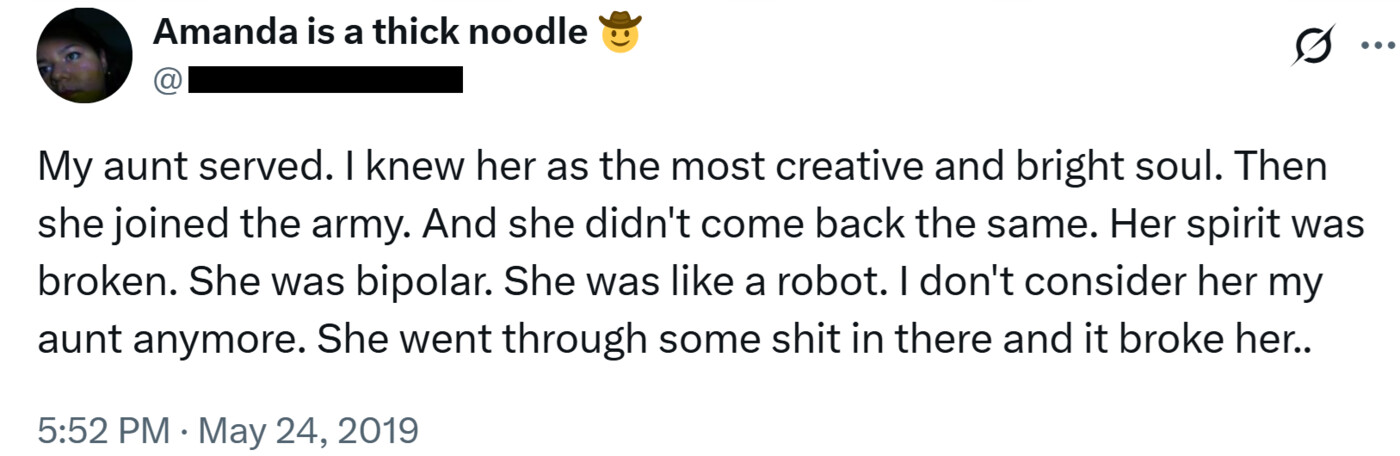
If we were to ask new recruits why they joined, we’d likely hear a mix of narratives about gaining strength, seeing the world, paying for college, serving God and country, learning life skills, continuing a family tradition, escaping poverty or an unsafe home, obtaining housing, having fun, and protecting loved ones. Most people join the military because they think it will benefit them or because they believe they are serving a higher calling.
cdn.crimethinc.com/assets/articles/2026/11/11/d1.jpg
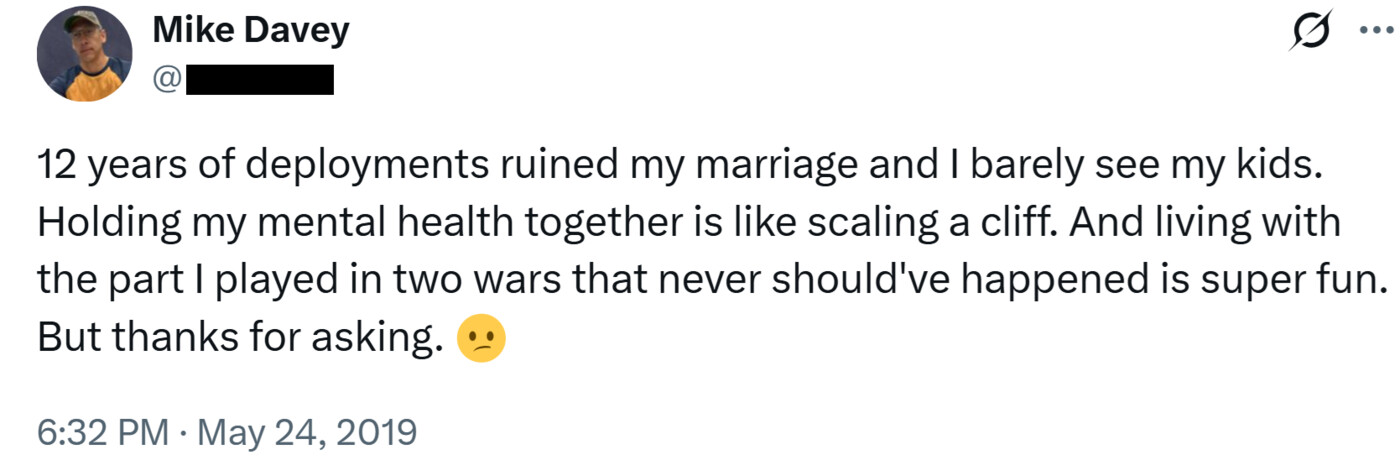
cdn.crimethinc.com/assets/articles/2026/11/11/d2.jpg
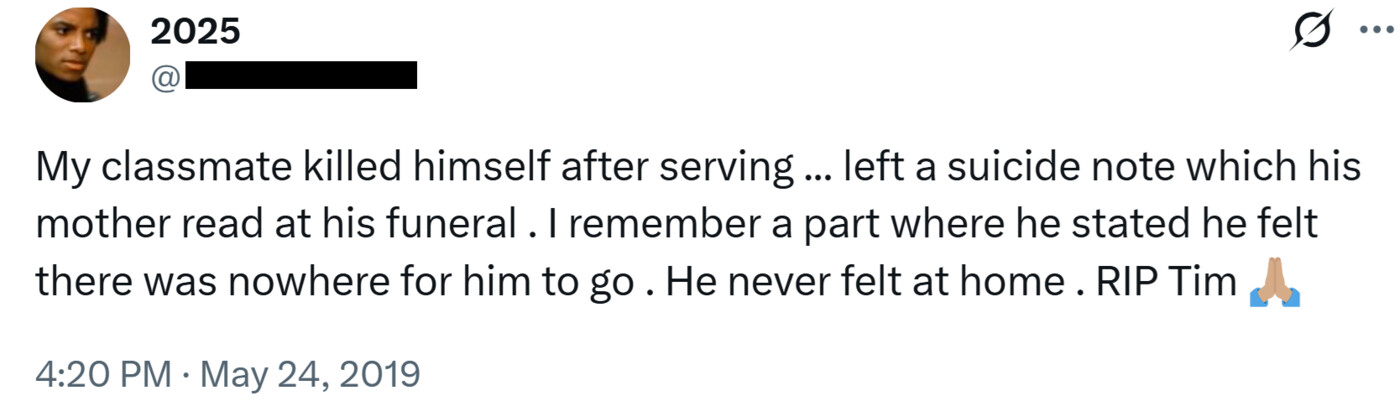
cdn.crimethinc.com/assets/articles/2026/11/11/d3.jpg
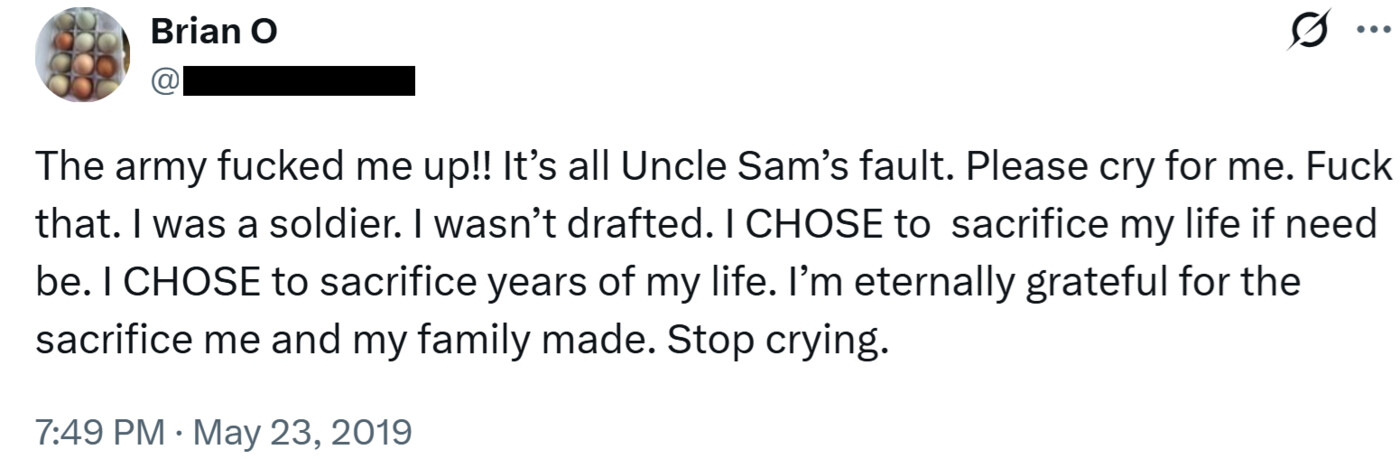
cdn.crimethinc.com/assets/articles/2026/11/11/d4.jpg

Some recruits get to live out their dreams. Some leave instability, danger, or deprivation for a more structured and economically stable life; some even gain a sense of belonging. If they’re lucky, they serve their time without incident, then move on to free college tuition, a no-down-payment housing loan, health insurance, and a free meal at Golden Corral once a year.
cdn.crimethinc.com/assets/articles/2026/11/11/e1.jpg
cdn.crimethinc.com/assets/articles/2026/11/11/e2.jpg
cdn.crimethinc.com/assets/articles/2026/11/11/e3.jpg
cdn.crimethinc.com/assets/articles/2026/11/11/e4.jpg
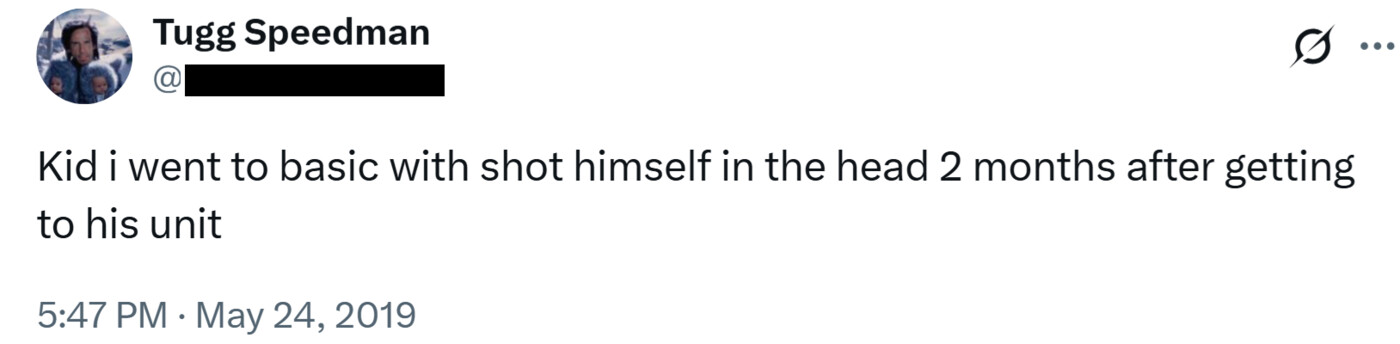
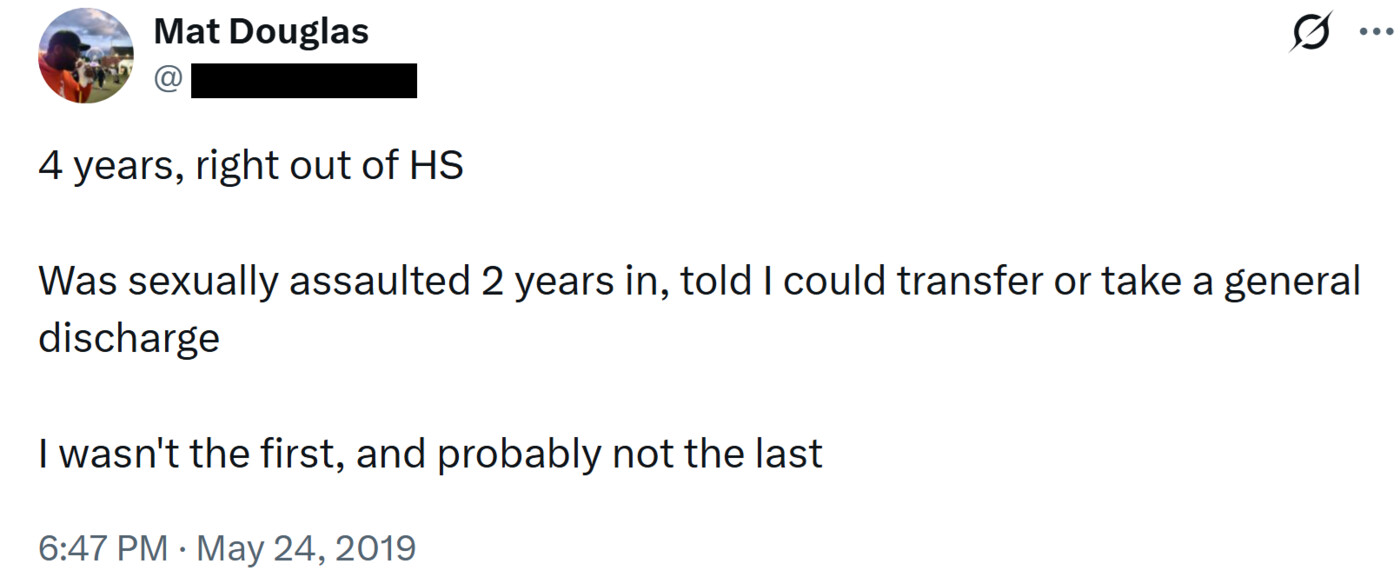
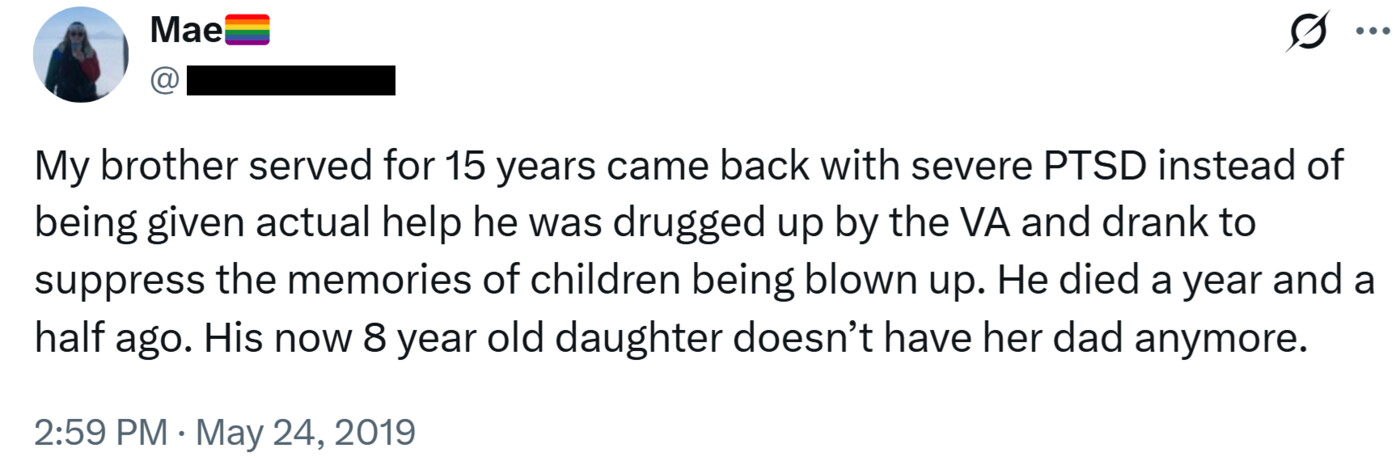
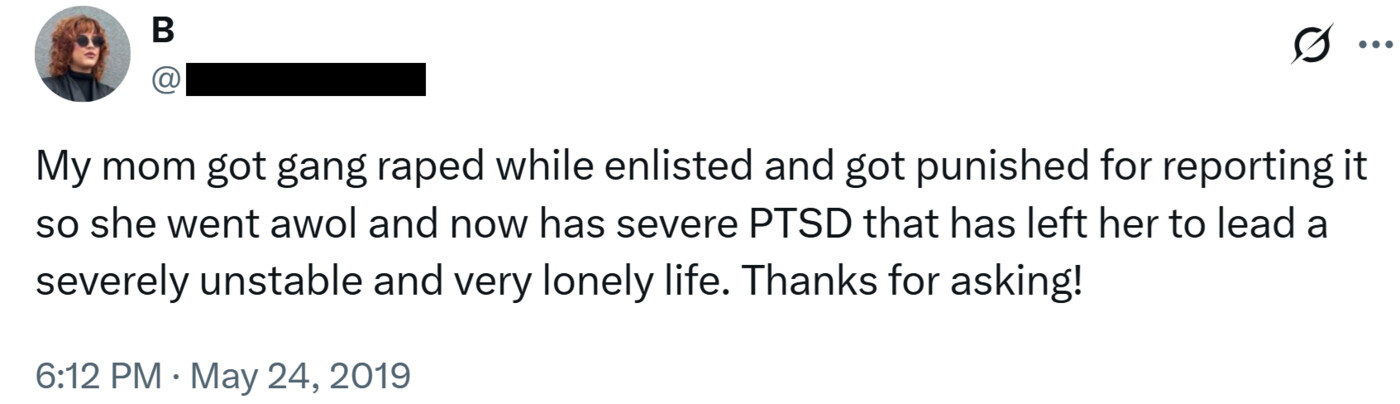
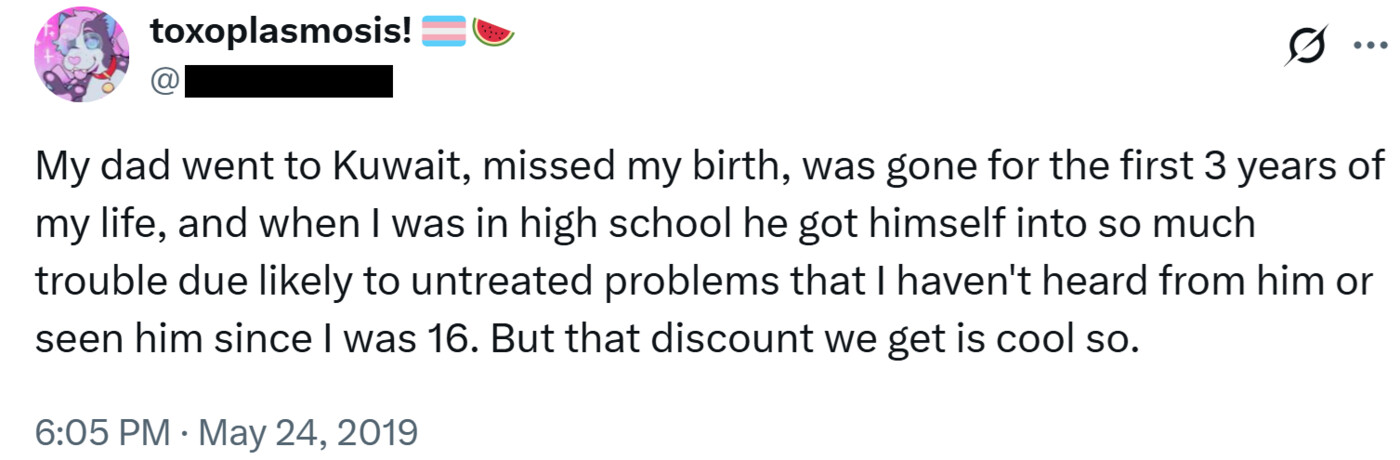
But thousands of veterans’ dreams become nightmares. The promises of recruiters, family members, and Hollywood movies offer a gamble at best—a roll of the dice that frequently ends with being harmed physically, psychologically, and sexually. Military service can lead to substance abuse, homelessness, and suicide. It can also end in unspeakable acts of violence against others, whether those be the declared enemies of the United States, noncombatants, or veterans’ own loved ones.
cdn.crimethinc.com/assets/articles/2026/11/11/f1.jpg
cdn.crimethinc.com/assets/articles/2026/11/11/f2.jpg

cdn.crimethinc.com/assets/articles/2026/11/11/f3.jpg
cdn.crimethinc.com/assets/articles/2026/11/11/f4.jpg
cdn.crimethinc.com/assets/articles/2026/11/11/f5.jpg
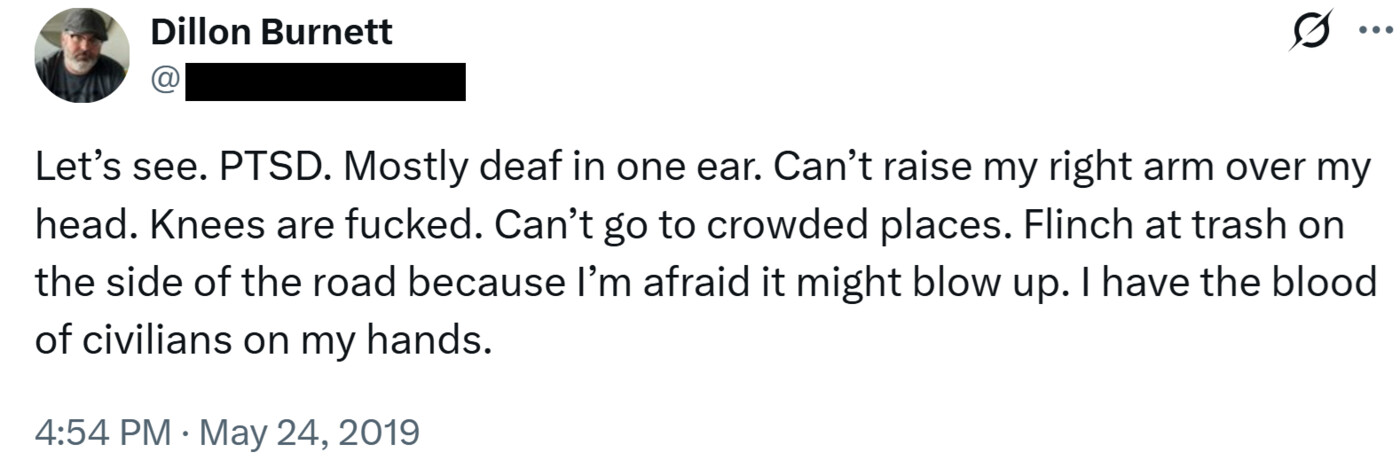
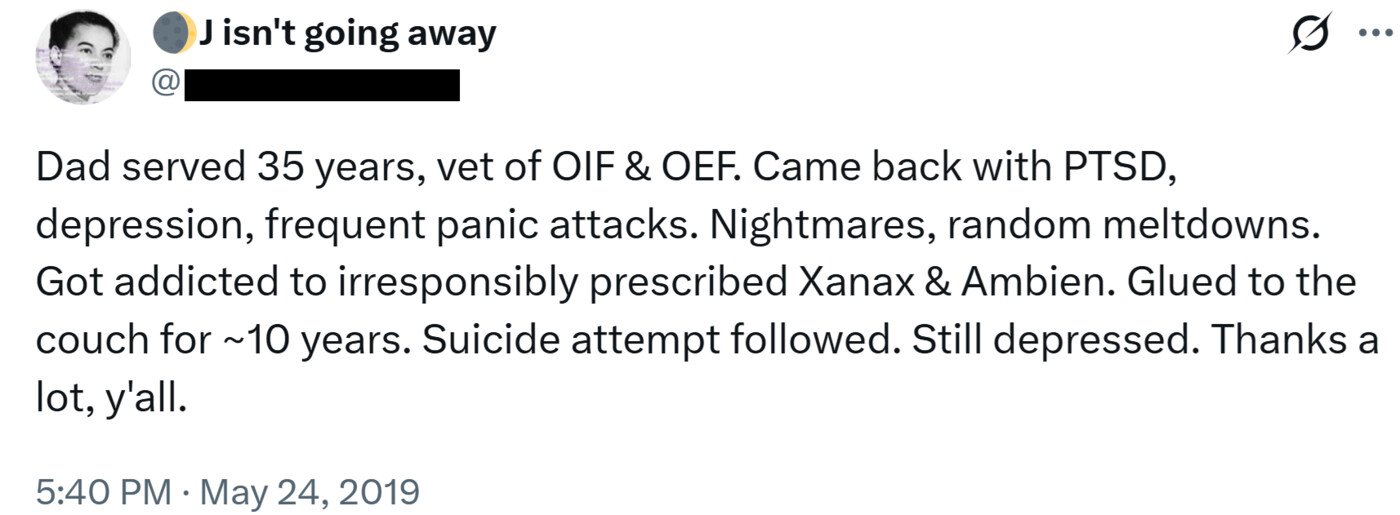
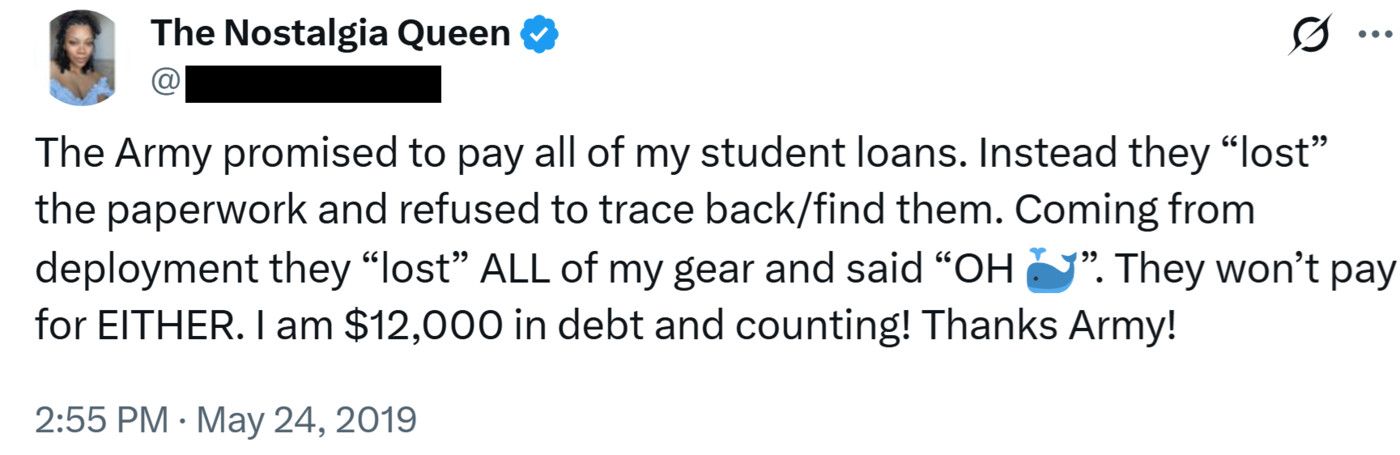
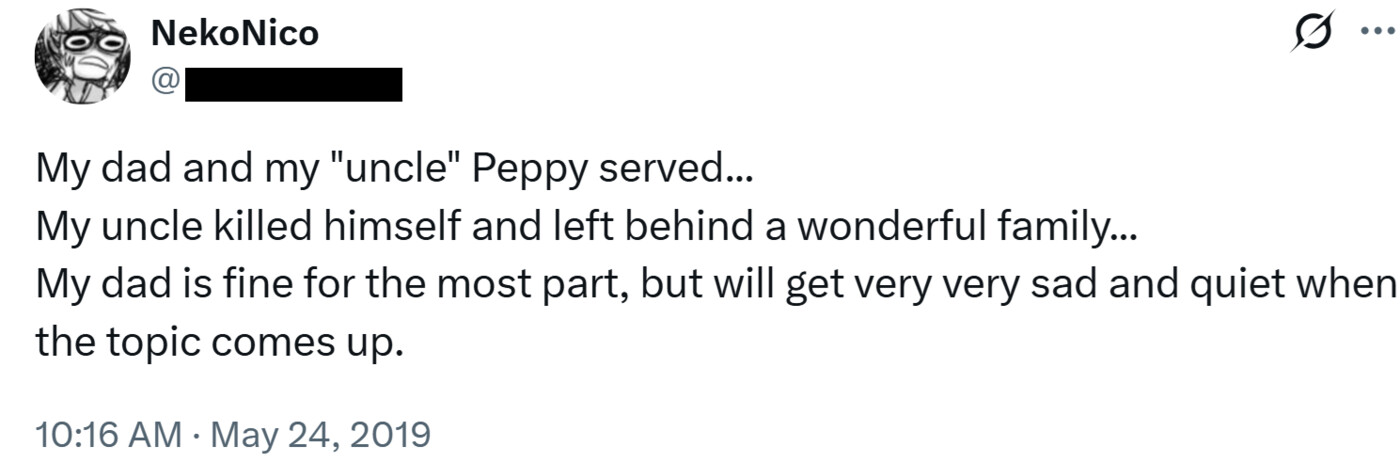
It is striking how many of these responses speak of being hoodwinked out of college, housing loans, and medical care—how many describe the pain of family members lost to PTSD, alcoholism, or suicide after witnessing or committing atrocities.
cdn.crimethinc.com/assets/articles/2026/11/11/g1.jpg
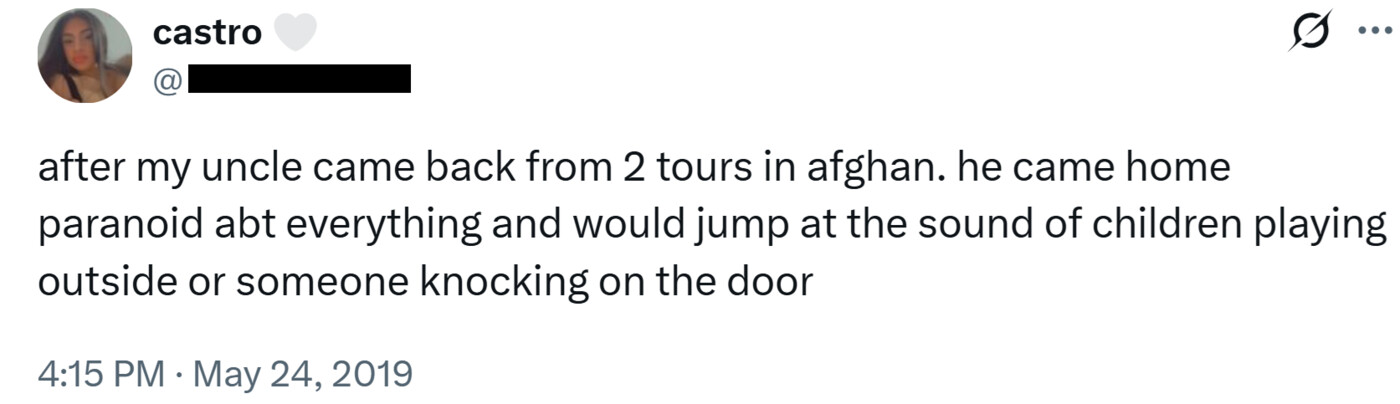
cdn.crimethinc.com/assets/articles/2026/11/11/g2.jpg
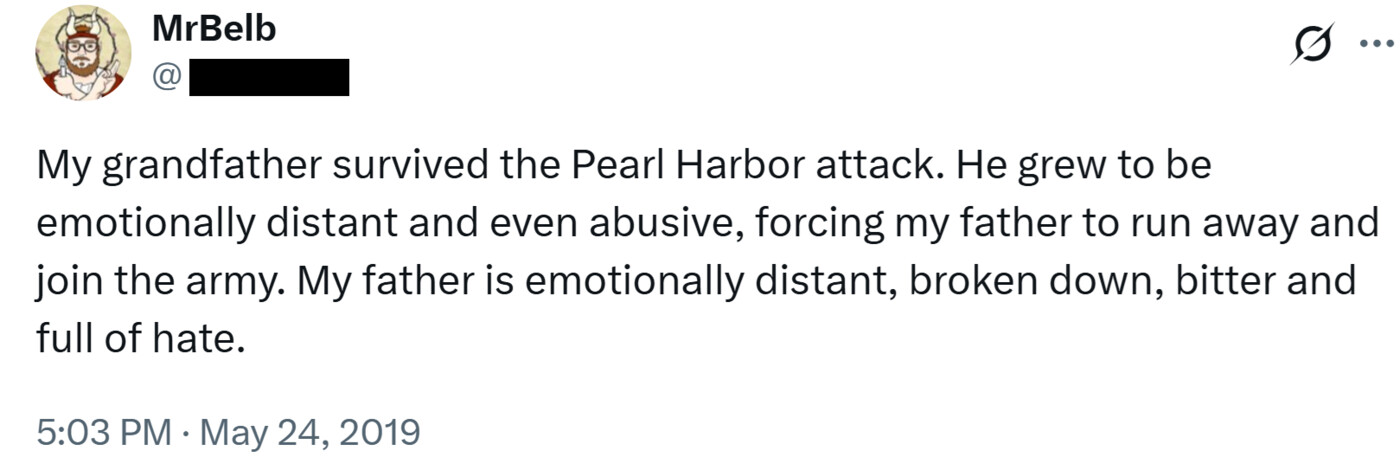
cdn.crimethinc.com/assets/articles/2026/11/11/g3.jpg
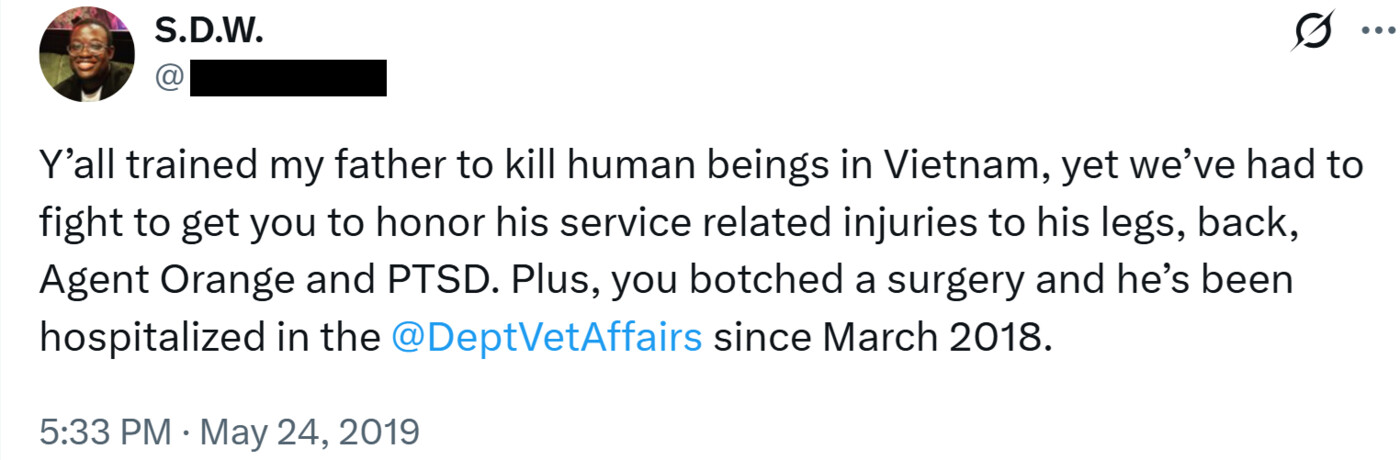
cdn.crimethinc.com/assets/articles/2026/11/11/g4.jpg
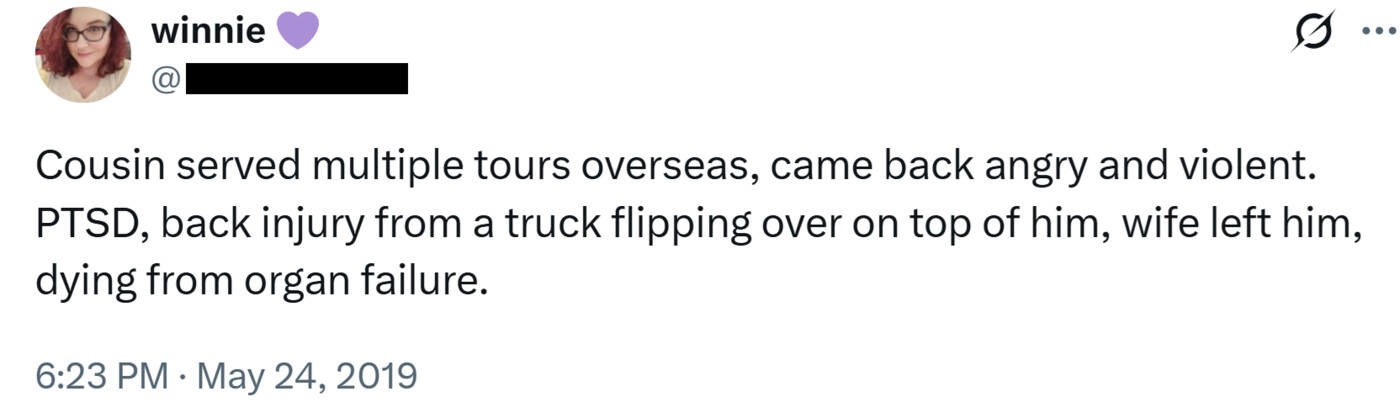
American media bombards us with war propaganda. Almost every video game spreads the myth that combat makes us stronger: more powerful weapons, tougher armor, a bigger health bar, greater fortunes. Hollywood promises that the hero can weather any fight—or, if he can’t, his death will be meaningful and glorious.
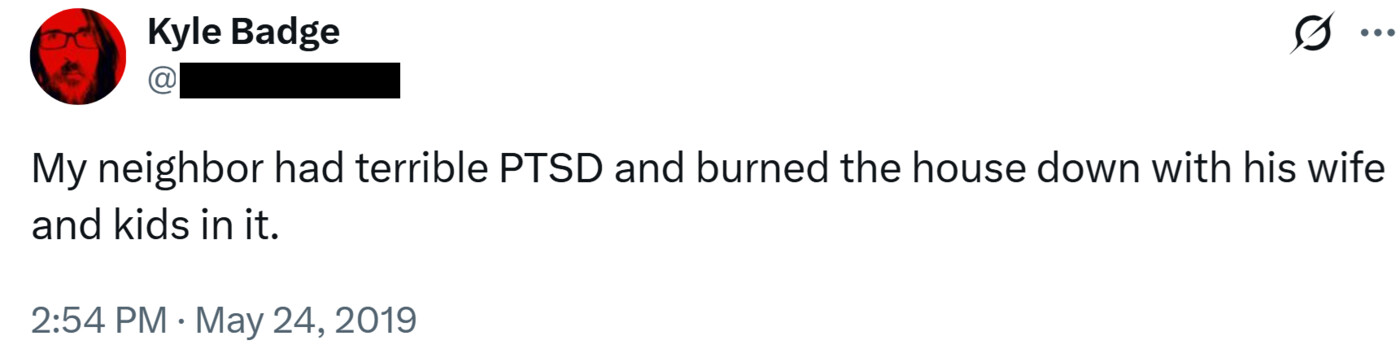
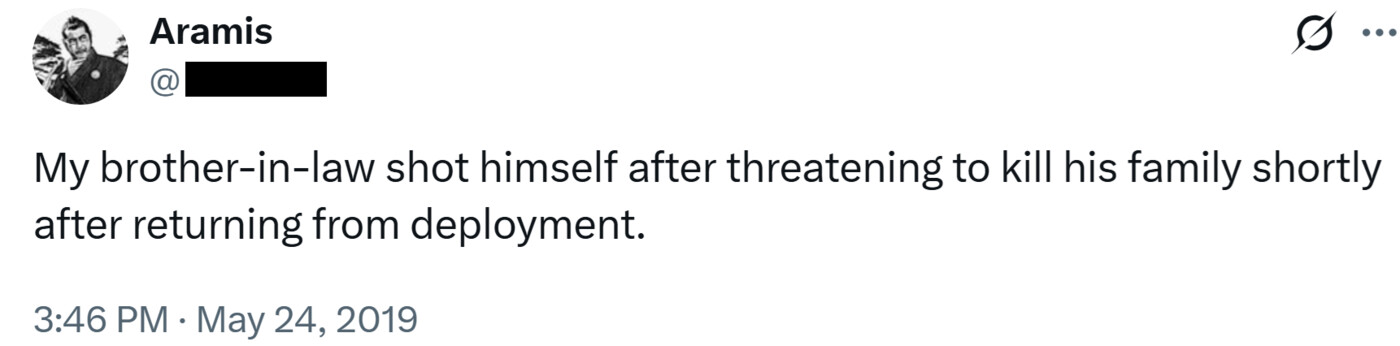
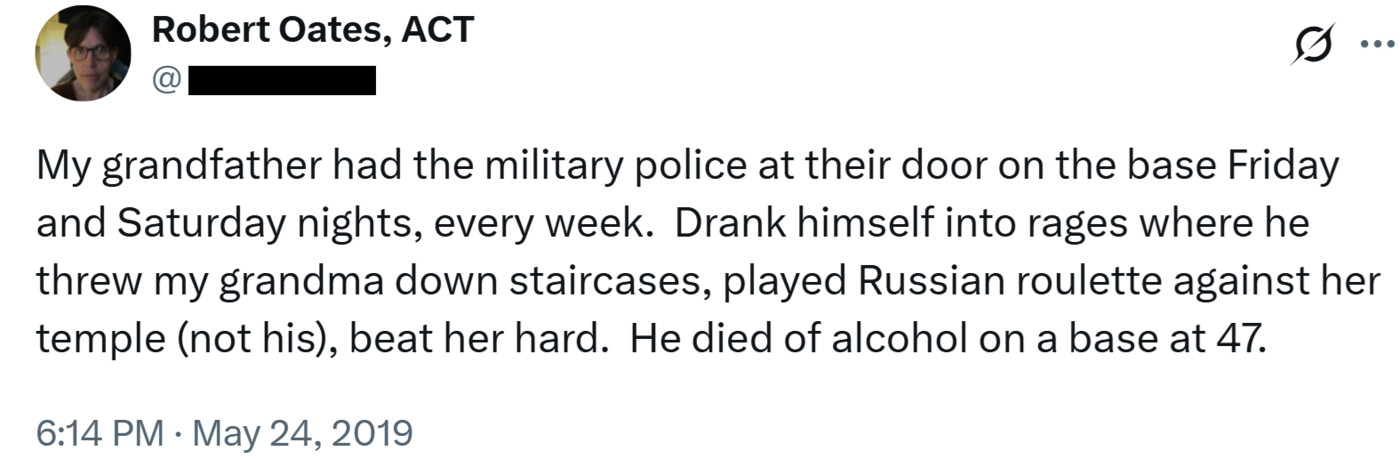
Statistically speaking, the more we are exposed to combat, the more likely we are to be severely harmed, both physically and mentally. This is true for both servicemembers and civilians. As for the families we want to protect, at least one out of every three veterans brings the war home to their family through domestic abuse. Veterans are two to four times more likely to harm their families than their civilian counterparts.
cdn.crimethinc.com/assets/articles/2026/11/11/h4.jpg
cdn.crimethinc.com/assets/articles/2026/11/11/h1.jpg
cdn.crimethinc.com/assets/articles/2026/11/11/h2.jpg
cdn.crimethinc.com/assets/articles/2026/11/11/h3.jpg

After massive troop and draftee resistance during the late 1960s and early 1970s, the US government ended selective compulsory military service (known as “the draft”). The military transitioned to a volunteer force, which means depending on recruits from families with a military tradition, working-class and impoverished enlistees, and whomever else recruiters can trick.
As one commenter pointed out,
cdn.crimethinc.com/assets/articles/2026/11/11/i1.jpg
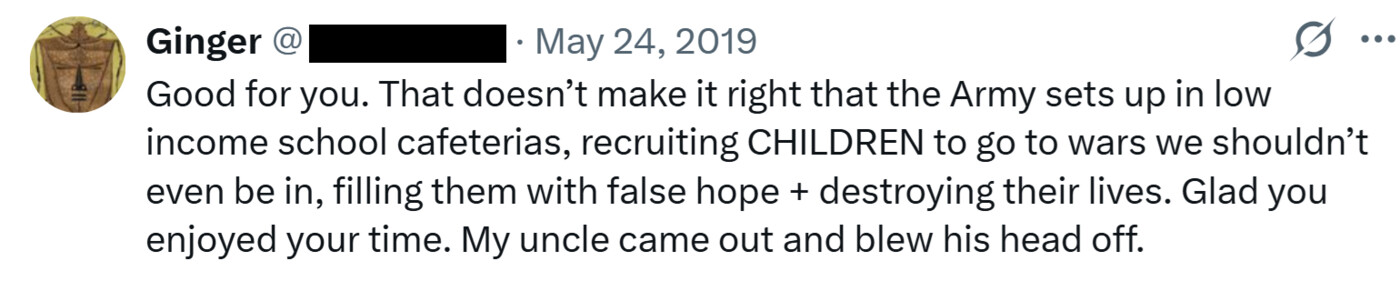
How many people would give recruiters the time of day if they led with the truth?
“How would you like an 11-20% chance of having debilitating PTSD? Or say, a 7-11% chance of severe physical disability? A 32-50% chance you’ll physically or sexually abuse your family? If you’re a woman, I can promise you at least a 25-50% chance that another service member will assault you. Or perhaps you’d like to become one of over 32,000 homeless veterans?”
“But if you want to assault civilians in another country—to kill them and mutilate their bodies—the likelihood of you getting in trouble will be almost zero.”
cdn.crimethinc.com/assets/articles/2026/11/11/j4.jpg
cdn.crimethinc.com/assets/articles/2026/11/11/j1.jpg
cdn.crimethinc.com/assets/articles/2026/11/11/j2.jpg
cdn.crimethinc.com/assets/articles/2026/11/11/j3.jpg

If the benefits are bait to lure the young, the desperate, and the bored, what about the narratives that draw those who seek a higher calling?
Almost every war America has fought in the last hundred years has not achieved its stated goals. Supposedly, the US military invaded Iraq to bring stability, peace, and democracy to the region; in fact, it brought years of civil war and death. Most US citizens still cannot name the current Iraqi head of state or describe the political situation in Iraq. Twenty years of fighting in Afghanistan and Vietnam resulted in the Taliban and Việt Cộng acquiring more power than they started with. The Korean War has technically never ended; pick your poison—the poverty and hunger of a communist dictatorship or the sterility, inequality, and exploitation of the modern capitalist world.
We are told that World War II was fought to end authoritarianism and establish global peace. Yet fascism proper remained in power Spain and Portugal, while explicitly white supremacist governments retained control in places like South Africa—and the US government maintained supportive relations with all of them. In the wake of the war, humanity faced the threat of nuclear annihilation in a new Cold War. The military-industrial complex became one of the most powerful forces in society, and all kinds of violent and humiliating forms of oppression continued to exist in the victorious countries as well as the defeated ones.
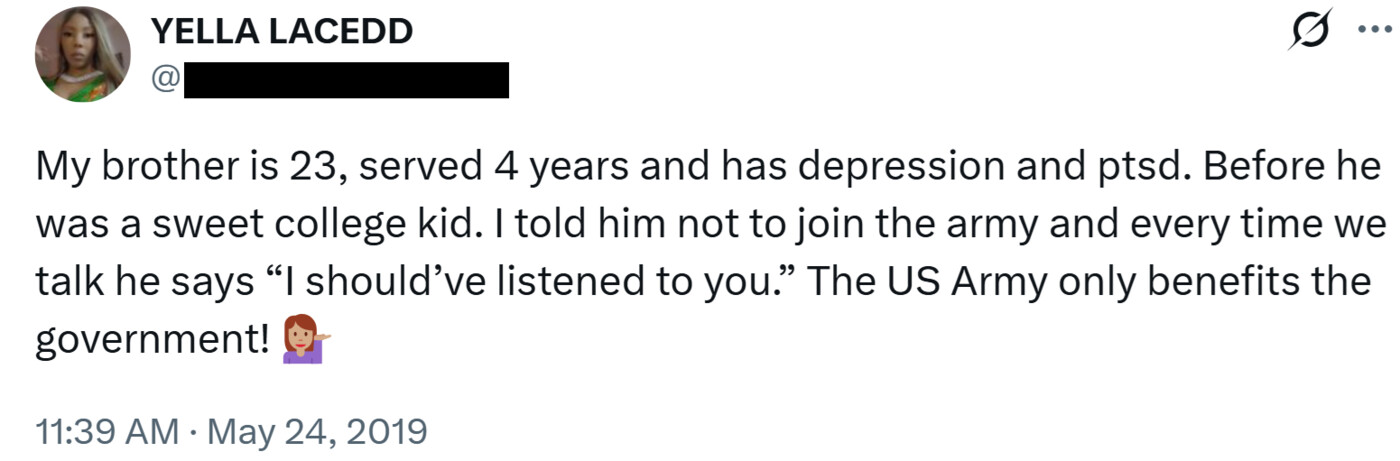
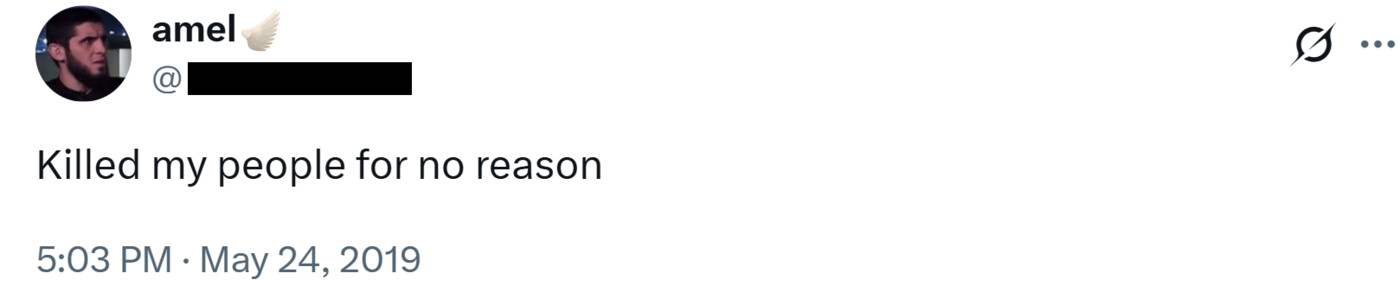
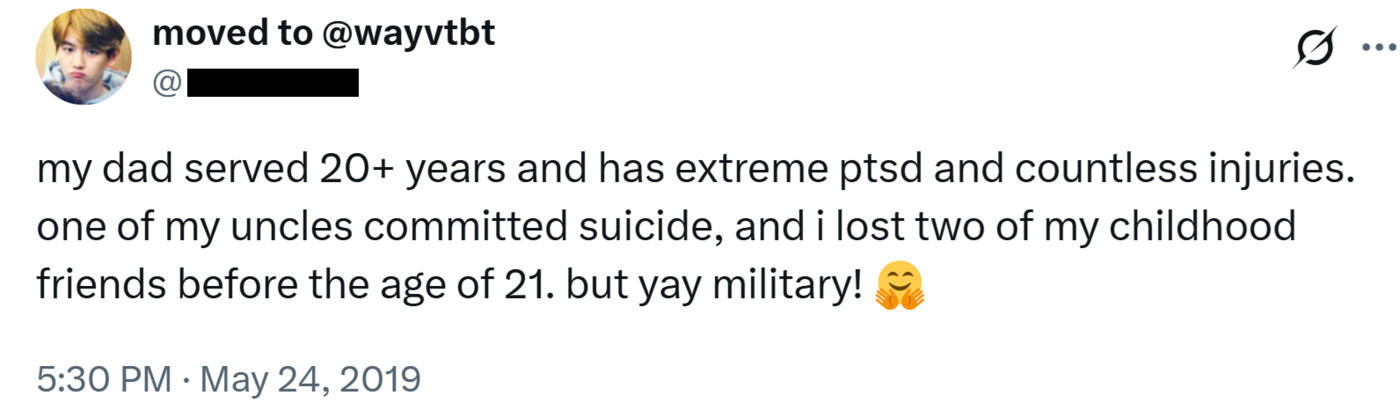
But at least the Great War—the war fought to end all wars—brought lasting peace to the world. Right?
cdn.crimethinc.com/assets/articles/2026/11/11/k1.jpg
cdn.crimethinc.com/assets/articles/2026/11/11/k2.jpg
cdn.crimethinc.com/assets/articles/2026/11/11/k3.jpg
cdn.crimethinc.com/assets/articles/2026/11/11/k4.jpg
cdn.crimethinc.com/assets/articles/2026/11/11/k5.jpg
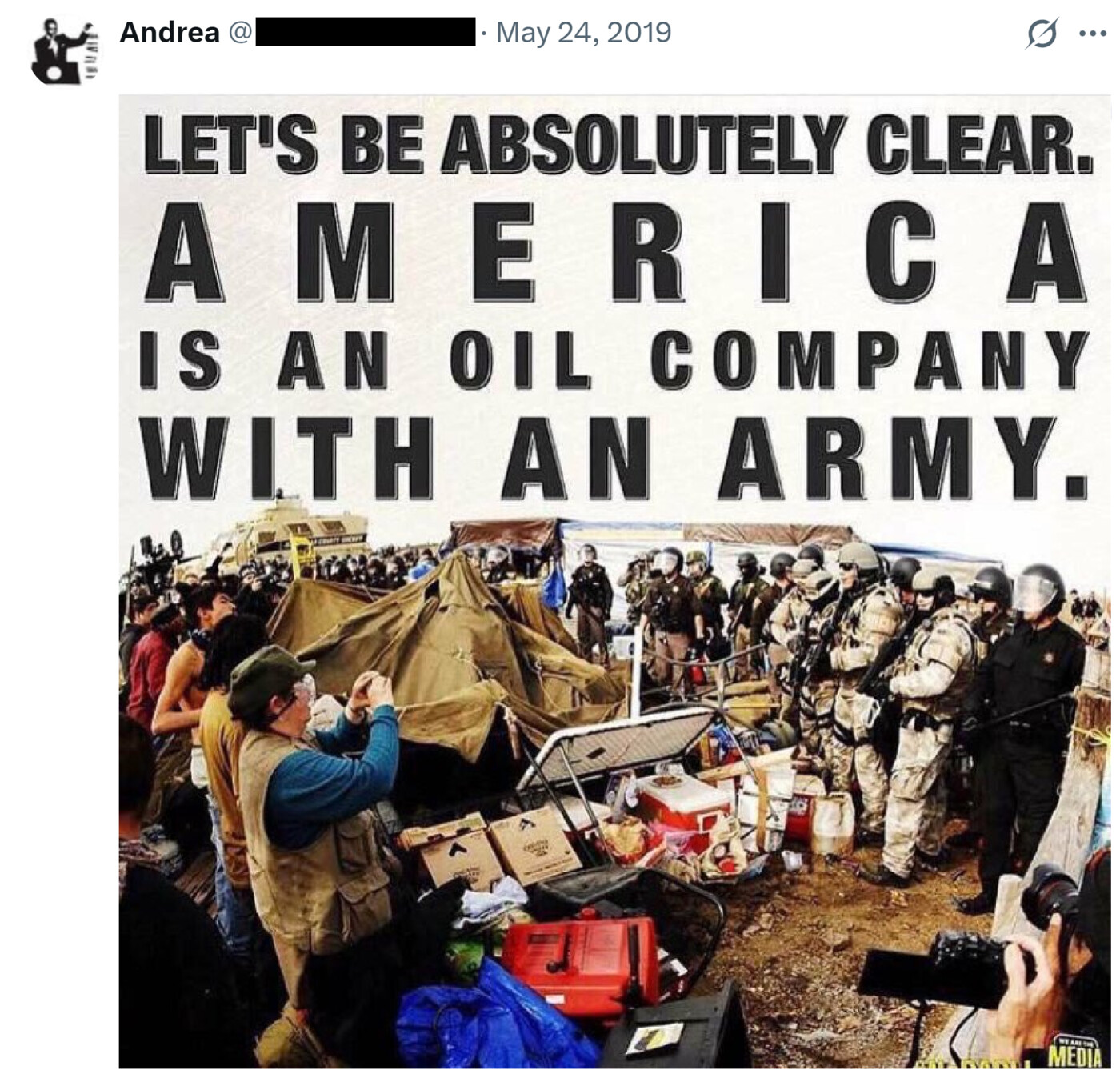
War is a racket. The rich and powerful use those below them as cannon fodder as they maneuver to acquire more wealth and power. In 2003, the oil reserves of Iraq were the third largest in the world. Shortly after the US invasion and toppling of Saddam Hussein’s government, the reserves were privatized and contracted to Western companies, generating windfall profits for a few lucky capitalists.
A popular anti-war chant at the time exhorted, “ExxonMobil, BP, Shell, take your war and go to hell!”
cdn.crimethinc.com/assets/articles/2026/11/11/l1.jpg
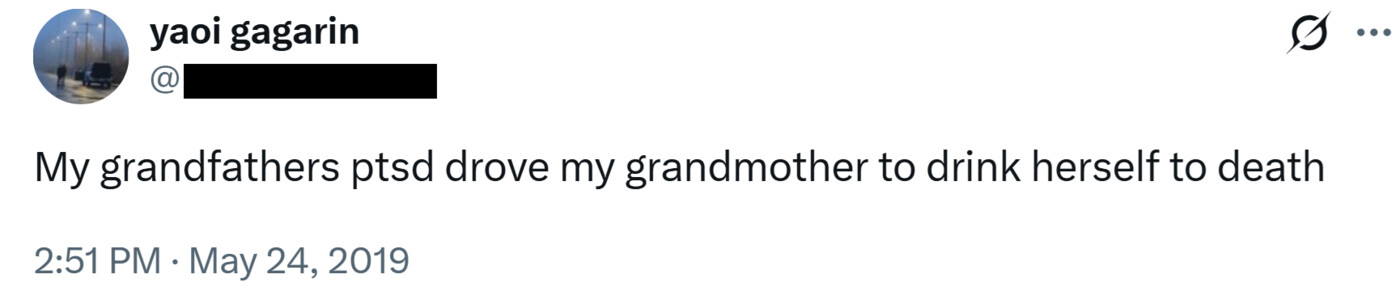
cdn.crimethinc.com/assets/articles/2026/11/11/l2.jpg
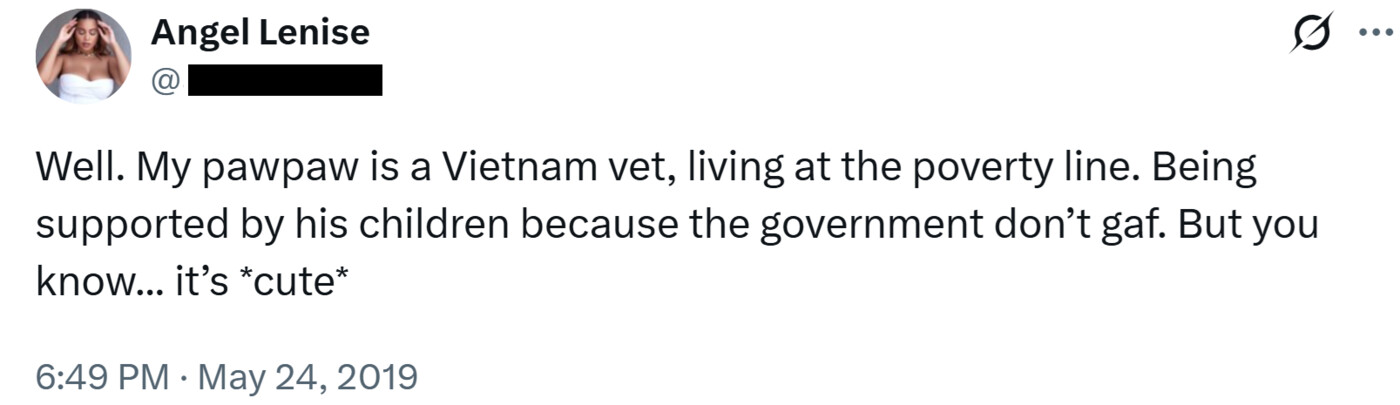
cdn.crimethinc.com/assets/articles/2026/11/11/l3.jpg
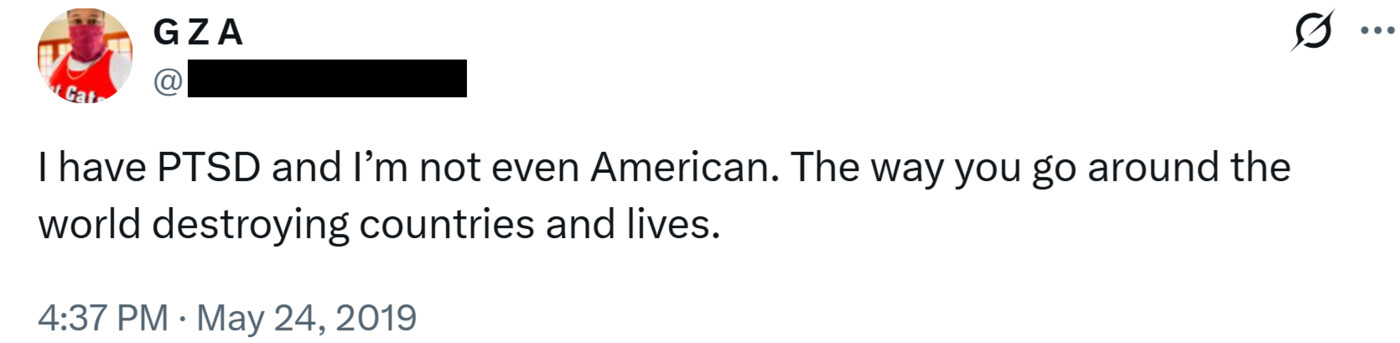
cdn.crimethinc.com/assets/articles/2026/11/11/l4.jpg
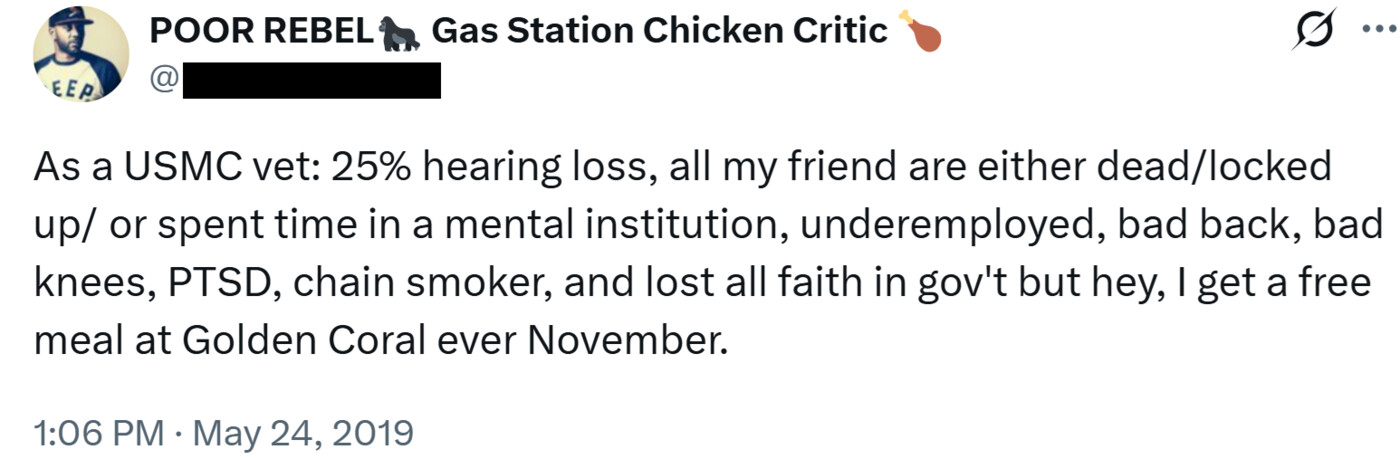
cdn.crimethinc.com/assets/articles/2026/11/11/l5.jpg
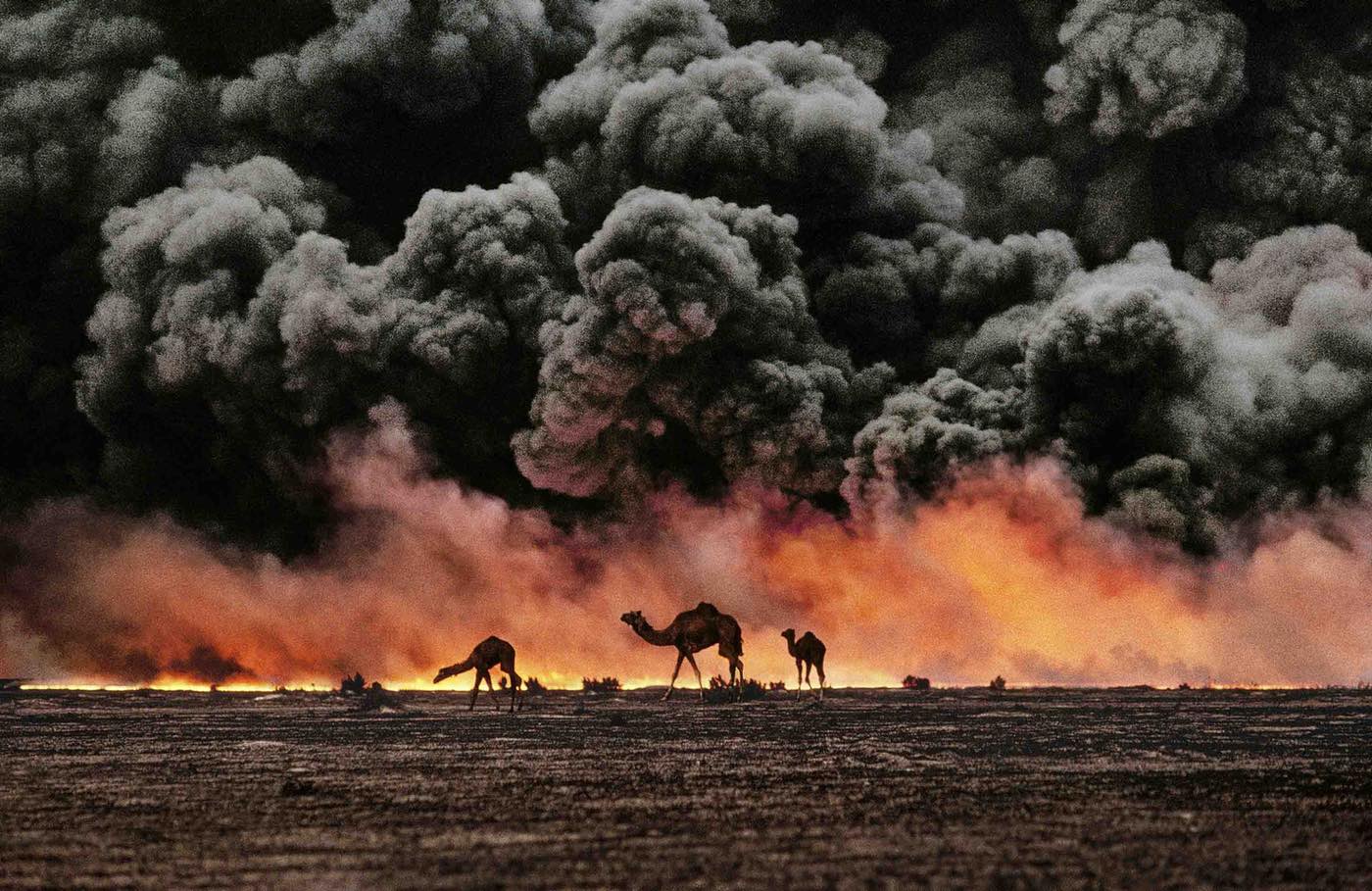
While militarists justified the War on Terror with rhetoric about fighting evildoers, the Bush administration sought to establish footholds on various continents in order to maintain military dominance throughout the world. One of the reasons the Afghan War lasted as long as it did is that the military industry prolonged it for profit. The United States government spent over $21,000,000,000,000 on the War on Terror.
Weapons manufacturers made a killing. During the years 2020-2024 alone—in other words, well after the Iraq and Afghanistan wars were over—$771 billion in Pentagon contracts went to Lockheed Martin ($313 billion), RTX (formerly Raytheon, $145 billion), Boeing ($115 billion), General Dynamics ($116 billion), and Northrop Grumman ($81 billion).
cdn.crimethinc.com/assets/articles/2026/11/11/2.jpg
cdn.crimethinc.com/assets/articles/2026/11/11/m1.jpg
cdn.crimethinc.com/assets/articles/2026/11/11/m2.jpg
cdn.crimethinc.com/assets/articles/2026/11/11/m3.jpg
cdn.crimethinc.com/assets/articles/2026/11/11/m4.jpg
cdn.crimethinc.com/assets/articles/2026/11/11/m5.jpg
Even if we set aside the question of how the US government came to have $21 trillion at its disposal in the first place—think about what that $21 trillion spent on the War on Terror could have been used for instead. What do you need to live a happy, fulfilling life? What do the peoples of Iraq and Afghanistan and Vietnam need? How much healthcare and education could have been provided? Genuine healthcare, not what the VA and the for-profit hospitals crank out or deny. And real education—skills people need and want for life, knowledge based on our passions—not the traps that pass for schools in America, one part daycare and one part prison.
But thank goodness the US government didn’t go to the peoples of Iraq and Afghanistan and meet their needs. Fundamentalist extremism would surely have ballooned in popularity after that!
cdn.crimethinc.com/assets/articles/2026/11/11/n1.jpg
cdn.crimethinc.com/assets/articles/2026/11/11/n2.jpg
cdn.crimethinc.com/assets/articles/2026/11/11/n3.jpg
cdn.crimethinc.com/assets/articles/2026/11/11/n4.jpg

cdn.crimethinc.com/assets/articles/2026/11/11/n5.jpg
It is not surprising that the US government and the warmongers didn’t meet the needs of the people they claimed to be liberating. They need new terrorists, or at least the threat of new terrorists, to keep up the racket. Without the fear of outsiders menacing America, how would they arrange trillions for war?
cdn.crimethinc.com/assets/articles/2026/11/11/o2.jpg
cdn.crimethinc.com/assets/articles/2026/11/11/o3.jpg

cdn.crimethinc.com/assets/articles/2026/11/11/o1.jpg
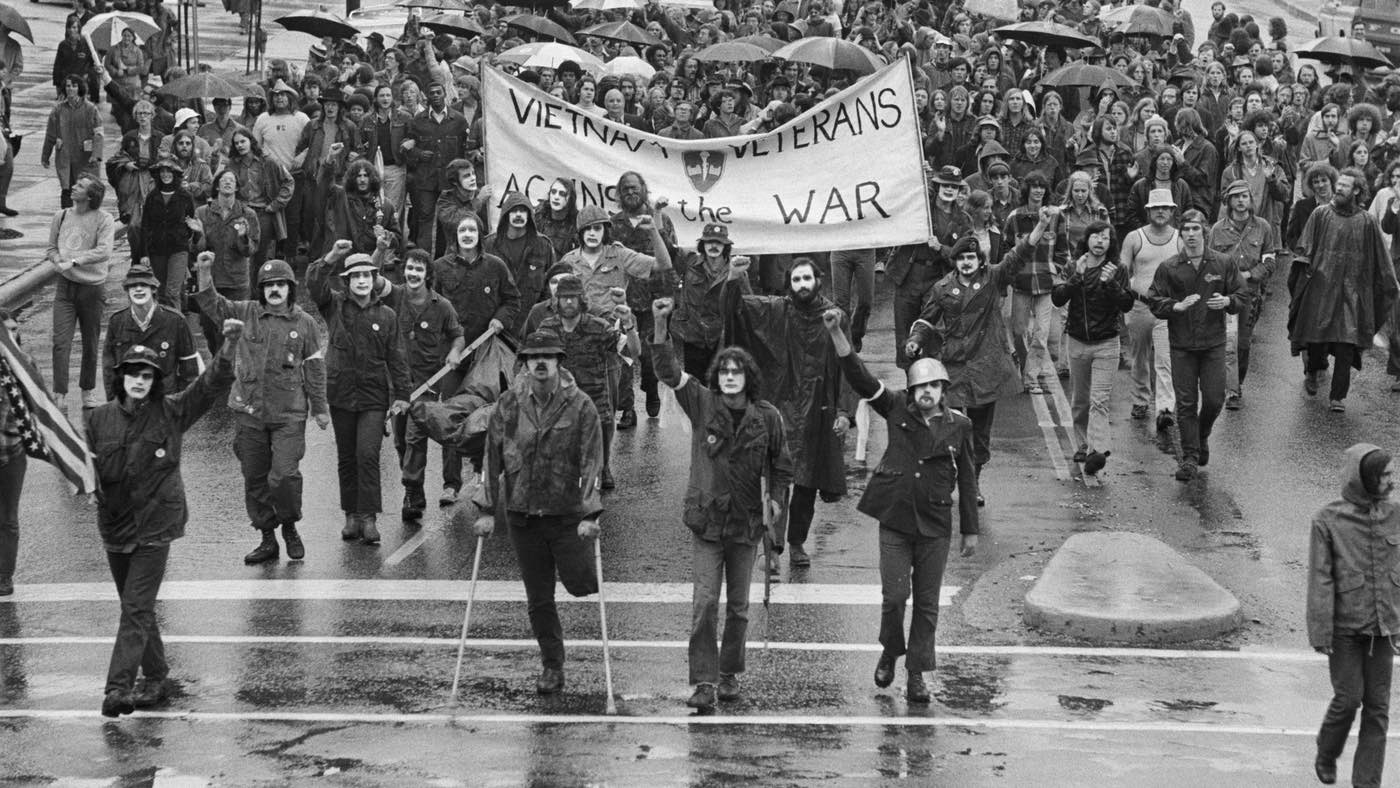
We could tally up who profited on the Vietnam War or World War I with similar results. The protests and revolutions that broke out around the world during and after both of those wars indicate how millions of people understood what those wars were truly about. They showed successive generations that militarism, capitalism, nationalism, and authoritarianism only benefit those at the top.
cdn.crimethinc.com/assets/articles/2026/11/11/3.jpg
cdn.crimethinc.com/assets/articles/2026/11/11/p1.jpg
cdn.crimethinc.com/assets/articles/2026/11/11/p2.jpg
cdn.crimethinc.com/assets/articles/2026/11/11/p3.jpg
cdn.crimethinc.com/assets/articles/2026/11/11/p4.jpg
cdn.crimethinc.com/assets/articles/2026/11/11/p5.jpg

Militarism always preys on the young and vulnerable, luring them with tales of heroism, riches, and duty. The young and desperate will serve their countries until they realize that their countries do not serve them.
No governments ever have. None ever will.
cdn.crimethinc.com/assets/articles/2026/11/11/w1.jpg
cdn.crimethinc.com/assets/articles/2026/11/11/w2.jpg
cdn.crimethinc.com/assets/articles/2026/11/11/w3.jpg
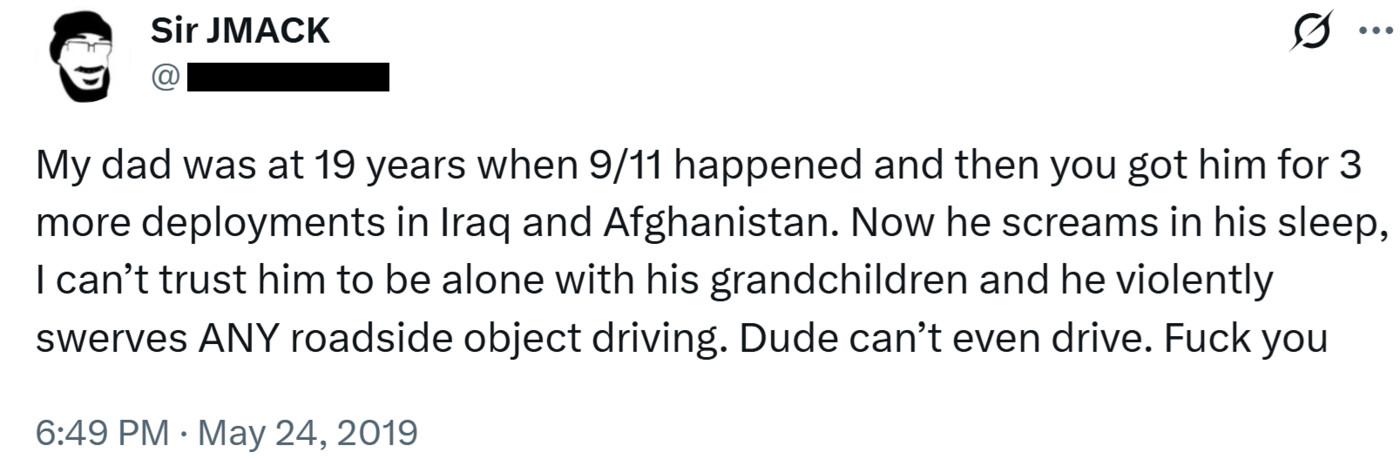
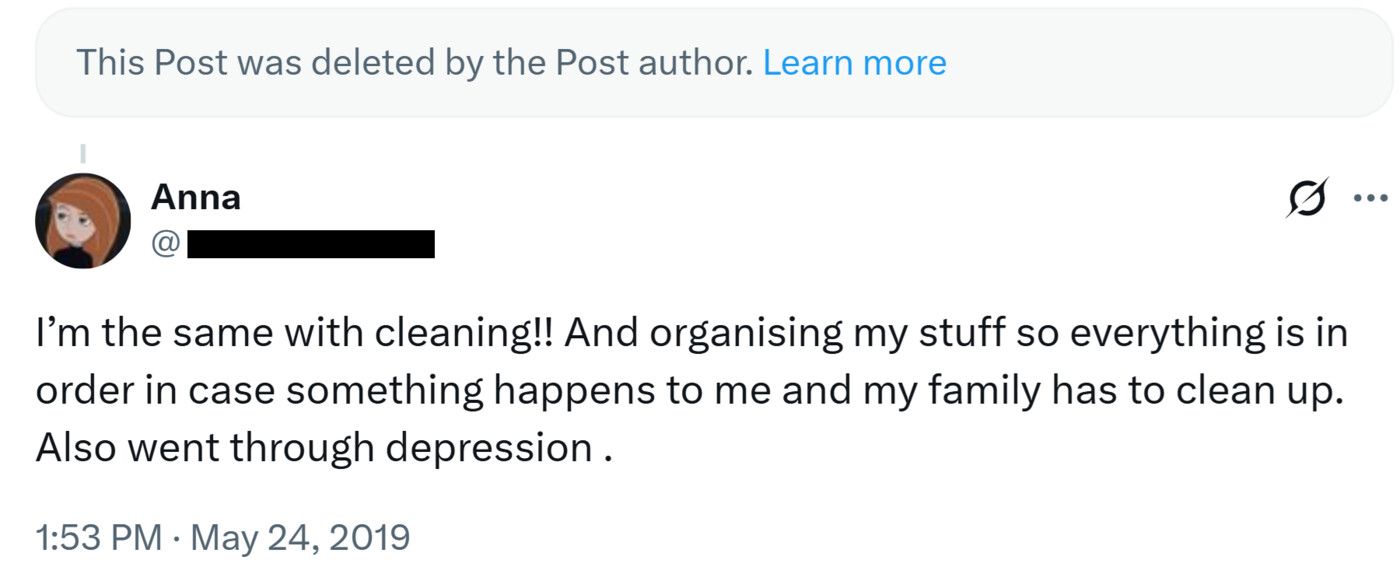
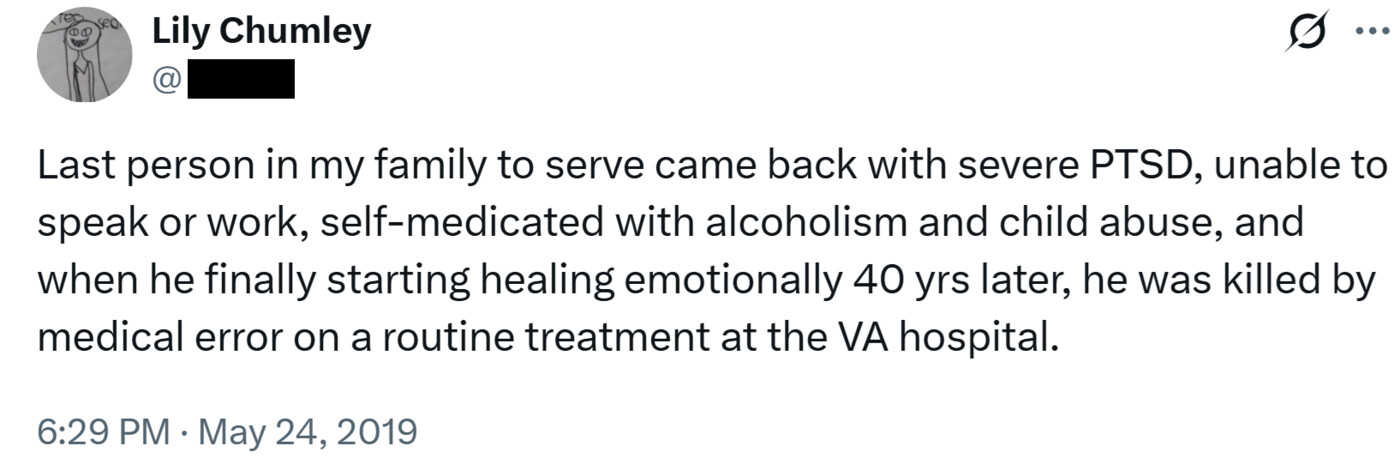
The public can no longer view all of the replies to “How has serving impacted you?” The website still claims to retain 8.7k of them, but they are not accessible. In part, this is because people deleting their accounts, whether out of boredom with the platform or because they don’t want to support Elon Musk’s embrace of techno-fascism.
The X algorithm promotes conservative and extreme-right content, suppresses news from traditional corporate media outlets, and promotes “independent” but usually conservative or far-right influencers. When Elon Musk bought Twitter, he immediately purged high-profile accounts belonging to anarchists, anti-fascists, and far-left users. All of these are obstacles to using what remains of the platform under his ownership.
cdn.crimethinc.com/assets/articles/2026/11/11/z1.jpg
cdn.crimethinc.com/assets/articles/2026/11/11/z2.jpg
cdn.crimethinc.com/assets/articles/2026/11/11/z3.jpg
In reaction to the neoconservatives in the Bush administration who led the invasions of Afghanistan and Iraq, many American conservatives shifted toward paleo-conservatism during the years-running Iraq and Afghanistan Wars. Some even became openly critical of war. Many believed that, in casting votes for Donald Trump, they were electing a politician who would keep the United States out of wars. But wherever there is nationalism, wherever state power is concentrated in the hands of an aspiring autocrat, war is never far behind.
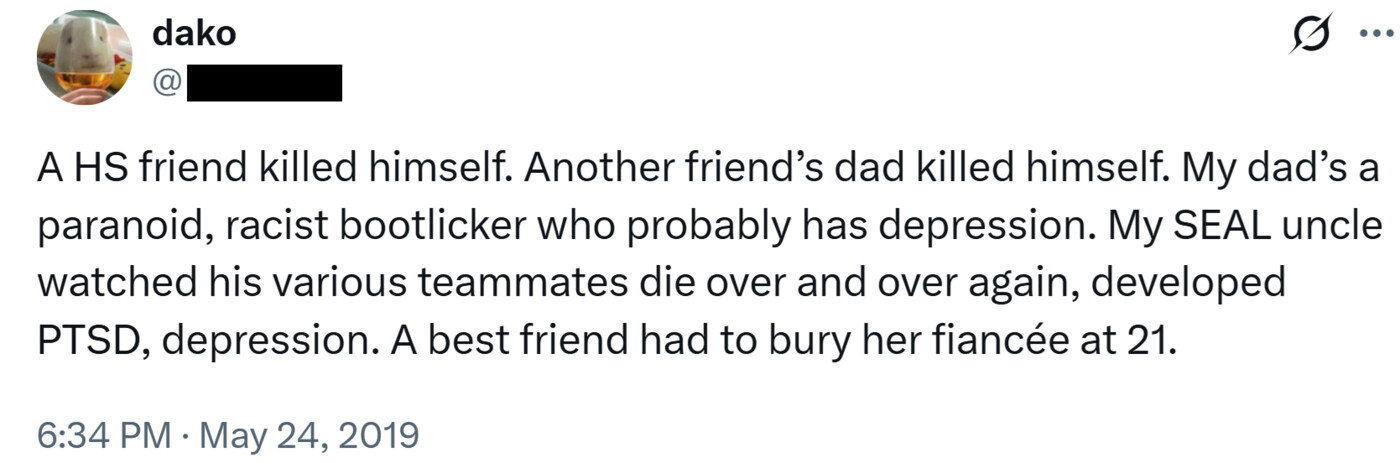
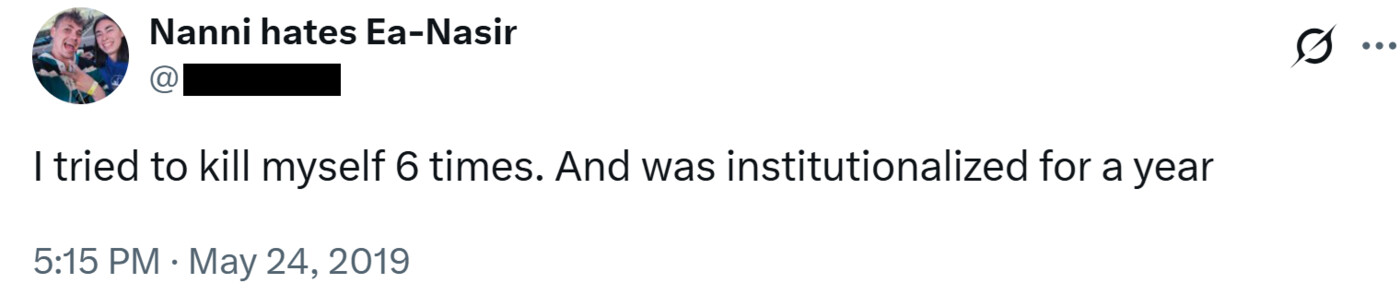
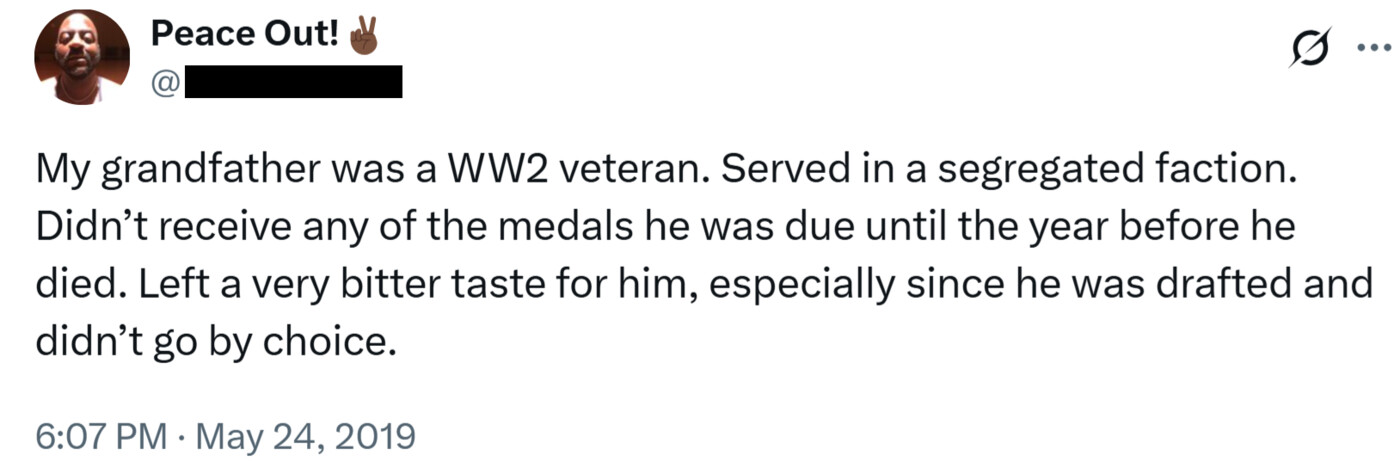
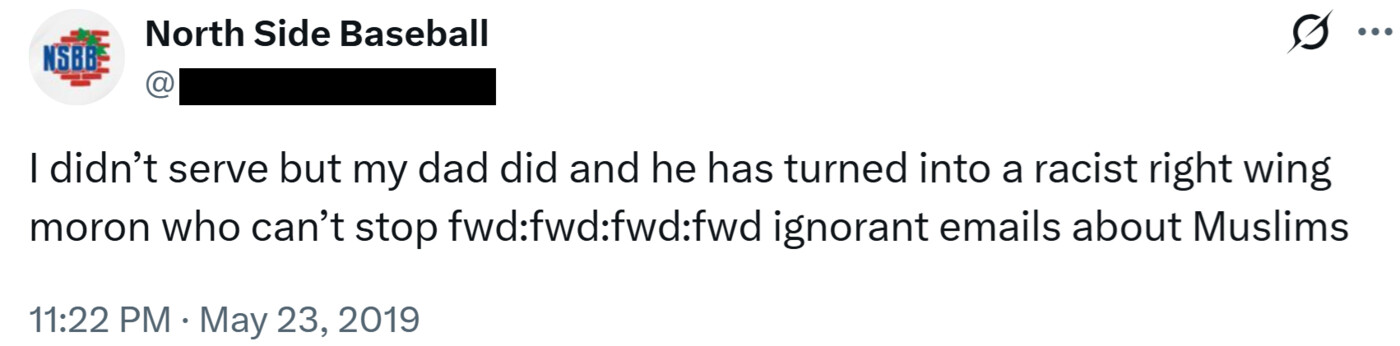
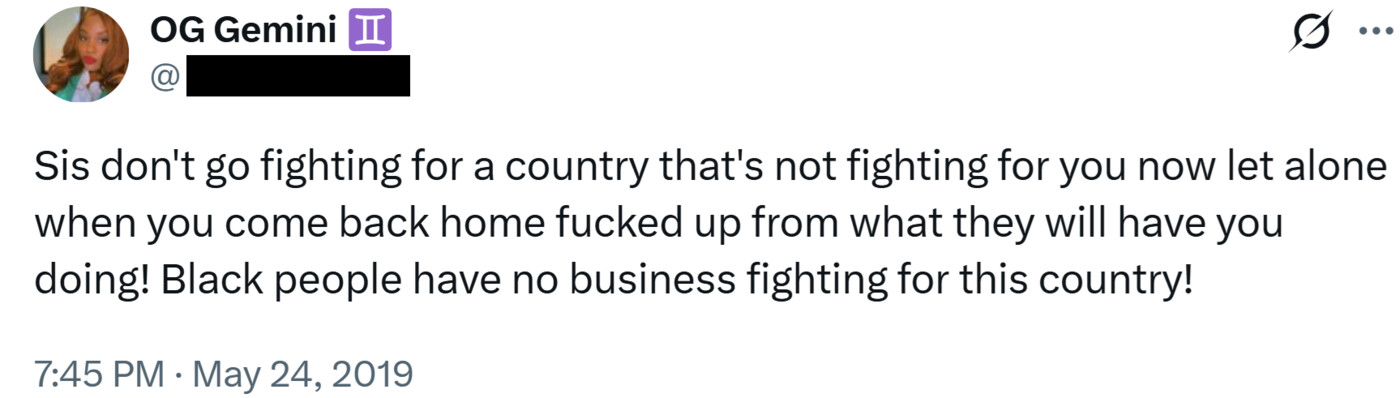
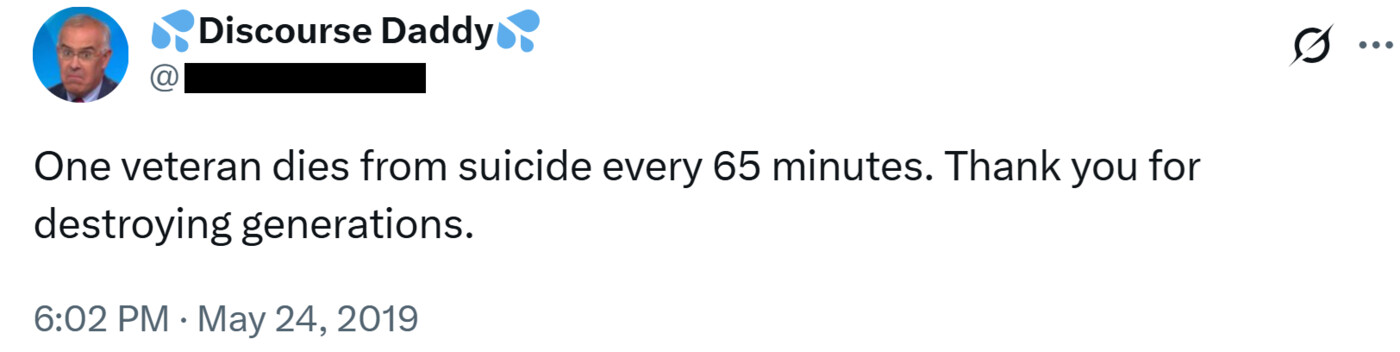
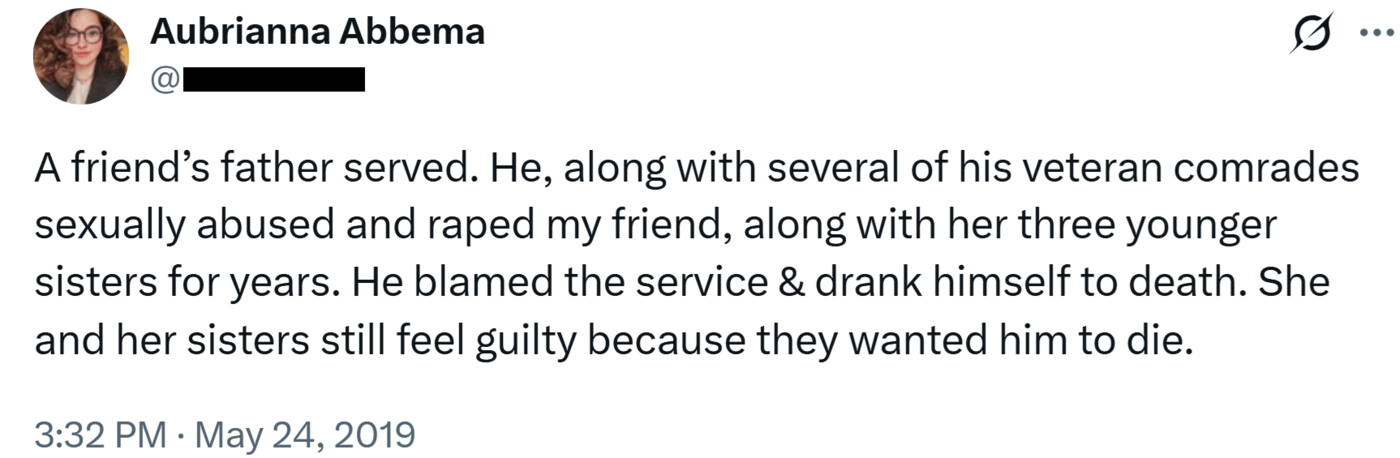
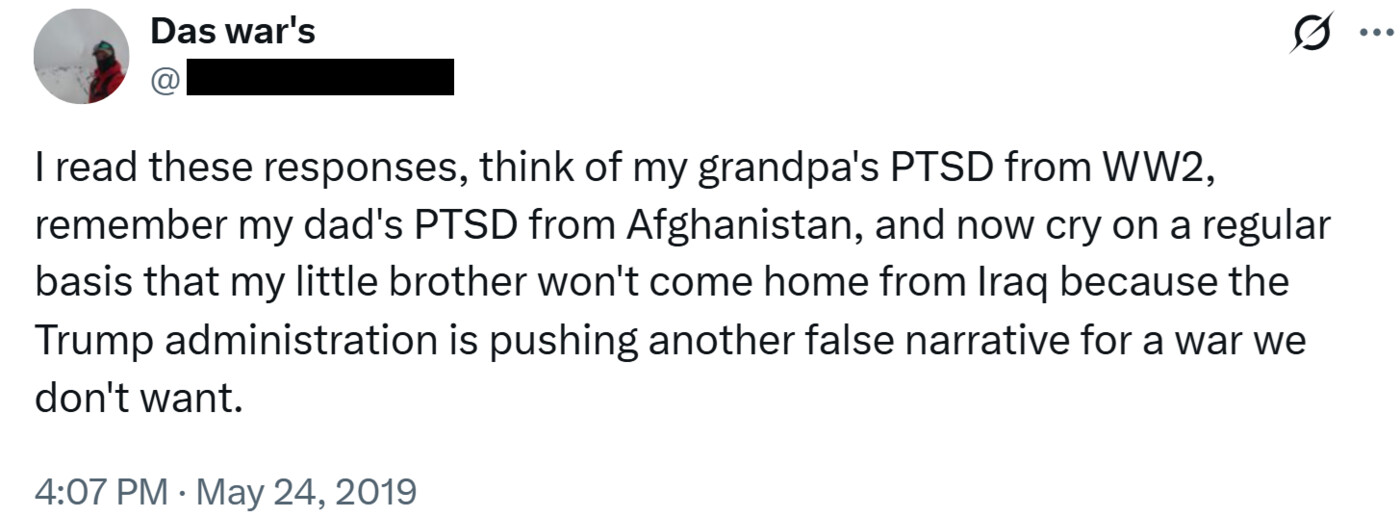
The answers to “How has serving impacted you?” comprise an interracial, multi-generational, gender-inclusive condemnation of the US military that cuts across the political spectrum. This is more of a liability to X’s brand of techno-fascism than an asset. Elon Musk’s platform has not buried them entirely, yet, but it’s not the sort of thing that he and his underlings would want people to easily and completely access. In view of that, it is unusual that so many damning tweets remain—a testament to how dangerous it is to trust your life to the military. It is worth documenting them before they disappear.
If you or your family members are currently serving in the US military, please contact the GI Rights Hotline at 1-877-447-4487 or just go AWOL. There is no need to stay in the service of a violent front for weapons and defense corporations. There’s no reason to die for their benefit, and there’s absolutely no excuse to become complicit in what the US government has done to to the people of Afghanistan, Iraq, and Iran.
cdn.crimethinc.com/assets/articles/2026/11/11/q1.jpg
cdn.crimethinc.com/assets/articles/2026/11/11/q2.jpg
cdn.crimethinc.com/assets/articles/2026/11/11/q3.jpg
cdn.crimethinc.com/assets/articles/2026/11/11/q4.jpg
cdn.crimethinc.com/assets/articles/2026/11/11/q5.jpg
cdn.crimethinc.com/assets/articles/2026/11/11/q6.jpg
cdn.crimethinc.com/assets/articles/2026/11/11/q7.jpg
cdn.crimethinc.com/assets/articles/2026/11/11/q8.jpg
cdn.crimethinc.com/assets/articles/2026/11/11/q9.jpg
cdn.crimethinc.com/assets/articles/2026/11/11/q10.jpg
cdn.crimethinc.com/assets/articles/2026/11/11/q11.jpg
cdn.crimethinc.com/assets/articles/2026/11/11/q13.jpg