Basic Banalities Concerning the January 31 Demonstration in Turin
:Reflections on Conflict Following a Night of Street Fighting in Italy


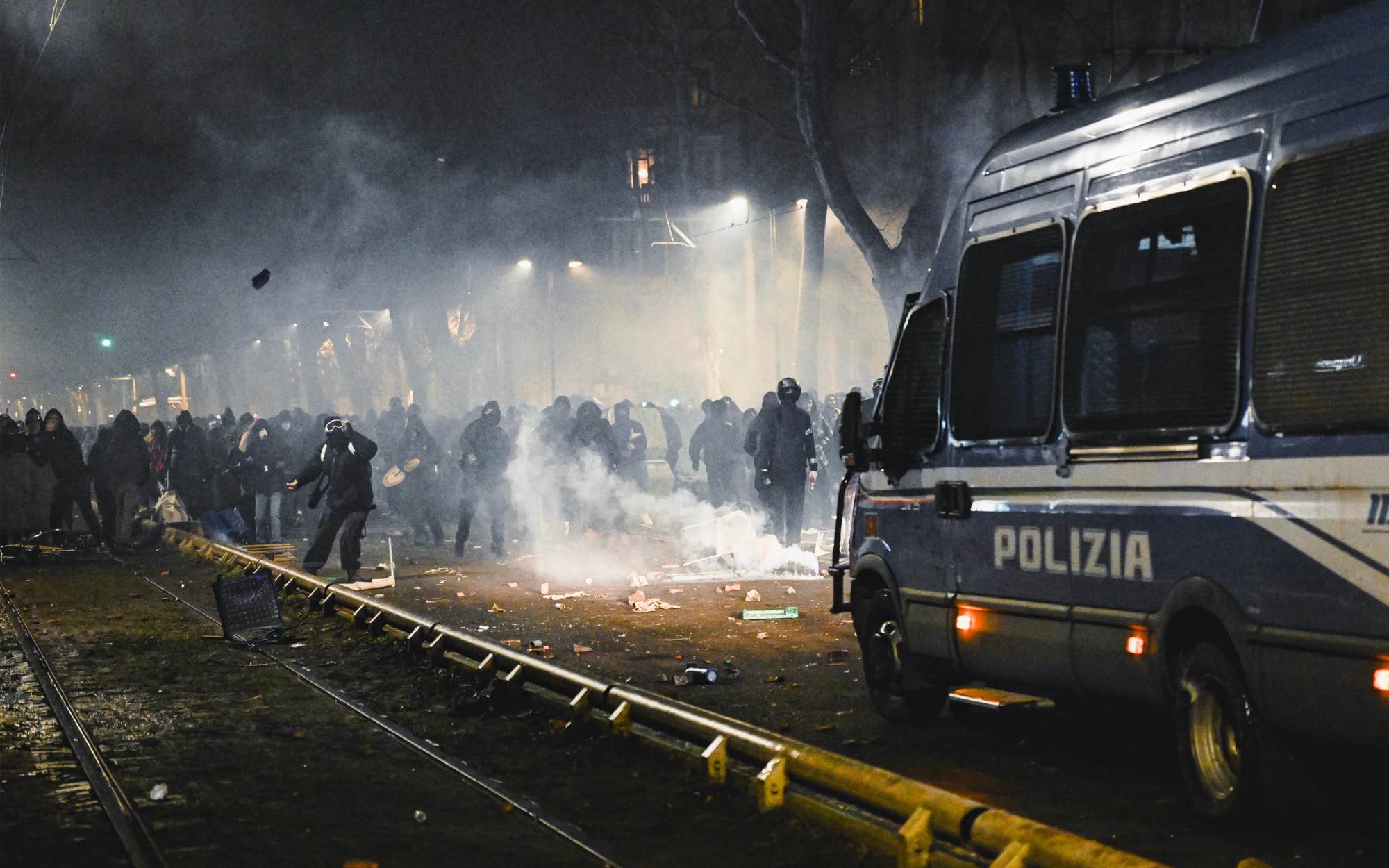
On December 18, 2025, police evicted the historic Askatasuna social center in Turin, which had been squatted since 1996. After an initial demonstration called immediately after the eviction, a call circulated for a second major demonstration on January 31.
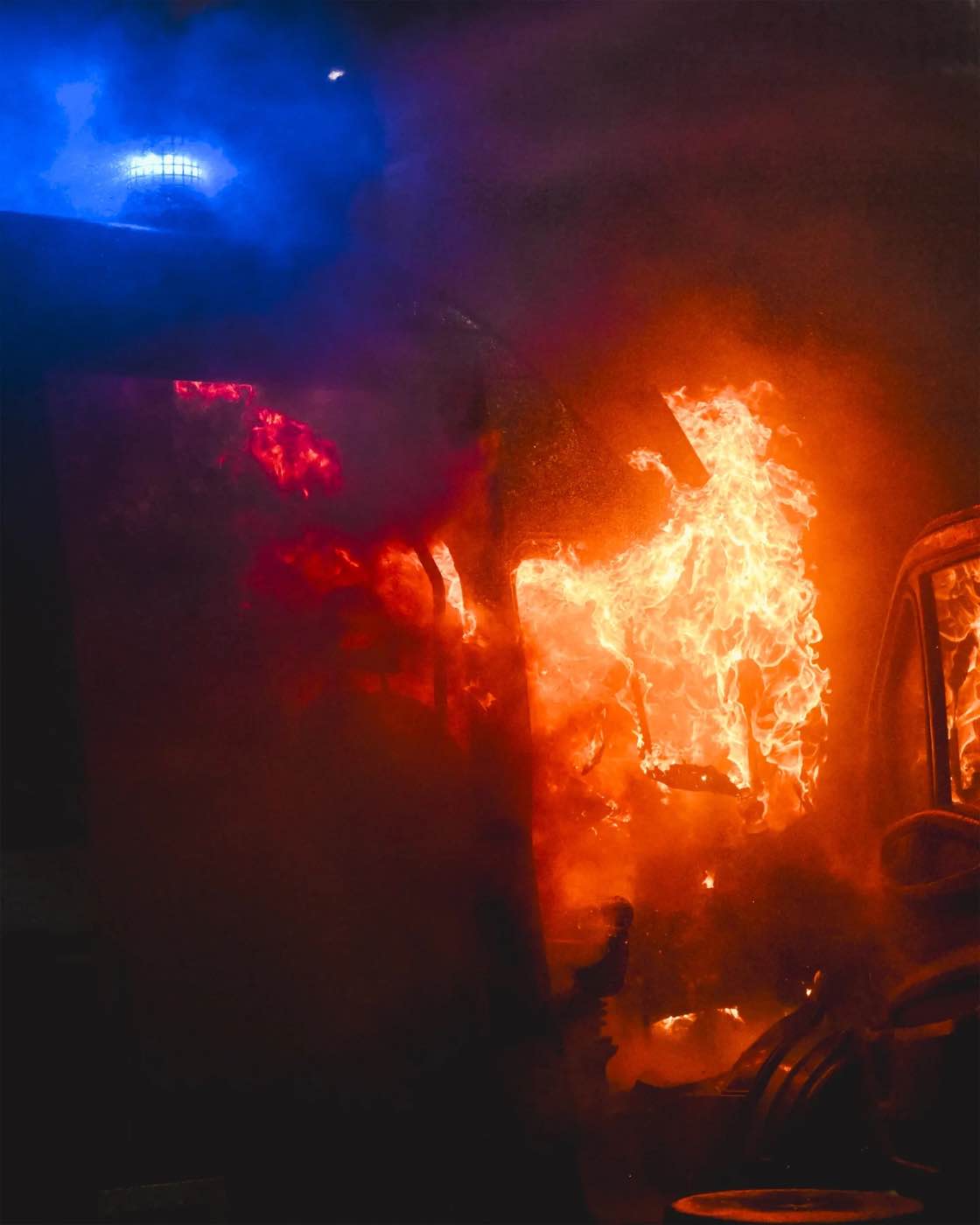
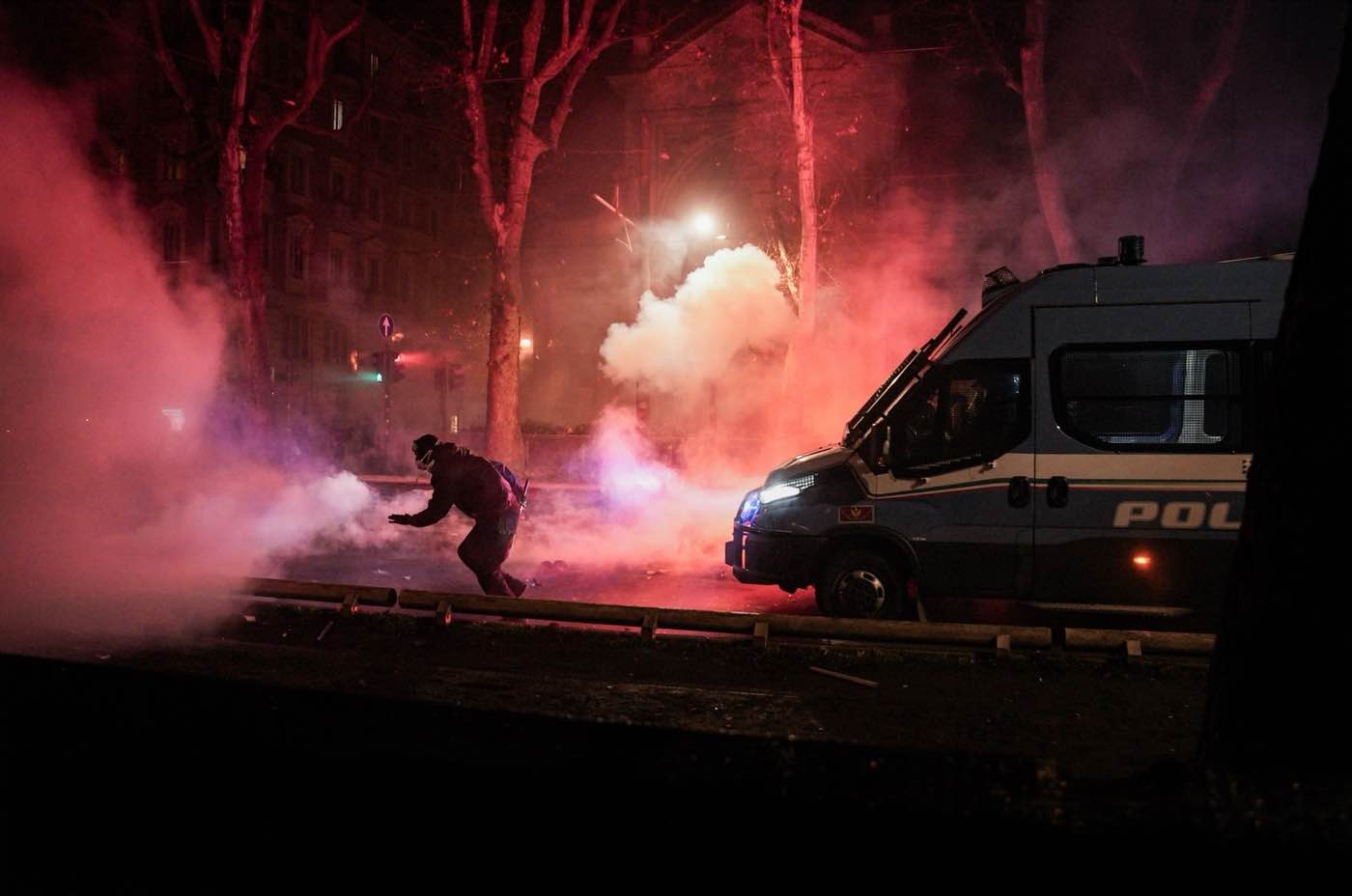
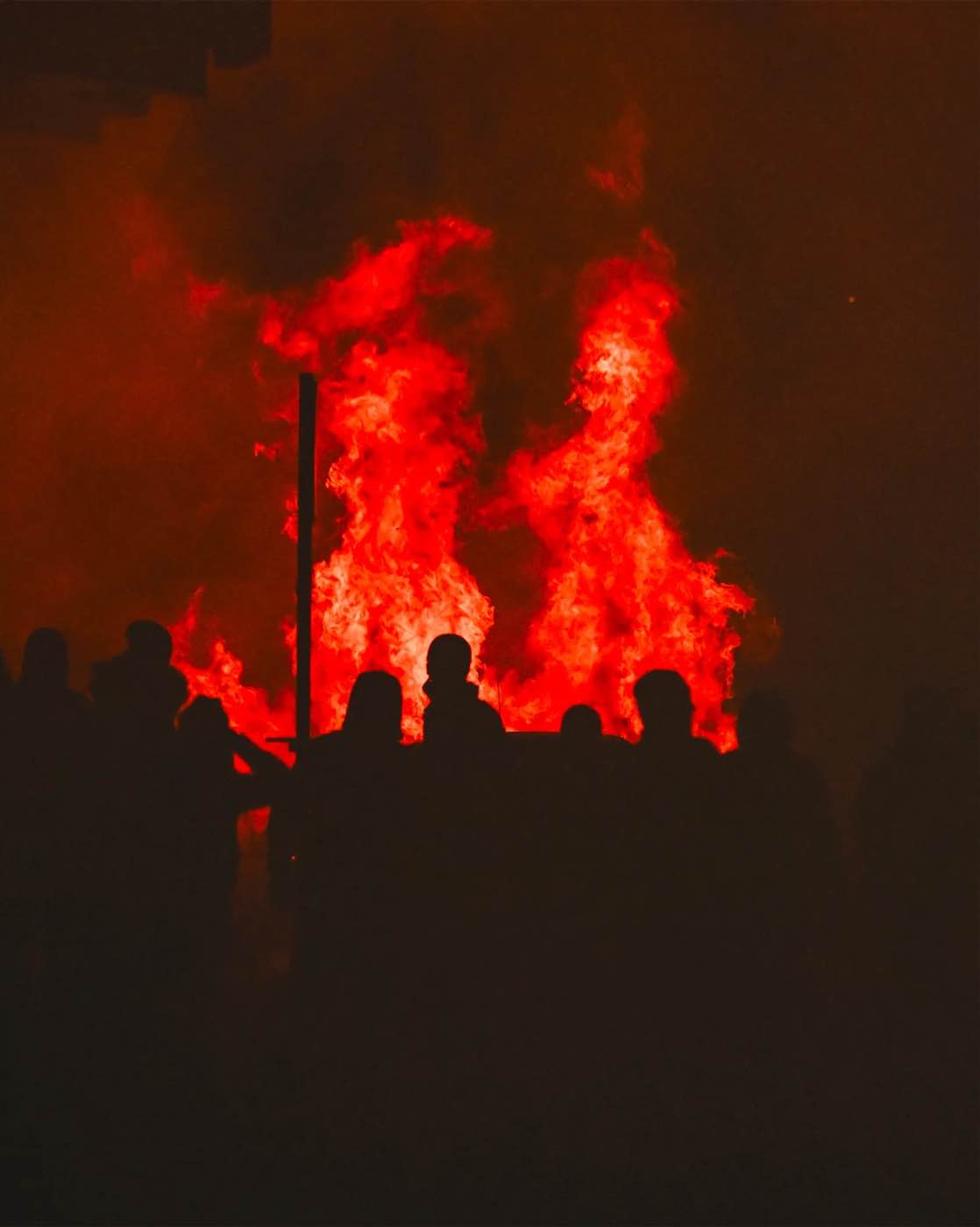
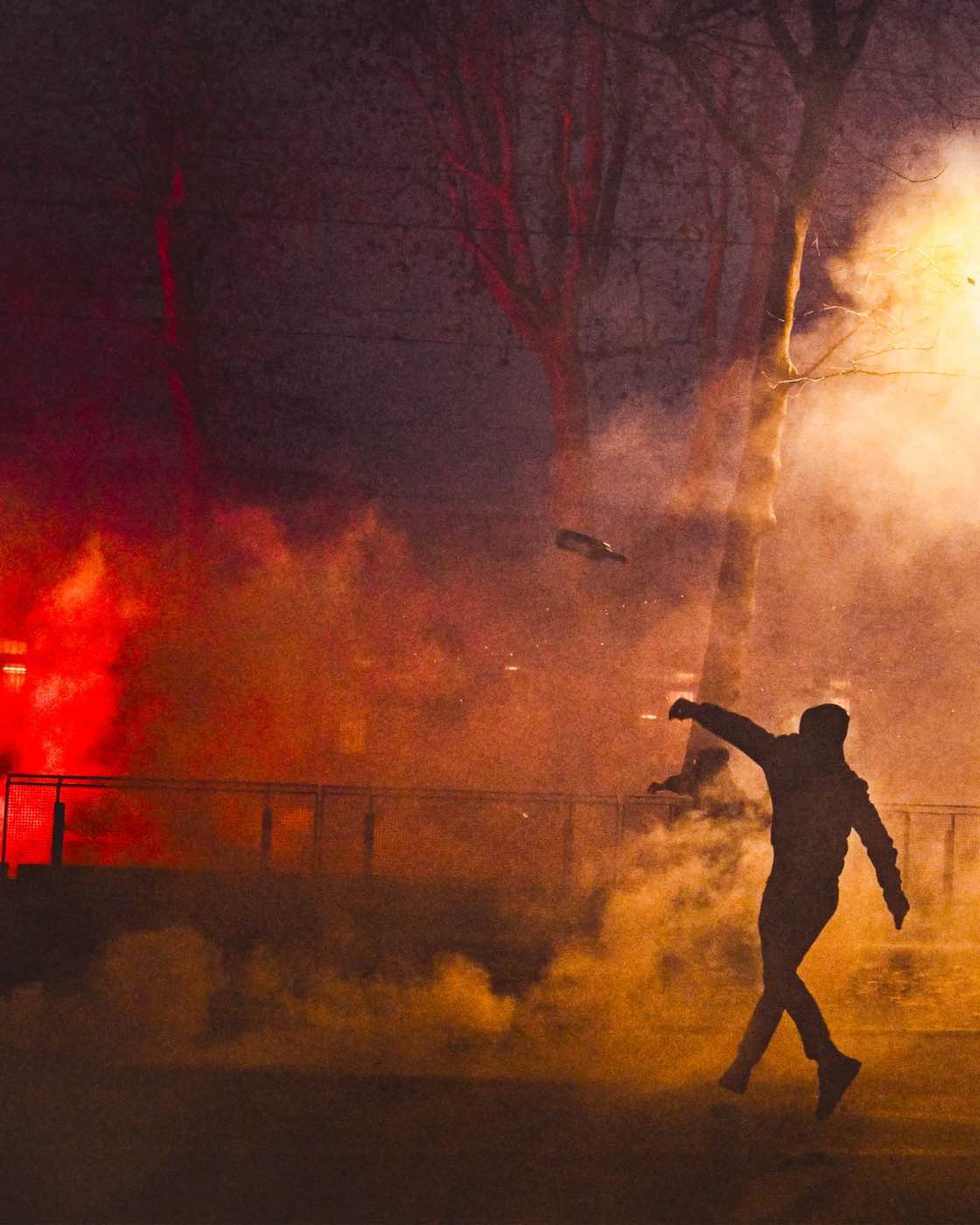
Newspapers report that 50,000 people took the streets. In Corso Regina Margherita, the street where the social center was located, clashes with the police continued for several hours. An armored vehicle went up in flames; videos circulated on social media showing a policeman who, left alone, was beaten by participants in the demonstration. In general, the march was characterized by an intensity of confrontation that is extraordinary in Italy today.
Something is changing in the Italian landscape. The pro-Palestinian movement that erupted in support of the flotillas that sailed for Gaza in fall 2025 drew millions of participants into the streets, including a new generation that had not previously participated in direct action. The events in Turin last month show that this momentum has not abated. While authoritarianism is gaining power all around the world, we are also seeing signs of ungovernable rage in the general population.
Here, we present a reflection on the demonstration of January 31 that recently appeared in Italian.
cdn.crimethinc.com/assets/articles/2026/02/07/1.jpg
1. The best legacy that the tradition of social centers could leave to younger generations is a furious commemoration of its funeral.
January 31 was several things at once. It was a massive, cross-sectional march, the belated recomposition of the various pieces of an antagonistic left in crisis, crushed between the advance of the reactionary right and the absolute political imbecility of the progressive front, a last gasp of the long experience of social centers that is now coming to an end. A last gasp of a trajectory that certainly found one of its most conflictual expressions in the Turin social center [Askatasuna], but which seems to have been caught in an unstoppable downward spiral for some time now. We are not writing this to lash out against the remnants of that entity known as the movement, to point out its limitations or mistakes. Rather, we want to state clearly what we saw on the 31st, beyond the predictable unfolding of a national march involving social centers, the diffuse left, and the social milieu that has gathered around the battle to defend the Sumud Flotilla.
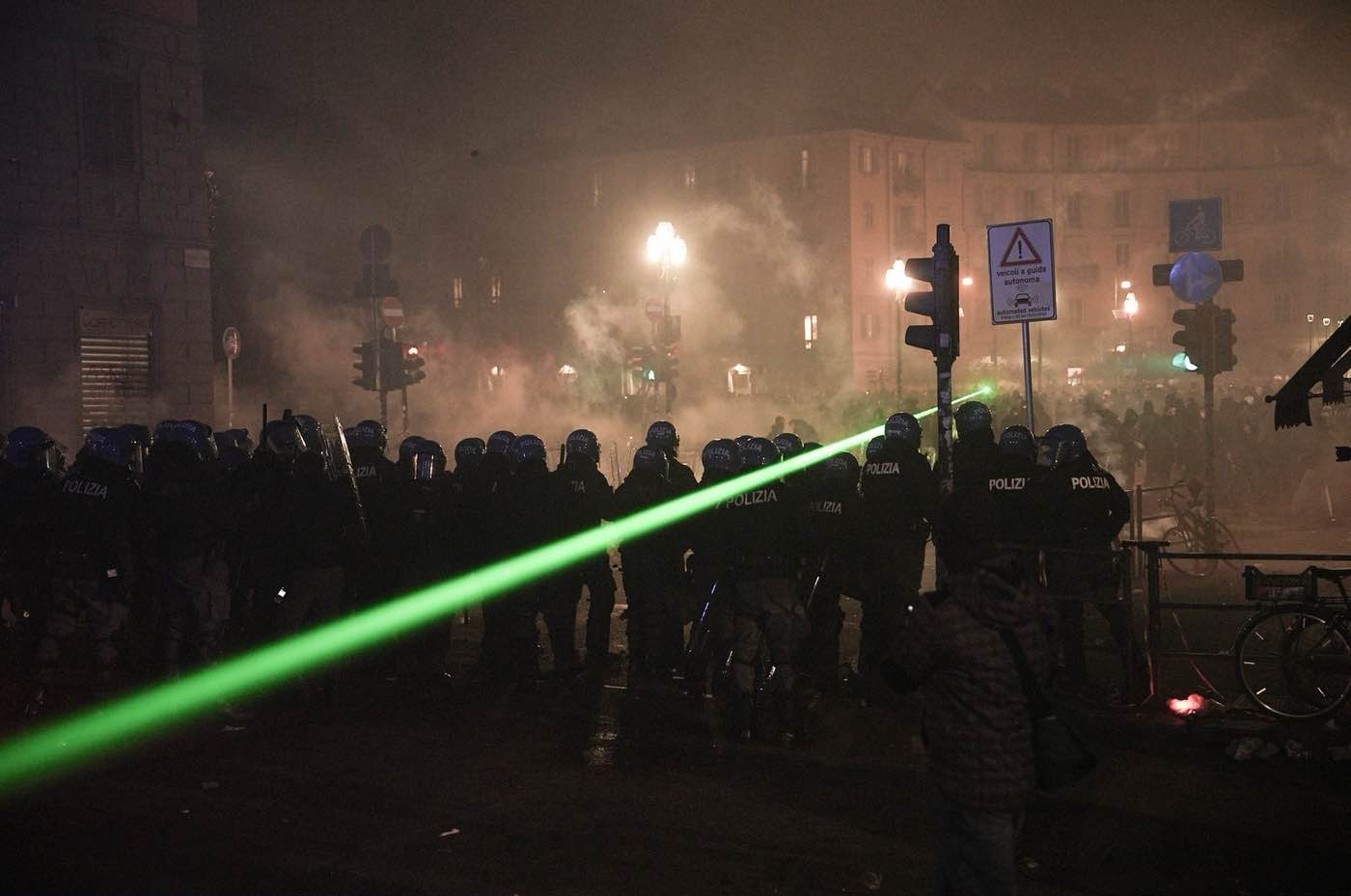
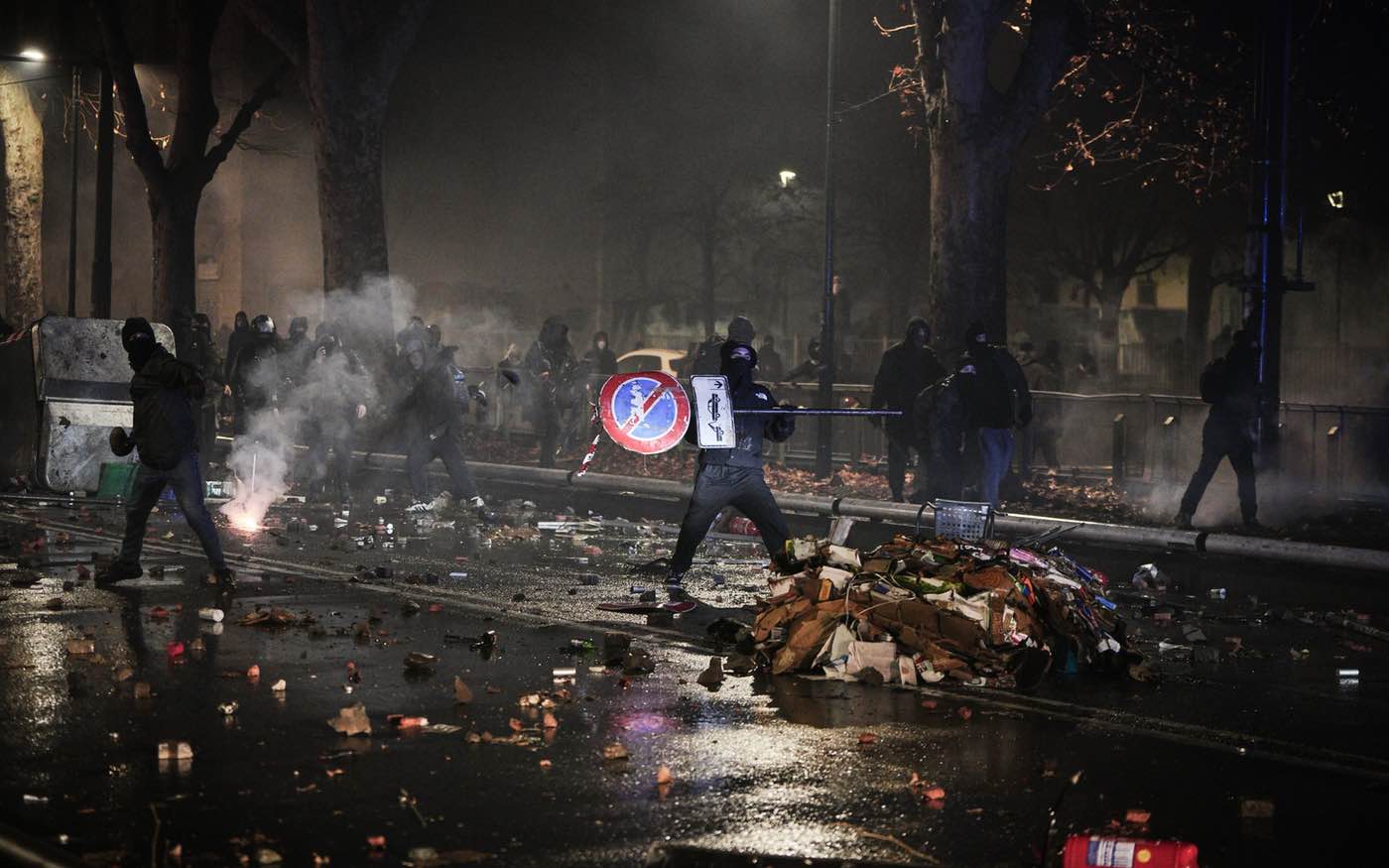
In the streets of Turin, there were thousands of young people who do not belong to collectives, structures, or militant groups. There were people in their early twenties, in many cases even younger, who at the end of Corso San Maurizio, as they approached the police barricades, disguised themselves, formed a black bloc with determination, and prepared to fight. They attacked the police, resisted the police charges, repelled them by advancing and retreating, meter by meter, for a full two hours. These are not things you see every day. These comrades gravitated towards the world of radical politics, perhaps taking to the streets for the first time with the protests for Palestine, and felt an irresistible call to come to Turin.
Why? In many cases, these are people who, on account of their age, have not even experienced the history of Askatasuna or any other social center firsthand, but have nevertheless responded to a call that is not an expression of opposition to the government, a specific political discourse on the war economy or cuts to public services, but rather the promise of an explosion of anger, a revolt, an event that would overturn the balance of power, at least for a day.
The experience of confrontation leaves us transformed and open to new possibilities: what movement politics can do is leave the field open for these possibilities to take shape and space.
cdn.crimethinc.com/assets/articles/2026/02/07/2.jpg
2. Victimhood serves no purpose; we need to express a narrative of the facts that restores their power.
Enough of being ashamed of existing. Fascists express their ideas with unbridled virulence; they are on the offensive in all fields and at all latitudes. On the other hand, the left is the purest expression of impotent moralism, and this is the other side of the fascist resurgence, the side that for decades has ceded ground to them, out of cowardice and stupidity, paving the way for their victory. But it is not enough for the left to be defeated; it wants to drag everyone else into its morbid love of defeat and impotence. For this reason, at the first sign of anger and uprising, it indulges in hysterical and incoherent condemnations: either it denies the reality of the uprising, or it launches furious condemnations. Faced with this barrage of lies, we must remain lucid.
Those who took to the streets are not victims of police violence, which is a constant and ruthless reality, but have courageously decided to face this violence, to prepare themselves to do so, to return it to sender as much as possible. Let us try to give dignity to this conduct, that of open rebellion, which is the political act par excellence, from which everything else springs. The reasons for the uprising are countless: they accumulate at work, on the street, in the family, at university, during an ID check. They lie in the unbearable conditions we inhabit every day, in a catastrophic future that is being foisted cynically on the younger generations. In Corso Regina, the clashes began before the front lines of the march, defended by shields and helmets, had even arrived. Many, in order to curry favor with the left, will play the victim card, emphasize the violence of the police in the streets, and go so far as to distort the facts by talking about a defenseless march that was suddenly charged by the police for no reason.
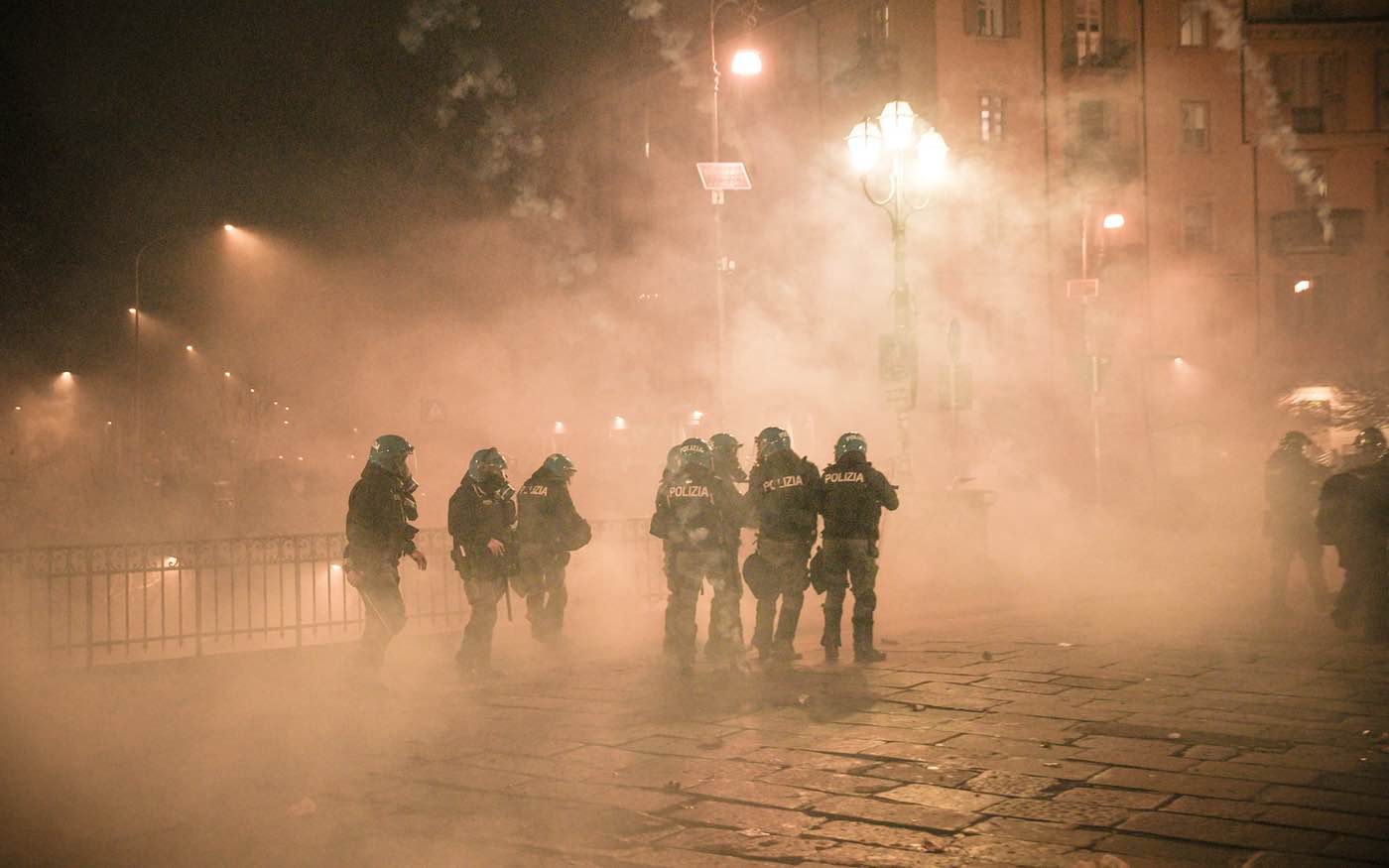
To those who were there, all this can only sound ridiculous. What we felt when we saw the riot police’s backs, when we saw their vehicles in flames, cannot be represented in the celebration of defeat, and perhaps cannot be represented at all. From the will to respond and the intensity of the uprising, a political power capable of rising to the challenge of the present can emerge.
cdn.crimethinc.com/assets/articles/2026/02/07/3.jpg
3. The divide between those who defend this society and those who revolt is a war between worlds. There is no common language or logic.
Now they talk about him and write about him, the psychologist, the sociologist, the idiot. And they talk about him and write about him, but he always remains clandestine.
—G. Manfredi, “Dagli appennini alle bande”
Silence is threatening, it is estrangement that accumulates, it gives no comprehensible signs, in the end it explodes […] They want us to talk. But we have nothing to say in their delegated places. Their politics, their culture, are self-denunciations. We remain silent. A threatening silence of alienation, of absenteeism, of rejection, of spontaneous appropriation, the latency of a new explosion in the making.
—Collettivo A/Traverso, Alice è il diavolo
It is impossible to bridge the gap between those who took to the streets in an offensive manner and those who, belonging to the worlds of public opinion, culture, and the political class, simply demonstrated impotence, servility, and (senile) dementia. The difference between the experience of the former and the cowardice of the latter is too profound for there to be any kind of understanding; it is useless to try to debate, as the justifications would only go round in circles. There is no common language, nor is there a common reality. What infuriates the progressive world of an establishment that no longer has any moral or intellectual credibility, nor even a basic sense of decency, is this generation’s unwillingness to engage in dialogue, to understand each other, to waste words. It is a threatening silence that has characterized subversive movements, cyclically, for a long time, but which is returning today with a vengeance. An opacity and a threatening silence that blow up the neutralizing machine of reformism, revealing its fascist nature and forcing it to openly embrace the hysterical tones of the worst police rhetoric: batons, order, unanimous condemnations, and holy inquisition.
Yet how can we talk to those who allow genocide to be broadcast worldwide, to those who deny the evidence of the ethical and existential collapse, before the biophysical one, of this civilization, to those who cover up with colored nail polish a disaster that is getting worse every day? How can we talk to those who falsify the meaning of words to the point of erasing it altogether? The truth is that this society has nothing to offer and, above all, it has no meaning to offer that could make life worthwhile, it has no subjective resources other than those of rapacity, privilege, and the most immoral and cowardly nihilism. So it’s just as well that you don’t understand the outpouring of affection, emotion, solidarity, and collective strength that is unleashed on a day like the 31st. Go ahead and continue to embroider it with implausible stories and classifications so stupid that only you can believe them. We will always try to be somewhere other than where you are looking for us.
cdn.crimethinc.com/assets/articles/2026/02/07/18.jpg
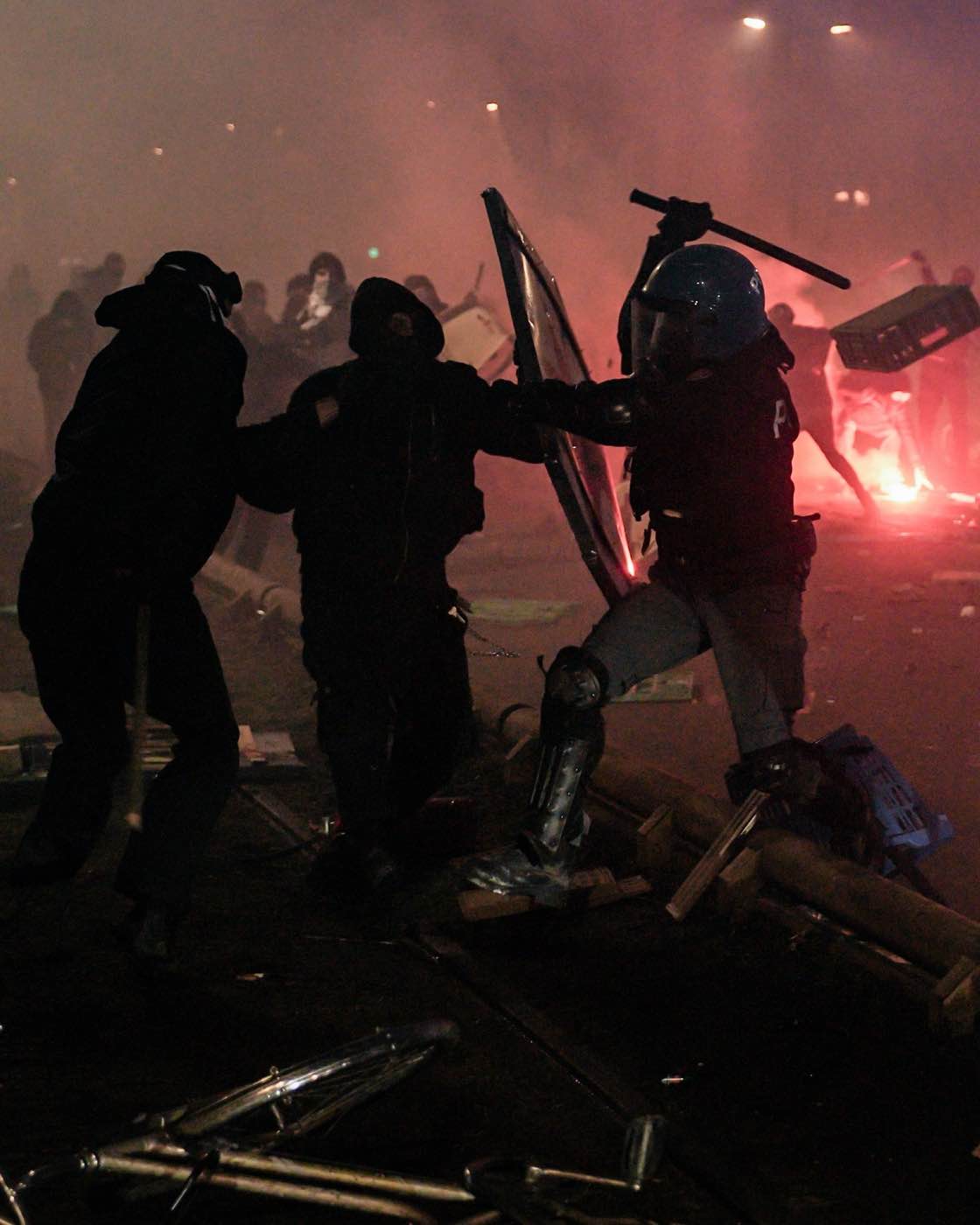
3b. The identikit of those who rebel, the cataloguing of the subjects in the field, is a police job that must be rejected, whoever it comes from. Moving away from this logic is a basic measure of hygiene and strategy.
“The effort to identify us according to the tried and tested logic of two centuries of counter-revolution backfires laughably and ignobly on anyone who would like to imprison us in a formula, in order to deliver us more easily to the walls of the prison.”
—Puzz, “Provocazione” (1974)
If the clumsy attempts of the press, politicians, and self-proclaimed intellectuals all tend to present a certain profile, to pinpoint a subject responsible for the clashes, let us take advantage of their stupidity and cherish the opacity it guarantees us. Journalists and various opinion makers will melt the few brain cells they have in an attempt to “understand these kids,” to “isolate the violent ones from the rest of the march,” or to launch into stale and poorly digested readings on crowd psychology. We will also be caught between those who will try to label us with equally annoying labels and, above all, those who share the same way of understanding the world: “The streets were filled with a great front against the Meloni government,” “here at last is the new and true political subject (after the Maranzas,1 Gen Z, the ecologists, the convergence of struggles, the knowledge workers, the logistics workers, the young, the precariat…),” they will thunder from the heights of their occupied buildings that reek of old age.
It makes no difference whether this frantic and ridiculous identikit work is aimed at repressing, imprisoning, and demonizing, or at understanding the reasons, explaining, recovering, and—why not?—healing. Let’s reject it. Those who rise up are part of a missing people, an anonymous and unclassifiable power that will only define itself through the political strategy and ethical consistency that we are capable of organizing. When and how is entirely up to us.
cdn.crimethinc.com/assets/articles/2026/02/07/4.jpg
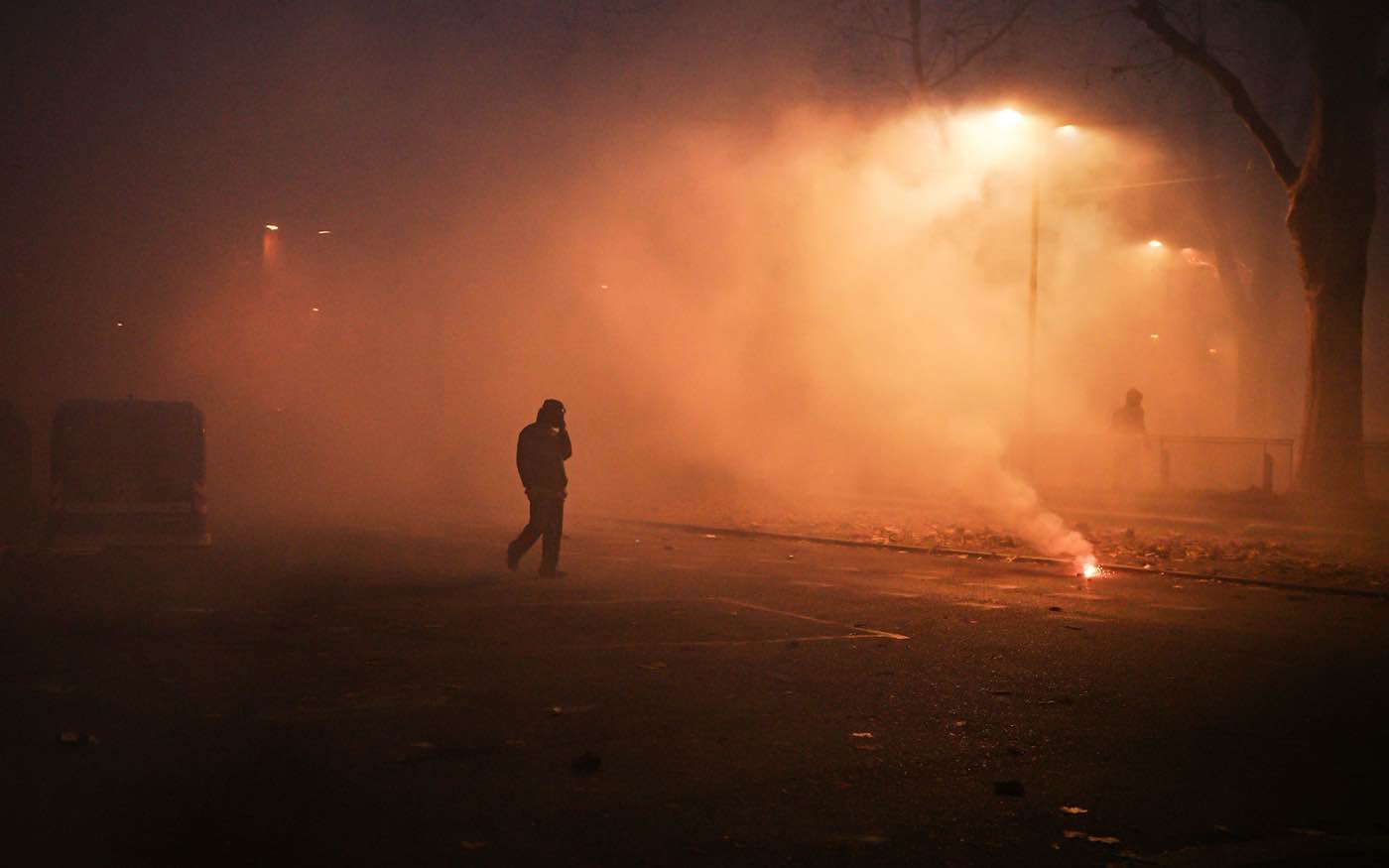
4. The return of riots is always the return of autonomous organization in crews.
A few friends talk to each other, small groups are created and become anonymous. The police are attacked well before the shield-bearing officers reach the first trucks. For two hours, groups continue to attack, moving around, trying to circumvent obstacles and take the adversary by surprise. This is unusual to see in this country, but it has already occurred on other occasions. In fact, one could almost venture to say that when something happens, it happens in precisely this way. Groups appear and disappear; we saw them in the post-1968 autonomy movement, in Genoa at the beginning of this millennium [i.e., at the riotous mobilization against the 2001 G8 summit], and then again on October 15, 2011 in Rome and in the squares against the lockdown. The more time passes, the more the groups remain orphaned of a political tradition as heavy as a boulder—they are the offspring of the Workers’ Movement that was defeated 50 years ago, which makes the ground after the charges similar to quicksand. For some, this is a mourning, a misfortune fallen from the sky during the glorious and centuries-long march towards socialism; for us, it is fresh air.
While the central avenue of Corso Regina was very crowded, the clear side streets offered interesting prospects for attack. Certainly, from a tactical point of view, there is much room for improvement. But it doesn’t matter, time is on our side. We will learn from our mistakes.
cdn.crimethinc.com/assets/articles/2026/02/07/19.jpg
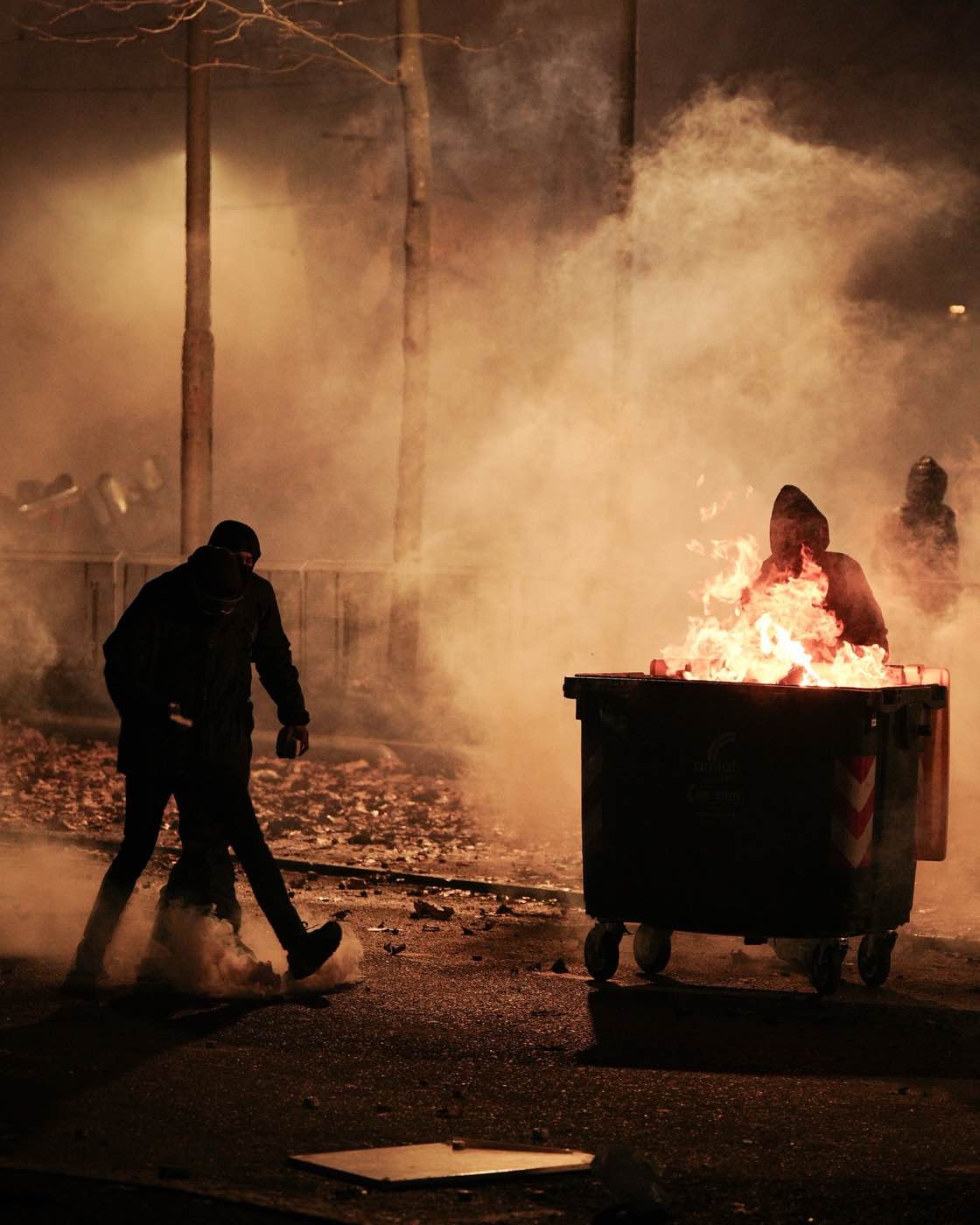
4b. There are no external agitators, but an awareness of what is at stake internationally.
“There were French, Spanish, and Greeks.” “The violent ones come from all over Europe.” For many politicians and journalists, one of the central points of the story is the presence of non-Italians at the demonstrations. A confused mixture of conspiracy theories (about infiltrators) and delusions about paramilitary organizational models is used to explain what is, all things considered, a simple fact. The accumulation of experiences from past cycles of uprisings around the world spontaneously contributes to weaving a network of contacts and friendships that transcends national borders. Is this so strange? One of the most common complaints against the protagonists of the riots is that they are seeking an ephemeral and instinctive outlet for their existential frustrations, without bothering to build a political perspective.
But the possibility for such moments to transform into a solid and lasting political force depends precisely on the strategic consolidation of experiences, relationships, and techniques. The fact that internationalism has become a dirty word or a criminalizing accusation even for the left is just another sign of its advanced state of sclerosis. It would be ridiculous to denounce the ongoing catastrophe if one does not have the ambition to organize as a global force.
cdn.crimethinc.com/assets/articles/2026/02/07/9.jpg
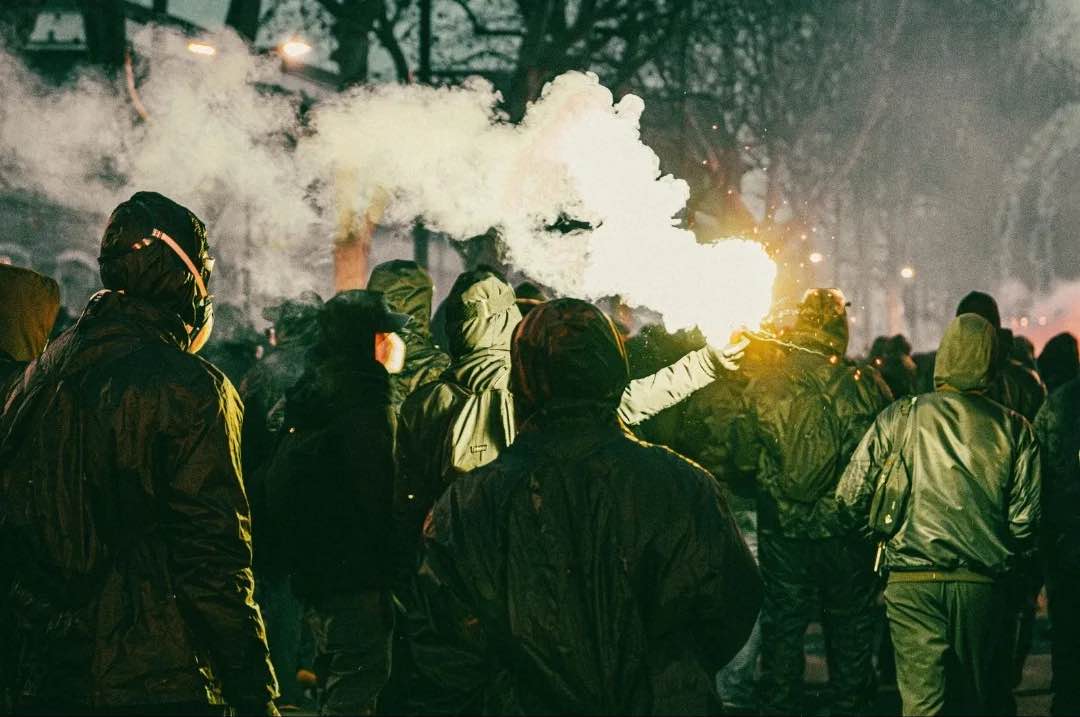
5. The revolt overturns everything because it jams the infernal machine of the left and right, the counterrevolutionary apparatus that is bringing fascists to power throughout the West.
We are living in a historical era of unrestrained counterrevolution. With the end of a long series of uprisings and insurrections that shook the world on several occasions, at least until 2019, the spectacle before us is rather bleak. The left’s absolute subservience to the agenda of cybernetic and ultra-liberal [in the sense of neoliberal] capitalism, seasoned with ostentatious contempt for anyone who does not bow to the dictates of progress, the market, or democratic reasoning, has inexorably paved the way for the outright victory of the worst fascist right. Contempt for the backwardness and irrationality of those who revolt, whether they are yellow vest motorists [a reference to the French gilets jaunes movement], farmers, or those who refuse to comply with health surveillance, has been a decisive ingredient in paving the way for this victory. This has proceeded to such an extent that the right wing—now in government—has managed, over the decades, to dress itself in the flags of alternative thinking, of protest, even appropriating the word “revolution.”
As a consequence of wanting to embody the front of Good and Order, the left is solely responsible for the current fascist tendencies and their constant strengthening. Not only that: the call to unite in a well-aligned and reasonable anti-fascist camp, in the name of stemming the fascist plague and the authoritarian danger, further fuels a vicious circle in which the left and right mutually support each other in their counter-revolutionary function.
This is nothing new in history: the right advances boldly, while the left expresses its nature in conformist defense of order and institutional normalization. The result is that any political discourse that seeks to intervene in the public sphere, caught up in this counter-revolutionary machine, is immediately crushed and rendered incomprehensible or else reabsorbed into one of the two poles. In this sense, forms of street rebellion, attacked from all fronts and from all sides, are a gesture that serves to show on the surface the obvious solidarity between all components of the government and propaganda machine, between all versions of the public sphere. By bringing to light the fact that fascists and progressives represent a false alternative, which the demonstrations for Palestine had only partially illuminated, the riots show the possibility of effective political opposition, of practices and behaviors that, although still embryonic, can free up space for something better. Something more serious and more exciting, which we insist on calling revolutionary possibility.
| cdn.crimethinc.com/assets/articles/2026/02/07/7.jpg | cdn.crimethinc.com/assets/articles/2026/02/07/6.jpg |
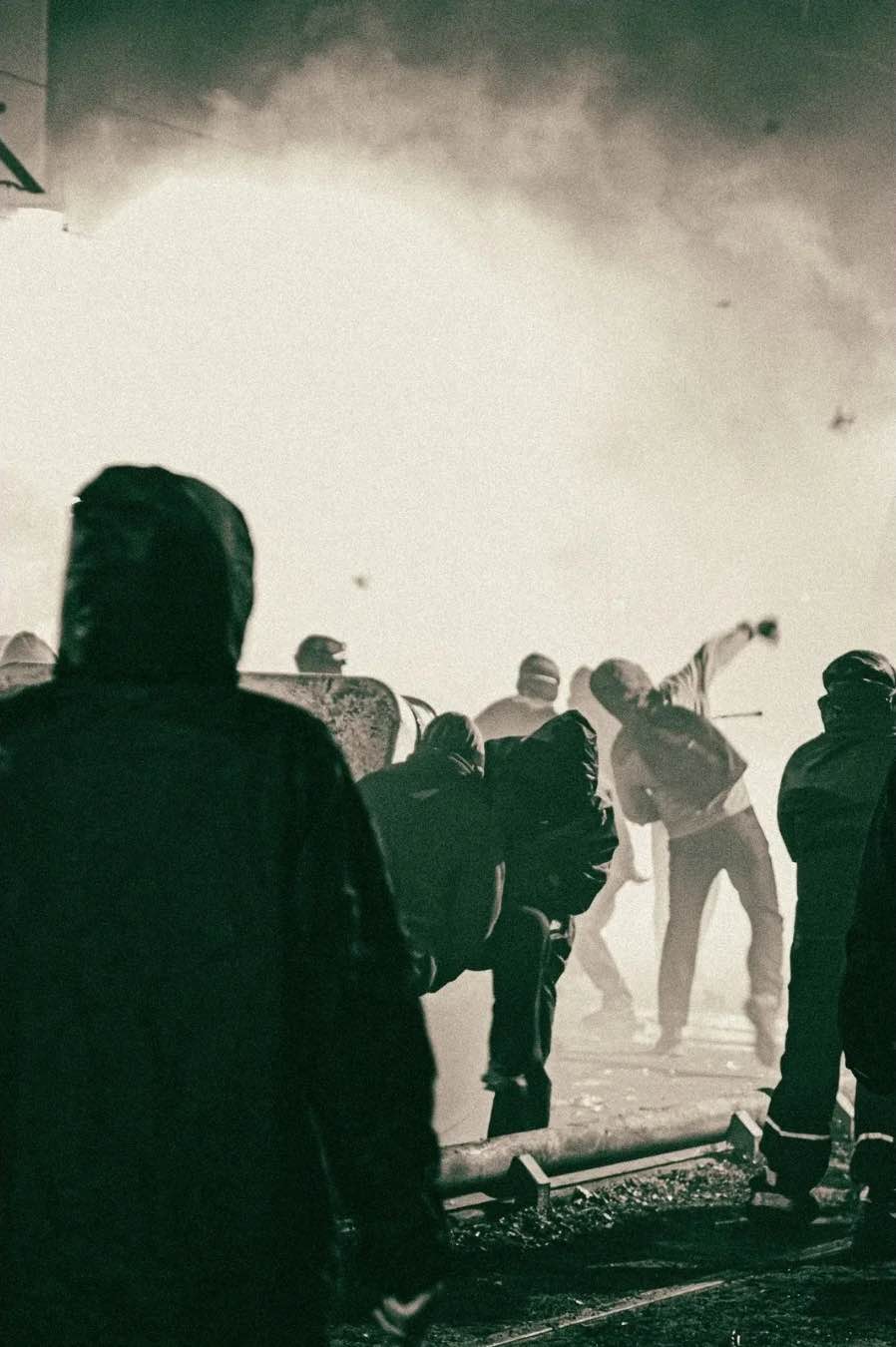
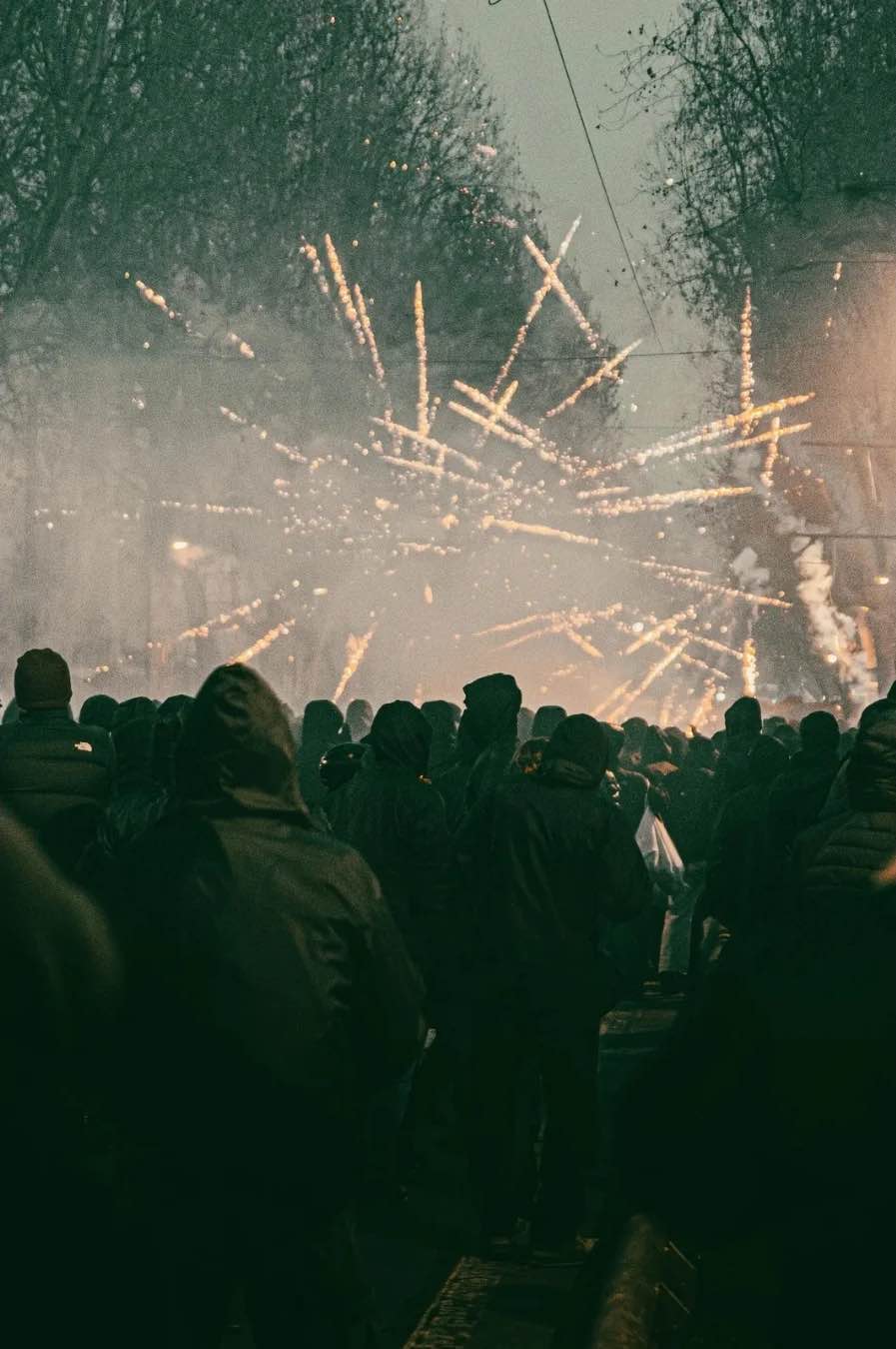
5b. Only street riots have any power to respond to the fascists.
We have said that the left has built up the support for the fascists for decades. Now we are faced with the paradoxical situation in which these characters point to attacks on the police and street disorder as an objective boon to the forces of repression, repression which they themselves loudly support. It is useless to waste breath replying to these wretches. Let us simply highlight a few historical constants that are obvious to anyone who is not completely blind. In 2020, following the murder of George Floyd, we saw an explosion of violent anger shake the city of Minneapolis and Donald Trump’s United States. This led to the burning of police stations and police vehicles, as well as widespread attacks and looting. The democratic and progressive world, in America and everywhere else, rushed to pass off as a “peaceful movement” what, according to all credible accounts, was in effect an insurrectionary uprising. Neutralization, erasure, and repression all play a role in the effort to conceal the subversive possibility that flashes in these moments.
The political outcome of the erasure and rehabilitation of the uprising is now obvious for all to see. Disguising it as peaceful opposition has not prevented Trumpism from returning with even greater force: taming the rupture is not only counterproductive, but dangerous. However, the events of 2020 were not in vain, because it is quite clear that the memory of the uprising is not unrelated to the forms of resistance that are appearing today in defiance of the military occupation of many cities and the fascist roundups that ICE is carrying out. In Minneapolis itself, the increasingly open civil war scenario has already led to some cold-blooded killings. People who have been at the forefront of obstructing arrests, trying to hinder police operations and breaking the law, have set an example of courageous and effective resistance. In a context of escalating repressive violence and reaction, it is all the more obvious that the democratic chorus is useless.
We leave the reader with just two questions: are those who risk their lives to take to the streets of Minneapolis more like the young people who had the courage to confront the police in Turin, or more like the self-righteous commentators who condemn them from home? If the network of organization and solidarity that is forming around the riots, instead of giving in to the blackmail of a return to normality, perfected its means and organized itself to endure, would a more radical and profound process of transformation really be absurd to imagine? We know from our own experience that fascism suffered setbacks precisely when riots broke out; when the left intervened, fascism triumphed. Weimar docet. [“Weimar teaches,” a reference to the republic that prevailed before the Nazis came to power in Germany.] Throughout history, and still today, the opposite of the right is not the left, but revolution.
| cdn.crimethinc.com/assets/articles/2026/02/07/5.jpg | cdn.crimethinc.com/assets/articles/2026/02/07/8.jpg |
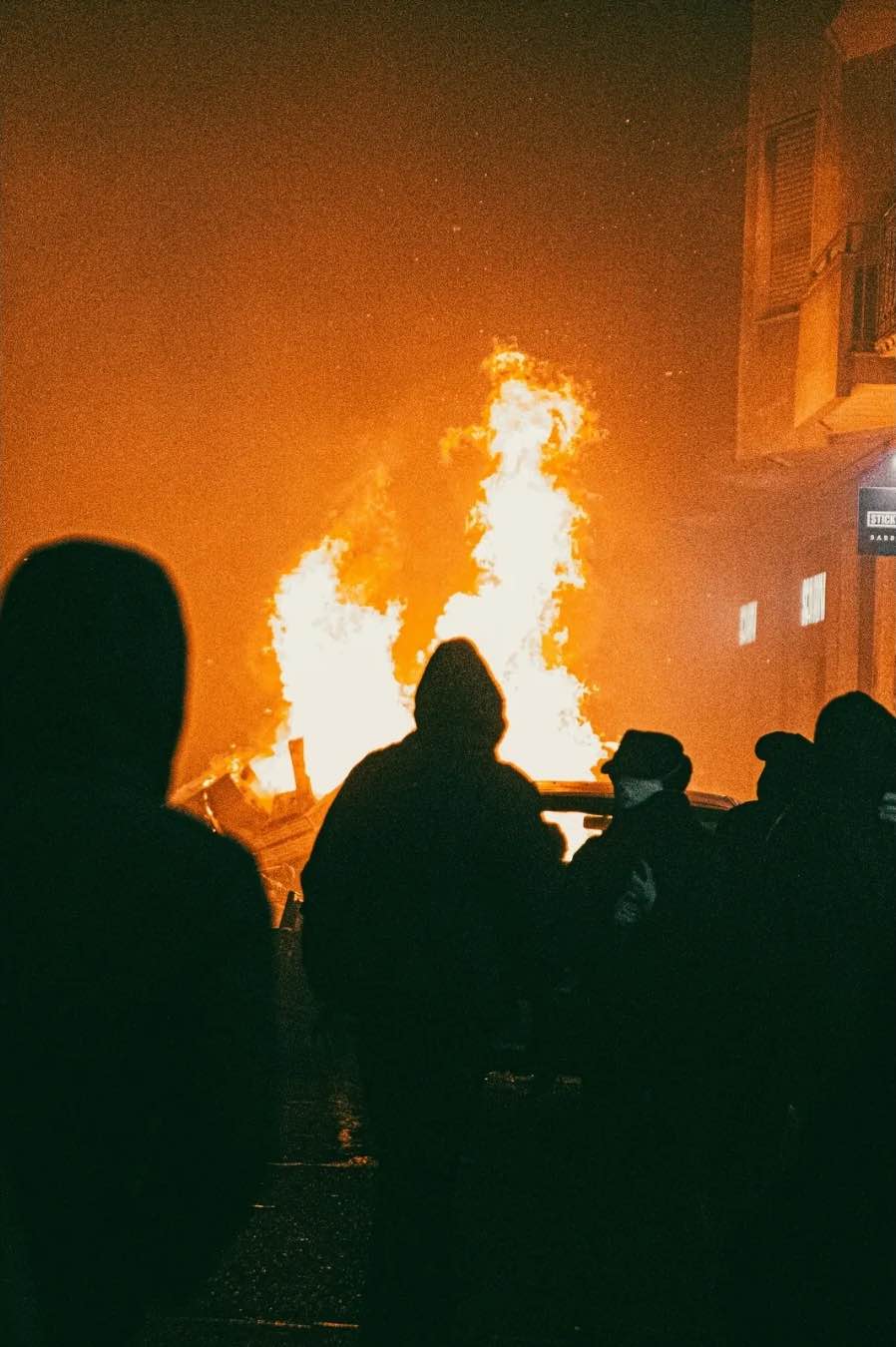
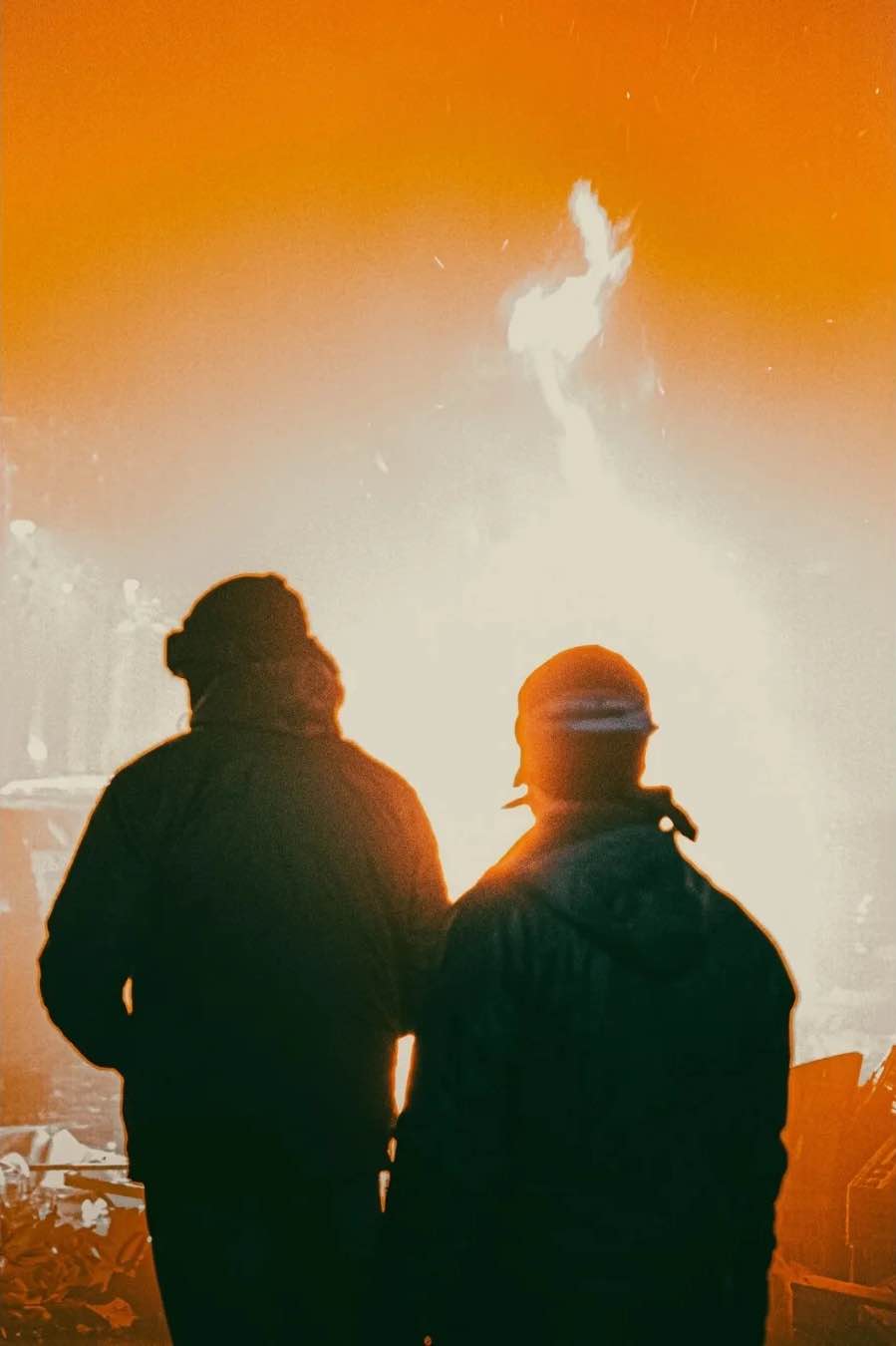
5c. The conspiracy theory about infiltrators is a police operation in step with the times, which is to say, completely implausible and poorly executed.
Obviously, infiltrators exist; revolutionary groups have discovered and expelled them on countless occasions, and we could cite many episodes. In no case, it is truly disheartening to reiterate, can “infiltrators” determine the outcome of a march, gather in groups of several hundred with a clear and obvious willingness to clash with police, casually take the front lines and, through very sophisticated psychological control tools, force the rest of the march to follow them, support them, and not abandon the square. This was obvious in 2001 in Genoa, it was obvious in 2011 in Rome, and it is obvious in 2026 in Turin. Moreover, January 31 was one of those occasions when the disconnect between those who personally engaged in the confrontation and the rest of the demonstrators was minimal; almost no one fled, and almost everyone understood the reasons for what was taking place. Those who think that such dynamics could attributed to infiltration have their brains devastated by constant exposure to media stupidity and digital technologies; if that alone were the issue, we could respond with compassionate tolerance. Not everyone is able to age well.
But the problem is that allegations of infiltration, when they take root, create collective phantoms that in many cases assist the work of the police, fostering attitudes of suspicion and condemnation. It would be good if this nonsense came to an end—out of prudence and an awareness of its ridiculousness, if not from lucidity.
cdn.crimethinc.com/assets/articles/2026/02/07/10.jpg
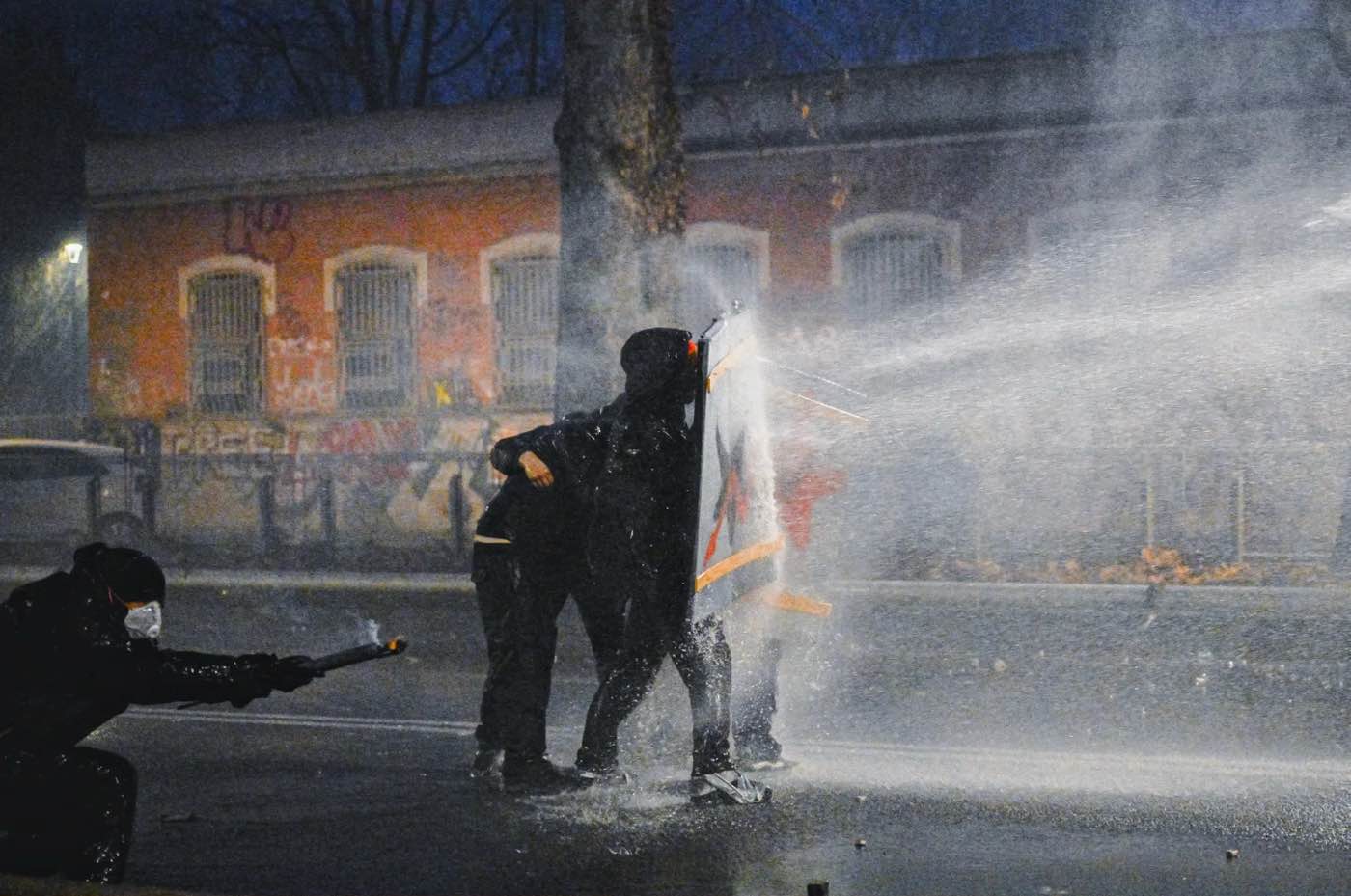
6. A terminological clarification on the meaning of courage and cowardice.
One of the most odious expressions of the shameless, Orwellian linguistic distortion that characterizes public discourse is what we hear about the question of courage from the mouths of many politicians and journalists. We are accustomed to a vocabulary in which every word is used to mean its opposite: peace is the reign of the war economy, the green economy poisons the planet, and civilization consists of submission, indifference to the suffering of others, and walking straight ahead while all kinds of injustice and violence are perpetrated a single step away. If we were not so consistently educated to use language in this way, we would be astonished to hear cheap hacks and ministers in their lofty positions calling the young people who were in the streets on Saturday “cowards.” It makes the blood boil.
Let’s try to paint a picture: someone who faces hours of tear gas fired at eye level and continuous police charges, at the risk of considerable injury and ending up in prison, to stand up to the armed and hyper-equipped police forces of a state—this person can be called a coward. The mercenaries who act with absolute impunity to defend the prevailing order are, on the other hand, an example of courage, as are the pen-pushers and politicians who dispense moral judgments without ever having faced a risk in their lives. It would suffice to dwell on this comparison and reflect on the terms to give you an idea of how little you understand.
| cdn.crimethinc.com/assets/articles/2026/02/07/15.jpg | cdn.crimethinc.com/assets/articles/2026/02/07/16.jpg |
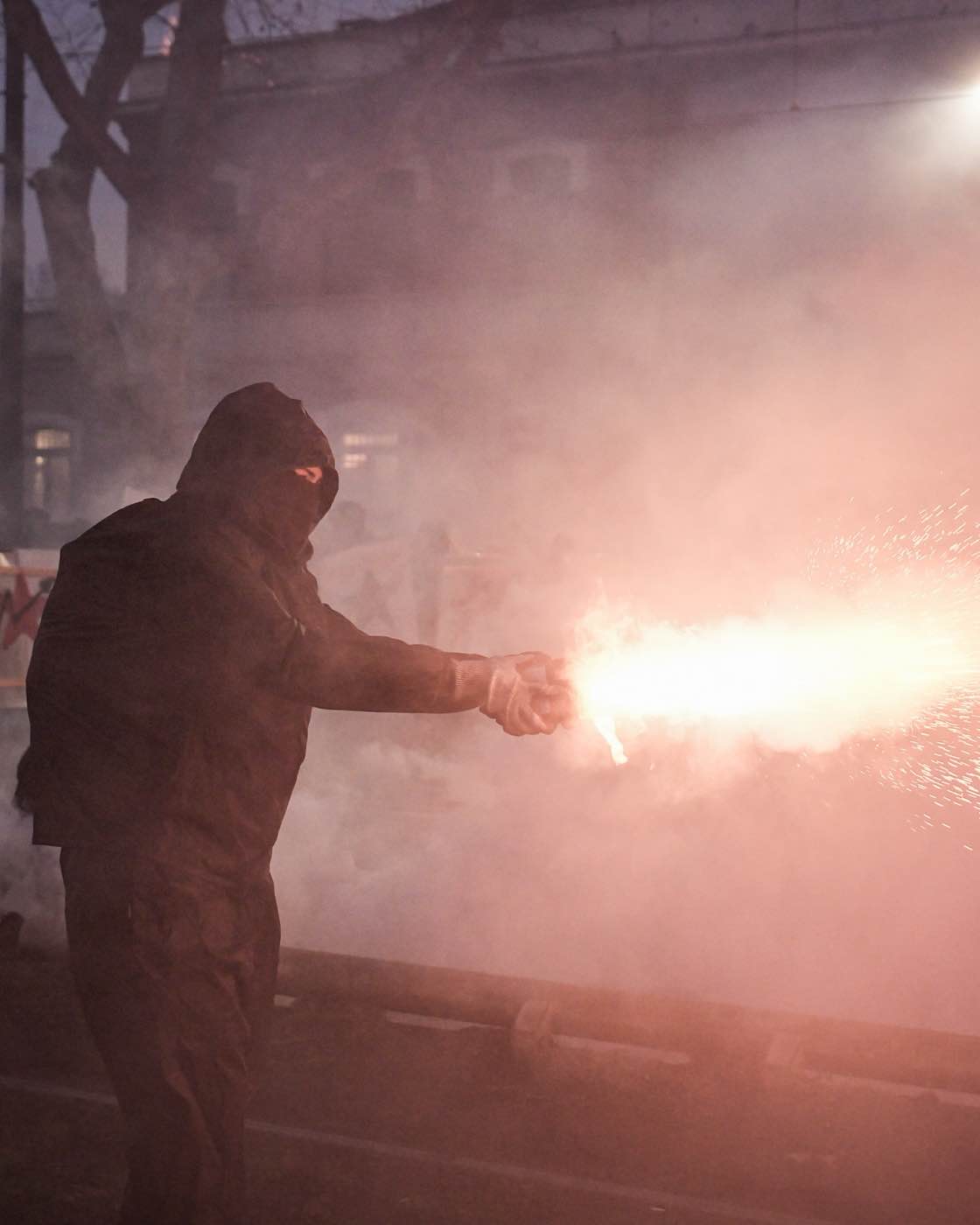
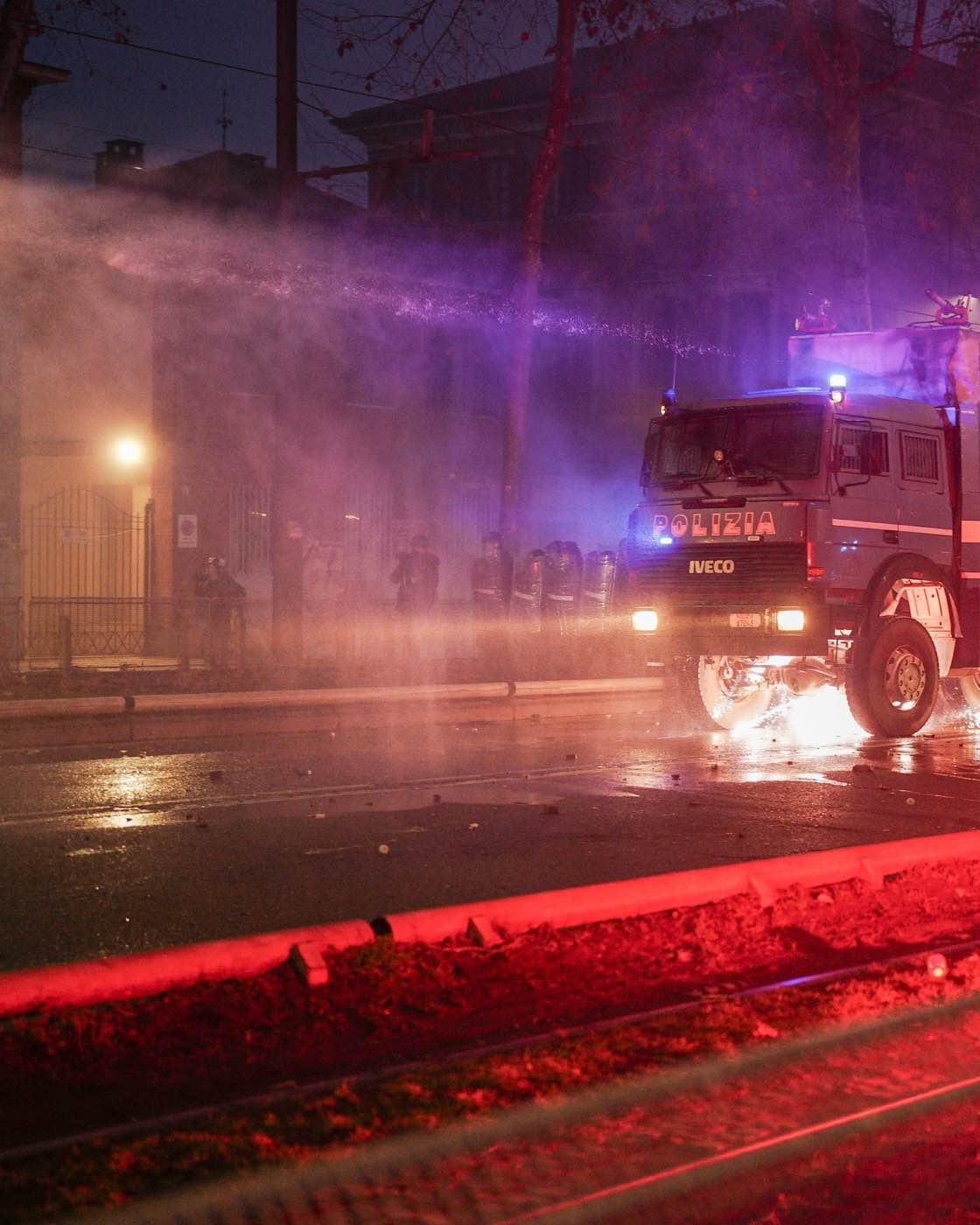
6b. Calling the episode of the cop on the ground an example of “savage violence” means not knowing what violence is.
A riot cop ends up on the ground while trying to overdo it during a charge. The rest of the platoon leaves him behind without a second thought. Some protesters kick him for a few seconds and, in the heat of the moment, he also receives a well-aimed blow to the back with a hammer. A basic, measured, fair, and justified act of self-defense. Two days later, he is already released from the hospital, almost unscathed, which would certainly not have been the case if he had been “hammered.” However, this is the version presented by the newspapers and the official narrative: a furious, savage attack of ruthless violence that horrifies.
The distortion is so blatant that it speaks for itself, but it is still worth saying a few things. First: after enduring so much, the desire to take revenge and strike back is a symptom of a vital instinct that is easy to understand. Those who struck the officer on the ground, hindering him as he threw himself into beating the demonstrators, were defending themselves and others. And they should be thanked. The same goes for all those who distributed Maalox [to treat the effects of chemical weapons], assisted those around them, and protected the rest of the march in every way possible. The ordinary citizen who is outraged by the few blows that the cop received is a victim of masochistic identification with his own executioner; his problem is psychopathological rather than political.
At a time in history when the word “revolution” is used to refer to the most bizarre things, to the point that even the head of government called Saturday’s protesters “pseudo-revolutionaries,” can you explain to us in which revolution the guardians of law and order did not receive, at the least, a good beating?
cdn.crimethinc.com/assets/articles/2026/02/07/17.jpg
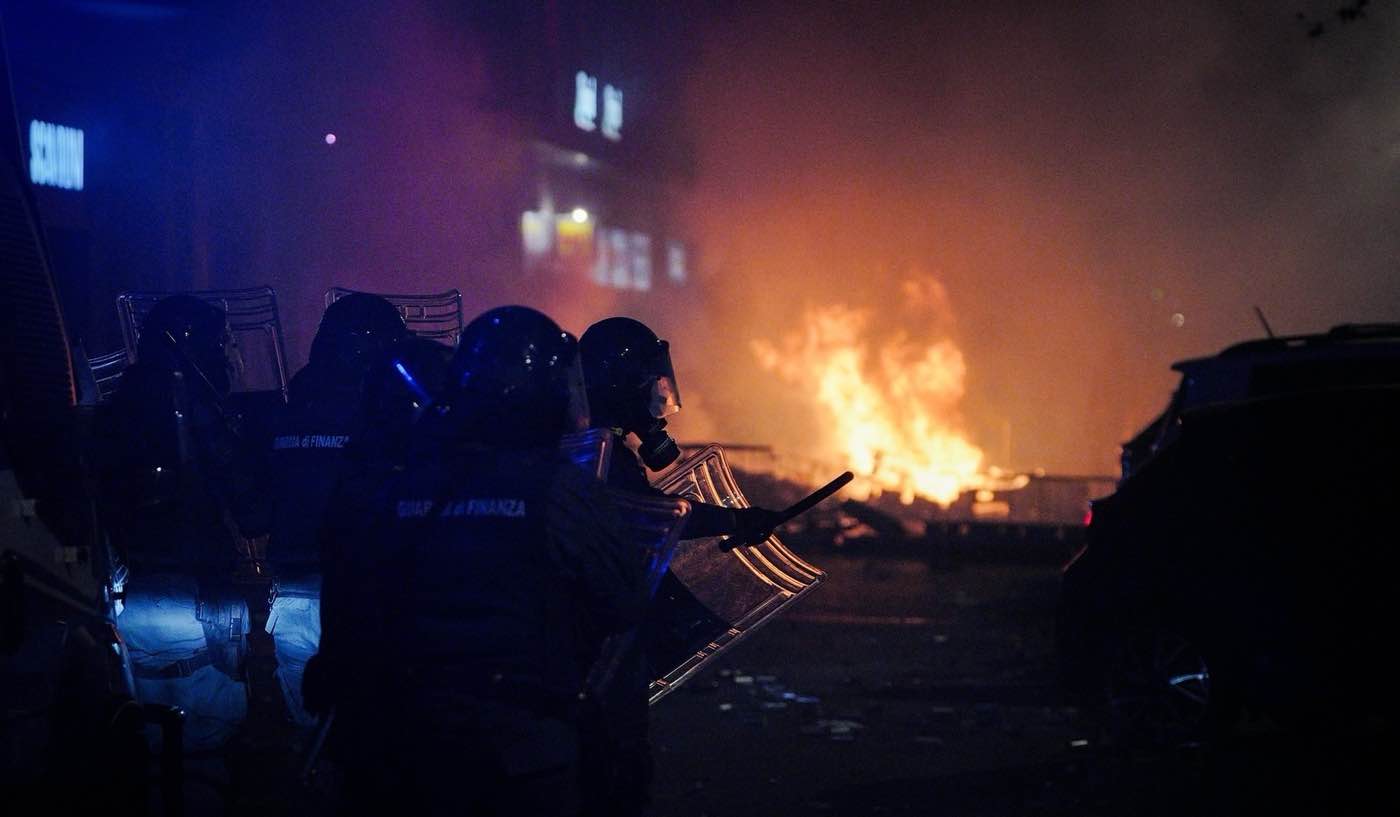
What can be done after a day like the 31st? Once the event is over, there are at least two possible attitudes toward its legacy.
One could say, “We were only playing around,” to try to make more palatable the intensity and violence of something that overwhelms us, that is dangerous and could have unforeseen consequences. Consequences not only in terms of criminal charges or repressive measures, but also in disrupting familiar organizational forms or throwing them into crisis, in rendering it impossible to reproduce the modes of political action that were common until the day before.
Political alliances based on unanimity are crumbling, enemy propaganda is undermining consensus by demonizing the most offensive practices, and we find ourselves in an uncomfortable position. The first option involves attempting to rebuild this consensus by reconstructing a single large family, to reduce the experience of confrontation—in its most disturbing aspects—to a watered-down and reassuring narrative that suits everyone’s tastes. The tactic of post-hoc recomposition, seeking to mend the rifts, attempting to downplay the attack on the police, emphasizing the violence against the demonstrators, in order to reoccupy the role of the “good guys” in the common front against government policies. This is a tactic that will find—with difficulty—some support in part of the intellectual and political world, but we doubt that it will go very far. The images of disorder are still too vivid in everyone’s eyes. The worst thing is that such an attitude creates a paralyzing disconnect in those who experienced that moment and remember well how little of a “defensive” nature there was in the explosion of collective anger.
| cdn.crimethinc.com/assets/articles/2026/02/07/11.jpg | cdn.crimethinc.com/assets/articles/2026/02/07/14.jpg |
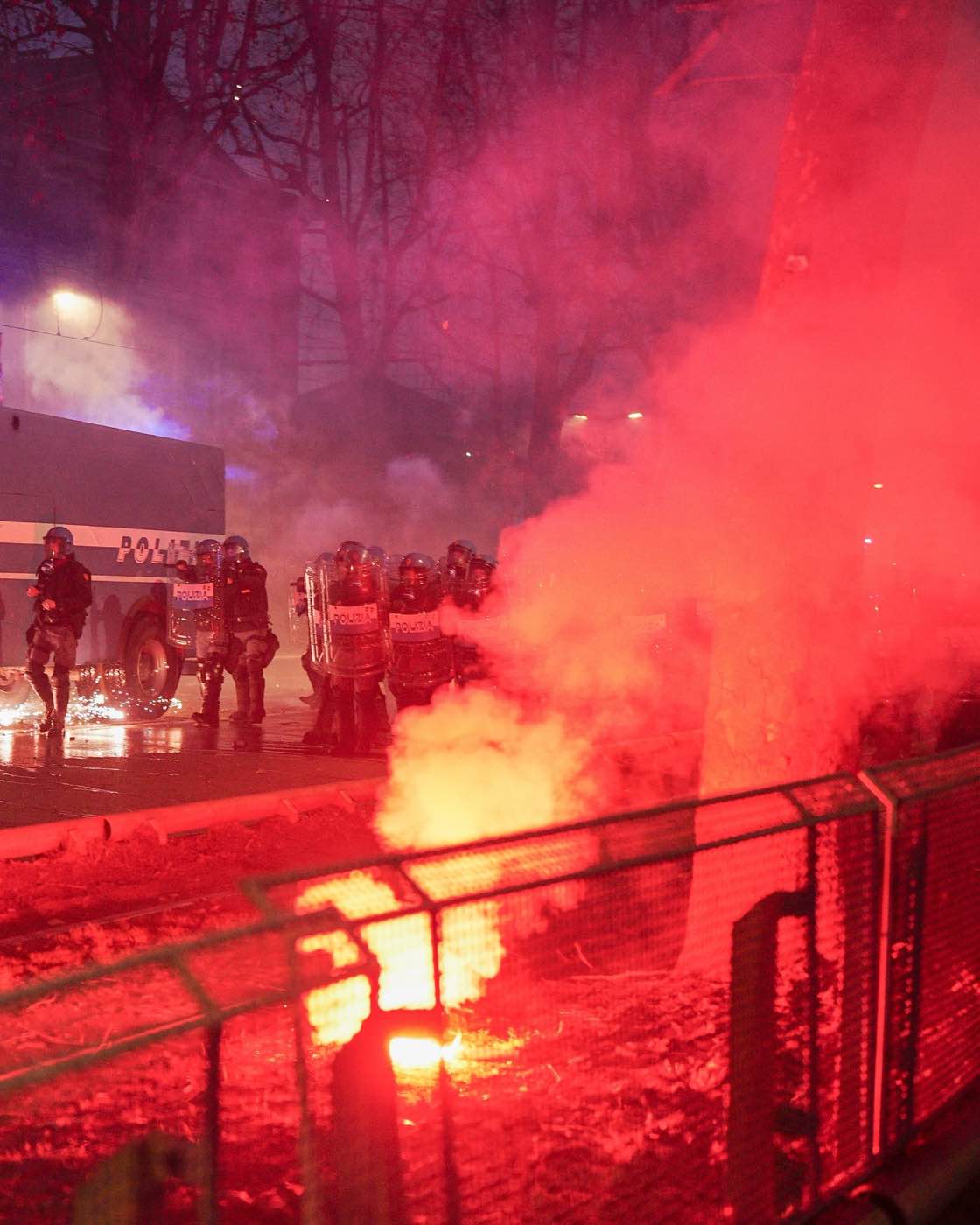
A second way of reacting is more like a gamble: it is riskier, because having all voices and opinions against you is never a comfortable position. But it is also more authentic and exciting. The second option is to tell the young people who fought in the streets that what happened is a serious matter, that destruction has its own political rationale, that one can believe in the intensity of that experience and organize it into concrete and general possibilities. We talked about the resistance against ICE in America, which represents, at least in part, an image of our immediate future, marked by civil war and fascist cruelty. The convergence of street opposition, in open defiance of the police, support networks, and popular organization, and a possible escalation of the conflict—these represent a crucial indicator of our future tasks.
Those who experienced the events of the 31st in the square, those who realize the state of the world in which they live and the extent of the disaster that is unfolding, know that they can expect nothing from institutional political alliances, legal protections, or shifts in opinion. Only by believing wholeheartedly in the impact of the uprising, in the friendships that are forged there, in the chance that it will transform into a revolutionary force, can we become immune to the epidemic of stupidity and cynicism that seems to have infected our contemporaries.
“…confronting this marble façade, if we continue to chip away at it, perhaps we will find a vein of gold. Perhaps this is the revolution.”
cdn.crimethinc.com/assets/articles/2026/02/07/20.jpg
| cdn.crimethinc.com/assets/articles/2026/02/07/12.jpg | cdn.crimethinc.com/assets/articles/2026/02/07/13.jpg |
-
“Maranza” is a derogatory term for racialized demographics, with a criminalizing and generational connotation (often referring to the Moroccan demographic from which the name derives, but not only), used widely in journalism. In the Italian context, it evokes a wide array of meanings, implying incompatibility and conflict with the existing order. ↩