They Escalate, We Escalate
:A Short History of the Fight against ICE in the Twin Cities


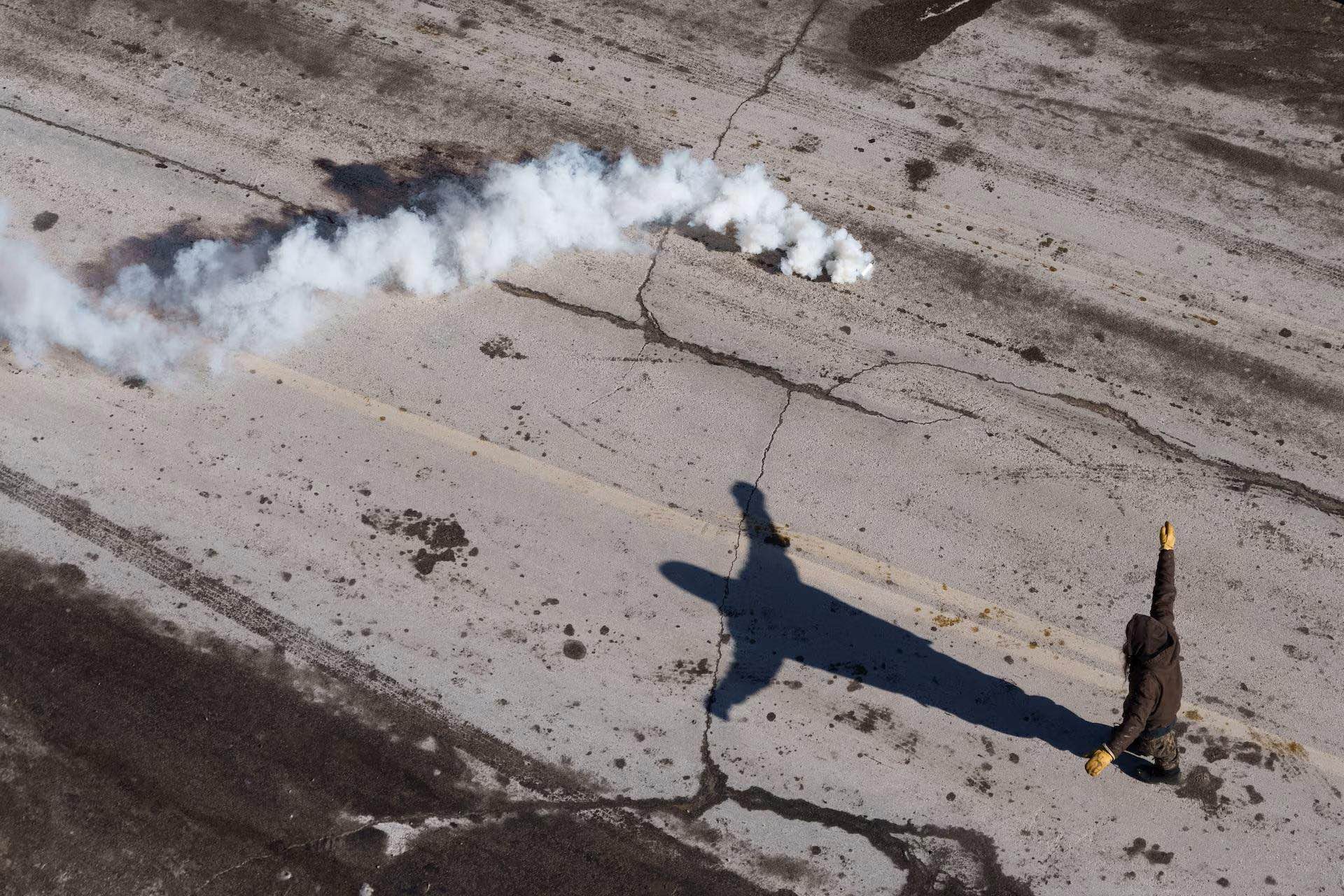
In the following analysis, participants in the resistance to the Immigration and Customs Enforcement assault on the Twin Cities chart the course of the movement from 2025 to the present day, exploring why it gained momentum despite escalating repression.
The surge of federal mercenaries to the Twin Cities is not over. Even if it is true, as federal authorities allege, that less than 500 federal agents remain (not counting Homeland Security Investigations agents), that is still several times the number of ICE agents that were deployed to the Twin Cities before 2026. One of the classic strategies of fascism is to ramp up violence to the maximum level, then back off the most extreme measures in order to accustom people to a more repressive status quo.
Nonetheless, the administration’s original objective was to normalize sending thousands of mercenaries to terrorize entire cities into submission. In that regard, the people of the Twin Cities achieved a victory, undermining the perceived legitimacy of the federal forces and forcing them to change tactics.
The people of the Twin Cities did not turn the tide against the occupation by force of arms, but by out-mobilizing ICE. Yet this does not mean that physically fighting the occupiers has played no role in the outcome.
A mass mobilization across the entire society forced the federal government to begin to withdraw. Well over 30,000 people have participated in the rapid response networks in some way,1 utilizing a wide range of tactics. Many thousands of these people dedicated their lives to the resistance and patrolled the streets every day for over two months. Many thousands more have participated in clandestine mutual aid networks to bring food, supplies, and rent relief to undocumented families forced into hiding. One in four adults in Minnesota participated in the general strike of January 23 in some way, and an estimated 8% of all Minnesotans refused to work that day. Signs reading “Everyone welcome except ICE” appeared in the windows of practically every business in South Minneapolis.
The scale of the resistance prompted Stephen Miller to remark,
“You only have to read their own words and hear their own words and judge their own conduct to understand that this is clearly an insurgency against the federal government.”
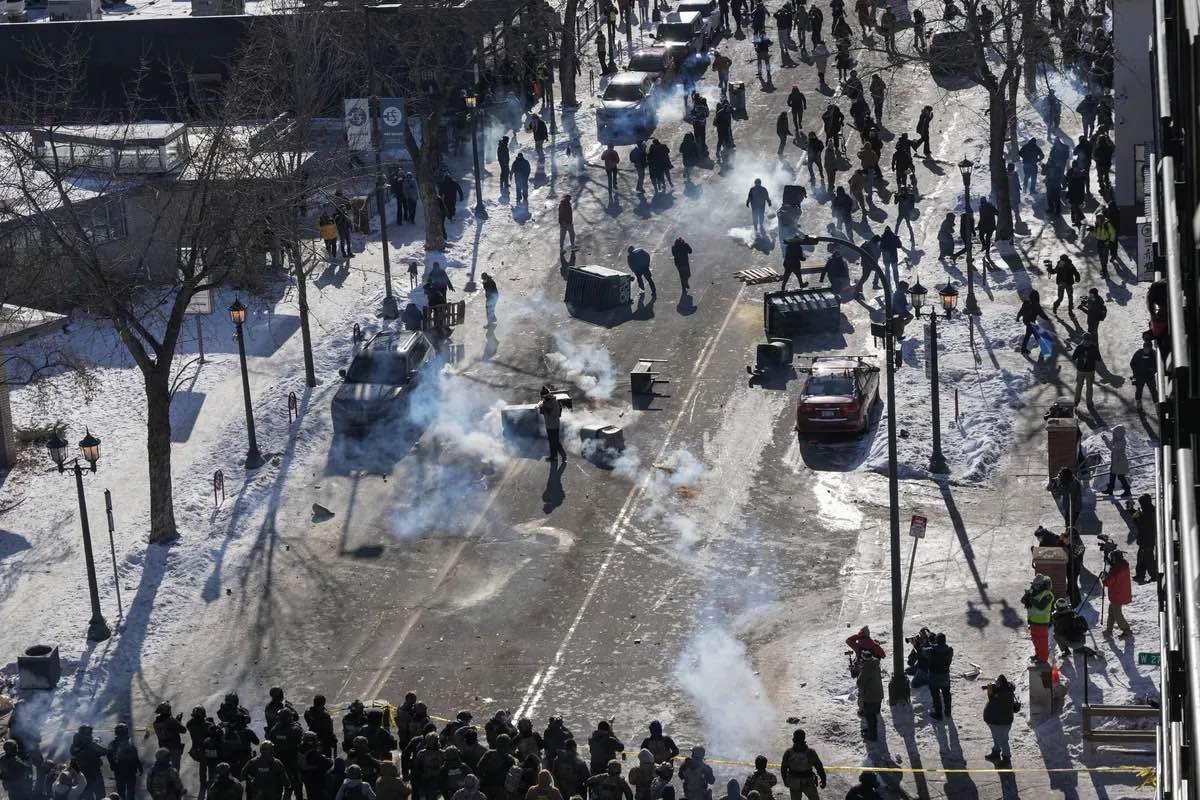
January 24, 2026. People respond to the murder of Alex Pretti.
In the negotiations in Hanoi a week before the fall of Saigon in 1975, an American general reportedly told a North Vietnamese commanding officer, “You know, you never beat us on the battlefield.”
The North Vietnamese commander replied, “That may be so, but it is also irrelevant.”
The Twin Cities could offer the same retort to our enemy today. Insurgencies win by continuously wearing down a more powerful opponent. We win by not losing.
While the vast majority of patrollers used car horns, cell phone cameras, and whistles as their weapons, it would be incorrect to characterize the resistance as strictly nonviolent. An unknown number of brave people threw their bodies between ICE and our vulnerable neighbors. Some of them slashed the tires and smashed out the windows of ICE vehicles, pelted ICE agents with snowballs, and rescued arrestees from their clutches.
According to “Border Czar” Tom Homan, in January alone, nearly 160 people were arrested for impeding or assaulting federal agents. In the course of that month, ICE and Border Patrol shot one person every week, killing Renee Good and Alex Pretti and injuring Julio Sosa Celis. Undeterred, the people rose in rebellion in greater and greater numbers after each shooting: on January 7, by fighting federal agents at Roosevelt Middle School, storming the doors of a federal courthouse, and barricading off the site of Renee’s murder; on January 14, by chasing off federal agents from the Northside and looting three of their cars; and on January 24, after the murder of Alex Pretti, by erecting barricades in Whittier and fighting off both ICE and local police, compelling them to withdraw.
From the daily skirmishes at the sites of abductions to the riots that engulfed entire neighborhoods, these clashes played a crucial role in the development of the resistance. Without these incidents, the daily rapid response chats, the hyperlocal neighborhood groups, the late-night hotel noise demos, and even the mass work stoppages might not have cohered into a movement capable of grinding down the resolve of the federal government. The reasons for this are social, not military.
Rather than looking at these moments as random occurrences of stochastic turbulence, extracurricular activities that punctuated the ongoing deep organizing with sensational headlines, we understand every engagement with enemy forces as part of an ongoing arc of escalation. Every escalation from ICE drove our own escalations in a feedback loop. Every time people fought back, that opened up a new range of possibilities and we stepped through a portal into a new phase of resistance.
Each clash with ICE propelled the movement forward in three ways:
- by building momentum and activating new participants,
- by turning up the “temperature,” and
- by forcing the state to change its tactics.
To show how this took place, we will briefly review the development of the movement from its origins.
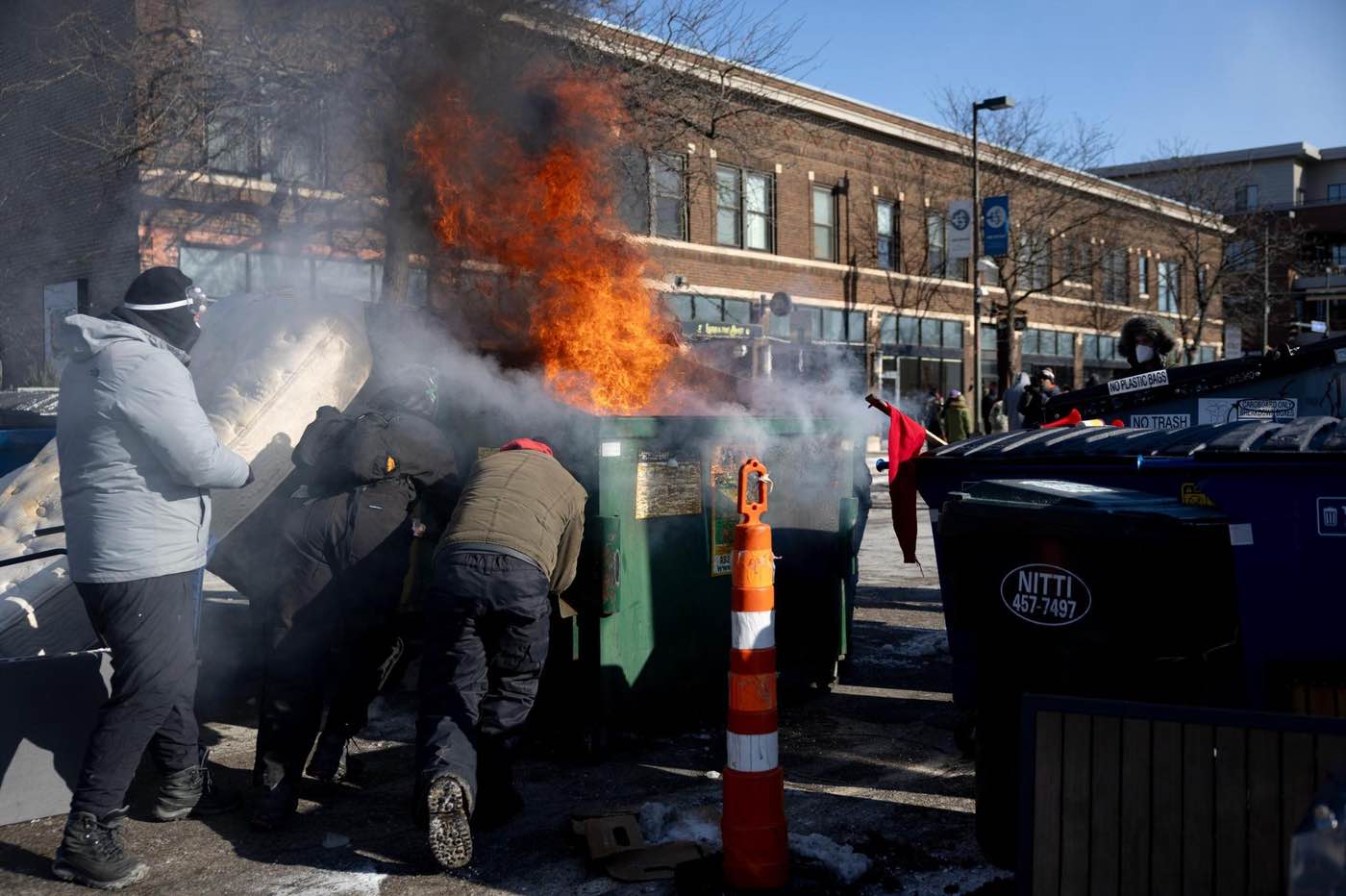
January 24, 2026. People respond to the murder of Alex Pretti.
In the Twin Cities, the first significant confrontation with ICE took place on June 3 at Taqueria Las Cuatro Milpas. The next day, people confronted ICE agents as they carried out raids in Chicago and Grand Rapids—and two days after that, the clashes began in Los Angeles that rapidly built to the first uprising of Trump’s second term.
Afterwards, while Trump deployed the National Guard to Los Angeles and went on to target Chicago and other cities with surges of federal agents, the administration did not immediately escalate ICE activity in the Twin Cities.
An organization called Monarca, launched in 2024, began holding legal observer trainings for people who wanted to track the movements of ICE. A similar group named MPLS Whistles emerged in October ahead of a press conference featuring Secretary of Homeland Security Kristi Noem.
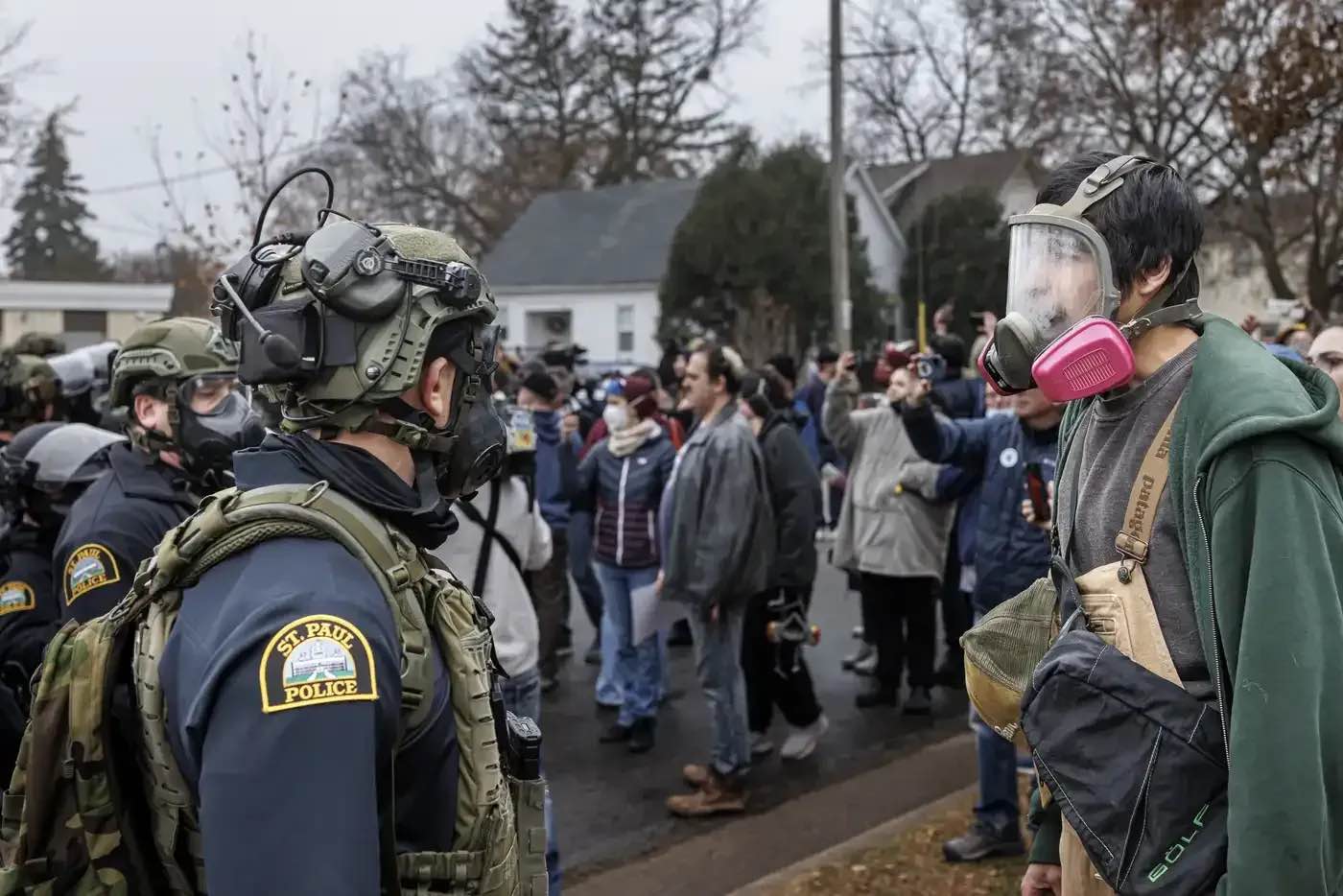
The first indications that Operation Metro Surge was on the way occurred on November 18, when ICE attempted to raid the Bro-Tex paper factory in Saint Paul. They abducted two workers, pepper-sprayed onlookers, and shoved demonstrators out of the street as a crowd spontaneously formed and attempted to block their vehicles. As the mercenaries fled, somebody smashed out the back window of an ICE van.
Word of the raid and the response spread like wildfire. A week later, on November 25, another ICE raid took place, this time on the east side of Saint Paul in the Payne-Phalen neighborhood. They took two more people. This time, word spread all over the cities and a larger crowd—over a hundred people—came out to stop them. The energy of the smaller clash a week prior had primed the population. This time, some people showed up in respirators and helmets. Federal agents escalated their repressive tactics, shooting pepper balls and sponge rounds from shotguns. One protester was injured by agents who cracked their head against the pavement.
As in June, DHS personnel tried to claim after the fact that the raid was not immigration-related, but nobody believed them. As we will discuss below, this is presumably a disinformation tactic intended to “keep the temperature down,” a priority that Republicans and Democrats share.
The two big November confrontations forced federal agents to change their strategy to hasty snatch-and-grabs. This shift showed the limitations of the first iteration of the rapid response networks, in which organizations like Monarca would verify reports and then circulate them. The rapid response networks that were cohering on Signal and Whatsapp solved this problem by decentralizing, cutting out the bottlenecks.
November 25, 2025. The beginnings of a proportionate response.
A week later, ICE invaded the Twin Cities. The stories on the news said they were targeting Somali immigrants. Waves of fear spread through every immigrant community. Some people stopped showing up to work.
ICE abducted twelve people in the first three days of December before the Department of Homeland Security formally announced Operation Metro Surge on December 4. Soon after, over 300 ICE agents were occupying our streets. Stories began to circulate about house raids in the suburbs. Organizers started calling face-to-face meetings to set up neighborhood defense groups. Proper anti-ICE patrols got underway. The first patrollers took to euphemistically calling ourselves “commuters.”
In the course of the first two weeks of the occupation, a holding pattern set in. ICE would jump out of their cars in pairs and snatch someone. Sometimes, if we were lucky, a crowd would form. People would get out their phones and blow their whistles and cuss at them. The agents would pepper-spray someone and leave with an abductee.
On the handful of occasions when we could stop abductions by sheer numbers, we did—for example, when ICE raided a construction site in Chanhassen in dangerously cold temperatures and two workers got frostbite from being trapped on a roof while a crowd faced down the feds. But for the most part, most of us were relatively passive observers in this period. Most of the abductions succeeded.
On December 15, that began to change. Two ICE agents attempted to kidnap a pregnant woman at the corner of 29th and Pillsbury. Agent Brenden Cuni slammed her to the ground and shoved his knee into her back. This was also the first time we positively identified an ICE agent after seeing him in the field. People began throwing snowballs and big chunks of ice at the agents from all sides.
As the thermal temperature dropped in the second half of December, the political temperature ratcheted up. It became commonplace to see ICE brutalizing people. December 22 marked the first time they fired live ammunition at us, when they shot at a man in Saint Paul after ramming his car. Reports circulated about ICE shooting out one observer’s tires. Another was arrested in a parking lot near the Whipple federal building (the staging area for practically all ICE activity in the area) and charged with “stalking.” They started brake-checking drivers who followed them, or boxing us in. They began attempting to carry out the abductions more quickly and violently. Their violence became more theatrical. The occupation created a new status quo.
For a couple of suspiciously calm days before January 6, it appeared that the abductions in Minneapolis might finally be slowing down. Then DHS announced a surge of 2000 more ICE and Border Patrol agents. Suddenly, the streets were overrun with them. Whereas before, you needed a car if you wanted to “commute,” now there were so many agents that foot patrols around certain hotspots became effective. The abductions became more indiscriminate. We saw agents grabbing people at bus stops and using facial recognition software on random people on the sidewalk. The same day that the surge began, ICE sent detained Minneapolis resident Victor Manuel Diaz to Fort Bliss, Texas, where he died—or else was murdered—only a week later.
January 7, 2026. People respond to the murder of Renee Good.
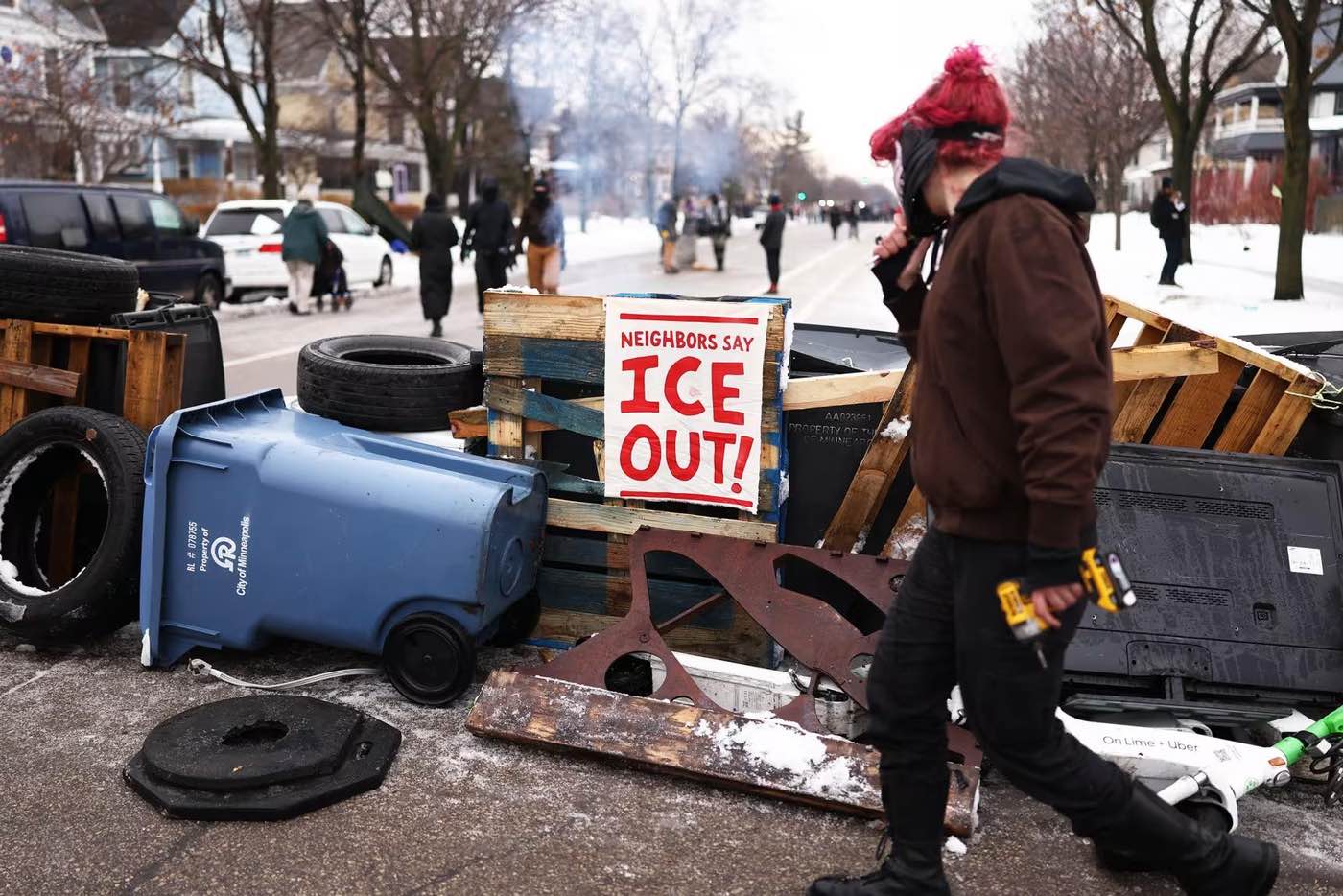
One day into the surge, on January 7, ICE agent Jonathan Ross murdered Renee Good. Dozens of federal agents gathered at the site of her murder to threaten the crowd. Considering what the agents had just done, the crowd’s immediate reaction was conservative and restrained. People blocked the street and chanted at the accomplices in the killing. Unprovoked, Border Patrol “Bor-Tac” officers Michael Sveum and Edgar Vazquez opened fire with chemical weapons, touching off skirmishes at 34th and Portland in which some people threw snowballs at federal agents as they retreated.
Two hours later, a fight broke out at Roosevelt Middle School, where people successfully stopped ICE agents from abducting an immigrant worker by swarming them in front of the building. That night, locals barricaded off 34th and Portland Avenue, the scene of the murder. Ten thousand people turned out to stand vigil for Renee Good.
On the morning of January 8, the day after the murder of Renee Good, people organized by a AFL-CIO “direct action trainer” carried out the first attempt to blockade the Whipple building. The crowd was fairly tame, but officers tear-gassed them nonetheless. As the protesters were only using soft blockade tactics, they were not able to withstand the assault.
After Renee’s murder, a new status quo emerged. ICE ramped up its terror to new heights. It became common for them to smash out people’s car windows. They detained more observers. They started using tear gas in minor confrontations in which it would have been unusual for regular cops to deploy it. Two Target employees who were citizens were beaten and arrested for filming federal agents. ICE released people from custody in the middle of the night in sub-zero temperatures in public parks. Liberal conspiracy theories became popular alleging that Trump was trying to use this violence to provoke us into a reaction. Rapid response chats ballooned in size.
On January 11, Greg Bovino conspicuously took a Border Patrol convoy up and down University Avenue, harassing people in crowded areas. At a Speedway gas station in Saint Paul, they beat and choked Orbin Mauricio Enriquez Serrano unconscious, and punched and tackled observers while they carried away his body. Two days later, a hundred people turned out to confront ICE when they raided a house in Powderhorn; ICE tear-gassed them. Clashes broke out at the Whipple building later on the night of January 13, when protesters and DHS police exchanged fireworks for CS gas and flashbangs.
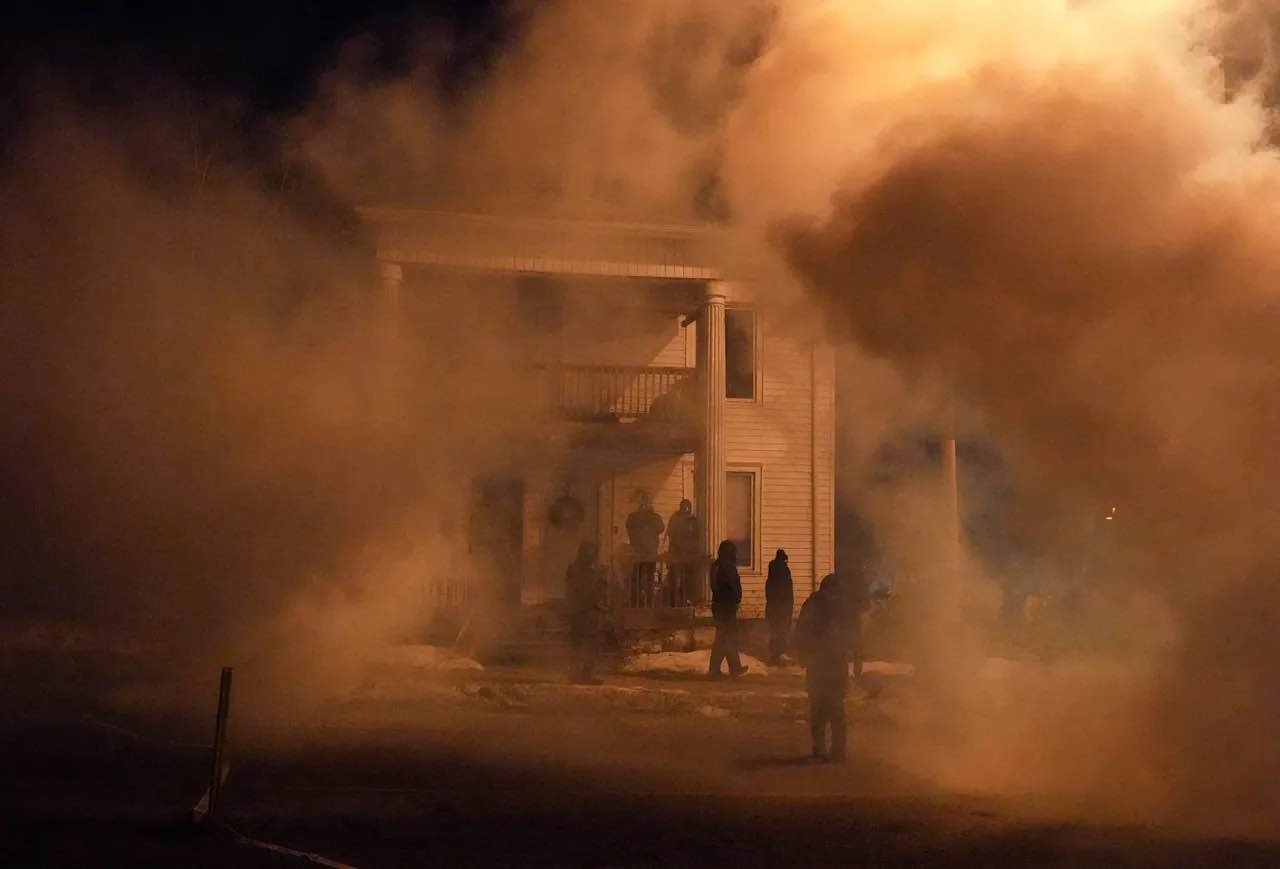
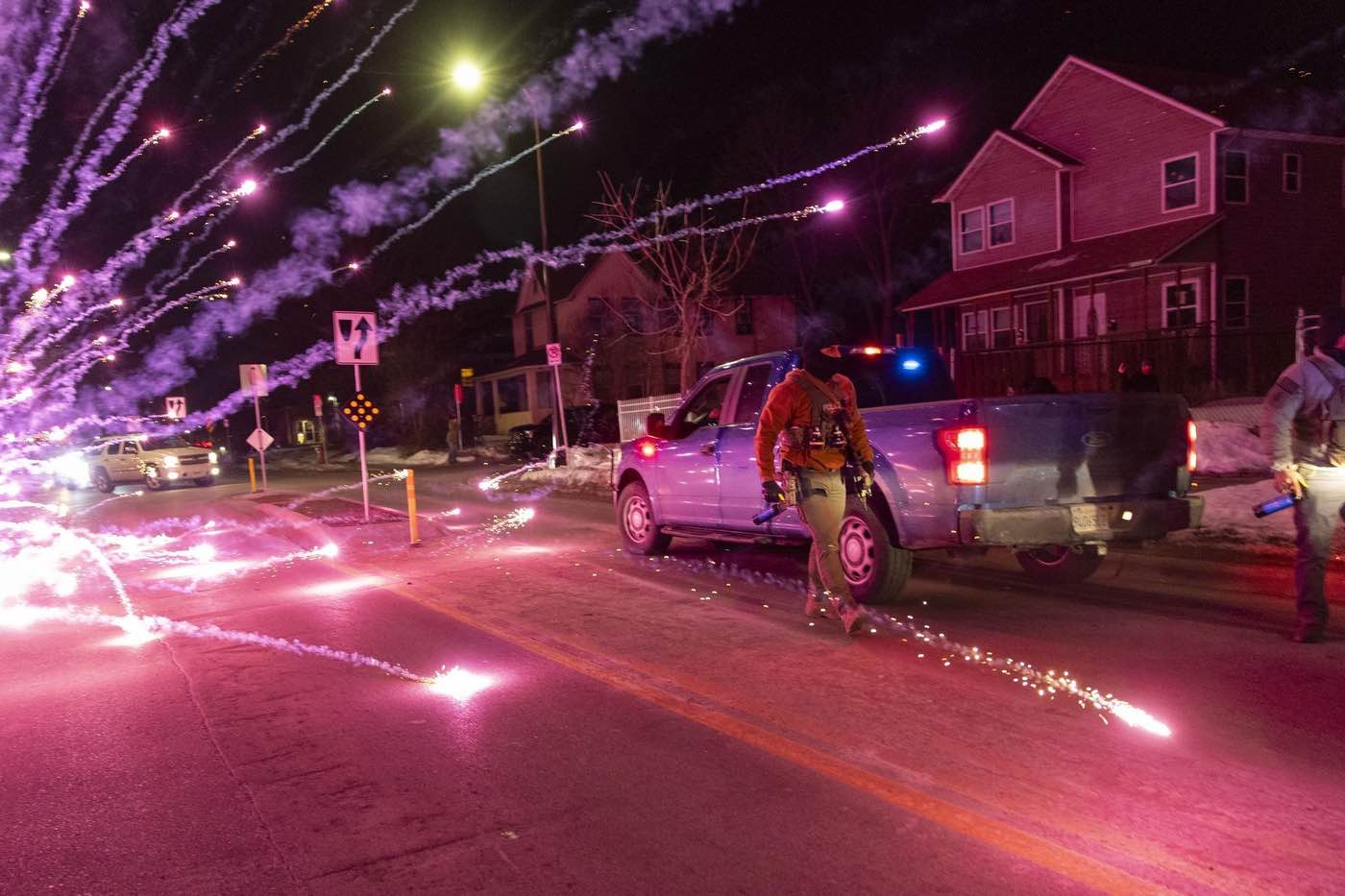
We saw an inflection point on January 14, when an ICE agent shot Julio Sosa-Celis through his own front door in north Minneapolis. Black and brown young people from the working-class Northside neighborhood came out by the hundreds and battled federal agents alongside activists. For three hours, MPD supported ICE as they fired tear gas and rubber bullets. People responded with bottles, rocks, and firecrackers.
ICE withdrew first, abandoning at least three vehicles. MPD fled shortly afterwards. The youth of Northside tagged and smashed up their cars, stole a gun safe from one trunk, and turned the scene into a lively block party. Witnesses livestreamed as people rifled through the ICE vehicles, pulling out sensitive documents and “challenge coins” distributed to the mercenaries for perpetrating harm against communities. Federal agents did not return until hours later.
For many in Twin Cities, January 14 felt like a turning point. It represented the stirring of a sleeping giant: the same social force that had produced the George Floyd rebellion rising to put its unmistakable stamp on the struggle against ICE.
After the riot in Northside, the number of detainees flown out of Minnesota reportedly dropped from 204 detainees flown out that day to only 114 the following day (January 15), and only 77 on January 16. The number never again reached anything like the levels seen between January 6 and January 15. The “drawdown” in the number of federal agents occupying the Twin Cities did not begin until February, but the riot of January 14 immediately put a cap on how many people the agents could abduct because it forced them to act more cautiously.
cdn.crimethinc.com/assets/articles/2026/02/23/chart.png
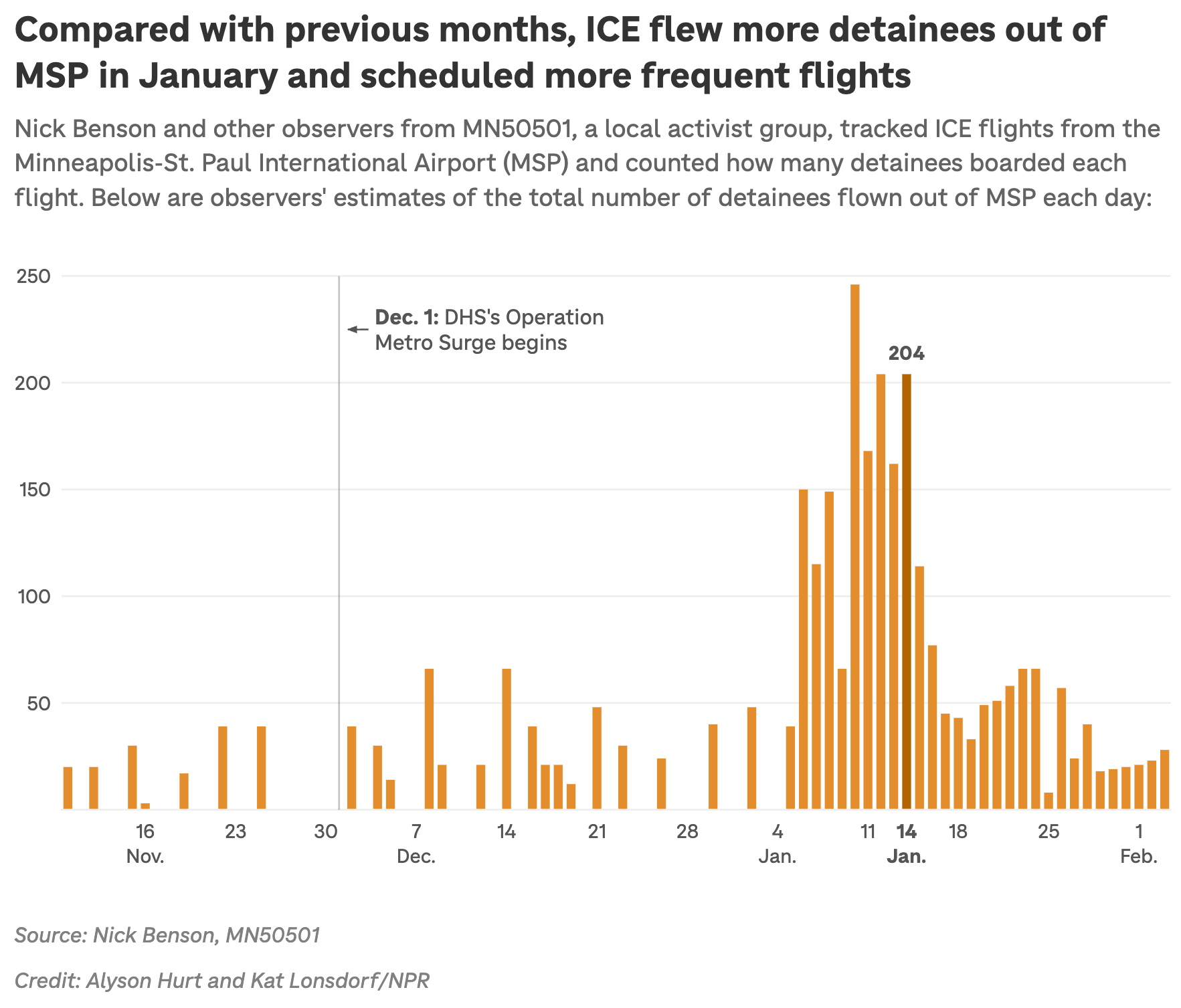
It was direct action—not the decisions of officials of either political party—that turned the tide. The changes in official policy came later, acknowledging a reality imposed by courageous grassroots action.
January 14, 2026. People respond to the shooting of Julio Sosa-Celis.
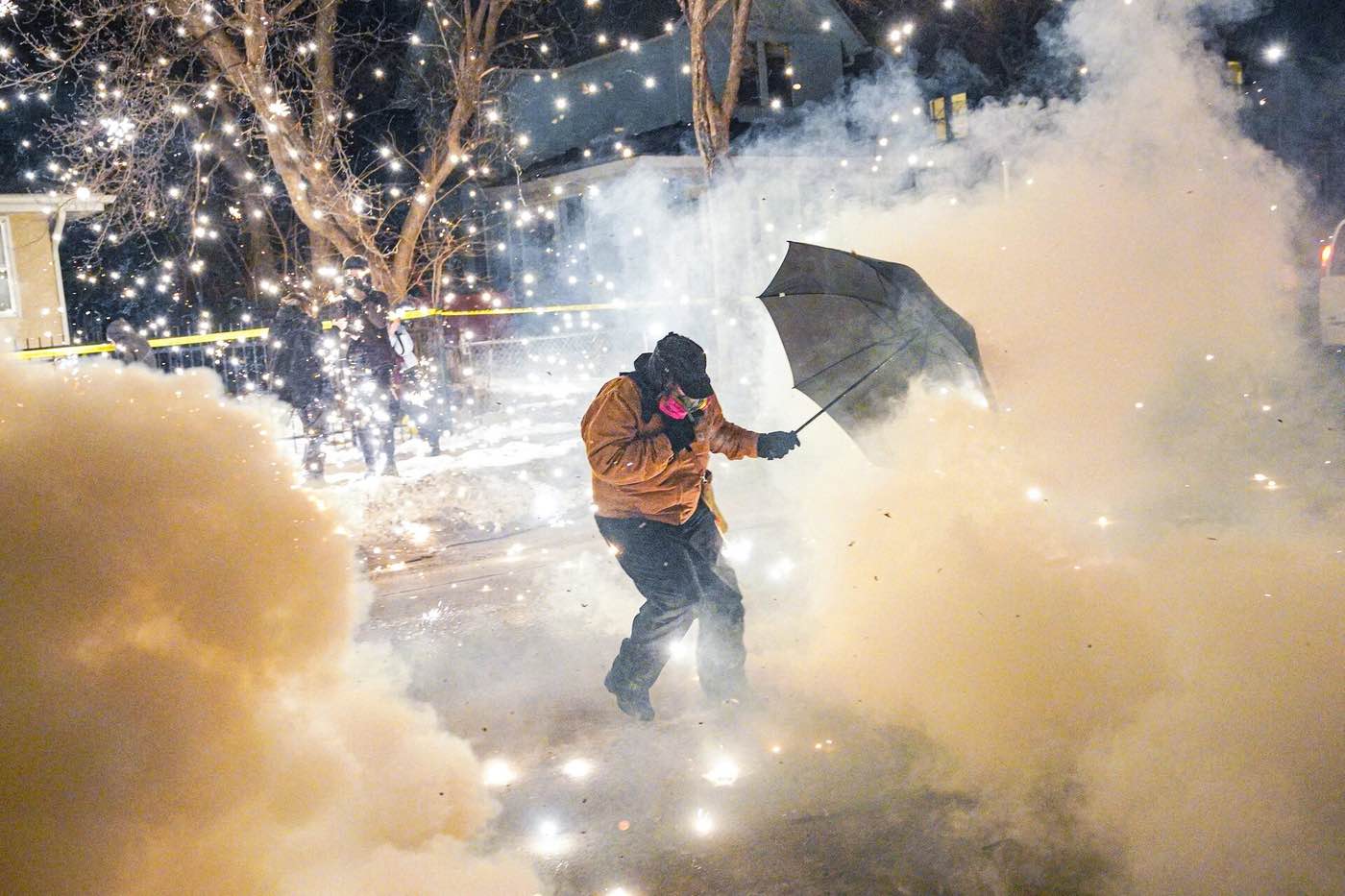
January 14, 2026. People respond to the shooting of Julio Sosa-Celis.
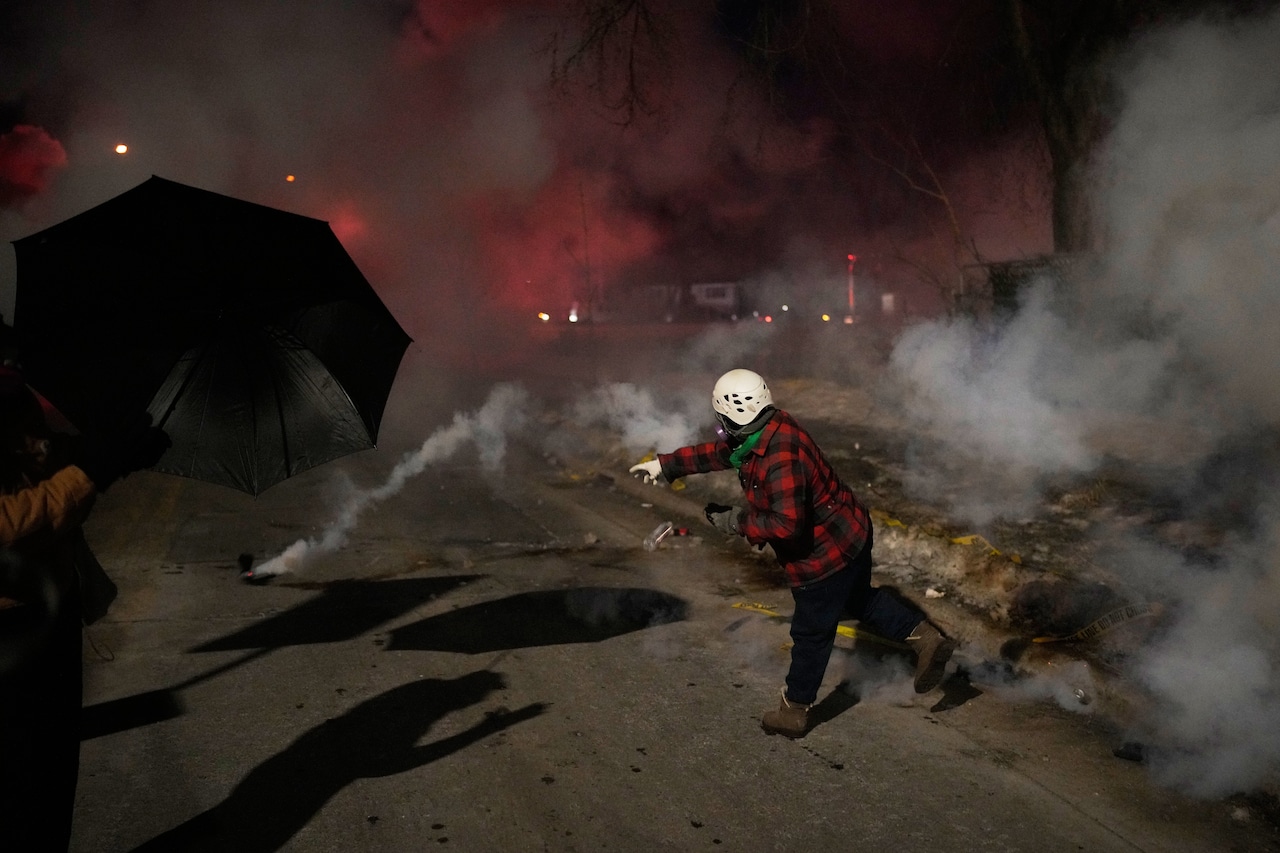
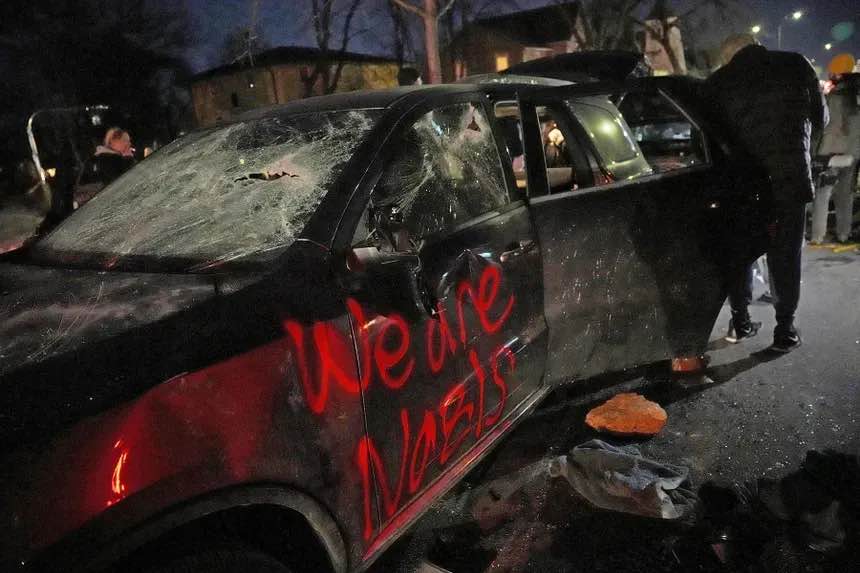
Things reached a crescendo on January 23, when 300,000 people went on strike against the occupation.
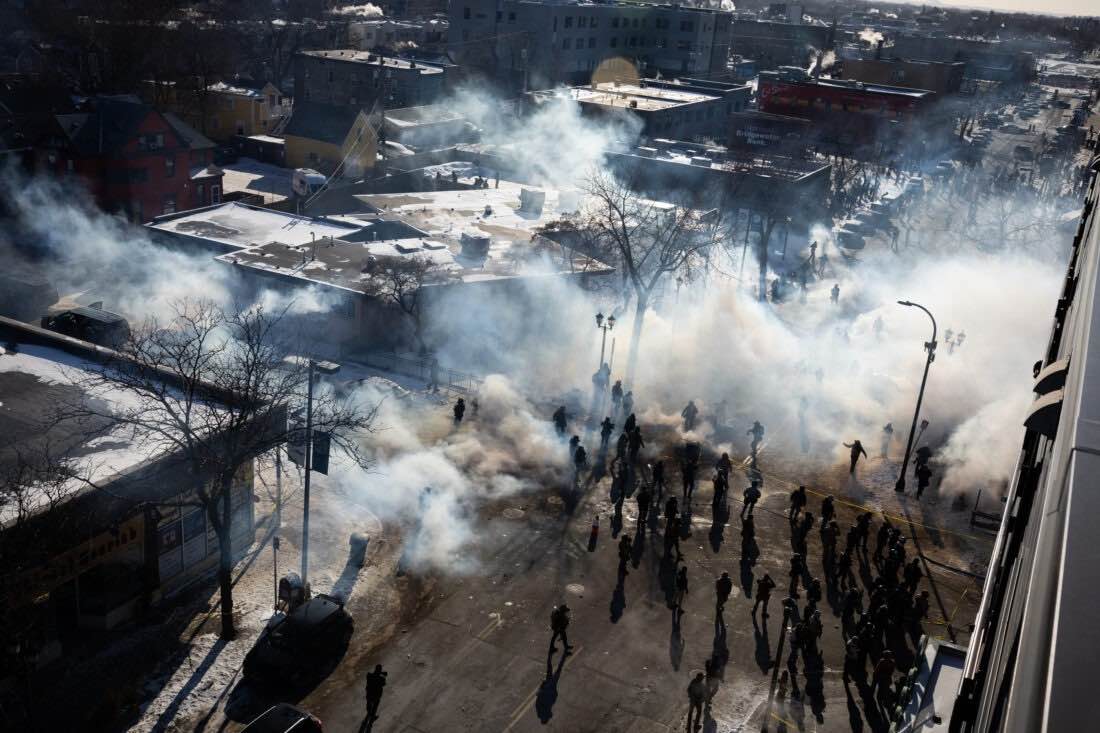
The next day, six CBP agents murdered Alex Pretti in cold blood, in broad daylight. A call went out for observers. Out of all the riots we’ve experienced, the street fighting in Whittier was notable for how rapidly it broke out. The most impressive part was that without any planning, all of the participants knew what to do at once. Barricades dotted Nicollet, Blaisdell, and 26th Street. People set dumpsters on fire. The pallets at one warehouse were all repurposed as barricade materials. Federal agents fired an astonishing amount of tear gas to cover their retreat before fleeing onto the 35W highway.
Three days later, Greg Bovino had been relieved of command and the state government was angling to make a deal for some sort of détente. That same day, Governor Tim Walz said,
“The politics for the White House is they cannot afford to see tear gas on the streets and they certainly can’t afford to see another incident like we saw on Saturday morning.”
January 24, 2026. People respond to the murder of Alex Pretti.
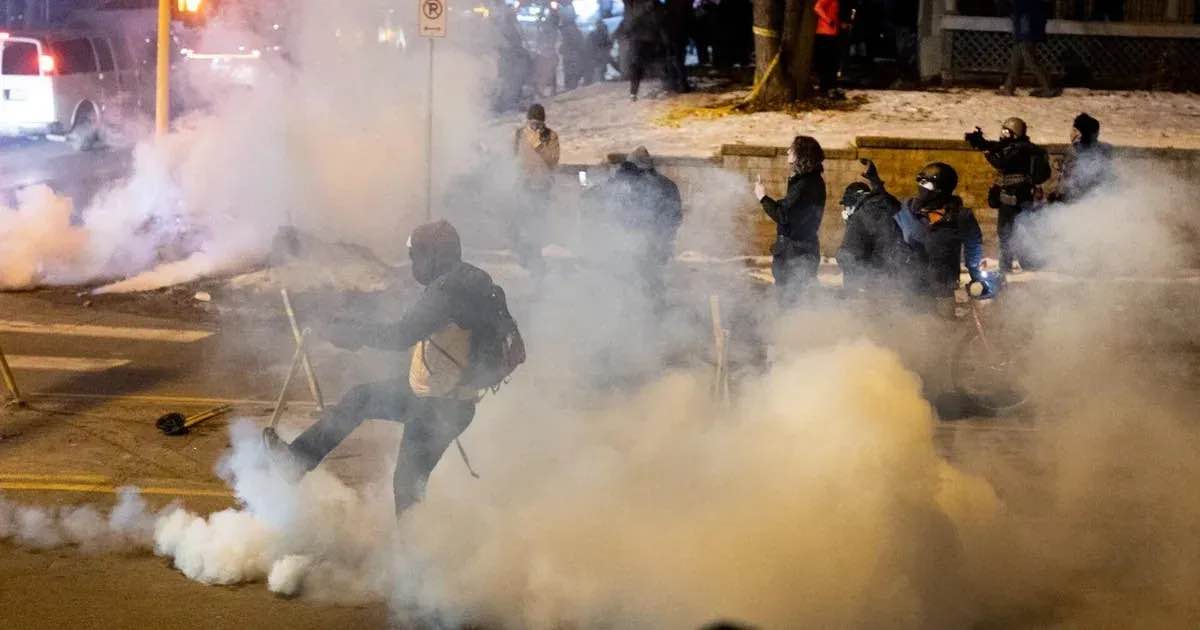
Today, nearly four weeks have passed since Alex’s murder and the events in Whittier. Border czar Tom Homan allegedly withdrew 700 agents from the Twin Cities after those events, although he and the other representatives of the federal government have given us no reason to take them at their word.
Above all, the “drawdown” represents a strategic shift intended to pacify people. The state government has given ICE access to all county jails. ICE may have become less visible, and they may be terrorizing the suburbs more intensely than the city centers, but they are still here—their motor pool is still full at Whipple and they’re still kidnapping people every day. Local organizers are calling for a week of action from February 25 to March 1 to keep the pressure on at a moment when the regime is trying to release it.
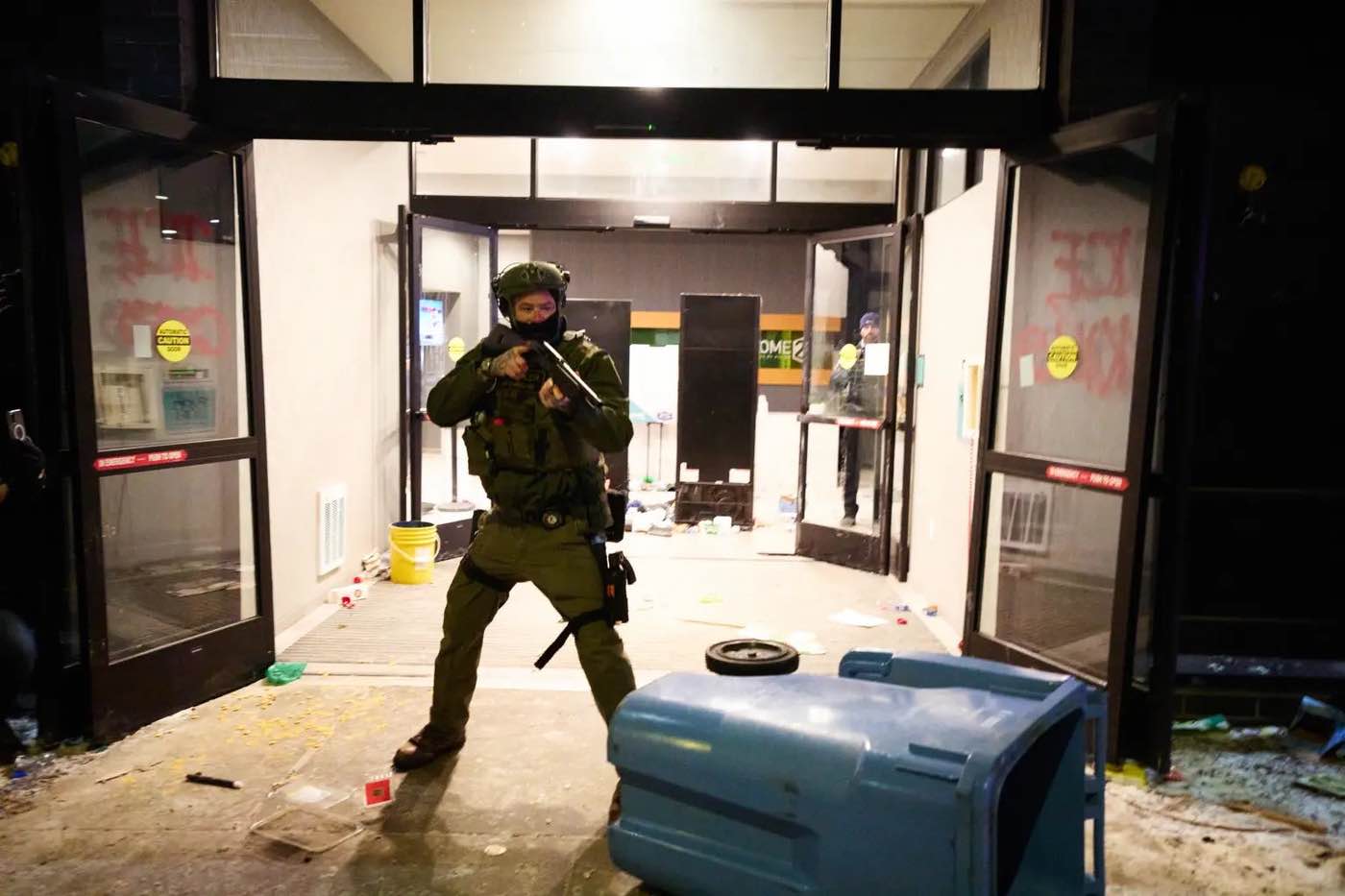
January 25, 2026: a federal mercenary menaces people outside a hotel housing ICE agents.
We can derive three tentative conclusions from this sequence of events:
The introduction of militant tactics did not diminish popular support for the resistance. On the contrary, the rapid response infrastructure has continued to grow and develop in each phase of the struggle. There were 3000 commuters in December; as of mid-February, some 30,000 have participated. The state has failed to convince the public to accept a dichotomy between “good protesters” and “bad protesters.” The movement remains extraordinarily popular.
“Disturbing the peace” is a form of leverage for the movement in and of itself. What forced the federal government to retreat was not only the direct surveillance and confrontation of ICE agents by commuters; it was also the general threat to public order posed by a movement of thousands of people in constant real-time communication that sometimes bleeds over into neighborhood rebellions, such as the ones that took place in Northside and Whittier in response to the shooting on January 14 and the murder of Alex Pretti on January 24. When they started negotiating, Walz and Trump both agreed that it was crucial to “turn down the temperature.” Insofar as that priority unifies the fascists within the Republican party and the false opposition represented by the Democratic establishment, it indicates how a grassroots social movement might pursue its own interests in a way that cannot be co-opted by either of the dominant forces in government.
The old mechanisms of repression no longer work. This is why the state is resorting to brute force. The powers that be are no longer interested in practicing the kind of counterinsurgency that involves winning hearts and minds. They’re making a bid to govern by terror alone. This is historically an indicator of a weak state, one that that no longer possesses legitimacy in the eyes of those it governs.
In other words—a government living on borrowed time.
January 24, 2026. People respond to the murder of Alex Pretti.
“From now on the demagogues, the opportunists, and the magicians have a difficult task. The action which has thrown them into a hand-to-hand struggle confers upon the masses a voracious taste for the concrete.”
—Frantz Fanon, The Wretched of the Earth
Further Reading
- Melt the ICE: Twin Cities Protesters Blockade ICE Inside the Federal Building
- Filter Blockades: A Tactic from the Twin Cities to Fight ICE and Defend Your Neighborhood
- The Noise Demonstrations Keeping ICE Agents Awake at Their Hotels—A Model from the Twin Cities
- Minneapolis Responds to the Murder of Alex Pretti: An Eyewitness Account
- Protesters Blockade ICE Headquarters in Fort Snelling, Minnesota: A Report from an Action during the General Strike in the Twin Cities
- From Rapid Response to Revolutionary Social Change: The Potential of the Rapid Response Networks
- Rapid Response Networks in the Twin Cities: A Guide to an Updated Model
- North Minneapolis Chases Out ICE: A Firsthand Account of the Response to Another ICE Shooting
- Minneapolis Responds to ICE Committing Murder: An Account from the Streets
- Protesters Clash with ICE Agents Again in the Twin Cities: A Firsthand Report
- Minneapolis to Feds: “Get the Fuck Out”—How People in the Twin Cities Responded to a Federal Raid