“History Is Repeating Itself”
:A Lebanese Perspective on the War on Palestine, Lebanon, and Iran


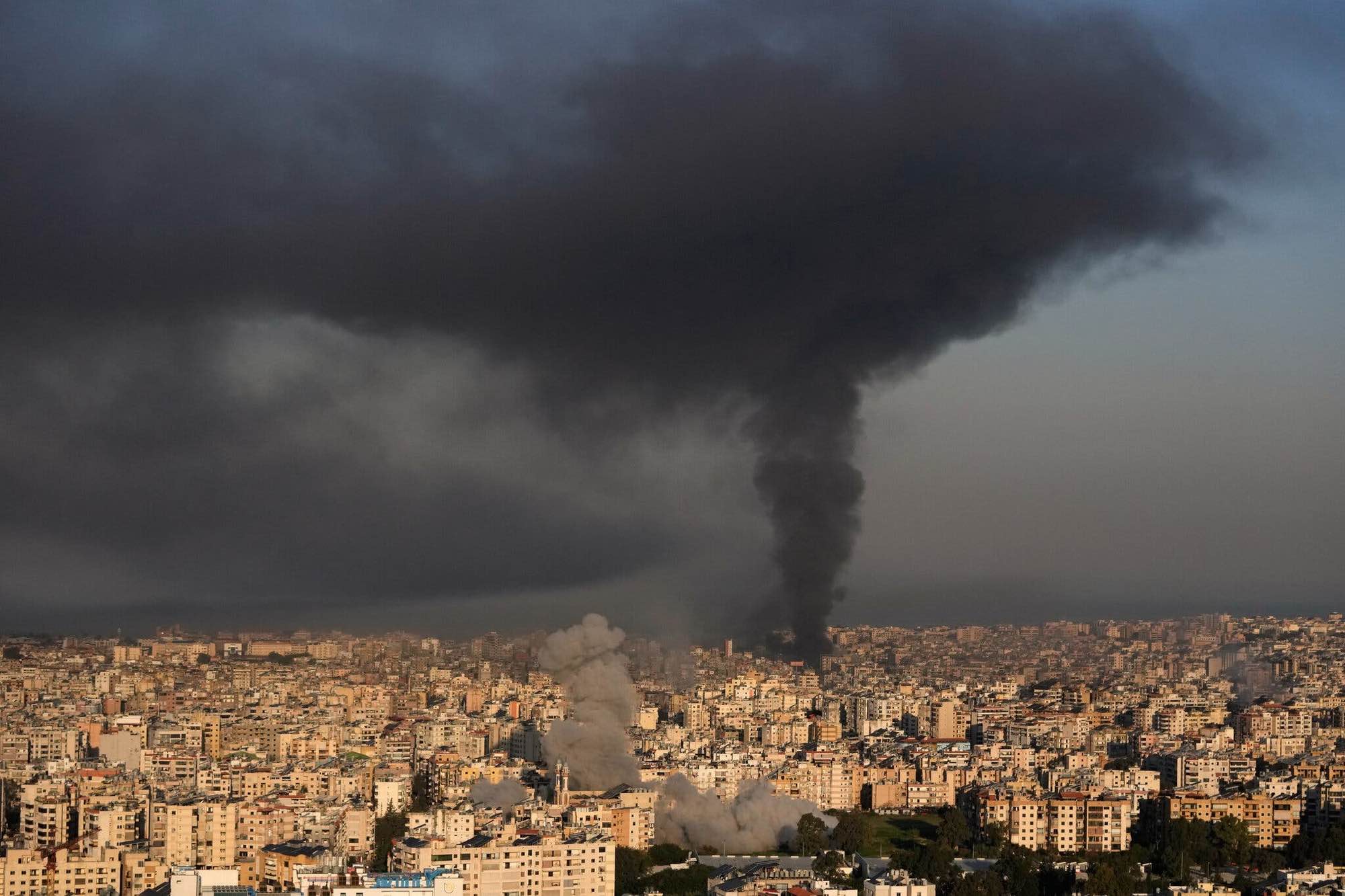
The war that the United States and Israel are waging in the Middle East is not solely directed at Iran. In addition to occupying the entirety of Palestine as well as the Golan Heights and other parts of Syria, Israeli troops are currently occupying parts of Lebanon while Israeli airstrikes pummel the country from above. At least 800,000 people have been forced to flee their homes in Lebanon since the beginning of March. Left unchecked, the Israeli government will reduce Lebanon to uninhabitable wreckage, just as it has Gaza.
To understand the consequences for people in Lebanon, we reached out to Elia Ayoub, who previously spoke to us about the uprising that took place in Lebanon in October 2019 against the sectarian rule of warlord oligarchs. How should we understand the latest round of hostilities in the context of the last several decades? How does this assault shape the prospects for Lebanese movements for liberation?
Elia Ayoub is an anti-authoritarian historian and researcher from Lebanon. He hosts The Fire These Times podcast, runs the Hauntologies newsletter, and hosts online classes on modern Lebanese history. You can donate to support people displaced by Israeli attacks on Lebanon here.
How did Israeli policies impact your life and the lives of those around you as you were growing up in Lebanon?
I would have to go back decades to give anything close to a full picture. Israel has been bombing Lebanon for a good part of the past four decades, even if we limit ourselves to starting in 1982. They militarily occupied south Lebanon until 2000, and then bombed Lebanon again in 2006. That was when they developed their notorious Dahieh military doctrine—so called after Beirut’s southern suburbs (Dahieh means “suburb” in Arabic)—which explicitly calls for disproportionate bombing of civilian areas to put pressure on Hezbollah. They bombed Lebanon again in 2023 and especially 2024. Then they signed a “ceasefire” with Hezbollah, which they have violated at least 10,000 times since, according to the UN.
And now they are bombing again.
Israel violates international law as a matter of state policy. I was 15 years old during the 2006 war. I remember watching Israeli jets dropping bomb after bomb over Dahieh. Close friends who are from the South, Dahieh, and the Bekaa valley have experienced death, displacement, and trauma multiple times over. Virtually everyone in Lebanon has witnessed an Israeli bombing, regardless of their age. If you have lived in Lebanon for a long enough period, you have experienced Israeli state violence.
We’re talking about millions of people from all walks of life, of all political persuasions—children and their parents and grandparents. For example, my 89-year-old grandmother, who fled the Nakba in 1948 as a child, has never passed more than a few years at a time in nearly a century of life without being directly or indirectly impacted by Israeli state violence. That’s all we know about Israelis. There is a widespread perception that they are incapable of existing as a political culture without war.
This is entirely missing from most of the coverage I’ve seen, which is limited to inhuman geopolitical abstracts. What is happening right now is not just about Hezbollah (which is already unpopular in Lebanon) dragging the country into foreign wars. If this was simply about Hezbollah, Israel wouldn’t be ethnically cleansing entire villages by dynamiting them. Israel wouldn’t be spraying herbicides over large swaths of Lebanon and Syria to kill crops and wildlife in order to make the land unusable for agriculture. Israeli politicians wouldn’t be routinely threatening to bomb Lebanon back to the dark ages, or threatening to turn Dahieh into Gaza, or designating all Lebanese Shias—roughly a third of the population—as a hostile population.
Hezbollah, a deeply reactionary party that I’ve long opposed—I say this simply to avoid confusion—would have never existed in the first place were it not for the Israeli occupation of southern Lebanon. There would have been no reason for a group that called itself the Islamic resistance to exist were it not for the fact that it was necessary to resist such a brutal foreign occupier.
And now, in the past few days, Israel has ordered the forced evacuation—effectively, the ethnic cleansing—of the entirety of southern Lebanon, Dahieh, and parts of the Bekaa. History is repeating itself, only now the weapons of mass destruction that the Israeli government possesses are even deadlier than before.
Israel repeatedly struck Beirut’s southern suburbs during the first week of March 2026.
How have Israeli policies and actions towards Lebanon and the region as a whole shifted over the past decade?
A sort of stalemate prevailed for most of the period following 2006, with escalations here and there. The Israelis were busy bombing Gaza from 2008 onward, especially in 2014, and Hezbollah occupied with defending the Assad regime in Syria. During that period, Israeli politicians never missed an opportunity to tell Lebanon that they can destroy us whenever they want—that they intend to do so.
Whatever Israel did in Gaza, we knew that they wanted to do the same in Lebanon. It didn’t take a genius to conclude that. Israelis tell us these things outright.
What has shifted is that Israeli politics has become even more explicitly genocidal than before. The attacks of October 7th provided an already genocidal political culture with the excuse it needed. We’ve all seen the results.
From a Lebanese point of view, seeing Israel get more and more violent made a lot of people conclude that, once they are “finished” with Gaza, they will turn their eyes to Lebanon.
Repeated Israeli incursions and air raids have created mass displacement within Lebanon. How have Lebanese people organized themselves in these chaotic moments? What groups or movements have helped people escaping the war?
We should remember that this latest round of mass displacement comes after a similar one in 2024 that mostly affected the same areas. There are established paths for those with connections to stay with friends or relatives, for those with means to rent out a place, and so on.
As for those who do not have these means, they are the hardest hit; many have been sleeping on the streets. We often see neighboring villages that aren’t as affected sheltering those who are fleeing, at least temporarily, while people make their way to their destination, if they have one in mind. People are adapting to an evolving situation on a daily basis. Some are fundraising on their own or as part of groups, others are volunteering with soup kitchens.
However, it’s impossible to “escape the war,” as the consequences are felt throughout the country.
In 2019, there was a burst of social movement activity in Lebanon drawing people together across sectarian lines to reject the domination of warlord oligarchs. What became of that time of possibility?
I wrote about this for CrimethInc. at the time.
The 2019 moment was the biggest uprising this country had ever seen. It was only possible because of years of organizing and protests, years of governmental corruption, and—of particular importance to this conversation—a long enough period of time without Lebanon being bombed. We would have not been able to take to the streets if Israelis were bombing those streets and our homes—which is what is happening now, once again.
This shows how Israel has been good to Lebanon’s sectarian regime.
The horizons that opened up in 2019 were closed soon after by a combination of factors: repression (including by Hezbollah), economic crisis, the COVID-19 pandemic, and the August 4, 2020 explosion at the port of Beirut. For most of the years since, most people have been simply trying to survive, with many people working on mutual aid, soup kitchens, and other forms of community building. We could reasonably attribute the emergence of those efforts to those few months in late 2019 and early 2020 that showed people—in particular, the generation that came of age after the 1975-1990 Lebanon wars—what is possible when we get together and organize.
That’s where that time of possibility went. But I think we haven’t seen the end of that potential yet.
How do you understand the relationship between Netanyahu’s government and Trump’s government today? Which is determining the course of events, and towards what end?
We know from US officials, including Marco Rubio, that Israel made the call to attack Iran and the US decided to join—so in that sense, the Israeli government is the one making the call. It’s surreal that the smaller power managed to drag the much larger power into this, and that a decision made by a fairly small number of people in Israel has had such consequences for the world economy, not to mention the ongoing death toll and the environmental disaster.
The Americans have no end goal. They did not plan ahead at all. Now we’re seeing Trump unhappy with Israel bombing Iranian oil depots, which means they didn’t even coordinate together. It’s unclear what the Israelis want beyond spreading chaos as an end in itself. It’s possible they were arrogant enough to believe that they could impose regime change in Iran via aerial bombardment alone, but as far as I can tell, they are happy simply to destroy as much of Iran as they can, while they can. This is a regime that has gotten away with carrying out genocide in view of the entire world for over two years, so it clearly believes it can act with impunity indefinitely.
There are different ideologies on the American side as well. The Christian nationalist and Zionist Pete Hegseth is celebrating the destruction in Iran as a victory in and of itself. As for Trump, he is clearly out of his depth. He did not expect things to get this bad this quickly. He likely hoped for an outcome like the one in Venezuela, where he got rid of Maduro but kept the regime in place with Delcy Rodríguez in charge but subservient to the will of the US government. They cannot achieve that in Iran—not only because the Iranian regime is more powerful, but also because the Israelis have their own priorities.
If the Americans were smarter, they would have understood by now that their problem is Israel. Even if your goal were simply to preserve US supremacy, American support for Israel has been a disaster. They have destroyed the illusion of Gulf security in a matter of days, destabilized the world economy, and proven to every government, once and for all, that the US cannot be trusted. However this ends, we are going to see a realigned world with reduced US influence.
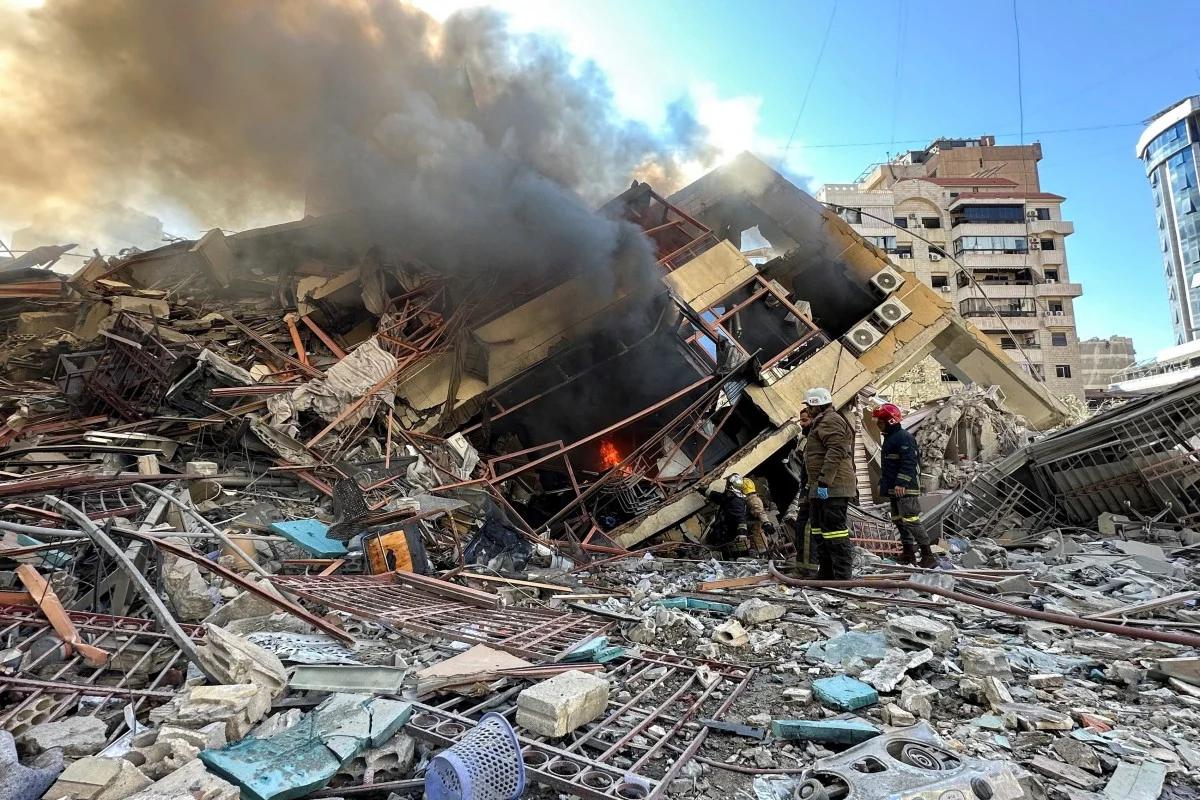
The consequences of an Israeli airstrike on the southern suburbs of Beirut on March 9, 2026.
Of all the responses to the US and Israeli aggression modeled by different political forces in Lebanon and throughout the surrounding region, which could point towards a horizon of liberation?
In Lebanon, groups like Buzuruna Juzuruna, which focuses on food sovereignty, and Egna Legna, an Ethiopian migrant women-run non-profit providing shelter, food safety and more, are examples of what is possible in the country beyond the sectarian and nationalist status quo. Queer Mutual Aid Lebanon is another one, as their definition of the queer community in Lebanon is not limited to Lebanese queers only.
In times of war, “humanitarian” discourse can either reproduce existing power dynamics—for example, by ignoring migrant domestic workers or queer Lebanese people—or depoliticize an inherently political situation—for example, reporting on how migrant domestic workers are affected without mentioning that Israel is bombing civilian areas forcing everyone to flee. Groups like the ones I have cited cut through all of this. They operate on a logic of people supporting people because they’re people. That can be a very radical act.
Military attacks by foreign powers—especially by imperialist nations—often produce a strong patriotic feeling among those who experience them. How should movements for liberation engage with this?
This isn’t really happening in Lebanon because the country is already fractured. There are many people who also blame Hezbollah for responding to Khamenei’s assassination by launching rockets towards Israel, so you’re not going to see a “rallying behind the troops” situation.
What are the most effective things that grassroots social movements elsewhere in the world can do right now to support those enduring this violence?
I always hesitate with questions like this one, only because “effectiveness” is a criterion that involves too many different factors to consider. As a general rule, I’d say adopting an anti-authoritarian framework is a good way to avoid downplaying the suffering of people who live under regimes like the Ayatollah’s while recognizing that this war has nothing to do with liberating those people.
I also think this is a situation in which the diasporas and their supporters outside of Iran, Lebanon, and Palestine can play a significant role. For example, there is very little space in Iran today for pro-Palestine activism, because the Ayatollah’s regime has long co-opted pro-Palestine discourse to its own ends—which have nothing to do with decolonizing Palestine and promoting an anti-Zionist solution that treats everyone equally regardless of religion or ethnicity. Iran has a system that can reasonably be described as gender apartheid. A state like that cannot liberate Palestinians from Israel’s ethno-supremacist apartheid.
Those of us in the diasporas can make the link between the authoritarianism of Israel and the authoritarianism of Iran without equating the two. This is crucial, because we need to be sensitive to the experience of those who are victimized by both regimes. To a Palestinian in Gaza, it could sound offensive to say that Iran is as bad as Israel, and vice versa to the Ayatollah’s victims in Iran. The absence of such nuance makes it easier for those—including parts of the Iranian diaspora—who promote the idea that Israel will liberate Iran.
There is anti-Arab racism among the Iranian diaspora that, ironically, shares similarities with the Ayatollah regime’s repression of non-Persian groups such as Ahwazi Arabs and Kurds. It is a form of ethno-supremacy that attracts and is attracted to the Zionist ethno-supremacy that most readers of this platform are more familiar with.
On the Palestinian diaspora side, more could be done to recognize the violence of the Ayatollah’s regime and the so-called “axis of resistance,” both of which have killed thousands upon thousands of people—including Palestinian Syrians who opposed Assad—while pretending to be pro-Palestine. Such connections are much more difficult to make in our region, but diasporas with more privileges can help build those desperately needed bonds.
While we’re at it, we should also be building bonds with members of the Jewish diaspora that reject Zionist ethno-supremacy in favor of building a common future.
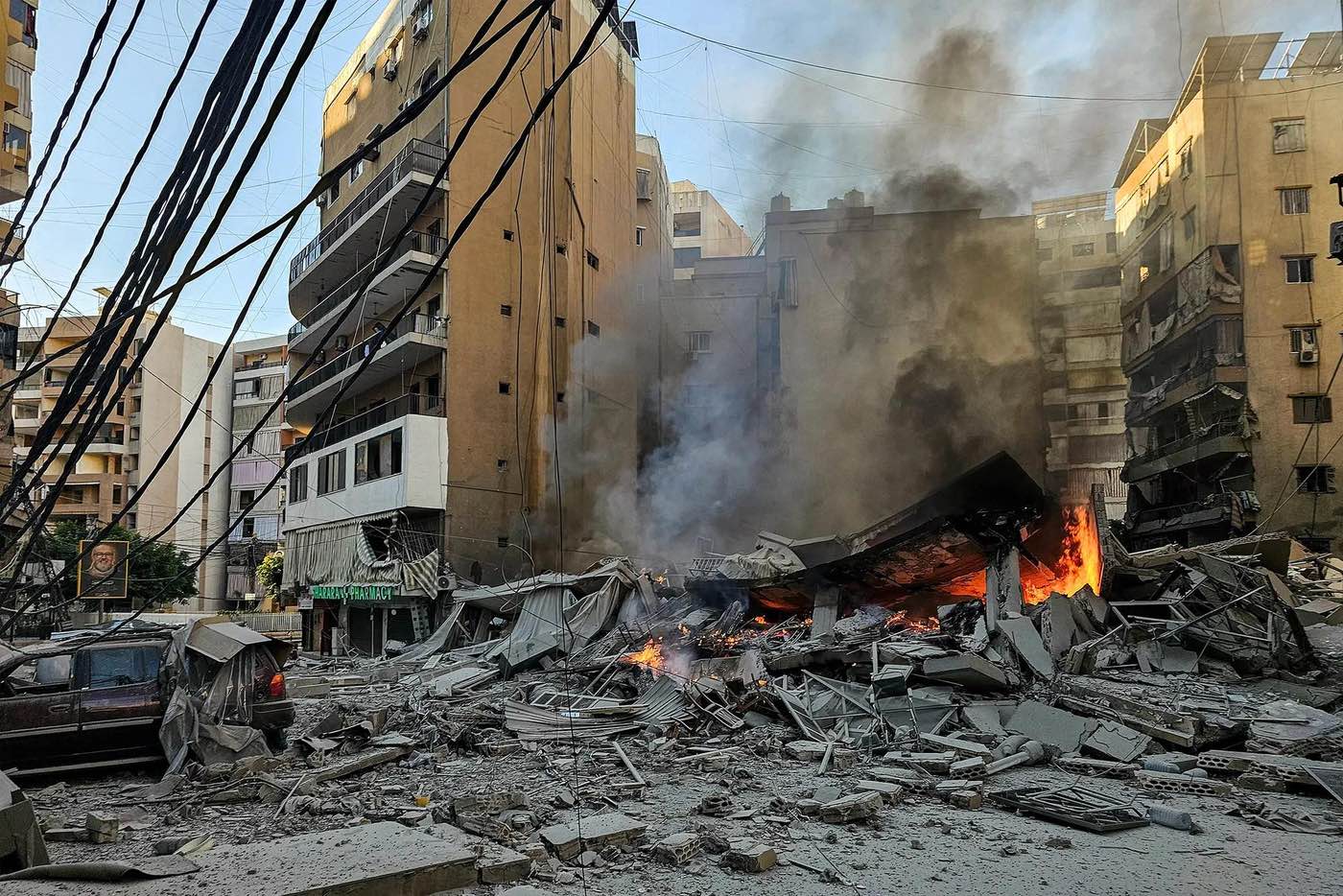
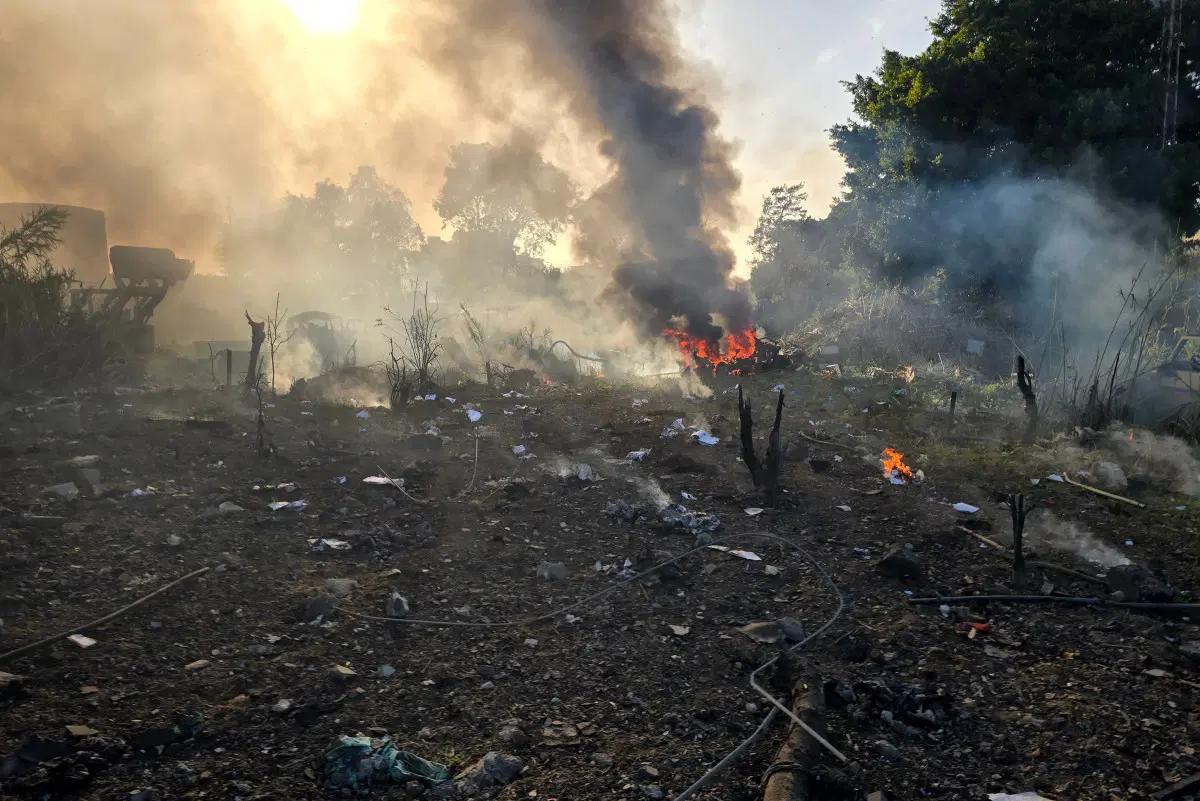
The site of an Israeli airstrike targeting the Lebanese city of Tyre on March 6, 2026.
One of the most exhausting things about horrific tragedies like this is that they force us to focus on harm reduction rather than on building the world of our dreams. If not for the US and Israeli attacks, what would you prefer to be thinking about, doing, creating?
I would be living in my home village in Lebanon, thinking about whether to go somewhere more rural where I could work on and with the land to build food sovereignty and promote mutual aid from the ground up across the country and beyond.
I would be spending more time in the woods there, learning local names for the animals and plants with my child, who has never been to Lebanon.
I appreciate this question, because it can be easy to forgot the scale of what was robbed of us. I do my best to keep hope and create roots wherever I am, but I am also always mourning what the multi-generational machines of destruction that are the Israeli and American states have done to our lives.
As long as there is a rogue and hyper-militaristic Zionist state to our south, it is too dangerous for me to live in Lebanon with my child.
Further Reading
- The Attack on Iran Is an Attack on All of Us
- “A State that Massacres Its Own People Cannot Be a Force of Liberation for Others”: A Conversation on the Recent Uprising in Iran
- Iran: An Uprising Besieged from Within and Without
- Making Sense of the PKK’s Self-Dissolution: What Does It Mean for the Middle East?
- “Women, Life, Freedom” against the War: A Statement against Genocidal Israel and the Repressive Islamic Republic
- Precarious Work Means Precarious Life: How the Rajaee Port Disaster Exemplifies the Assault on Baluch Ethnic Minorities
- Ya Ghazze Habibti—Gaza, My Love: Understanding the Genocide in Palestine
- Against Apartheid and Tyranny: For the Liberation of Palestine and All the Peoples of the Middle East—A Statement from Iranian Exiles
- Jin, Jiyan, Azadi (Woman, Life, Freedom): The Genealogy of a Slogan
- Revolt in Iran: The Feminist Resurrection and the Beginning of the End for the Regime
- The Syrian Cantina in Montreuil: Organizing in Exile — How Refugees Can Continue Revolutionary Struggle in Foreign Lands
- “There Is an Infinite Amount of Hope… but Not for Us” — An Interview Discussing the Pandemic, Economic Crisis, Repression, and Resistance in Iran
- Lebanon: The Revolution Four Months in
- Against All Wars, Against All Governments: Understanding the US-Iran War