Iran: An Uprising Besieged from Within and Without
:Three Perspectives


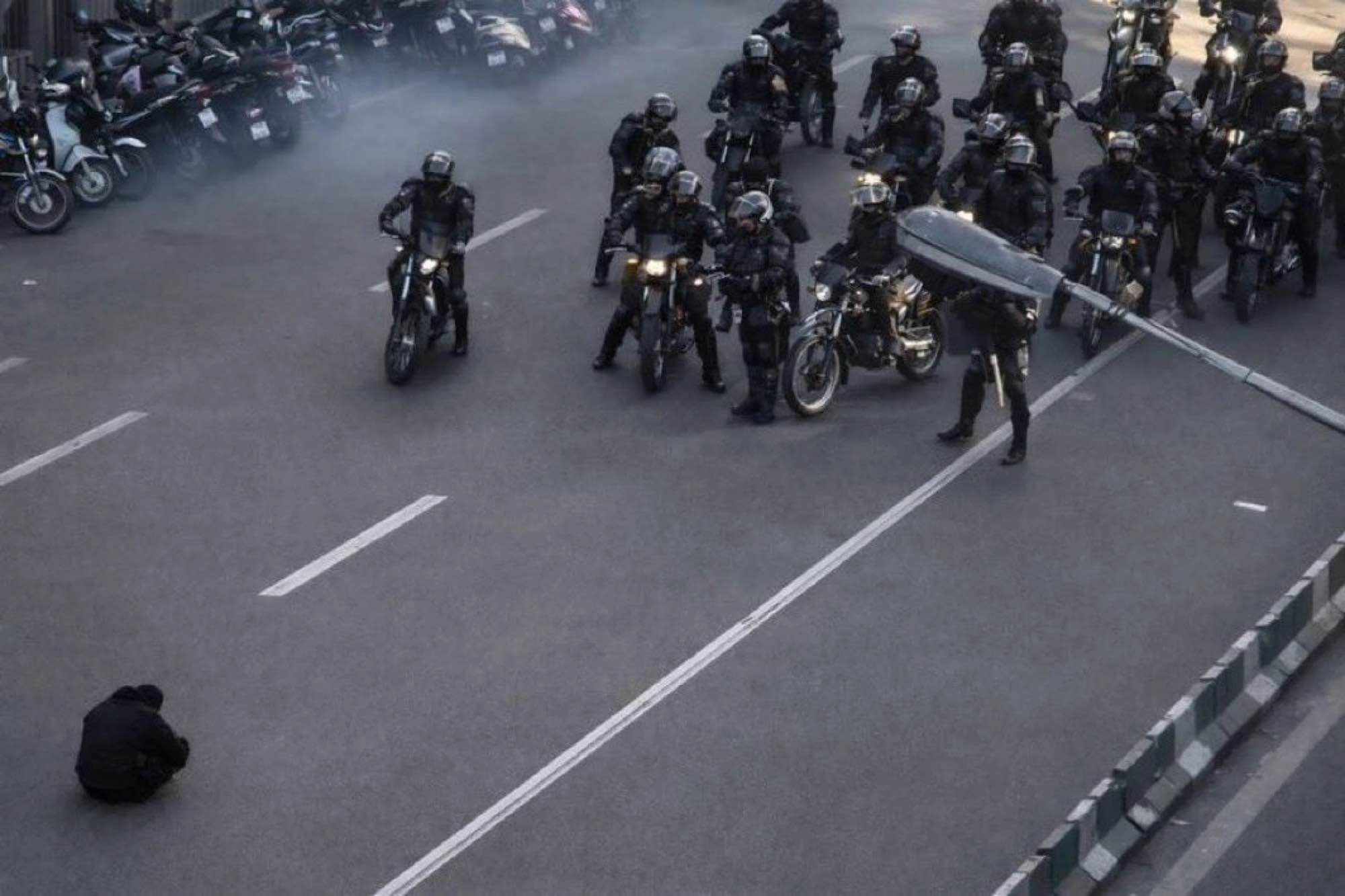
Starting on December 28, 2025, a new wave of protest broke out across Iran, triggered by economic distress and escalating to call for the toppling of the government. This is at least the fifth such movement in a decade, drawing on previous waves of labor unrest and feminist resistance. Yet within this uprising, the grassroots movement contends with reactionary monarchists, largely based outside Iran, who seek to win the backing of the United States and Israel to seize power.
This comes in the midst of a tumultuous geopolitical situation. The Israeli government has intensified the bombing of Gaza and Lebanon and the seizure of land in Gaza, Lebanon, and Syria; it is preparing to construct a settlement that will cut the West Bank in half in order to make a Palestinian state impossible. The United States has just kidnapped the president of Venezuela and his wife in order to seize Venezuelan oil, signaling a readiness to go to great lengths to dominate people both inside and outside its borders.
In the fall of 2025, protesters in Nepal and elsewhere demonstrated that it is still possible for social movements to overthrow governments. A successful revolution in Iran could set off a wave of change around the world. But if such a revolution were hijacked by reactionary forces, it could set movements for liberation back another generation or more.
The stakes are high. We owe it to grassroots movements in Iran to learn about them and support them, both because they are confronting a desperate situation and to ensure that a puppet regime serving Israel and the United States cannot come to power. Here, we present three perspectives on the uprising of the past week and a half.
cdn.crimethinc.com/assets/articles/2026/01/07/3.jpg
Report on the Current Wave of Protests in Iran
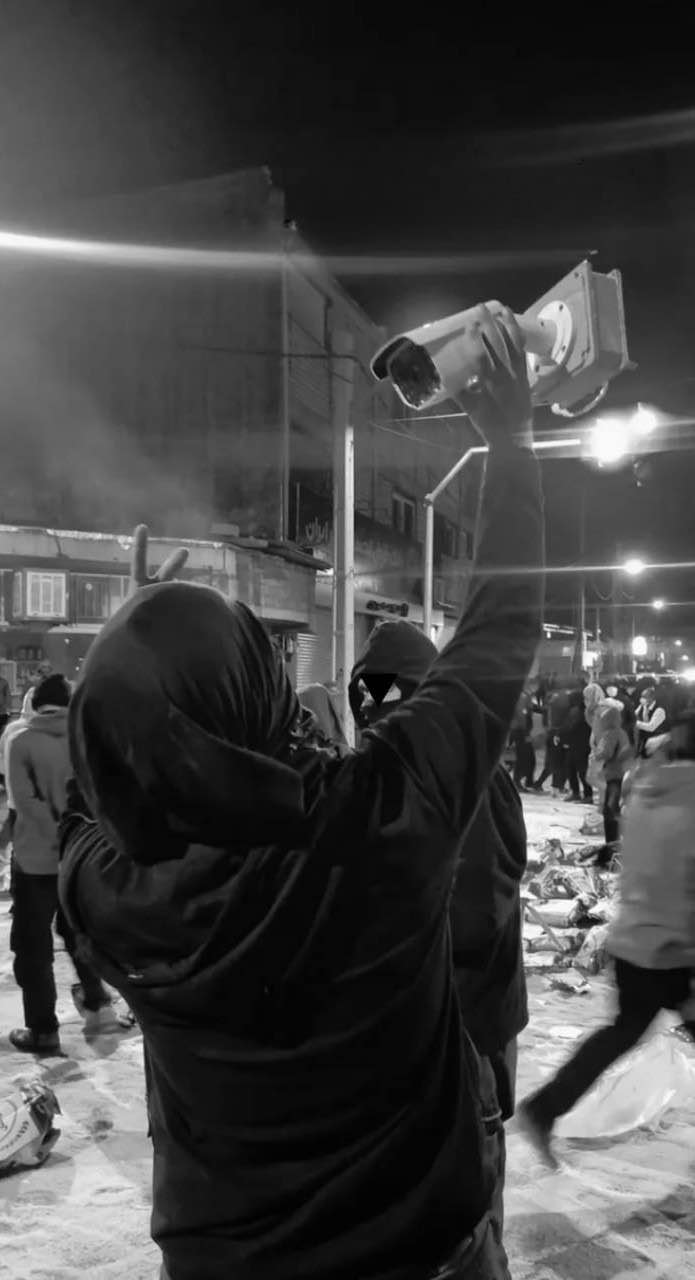
This text was contributed by an anarchist based inside Iran who is actively documenting and reporting on the current situation. Due to serious security concerns, the author prefers to remain anonymous.
For nearly a decade, Iranian society has repeatedly witnessed waves of street protests directed against the ruling political system, the Islamic Republic. While these protests have emerged as the consequence of different immediate triggers, they are all rooted in deep and unresolved structural crises—economic, political, and social—that continue to shape everyday life in Iran.
Throughout these years, the state’s primary response to public dissent has been systematic repression. Protest movements have consistently been met with lethal force, mass arrests, imprisonment, and widespread intimidation. Far from resolving the underlying issues, this approach has contributed to the accumulation of public anger and a growing sense of injustice across society.
The most recent protests were initially triggered by the dramatic collapse of Iran’s national currency and the severe deterioration of living conditions. The rapid devaluation of the rial, combined with soaring inflation and widespread poverty, has pushed large segments of the population beyond economic survival. These conditions have led many to conclude that the crisis is not temporary or reformable, but structural and inseparable from the existing system of power.
Unlike earlier episodes, the current protests reflect a broader level of collective awareness. Demonstrations are no longer confined to specific cities or social groups; instead, they have spread simultaneously across multiple regions, involving diverse segments of society. Economic grievances have quickly transformed into explicitly political demands, with protesters openly calling for the end of authoritarian rule and the dismantling of the Islamic Republic.
At the same time, parts of the opposition—most notably, monarchist groups—are attempting to capitalize on the protest movement. Through satellite media and social platforms, these actors seek to present themselves as viable political alternatives, drawing on nostalgic narratives of the pre-revolutionary era while attempting to redirect popular anger toward their own projects of power.
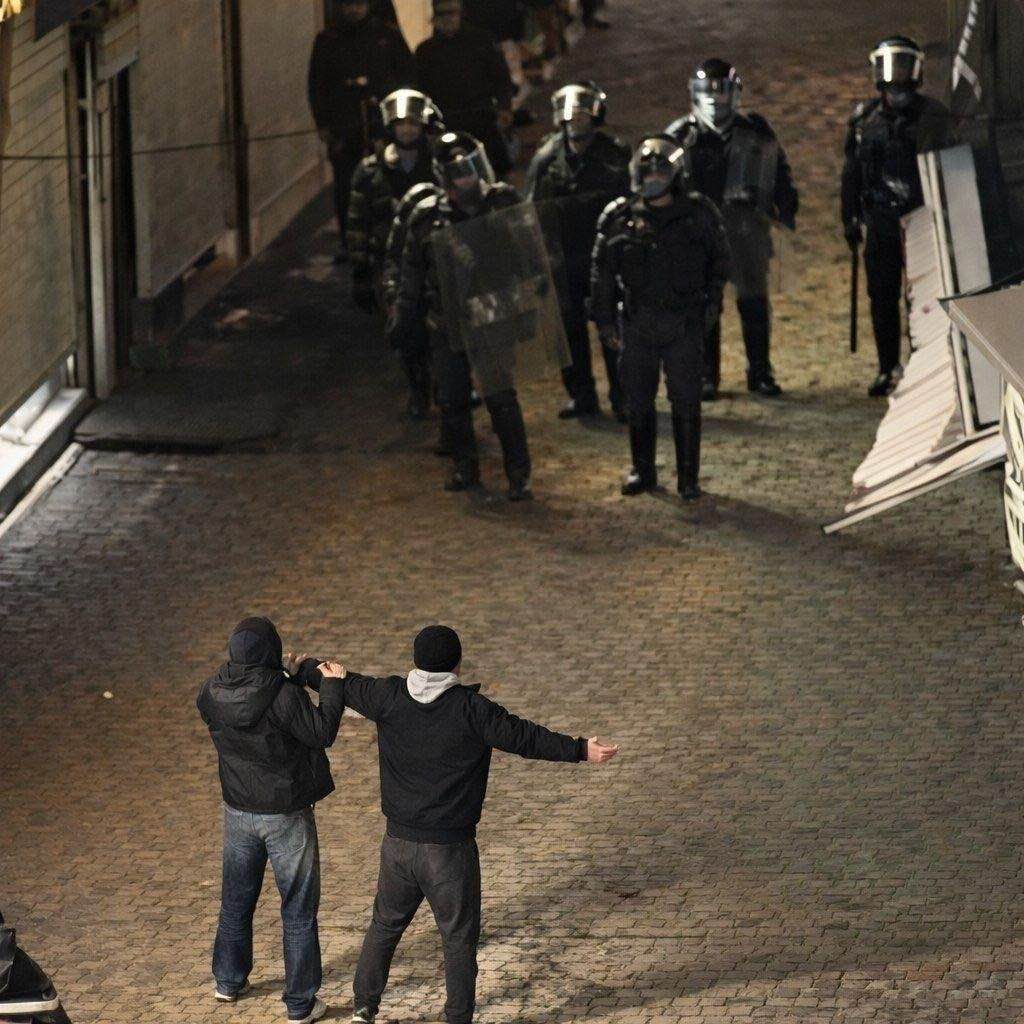
Meanwhile, state repression has intensified significantly. Reports indicate that more than ten protesters have been killed and hundreds arrested in recent days, though the real figures are likely higher. Security forces have expanded their use of violence, surveillance, and arbitrary detention, placing immense pressure on protesters and the wider population.
Overall, the current situation in Iran represents far more than a spontaneous outbreak of unrest. It signals a profound crisis of legitimacy, the collapse of public trust in governing institutions, and a critical phase in the confrontation between society and the ruling order. The trajectory of this moment will depend on the balance between social resistance, state repression, and the capacity of people to organize independently outside both state power and elite opposition forces.
cdn.crimethinc.com/assets/articles/2026/01/07/1.jpg
Iran Protests Amid a Siege by Internal and External Enemies: A Report on the Recent Mass Uprising
The following analysis is contributed by Roja, an independent, leftist, feminist collective based in Paris. Roja was born after the femicide of Jina (Mahsa) Amini, alongside the beginning of the “Jin, Jiyan, Azadi” uprising in September 2022. The collective is composed of political activists from a range of nationalities and political geographies within Iran, including Kurdish, Hazara, Persian, and more. Roja’s activities are not only connected to social movements in Iran and the Middle East, but also to local struggles in Paris in step with internationalist struggles, including in support of Palestine. The name “Roja” is inspired by the resonance of several words in different languages: in Spanish, roja means “red”; in Kurdish, roj means “light” and “day”; in Mazandarani, roja means the “morning star” or “Venus,” considered the brightest celestial body at night.
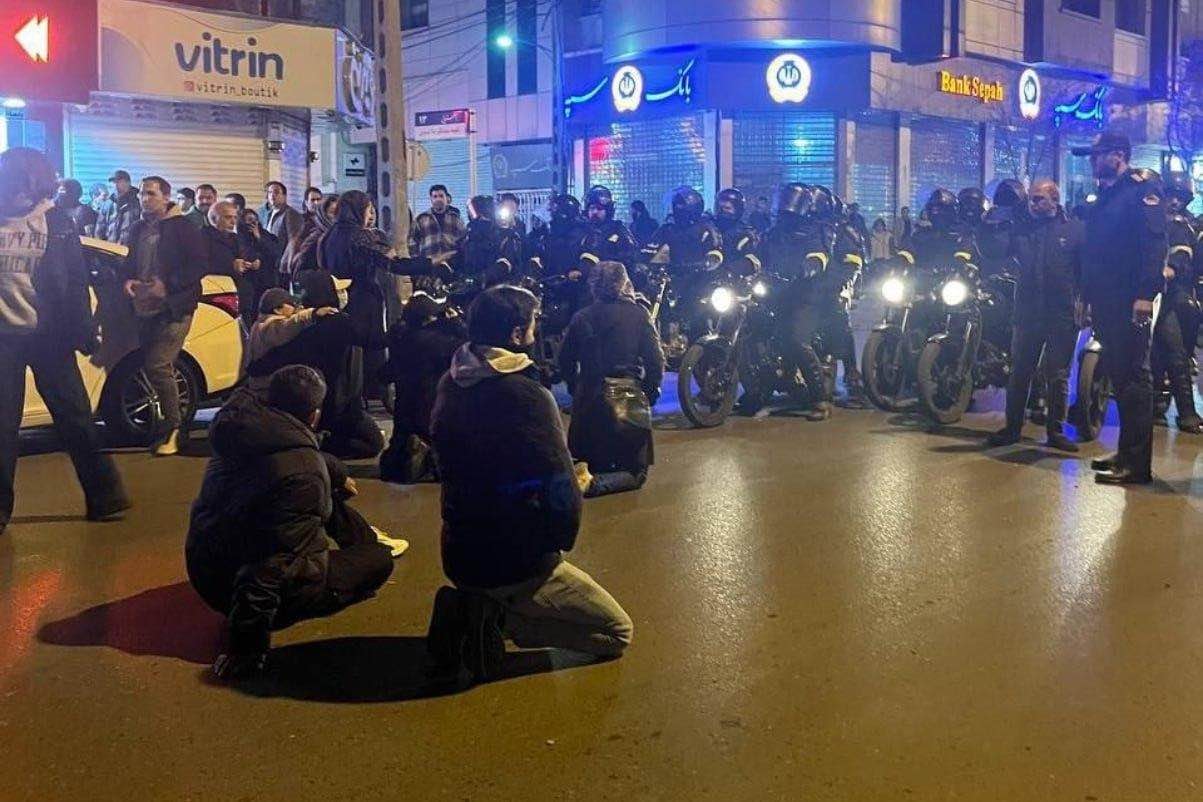
Update, January 9: This political intervention was written by Roja on January 4, 2026, on the sixth day of Iran’s nationwide protests. Much has unfolded since then—above all the historically unprecedented night of January 8, the twelfth day of the uprising. The day began with a general strike among shopkeepers and in the merchant economy, notably in Kurdistan, called by Kurdish parties. The shutdown of shops converged with street and campus mobilizations across the country. Clashes with security forces spread through dozens of cities, from the capital to border provinces; one rights-monitoring report counted protest actions in at least 46 cities across 21 provinces on that day. By nightfall, circulating footage showed crowds on an extremely shocking scale that routine policing could not contain: millions of people taking back the streets as their own and, in many places, pushing the security presence into retreat—an atmosphere that, for many, carried the memory of the months leading to the 1979 revolution. On the evening of January 8, as the Islamic Republic’s repressive apparatus faltered and the streets slipped beyond its grip, it implemented a near-total internet shutdown. The blackout continues at the time of writing, an attempt to sever circuits of coordination and to pre-empt the documentation of killings.
At the same time, Donald Trump reiterated threats of retaliation if the Islamic Republic escalates killings, while also—only partially—distancing himself from Reza Pahlavi, saying he was not sure a meeting would be appropriate and that “we should let everybody go out there and we see who emerges.” The fixation on the “son of the Shah” obscures another tendency, no less real, which we focus on in this text: the prospect of a controlled transition through internal reconfiguration—change without rupture—along the lines of what has recently unfolded in Venezuela.
I. The Fifth Uprising since 2017
Since December 28, 2025, Iran has once again been burning in the fever of widespread protests. Chants of “Death to the dictator” and “Death to Khamenei” have echoed through the streets in at least 222 locations across 78 cities in 26 provinces. The protests are not only against poverty, soaring prices, inflation, and dispossession, but against an entire political system rotten to the bone. Life has become untenable for the majority—especially for the working class, women, queer people, and non-Persian ethnic minorities. This is due not only to the free fall of Iranian currency following the twelve-day-war, but also to the breakdown of basic social services, including repeated power cuts; a deepening environmental crisis (air pollution, drought, deforestation, and the mismanagement of water resources); and mass executions (at least 2,063 people in 2025)—all of which have combined to worsen living conditions.
The crisis of social reproduction is the focal point of the current protests, and their ultimate horizon is the reclaiming of life.
This uprising is the fifth wave in a chain of protests that began in December 2017 with the uprising known as the “Bread Revolt.” This continued with the bloody uprising of November 2019, an explosion of public rage against the fuel price hike and injustice. The 2021 revolt was known as the “uprising of the thirsty,” initiated and led by Arab ethnic minorities. This wave peaked with the “Woman, Life, Freedom” uprising in 2022, which brought women’s liberation struggles and the anti-colonial struggles of oppressed nations such as Kurds and Baluchis to the fore, opening new horizons. Today’s uprising centers the crisis of social reproduction once again—this time, on a more radical, post-war terrain. Protests that begin with livelihood demands, but with striking speed, target the structures of power and the corrupt ruling oligarchy.
II. An Uprising Besieged by External and Internal Threats
The ongoing protests in Iran are besieged on all sides by both external and internal threats. Only one day before the imperialist US assault on Venezuela, Donald Trump, draped in the language of “support for protesters,” issued a warning: if the Iranian government “kills peaceful protesters, which is their custom, the United States of America will come to their rescue. We are locked and loaded and ready to go.” This is imperialism’s oldest script, using the rhetoric of “saving lives” to legitimize war—whether in Iraq or Libya. The US is still following that script today: in 2025 alone, it launched direct military attacks against seven countries.
The genocidal Israeli government, having previously staged its twelve-day assault against Iran under the name of “Woman, Life, Freedom” now writes in Persian on social media: “We stand with you, protesters.” Monarchists, as the local arm of Zionism, who took on the stain and shame of supporting Israel during the Twelve-Day War, are now trying to present themselves to their Western masters as the only alternative. They have done this through selective representation and manipulation of reality, launching a cyber-campaign to appropriate the protests, to fabricate, distort, and alter the sound of street slogans in favor of monarchism. This reveals their deceitfulness, their monopolistic ambitions, their media power, and, crucially, their weakness inside the country, as they lack material power in Iran. With the slogan “Make Iran Great Again,” this group welcomed Trump’s imperial operation in Venezuela and are now waiting for the kidnapping of the leaders of the Islamic Republic by American and Israeli hit men.
And, of course, there are the pseudo-left campists—the self-styled “anti-imperialists”—who whitewash the Islamic Republic’s dictatorship by projecting an anti-imperialist mask onto its façade. They cast doubt on the legitimacy of the current protests by repeating the tired accusation that “an uprising under these conditions is nothing but playing on the field of imperialism,” because they can only read Iran through the lens of geopolitical conflict—as if every revolt is merely a US–Israeli project in disguise. In doing so, they deny the political subjectivity of the people of Iran and grant the Islamic Republic discursive and political immunity as it massacres and represses its own population.
“Angry at imperialism” yet “afraid of revolution”—to recall Amir Parviz Puyan’s seminal formulation—their posture is a form of reactionary anti-reaction. We are even told not to write about Iran’s recent protests, killings, and repression in any language other than Persian in international arenas, lest we give the imperialists a “pretext”—as if, beyond Persian, there are no people in the region or the world capable of shared destinies, shared experience, connection, and solidarity in struggle. For campists, there is no subject other than Western governments, and no social reality other than geopolitics.
In opposition to these enemies, we insist on the legitimacy of these protests—on the intersection of oppressions, and on the shared destiny of struggles. The reactionary monarchist current is expanding within the Iranian far-right opposition, and the imperialist threat against people in Iran—including the danger of foreign intervention—is real. But so is the people’s fury, forged across four decades of brutal repression, exploitation, and the state’s “internal colonialism” targeting non-Persian communities.
We have no choice but to face these contradictions as they are. What we are seeing today is an insurgent force rising from the depths of Iran’s social hell: people staking their lives to survive, confronting the machinery of repression head-on.
We have no right to use the pretext of an external threat to deny the violence inflicted on millions in Iran—or to deny the right to rise up against it.
Those who come into the streets are tired of abstract, simplistic, patronizing analyses. They fight from within contradictions: they live under sanctions while simultaneously experiencing the plunder of a domestic oligarchy. They fear war, and they fear internal dictatorship. But they do not freeze in fear. They insist on being active subjects of their own destiny—and their horizon, at least since December 2017, is no longer reform, but the fall of the Islamic Republic.
III. The Spread of the Revolt
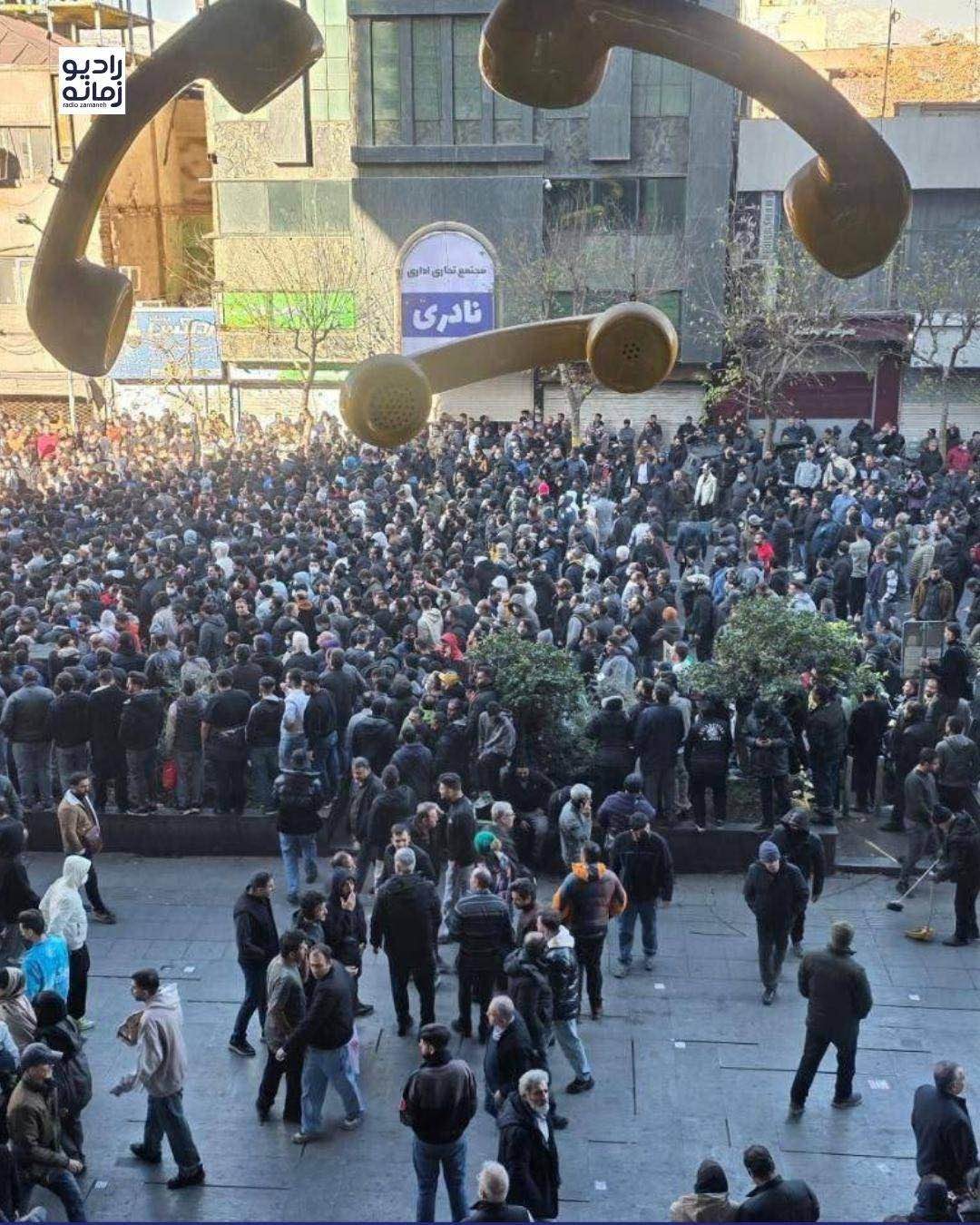
The protests were sparked by the free fall of the rial—erupting first among shopkeepers in the capital, especially in mobile-phone and computer markets—but they quickly expanded into a broad, heterogeneous uprising that pulled in wage workers, street vendors, porters, and service workers across the merchant economy of Tehran. The revolt then moved quickly from Tehran’s streets into universities and to other cities, notably smaller ones, which have become the epicenter of this protest wave.
From the outset, the slogans targeted the Islamic Republic as a whole. Today, the revolt is being carried forward above all by the poor and dispossessed: youth, the unemployed, surplus populations, precarious workers, and students.
Some have dismissed the protests because they began in the Bazaar (the merchant economy of Tehran), which is often perceived as an ally of the regime and a symbol of commercial capitalism. They have branded the protests “petty-bourgeois” or “regime-linked.” This reflex recalls early reactions to France’s Yellow Vest movement of 2018: because the revolt emerged outside the “traditional” working class and recognized left networks, and because it carried contradictory slogans, many rushed to declare it doomed to reaction.
But where an uprising begins does not determine where it goes. Its point of departure does not predetermine its trajectory. The current protests in Iran could have been reignited by any spark, not only the Bazaar. Here too, what began in the Bazaar quickly spread to the neighborhoods of the urban poor across the country.
cdn.crimethinc.com/assets/articles/2026/01/07/2.jpg
IV. The Geography of the Revolt
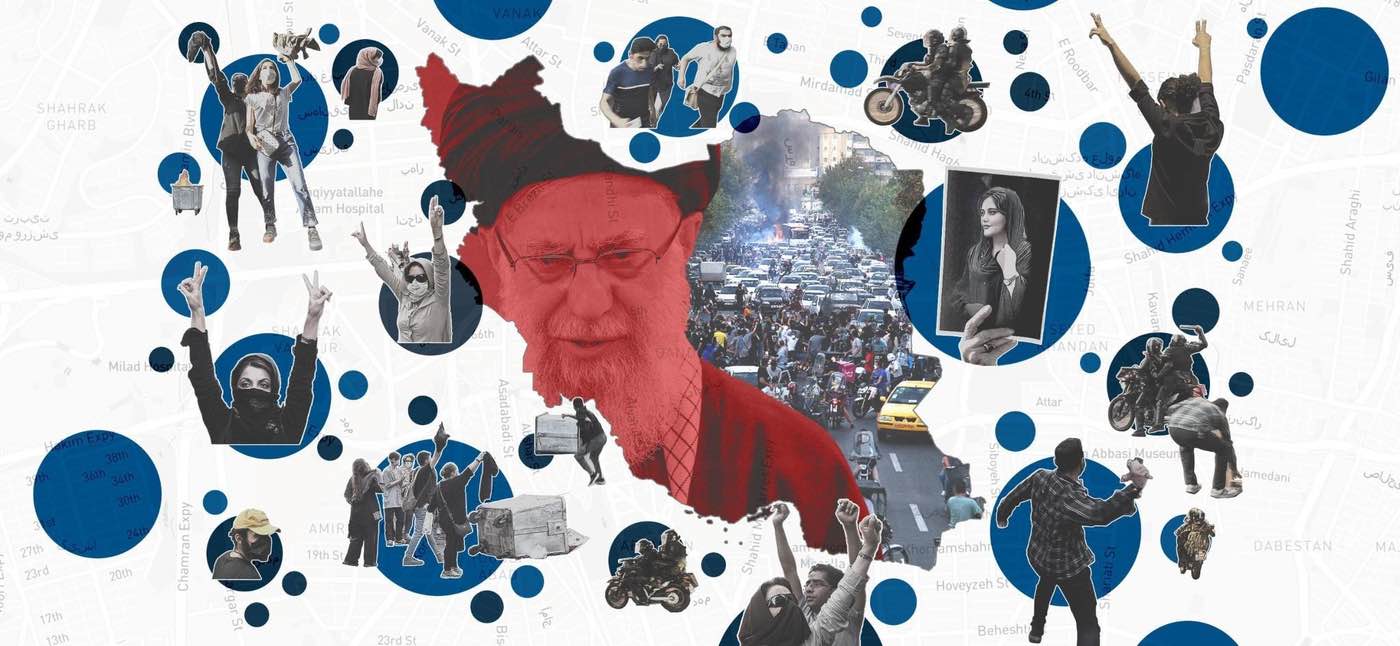
If the beating heart of “Jin, Jiyan, Azadi” in 2022 pulsed from marginalized regions—Kurdistan and Baluchestan—today, smaller cities in the west and southwest have become central nodes of unrest: Hamedan, Lorestan, Kohgiluyeh and Boyer-Ahmad, Kermanshah, and Ilam. The Lor, Bakhtiari, and Lak minorities in these regions are being doubly crushed under the Islamic Republic’s overlapping crises: the pressure of sanctions and the shadow of war, ethnic repression and exploitation, and the ecological destruction that threatens their lives—especially across the Zagros. This is the same region where Mojahid Korkor (a Lor protester during the Jina/Mahsa Amini uprising) was executed by the Islamic Republic one day before Israel’s assault, and where Kian Pirfalak, a nine-year-old child, was killed by live ammunition fired by security forces during the 2022 uprising.
Nevertheless, unlike the Jina uprising—which from the outset expanded consciously along gender/sexual and ethnic fault lines—class antagonism has been more explicit in the recent protests, and so far, their spread has followed a more mass-based logic.
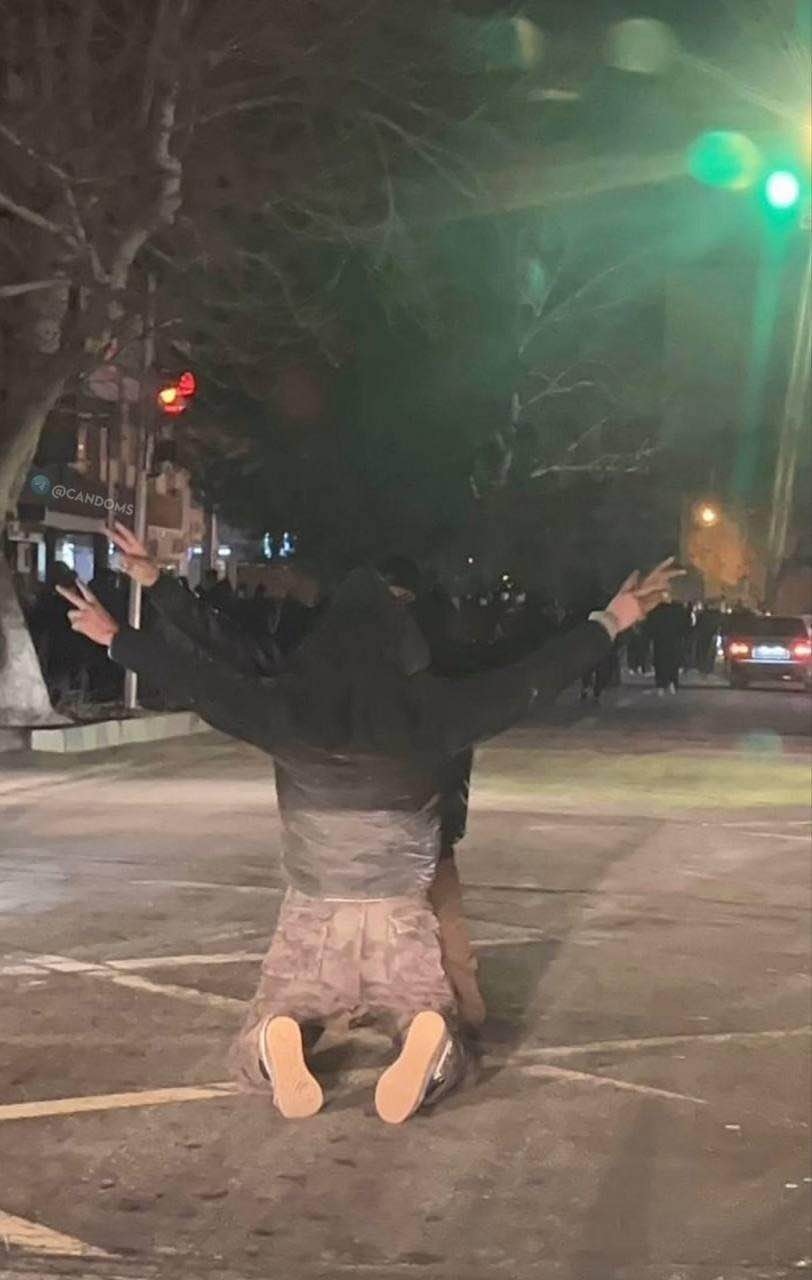
Between December 28 and January 4, 2025, at least 17 people were killed by the Islamic Republic’s repressive forces using live ammunition and pellet guns—most of them Lor (in the broad sense, especially in Lorestan and Chaharmahal and Bakhtiari) and Kurdish (especially in Ilam and Kermanshah). Hundreds have been arrested (at least 580 people, including at minimum 70 minors); dozens have been injured. As the protests advance, police violence escalates: on the seventh day in Ilam, security forces raided Imam-Khomeini Hospital to arrest the wounded; in Birjand, they attacked a women’s student dormitory. The death toll continues to rise as the uprising deepens, and the real numbers are certainly higher than those announced.
The distribution of this violence is uneven, of course: repression is harsher in smaller cities—especially in marginalized, minority communities that have been pushed to the periphery. The bloody killings in Malekshahi in Ilam and in Jafarabad in Kermanshah bear witness to this structural disparity in oppression and repression.
On the fourth day of protest, the government—coordinating across institutions—announced widespread closures in 23 provinces under the pretext of “cold weather” or “energy shortages.” In reality, this was an attempt to break the circuits through which revolt spreads—Bazaar, university, street. In parallel, universities increasingly shifted classes online to cut horizontal ties among spaces of resistance.
V. The Impact of the Twelve-Day War
After the Twelve-Day War, Iran’s ruling power—seeking to compensate for its collapsed authority—has turned more openly to violence. Israel’s attacks on Iran’s military sites and civilians further militarized and securitized the political and social space, notably via the racist campaign of mass deportation of Afghan immigrants. And while the state speaks relentlessly in the name of “national security,” it has itself become a central producer of insecurity: intensified insecurity of life through an unprecedented surge in executions, the systemic mistreatment of prisoners, and intensified economic insecurity through the brutal reduction of people’s livelihoods.
The Twelve-Day War—followed by intensified US and EU sanctions and the activation of the UN Security Council snapback mechanism—tightened pressure on oil revenues, banking, and the financial sector, choking foreign-currency inflows and deepening the budget crisis.
From June 24, 2025, when the war ended, to the night that the first protests erupted in Tehran’s Bazaar on December 18, the rial lost around 40 percent of its value. This was not a “natural” market fluctuation. It was the combined outcome of escalating sanctions and the Islamic Republic’s deliberate effort to pass on the effects of the crisis from above to below through the managed devaluation of the national currency.
The sanctions must be condemned unconditionally. In today’s Iran, however, they also operate as an instrument of internal class power. Foreign currency is increasingly concentrated in the hands of a military–security oligarchy that profits from sanctions circumvention and opaque oil brokerage. Export revenues are effectively held hostage, released into the formal economy only at select moments, at manipulated rates. Even when oil sales rise, the proceeds circulate within quasi-state institutions and a “parallel state” (above all the Islamic Revolutionary Guard Corps), rather than entering people’s everyday lives.
To cover the deficit produced by falling revenues and blocked returns, the state turns to subsidy removals and austerity. In this framework, the rial’s sudden fall becomes a fiscal tool: it forces “hostage” currency back into circulation on state terms and rapidly expands the government’s rial resources—since the state itself is among the largest holders of dollars. The result is direct extraction from the incomes of the lower and middle classes, and the transfer of profits from sanctions circumvention and currency rent to a narrow minority—deepening class division, livelihood instability, and social rage. In other words, the costs of sanctions are paid directly by the lower classes and the shrinking middle strata.
The collapse of the national currency must therefore be understood as organized state plunder in a war-scarred, sanction-strangled economy: deliberate exchange-rate manipulation in favor of brokerage networks tied to the ruling oligarchy, in the service of a state that has turned neoliberal price liberalization into a sacred doctrine.
Campist pseudo-leftists reduce the crisis to US sanctions and dollar hegemony, erasing the role of the ruling class of the Islamic Republic as active agents of dispossession and financialized accumulation. Right-wing campists, generally aligned with Western imperialism, blame only the Islamic Republic and treat the sanctions as irrelevant. These positions mirror each another—and each side has clear interests in adopting them. Against both of them, we insist on recognizing the entanglement of global and local plunder and exploitation. Yes, sanctions devastate people’s lives—through medicine shortages, missing industrial parts, unemployment, and psychological erosion—but the burden is socialized onto the people, not onto the military-security oligarchy that amasses enormous wealth by controlling the informal circuits of currency and oil.
cdn.crimethinc.com/assets/articles/2026/01/07/4.jpg
VI. The Contradictions
In the street, contradictory slogans are heard, from calls to overthrow the Islamic Republic to nostalgic appeals for monarchy. At the same time, students chant slogans target both the Islamic Republic’s despotism and monarchical autocracy. Pro-Shah and pro-Pahlavi slogans reflect real contradictions on the ground—but they are also amplified and manufactured through right-wing media distortions, including the shameful replacement of the voice of protestors with monarchist slogans. The chief perpetrator of media manipulation is Iran International, which has become a megaphone for Zionist and monarchist propaganda. Its annual budget is reportedly around $250 million, funded by individuals and institutions linked to the governments of Saudi Arabia and Israel.
Over the past decade, Iran’s geography has become a field of tension between two socio-political horizons, mediated by two different models of organizing against the Islamic Republic. On one side stands concrete, embedded social organizing along the fault lines of class, gender/sexuality, and ethnicity—most vividly, in the intersecting networks forged during the Jina uprising in 2022, stretching from Evin Prison to the diaspora, and producing an unprecedented unity among diverse forces, from women to Kurdish and Baluchi ethnic minorities, opposing the dictatorship while presenting feminist and anti-colonial horizons. On the other side stands a populist mobilization staged as a “national revolution,” aimed at producing a homogeneous mass of atomized individuals through satellite television networks. Backed by Israel and Saudi Arabia, this project seeks to assemble a body whose “head”—the son of the deposed Shah—can later be inserted from outside, through foreign-backed intervention, and grafted onto it. Over the past decade, monarchists, armed with massive media power, have pushed public opinion toward an extreme, racist nationalism—deepening ethnic rifts and fragmenting the political imagination of Iran’s peoples.
The growth of this current in recent years is not a sign of people’s political “backwardness,” but the result of the lack of broad left organization and media power in producing an alternative counter-hegemonic discourse—an absence and weakness partly produced by repression and suffocation, which opened space for this reactionary populism. In the absence of a powerful narrative from left, democratic, and non-nationalist forces, even universal slogans and ideals such as freedom, justice, and women’s rights can easily be appropriated by monarchists and sold back to the people in an apparently progressive shell that hides an authoritarian core. In some cases, this is even packaged in socialist vocabulary—this is precisely where the far-right also devours the terrain of political economy.
At the same time, as antagonism with the Islamic Republic intensifies, tensions between these two horizons and models have also intensified; today the divide between them can be seen in the geographic distribution of protest slogans. Since the “return of Pahlavi” project represents a patriarchal horizon based on Persian ethno-nationalism and a deeply right-wing orientation, in places where grassroots worker and feminist organizing has emerged—in universities and in Kurdish, Arab, Baluchi, Turkmen, Arab and Turk regions—pro-monarchy slogans are largely absent and often provoke negative reactions. This contradictory situation has led to various ways of misunderstanding the recent uprising.
VII. The Horizon
Iran stands at a decisive historical moment. The Islamic Republic is in one of its weakest positions in history—internationally, after October 7, 2023 and the weakening of the so-called “Axis of Resistance,” and internally, after years of repeated insurgencies and uprisings. The future of this new wave remains uncertain, but the scale of the crisis and the depth of popular dissatisfaction ensure that another round of protests can erupt at any moment. Even if today’s uprising is suppressed, it will return. In this conjuncture, any military or imperial intervention can only weaken the struggle from below and strengthen the Islamic Republic’s hand to carry out repression.
Over the past decade, Iranian society has been reinventing collective political action from below. From Baluchestan and Kurdistan in the Jina uprising to smaller cities in Lorestan and Isfahan in the current protest wave, political agency—without any official representation from above—has shifted to the street, to strike committees, and to local, informal networks. Despite brutal repression, these capacities and connections remain alive within society; their ability to return and crystallize into political power persists. But the accumulation of rage is not the only thing that will determine their continuity and direction. The possibility of building an independent political horizon and a real alternative will also prove decisive.
This horizon faces two parallel threats. On the one hand, it can be appropriated or sidelined by right-wing forces based outside the country—forces that instrumentalize people’s suffering to justify sanctions, war, or military intervention. On the other hand, segments of the ruling class—whether from military-security factions or reformist currents—are working behind the scenes to market themselves to the West as a “more rational,” “lower-cost,” “more reliable” option: an internal alternative from within the Islamic Republic, not to break with the existing order of domination, but to reconfigure it under a different face. (Donald Trump is aiming to do something similar in Venezuela, bending elements of the ruling government to his will rather than bringing about a change in government.) This is a cold calculus of crisis-management: containing social rage, recalibrating tensions with global powers, and reproducing an order in which peoples are denied self-determination.
Against these two currents, the revival of an internationalist politics of liberation is more necessary than ever. This is not an abstract “third way,” but a commitment to place people’s struggles at the center of analysis and action: organization from below instead of scripts written from above by self-appointed leaders, instead of false oppositions manufactured from outside. Today, internationalism means holding together the right of peoples to self-determination and the obligation to fight all forms of domination—internal and external alike. A real internationalist bloc must be built from lived experience, concrete solidarities, and independent capacities.
This requires the active participation of left, feminist, anti-colonial, ecological and democratic forces in building broad, class-based organization within the protest wave—both to reclaim life and to open up alternative horizons of social reproduction. At the same time, this organizing must situate itself in continuity with the liberatory horizon of prior struggles, and specifically the “Jin, Jiyan, Azadi” movement—the energy of which still carries the potential to disrupt, all at once, the discourses of the Islamic Republic, the monarchists, the Islamic Revolutionary Guard Corps, and those former reformists now dreaming of a controlled transition and reintegration into US-Israeli cycles of accumulation in the region.
This is also a decisive moment for the Iranian diaspora: it can help redefine a politics of liberation, or it can reproduce the exhausted binary of “internal despotism” versus “foreign intervention” and thereby prolong the political impasse. In this context, it is necessary for forces in the diaspora to take steps toward forming a real internationalist political bloc—one that draws clear lines against both internal despotism and imperialist domination. This stance links opposition to imperialist intervention with an explicit break from the Islamic Republic, refusing any justification of repression in the name of fighting an external enemy.
cdn.crimethinc.com/assets/articles/2026/01/07/6.jpg
The View from Syria
This is excerpted from a statement from anarchist internationalists on the ground in northern Syria.
Iran is an important actor in the geopolitics of the Middle East. Its influence also had a strong impact on Syria during the Assad era. Smuggling and other transportation routes were passing through Syria, supplying Hezbollah. After the fall of the Assad regime, Iran was pushed out of Syria and has generally lost its previous power in the region. The damage sustained during the Israeli attacks in June 2025 became another factor that affected the situation of Islamic Republic.
Protests have been regularly flaring up in Iran. The 2022 protests under leading slogan «Woman, Life, Freedom» are famous globally. Just as then, the protests spread all over the country. People’s discontent spread due to economic factors—inflation, growing prices, and poverty, but eventually arrived at calling to take down the regime. Protesters are clashing with the police in the streets, and some have been killed and injured.
During Israel-Iran escalation in 2025, an interesting detail to notice were the statements of Netanyahu and Trump on the intentional destabilization of Iran with the goal of regime change. It is a pretty standard approach of the USA towards “inconvenient” governments in the regions of their interests: clearing the path for more co-operative politicians, as they tried to do in Afghanistan. During the most recent escalation of Israel-Iran war, there were rumors that there already exists a tentative “democratic” ruling figure, backed and prepared by the United States. Although this information wasn’t confirmed, we can well imagine that it could be true, considering the methods of the United States in other instances (e.g., the recent kidnapping of the Venezuelan president). In this context, the meaning of Trump’s declared intention to come to the aid of Iranian protesters if Iran will “cruelly kill peaceful demonstrators, as they do,” becomes clear.
Iranian Kurdistan, Rojhilat, is one of Iran’s rebellious regions. Their attempts to declare autonomy have not been successful for decades, but the guerrilla struggle in the territory of Iran continues. PJAK (the Party of Free Life of Kurdistan) has supported the protesters and again condemned the current regime.
The Kurdish liberation movement is fighting for freedom not only in Syria or Turkey. News from Rojhilat take the headlines somewhat less frequently, but the situation in Iran is especially hard for the liberation struggle. PJAK forces include a female armed wing, which is especially important in the context of a dictatorship that executes “moral policing” over the population and, as usual, harms the most vulnerable groups, including women.
Instability in Tehran could be beneficial for the Kurdish region and could weaken the imperialist alliances of the Russia-Iran-China axis. Nevertheless, a puppet government installed by the USA, Israel, or anyone else won’t address the Kurdish question in Iran. Furthermore, addressing the Kurdish question in a neoliberal imperialist framework can’t provide a true solution for a multi-ethnic and multi-religious Middle East. Democratic confederalism, already being implemented in northeastern Syria by the Democratic Union Party (Partiya Yekîtiya Demokrat, PYD) and advocated by PJAK in Rojhilat, offers a much more promising option to bring peace.
cdn.crimethinc.com/assets/articles/2026/01/07/5.jpg
Appendix: Further Reading
- Iran: Precarious Work Means Precarious Life—How the Rajaee Port Disaster Exemplifies the Assault on Baluch Ethnic Minorities
- “Women, Life, Freedom” against the War—A Statement against Genocidal Israel and the Repressive Islamic Republic
- Against Apartheid and Tyranny—For the Liberation of Palestine and All the Peoples of the Middle East: A Statement from Iranian Exiles
- Jin, Jiyan, Azadi (Woman, Life, Freedom)—The Genealogy of a Slogan
- Revolt in Iran—The Feminist Resurrection and the Beginning of the End for the Regime
- “There Is an Infinite Amount of Hope… but Not for Us”—An Interview Discussing the Pandemic, Economic Crisis, Repression, and Resistance in Iran
- Against All Wars, Against All Governments—Understanding the US-Iran War