Post Modern Times: Post Mortem
:Evaluating an Economic Experiment in Minneapolis from a Revolutionary Perspective


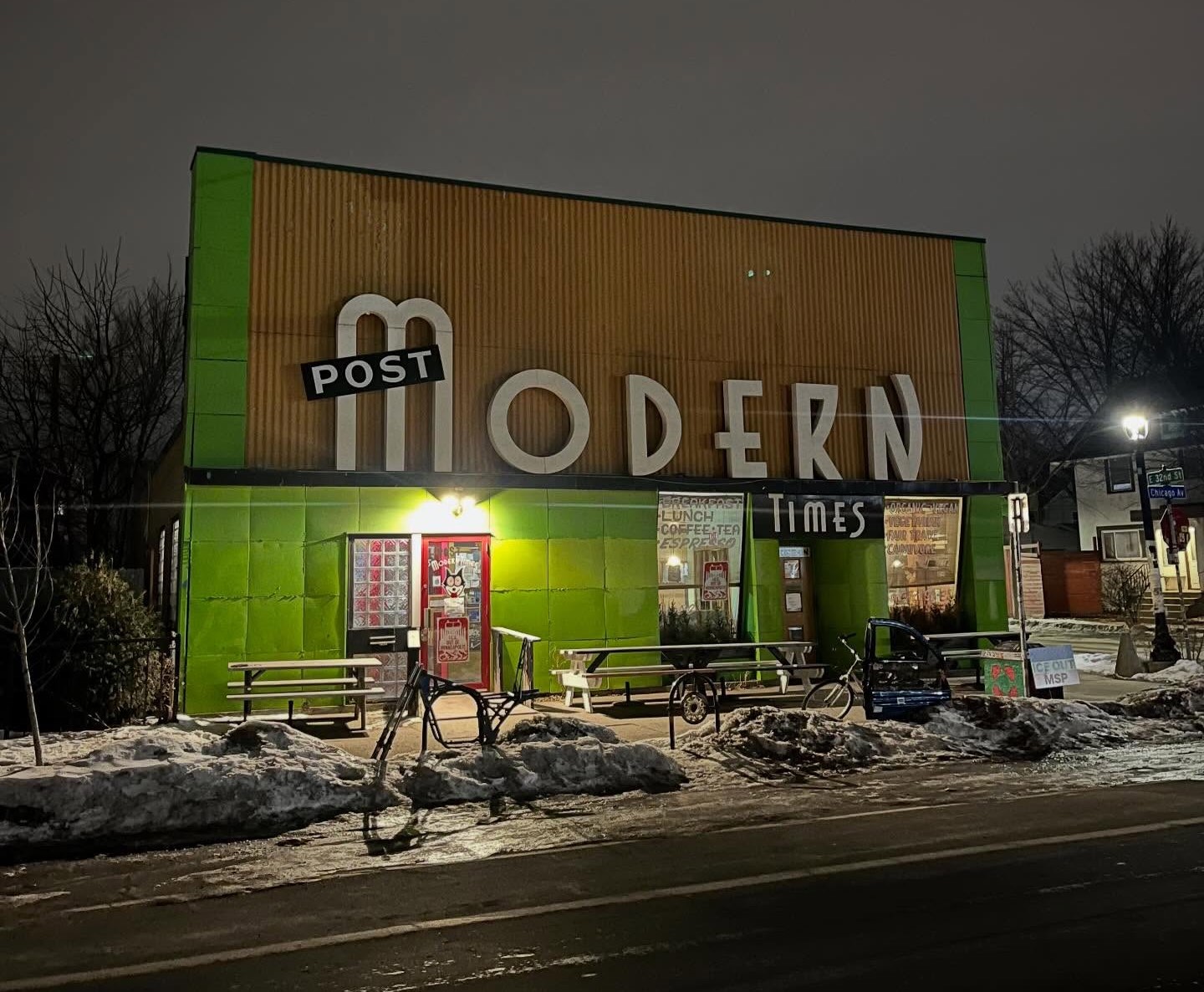
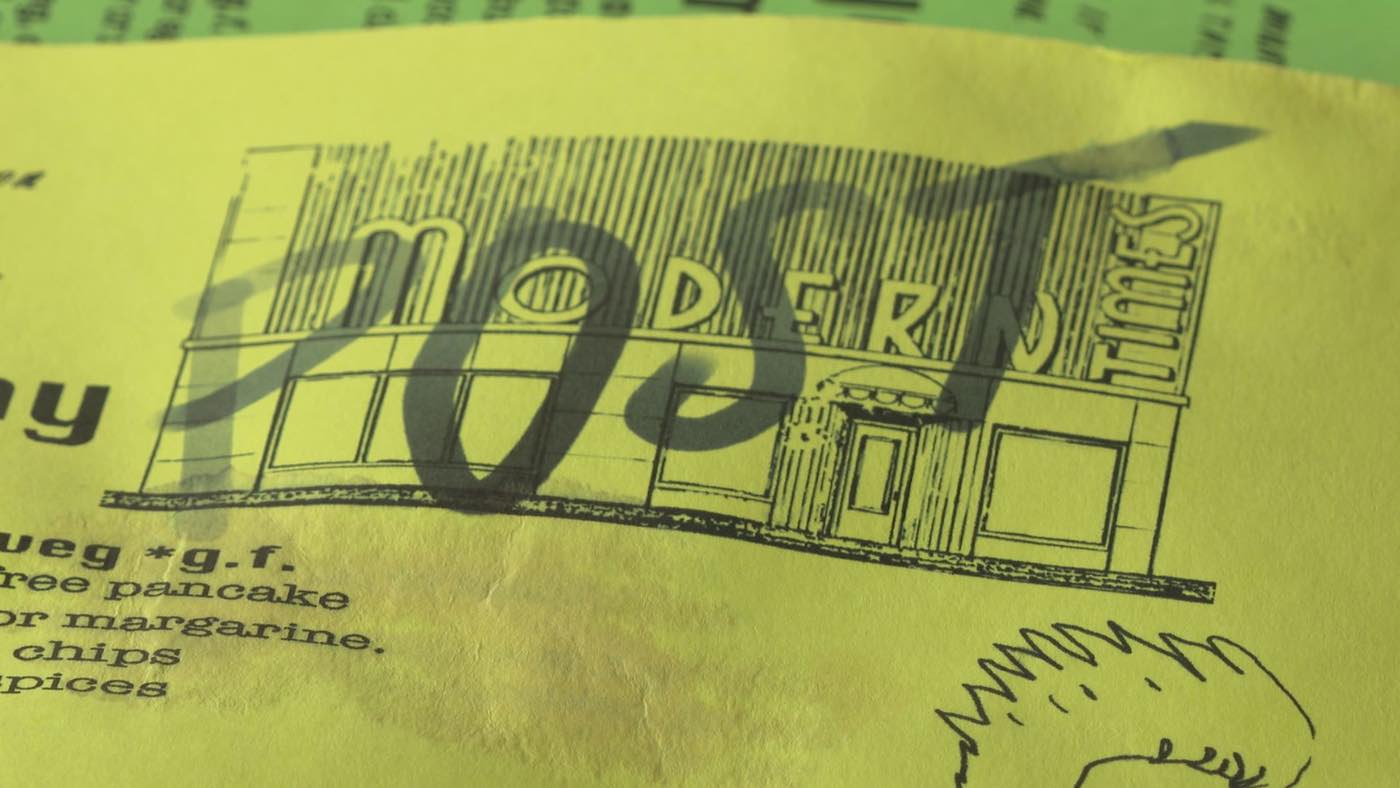
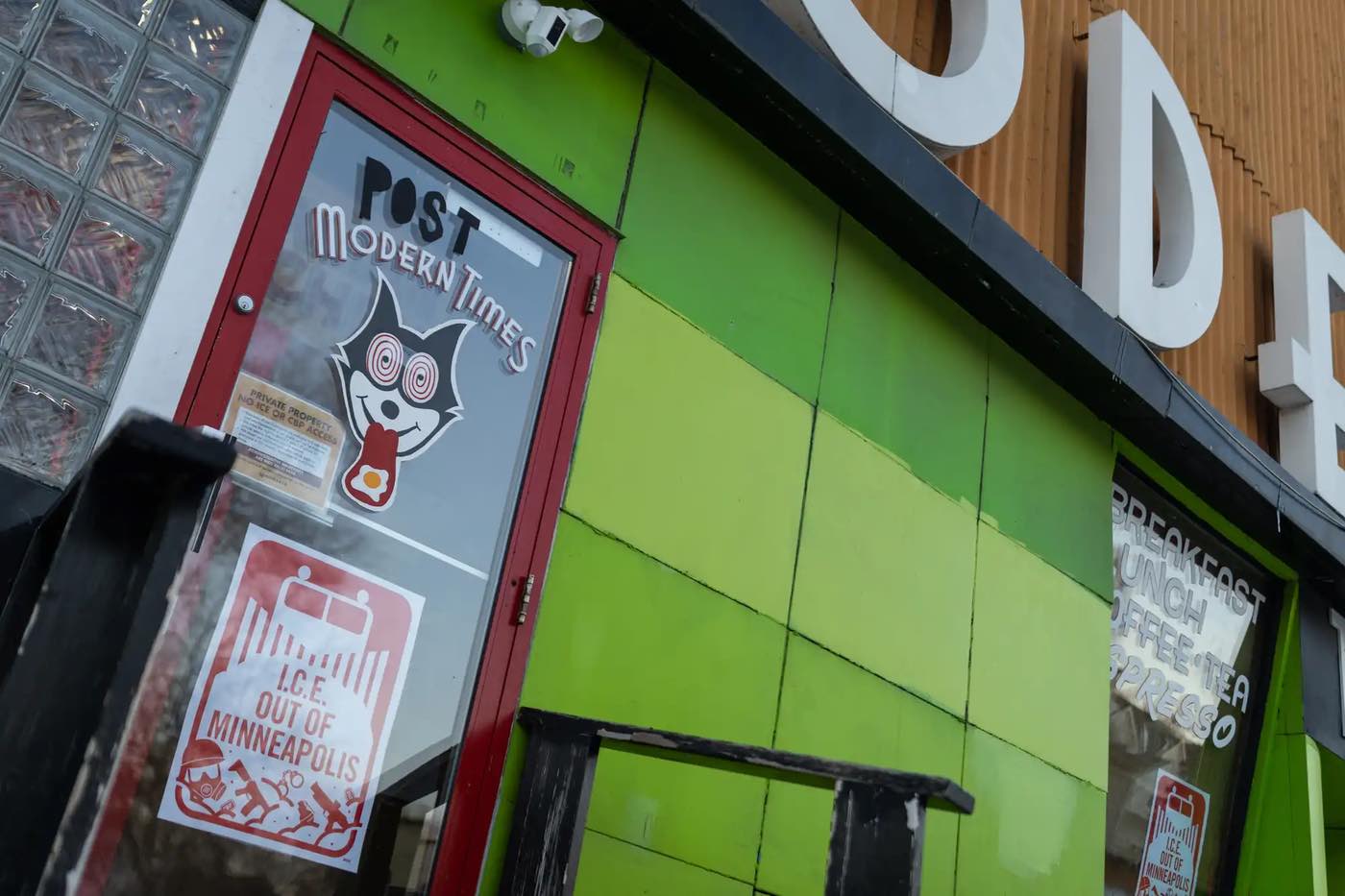
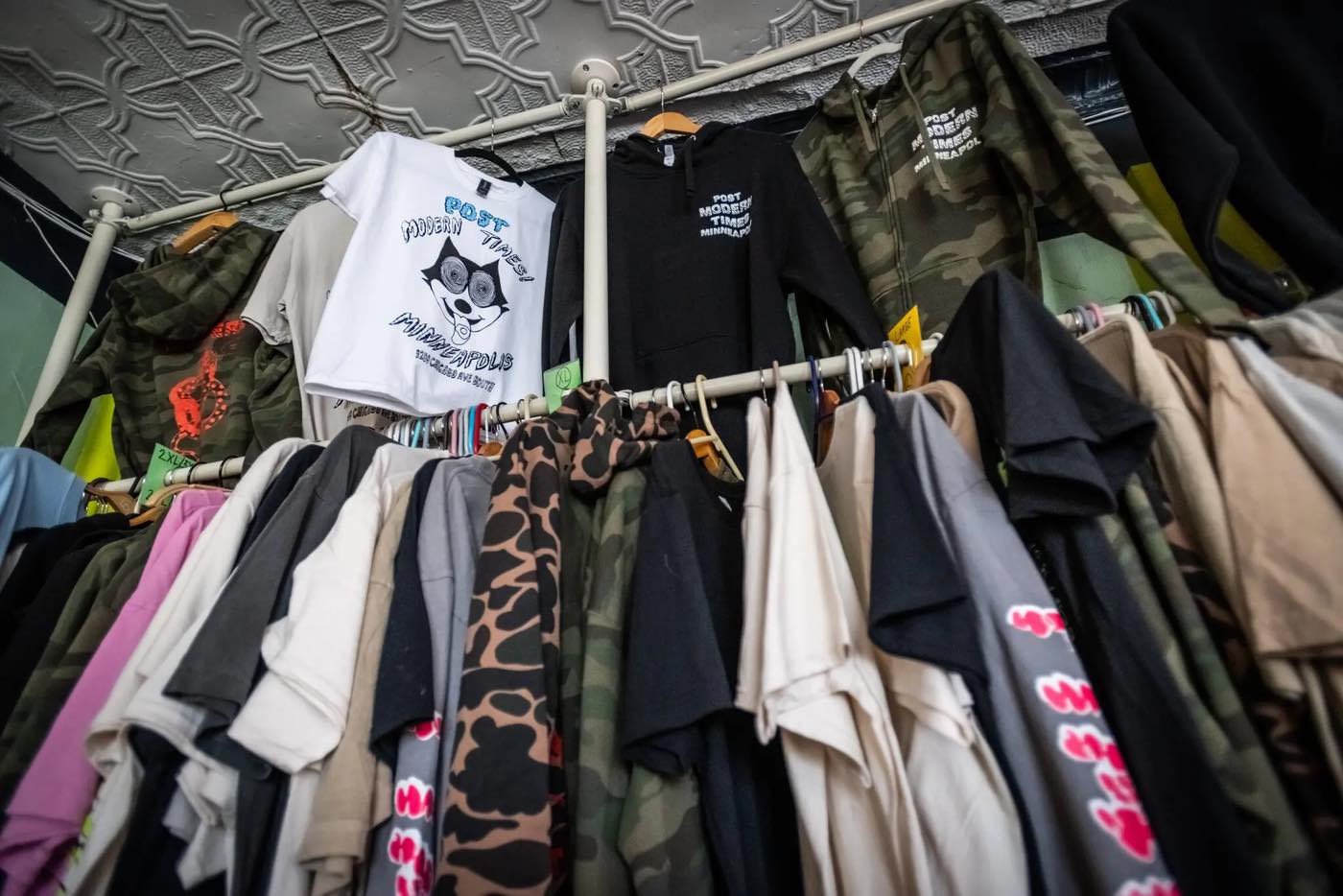
On January 27, 2026, at the height of Operation Metro Surge and in the immediate aftermath of the murder of Alex Pretti, Dylan Alverson, the owner of a south Minneapolis café known as Modern Times, took to Instagram to make an announcement. He explained that Modern Times was changing their name and their business model. From that day forward, “until this occupation is over,” the newly named Post Modern Times would be “free to all.” The purpose of this change was to enable the café to refuse “to generate taxes under the guise of a functioning for-profit capitalist business aligned with government strategy.” Not long after, “border czar” Tom Homan announced the drawdown that came to pass in February, precipitating a decline in both ICE and partisan activity; yet the Post Modern Times continued in this capacity for a further six months.
This retrospective is aimed at elaborating the lessons the Post Modern Times experiment has to offer aspiring revolutionaries. We examine the experiment’s successes and limits in building dual power economically and counteracting what we will call the viscosity of race, in order to explore what it shows us about the meaning of partisanship.
cdn.crimethinc.com/assets/articles/2026/08/13/5.jpg
An Experiment
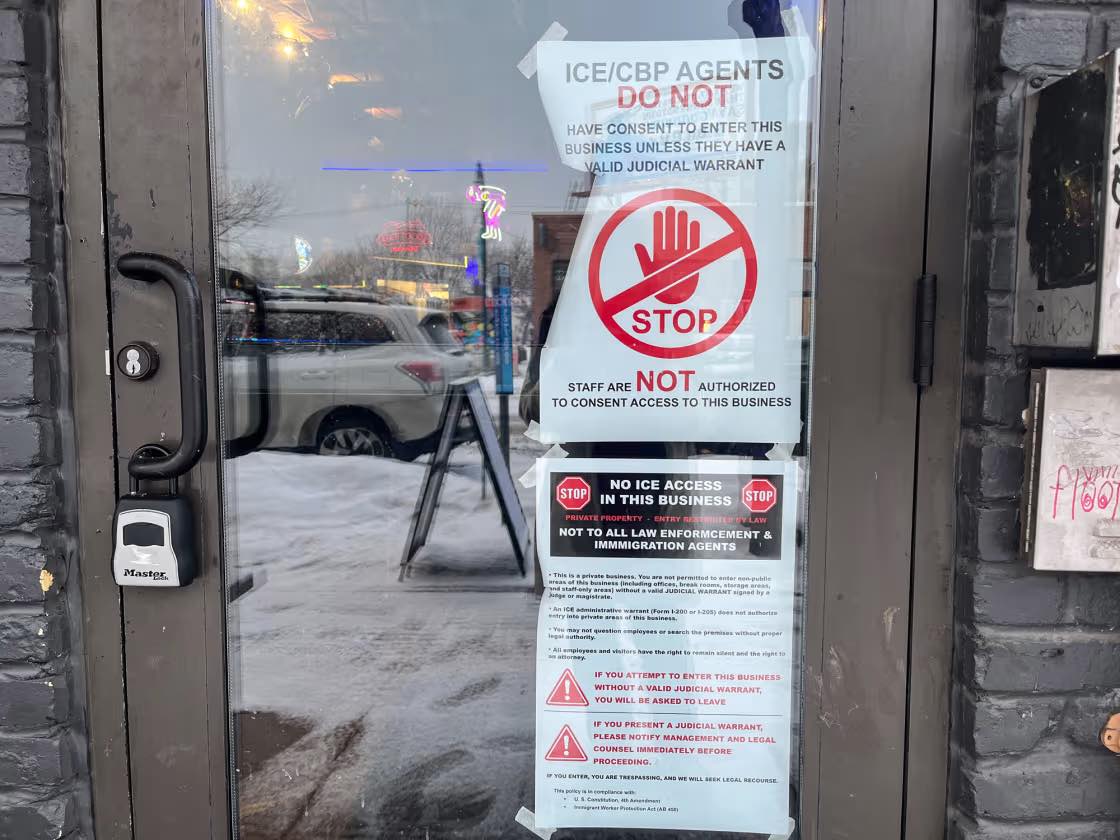
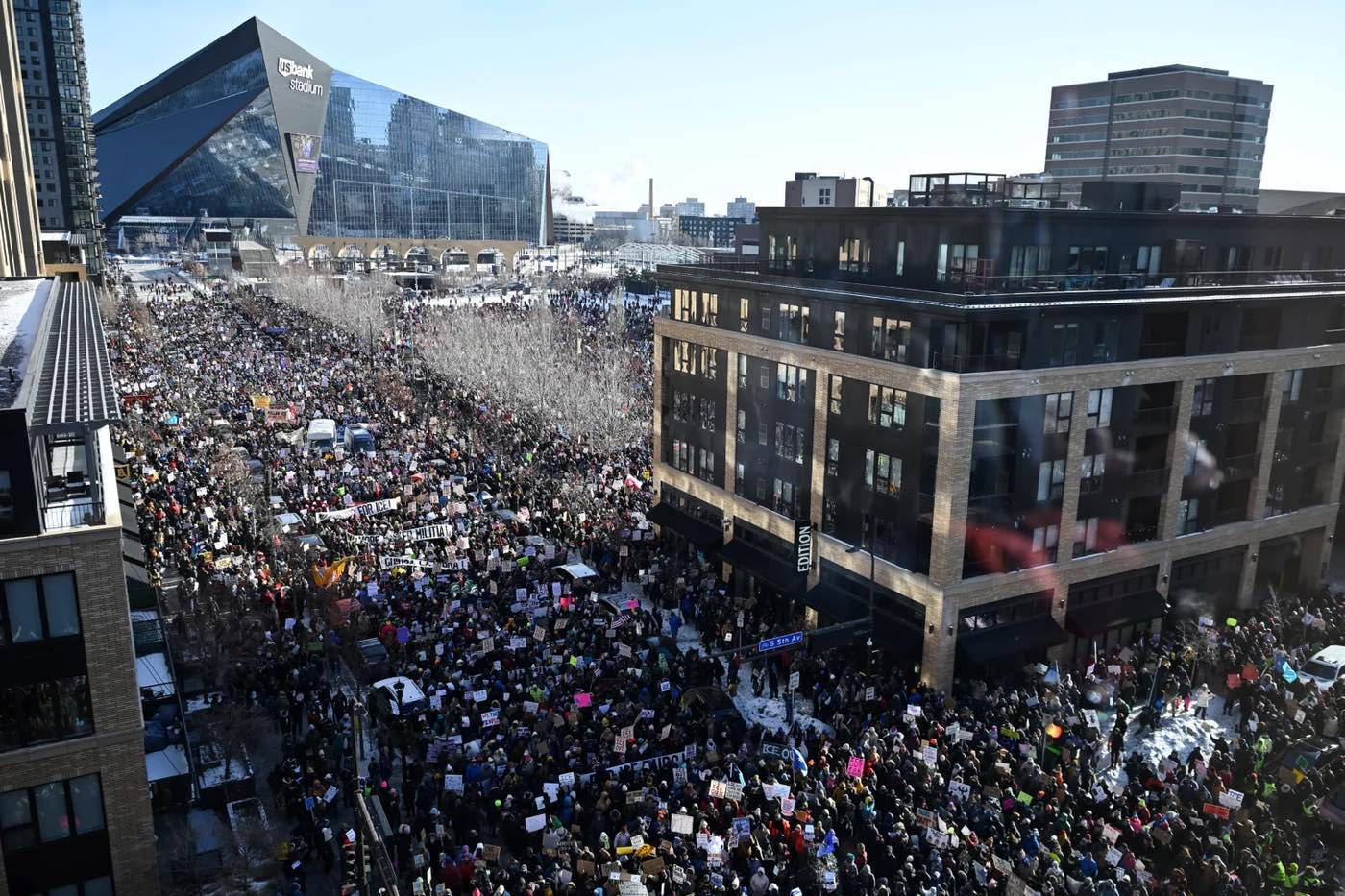
In the winter of 2026, the federal ICE occupation known as Operation Metro Surge met immense and widespread resistance. This insurgency is described in detail elsewhere; here, it suffices to say that one element contributing to its apparent strength—as well as its limits—was the emergence of a cross-class alliance. This tenuous coalition saw many business owners make crucial contributions, from the simple act of posting signs barring entry to federal agents to donating to “mutual aid” organizing and supporting their employees when they clashed with ICE directly. While revolutionaries should examine the limits that this alliance introduced into the movement, that is not the purpose of this text. Here, we aim to examine the successes and limits of a much-lauded yet under-analyzed situation that emerged as a consequence of this cross-class alliance, a singular action taken by one small business during Operation Metro Surge: (Post) Modern Times café changing their business model from regular pricing to functioning entirely on donations in order to stop paying taxes to the government oppressing their community.
The decision to shift business models represented a significant experiment in economic resistance to state power. It offered us a glimpse of what it could look like to engage seriously in “re-organizing economic [life],” albeit one clouded by the experiment’s failure to spread.1 In a moment of significant upheaval in which private property went largely unquestioned and unchallenged, the refusal of a business to charge for meals in order to cease to pay sales tax could be understood as a kind of proto-communist measure. While obviously not without its limits, it anticipates communist social relations by setting the price of commodities at zero, at which point they cease to be commodities at all.2
On July 24, Alverson announced the temporary closure of the café and the end of the business model he had introduced in January. While the difficulty of relying on donations from the public alone to fund the longstanding operation may have played no small role in this decision, it is far from the only factor. In fact, hardly a month prior to the announcement, the New York Times ran an article on the café, reporting that surprisingly, the model had provided a certain amount of financial stability. A subsequent report from the Star Tribune advanced a different narrative: despite the supposed altruism of the café’s usual customer base and surrounding homeowners, the influx of poor, racialized, and in many cases homeless people proved to be too much for their delicate sensibilities. In the Star Tribune article, one neighbor said that this experiment had created the “first time I don’t feel safe” in the same neighborhood where the state murdered George Floyd and Renee Good.
cdn.crimethinc.com/assets/articles/2026/08/13/2.jpg
The Viscosity of Race
Opened in 2011, Modern Times has long been humorously referred to as the place “punks bring their parents.” The fusion of hippie and punk aesthetics that define the café has cemented its place in the southside Minneapolis subcultural scene. In view of this, it should be no surprise that the customer base has been predominantly white. That makes it all the more noteworthy that the experiment succeeded in breaking through that relative homogeneity to some extent.
Arun Saldanha, in his writing on trance festivals in Goa, India, developed the term viscosity to describe the racial dynamics within the festival. The accumulation of shared practices, aesthetics, and knowledge created a dense interiority that was difficult for outsiders to penetrate. Saldanha refers to examples such as the clothing they wore and the drugs they shared together as demarcating those who were habituated to the scene and those who weren’t. In the case of Goa, race shaped the differential access to these habits which created de facto forms of exclusion. Without any explicit or overt discrimination, viscosity tends to produce spaces of relative racial homogeneity.3
While the specific practices, aesthetics, and choice of drugs may be different, it is not difficult to recognize a similar pattern in punk and many left-wing social milieus. Subcultural spaces like Modern Times in south Minneapolis have accumulated a relatively dense racial viscosity and largely continue to retain it, including in organizing spaces. Addressing this problem is of vital importance to revolutionaries if we are to contend with the extreme alienation of capitalist society. For that purpose, the experiment offers us useful insight.
Over a long enough period of time, a material shift in structure, such as removing prices from the menu, could help to break down these racial barriers. The results at Post Modern Times were not immediate, but as word spread, the prospect of quality meals offered for free began to counteract the viscosity of race.
cdn.crimethinc.com/assets/articles/2026/08/13/3.jpg
Retreat
As this viscosity was challenged in one direction, it was reinforced from the other. As Post Modern Times began to bring in more racialized and homeless people, its familiar customer base started to disappear. While owner Alverson suggests that this new influx may have been “crowding out paying customers,” the café was notorious for long wait times well before any of this. The “crowding out” that seems to actually have occurred was the breaking of subcultural—and therefore racial—homogeneity within the space.
It would be easy to chide the prejudices of café-goers and neighboring homeowners for their reactions to this demographic shift. However correct, that would be a moralistic critique, whereas this essay is concerned with the strategic possibilities that experiments such as Post Modern Times could point towards. Those who express existential fear at the mere sight of a person who does not have a home are likely uninterested in revolutionary horizons, but it would be a mistake to accept the narrative that this was the dominant reaction, or the only possible one.
Post Modern Times represented the possibility of creating a space of encounter between many different social worlds in a time marked by increasing stratification and alienation. There is no question that the experiment introduced new challenges and conflicts for workers and neighbors, but such challenges are an inescapable aspect of constructing a new society, even in the most embryonic forms. In response, rather than embrace this opportunity, many found themselves withdrawing from it. The explanations vary—wait times, racist biases, or moralism—but the consequences were the same.
cdn.crimethinc.com/assets/articles/2026/08/13/1.jpg
Moralism
With the removal of prices, Post Modern Times became a popular restaurant for those who could not otherwise afford a good, hot meal. As more and more homeless people joined the lines to be seated, the restaurant took on a dynamic that is familiar to anyone with any experience in “mutual aid” organizing in the Twin Cities and beyond.
This dynamic is not mutual at all: the organizing is done by those with means for those without them. Pointing this out is not intended to dismiss how helpful those programs can be, nor how many lives they have improved or even saved. Yet as the turbulence of our era continues to intensify and dual power institutions become essential to sustaining all of us, it becomes more and more crucial to distinguish between these programs and geniunely mutual aid.
The idea that some people (defined by their predicates, whether by their proximity to whiteness, financial stability, or something else) are less deserving of free food than others (e.g., the unhoused) is a purely moralistic argument. Not only does it vacate the mutuality of “mutual aid,” it also deprives us of any possibility of direct encounter across the barriers these predicates impose that isn’t mediated by a service relationship.4 It does not take a stretch of the imagination to conclude that many people can’t conceive of what a relationship across lines of difference could look like that doesn’t rely on service to mediate it.
While some aspiring white allies may have chosen to avoid Post Modern Times in a noble attempt to avoid crowding out its supposedly more deserving customers, they actively foreclosed the chance to make connections with the very people they claim to support. And now Post Modern Times is literally closed.
cdn.crimethinc.com/assets/articles/2026/08/13/4.jpg
Partisanship
Our takeaway from Post Modern Times is twofold. On the one hand, it was a reasonably successful experiment in the reorganization of the economic sphere, though admittedly at the scale of only a single restaurant. Refusing to charge for meals—and thus refusing to pay sales tax—proved not only to be possible for an extended period of time, but also to be a valuable effort towards solving certain challenges posed by revolutionary organizing. Of these challenges, the racial viscosity of organizing spaces is perhaps the most salient.
On the other hand, this experiment also revealed how much further we have to go. Any success in diluting the racial viscosity of the space precipitated retreat in equal proportions. Whether this was due to thinly-veiled racism or to the valiant calculations of moral activists, the outcome was the same. What was comfortable won the day.
For revolutionaries, this underscores the importance of partisanship. For us, partisanship means fidelity to revolution; it is our belief that whatever it takes to build towards a revolution that abolishes capitalism and the state is worth it. This includes, for example, the perhaps uncomfortable experience of making earnest and unmediated connections with people unlike ourselves. It also includes, in a context in which many businesses were satisfied to put up “no ICE allowed” signs, the refusal to charge money for service at a restaurant in order to subtract taxes from the government’s income stream.
As with all experiments, the result was never likely to be unqualified victory. The important thing is to subject the outcome of such experiments to rigorous analysis and learn as much as we can from each one. We do not intend this essay as the final word, but rather a contribution to a broader understanding of the situation.
-
See the analysis of dual power in Connor O’Callaghan, “Revolution, Dual Power, and the Twin Cities Rapid Response Network,” Ill Will, July 1, 2026. While the essay neglects to problematize the emergence of dual power—in particular its policing function—it is right to note the insurgency’s relatively tame interventions into the economic sphere. ↩
-
It’s important to remember that Modern Times is owned by an individual whose employees’ labor is inherently exploited for surplus value. Refusing to charge for meals does not change the totality of capitalist society they operate within, either. Ingredients still cost money, as do wages, and it is unlikely that the business refused to pay property taxes as well as sales taxes. Post Modern Times relied on donations from generous customers and others to stay afloat, with unknown results due to a lack of public financial information—although a New York Times report vaguely suggested some amount of success. Of course, for measures like this to become truly sustainable and spread, a more general assault on capitalist social relations would be required. See Brett Anderson, “This Restaurant Stopped Charging for Food. And Profits Are Up.” New York Times, June 8 2026. Online here. ↩
-
“In basic terms, viscosity pertains to two dimensions of a collective of bodies: its sticking together, and its relative impermeability. At that Dolce Vita party, at 8 a.m. on January 6, 2000, there was a viscosity of predominantly white ravers. They stuck together in time and space because they all saw each other regularly, smoked chillum together, danced to Goa trance, wore flashy clothing, and had money to spend on LSD and Ecstasy. Others, especially domestic tourists, weren’t habituated to all this; they didn’t have the cultural or economic resources to join in. When the sun came up, most Indians felt visible and out of place between so many white bodies. The denser the collective, the more difficult to cut through it: these are the two dimensions of viscosity. There is no downright exclusion… still, the net effect is that there is a strong tendency of dancers to be white.” Arun Saldanha, Psychedelic White: Goa Trance and the Viscosity of Race, 2007, pg. 5. ↩
-
Among the endless list of missed opportunities that follow all moments of social unrest is the dream of a Powderhorn Park encampment commune that would not have been exclusive to the unhoused, but to all who might choose to continue fighting for revolution in the aftermath of the largest uprising this country has experienced in several decades, à la Gota Go Gama Village in Sri Lanka. ↩