“A State that Massacres Its Own People Cannot Be a Force of Liberation for Others”
:A Conversation on the Recent Uprising in Iran


In the following interview, Palestine solidarity activists from the Chinese diaspora speak with Iranian activists in exile about the uprising that took place in Iran in January 2026, comparing notes about resistance to various forms of authoritarianism.
Preface
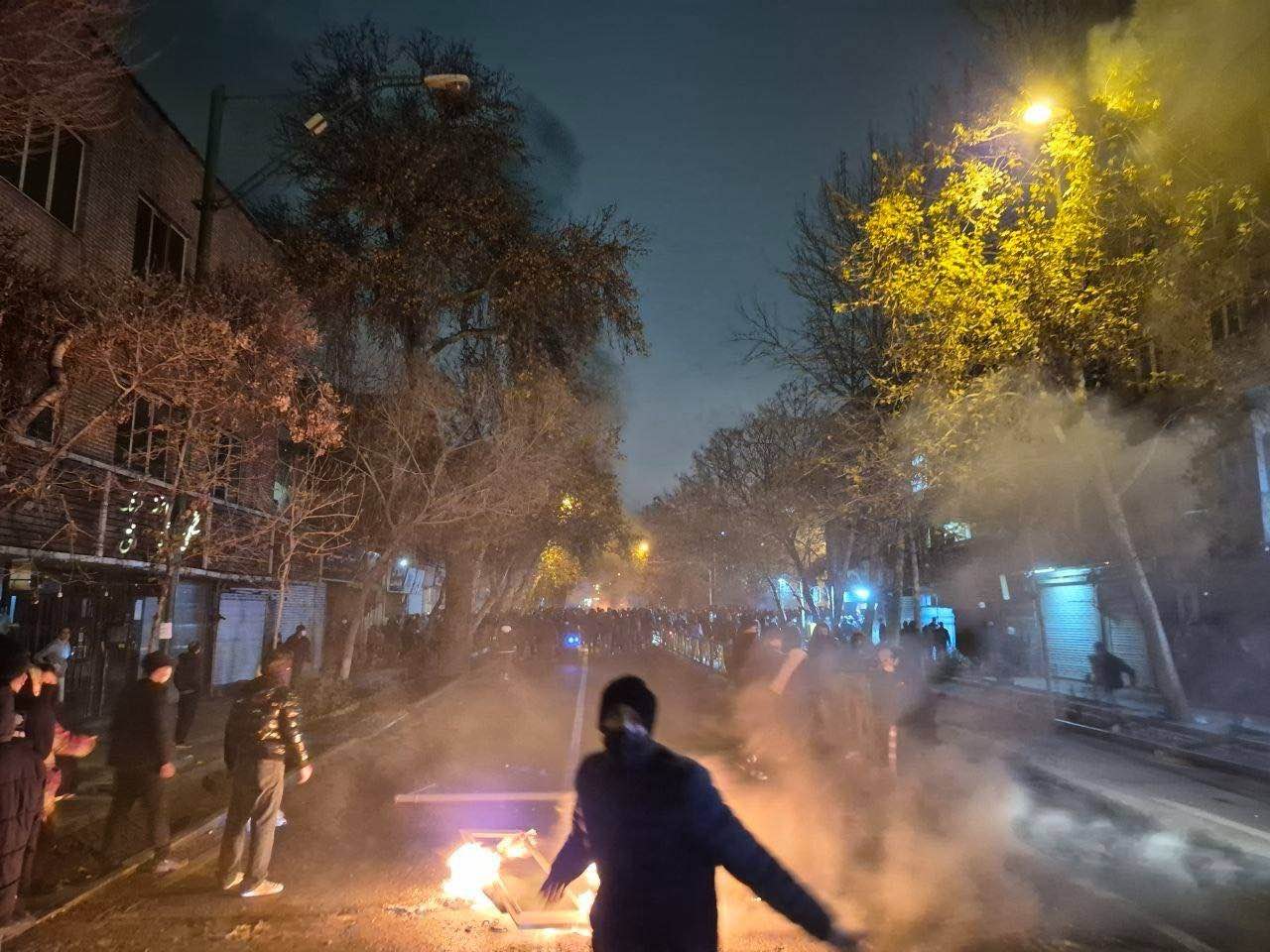
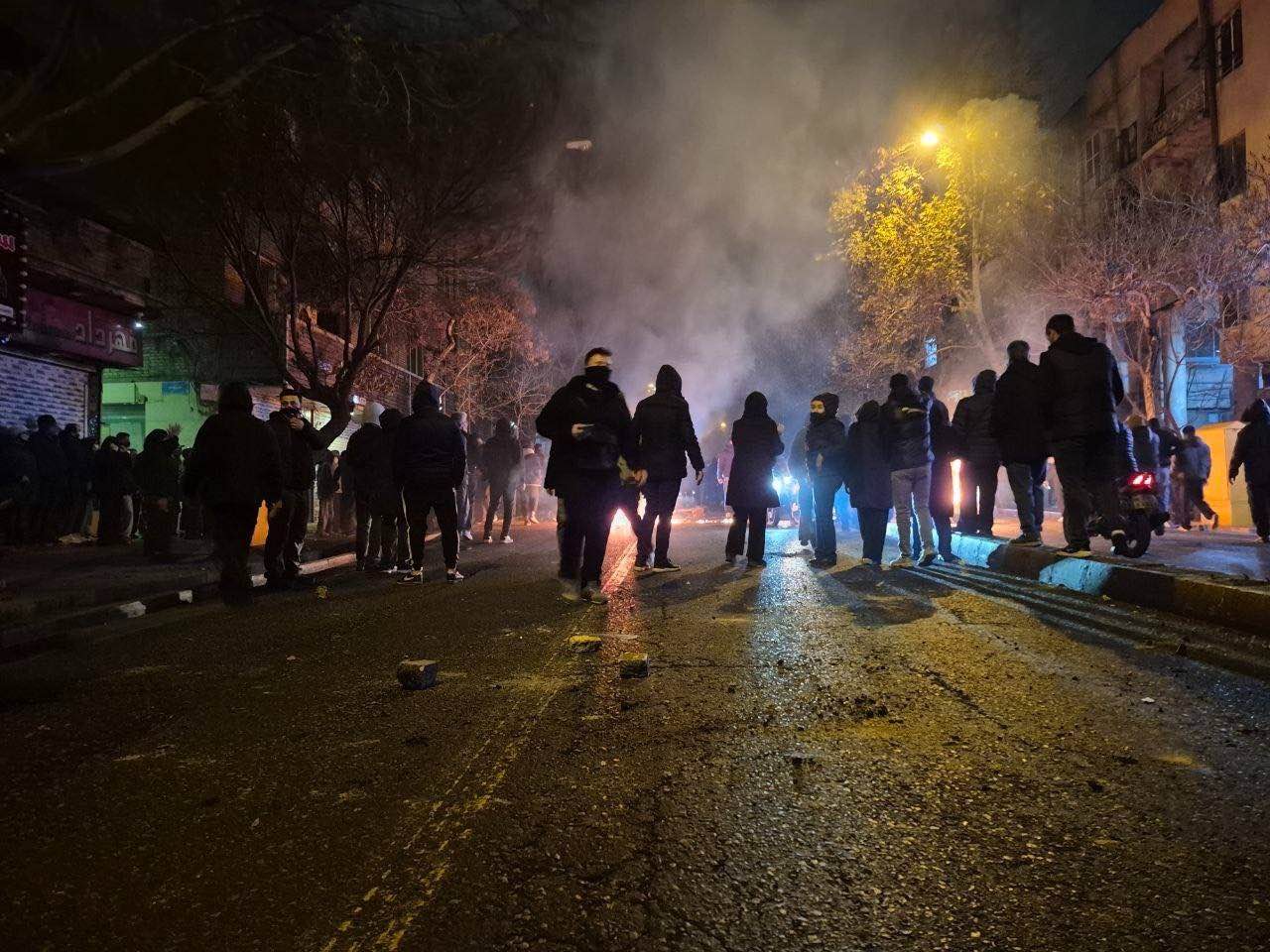
Following the countrywide protests in Iran on January 8, 2025 and the bloody crackdown that followed, the Palestinian Solidarity Action Network (PSAN) conducted interviews and sustained conversations with two comrades from Roja, as well as with Iranian movement organizer Leila Hossein Zadeh. Under an unprecedented total communications blackout, the security forces of the Islamic Republic of Iran carried out systematic lethal violence against street protesters and ordinary civilians, inflicting large-scale deaths, arrests, and disappearances. Many who lived through this experienced it as a war directed against society as a whole, erasing any distinction between “wartime” and “peacetime.”
cdn.crimethinc.com/assets/articles/2026/02/18/9.jpg
PSAN is an internationalist diasporic sinophone collective formed in solidarity with the struggle for Palestinian liberation. Since the outbreak of the 2026 Iranian uprising, Iran and Palestine have increasingly been framed as opposing issues within Western leftist discourse. The resulting divisions within pro-Palestine movements over Iran’s ongoing uprising and repression deeply trouble us.
As activists shaped by the Chinese context, we place the experiences that Roja describe alongside our own historical and lived realities. In discussing internet shutdowns, street-level organizing, the normalization of state violence, and the ways that internationalism is hollowed out through the language of national security, we came to see that we were not confronting an unfamiliar situation, but a set of mechanisms of governance repeatedly tested, shared, and transplanted from one regime to another. Comrades from Roja also spoke about how the Islamic Republic of Iran has deployed Chinese state security technologies to suppress dissent. This resonates with PSAN’s earlier investigations, which have shown that Chinese state security technologies are not only deployed in “Xinjiang,” but have also been used in Palestine. The Iranian experience thus becomes part of a broader understanding of how contemporary authoritarian governance circulates across regions, part of a shared reservoir of experience and memory between us.
We hope to share this experience with those who, under extreme conditions, still seek to understand, to record, and to continue acting. We believe—and we hope—that victory belongs to those who resist.
We conducted this interview on January 23, before internet connection to Iran resumed.
Roja (روژا) is an independent, leftist, feminist collective based in Paris. Roja was born after the femicide of Jina (Mahsa) Amini and the beginning of the “Jin, Jiyan, Azadi” uprising in September 2022. The collective is composed of political activists from a range of nationalities and political geographies within Iran, including Kurdish, Hazara, Persian, and more. Roja’s activities are not only connected to social movements in Iran and the Middle East, but also to local struggles in Paris in step with internationalist struggles, including in solidarity with Palestine. The name “Roja” is inspired by the resonance of several words in different languages: in Spanish, roja means “red”; in Kurdish, Roja means “light” and “day”; in Mazandarani, roja means the “morning star” or “Venus,” considered the brightest celestial body at night.
Leila Hossein Zadeh is a human rights defender and student activist in Iran’s contemporary social movements. In 2018, for her involvement in student activism, she was sentenced by the Tehran Revolutionary Court to five years’ imprisonment on charges of “assembly and collusion against national security,” and to an additional year for “propaganda against the state.” Although parts of the sentence were reduced on appeal, the five-year term remains pending, functioning as a long-term deterrent against her political activities. In November 2024, following her master’s thesis defense at the University of Tehran—where she researched ethnic minority issues and appeared without a headscarf—she was again charged with “propaganda against the state” and “appearing in public without sharia-compliant hijab,” and sentenced in absentia to one year of imprisonment and a heavy fine, without a hearing.
I. A War against Its Own Society
It has been more than 25 days since the nationwide protests began. Can you describe the situation on the ground, especially in terms of organization? How did people organize on January 8 without a single leadership or central command, and how did earlier cycles since 2017 shape this process?
Roja: This uprising is part of an ongoing cycle of mass protests that began in 2017, with the waves becoming more widespread, confrontational, and frequent. Major moments include the brutally repressed 2019 “Bloody November” protests over fuel price hikes, the 2021 “uprising of thirst” against water deprivation and ecological extraction, and the 2022 Jina Uprising, “Woman, Life, Freedom.” The 2022 uprising marked a peak because it united anti-colonial, feminist, and egalitarian struggles, sparked by the killing of Jina Amini, a young Kurdish working-class woman whose death resonated across social and political divisions.
Leila: When we talk about organization, there are two different levels. One is organization at the street level, and the other is organization at the level of political organizations. At the street level, people on the ground learn from previous uprisings, and each cycle has become progressively more confrontational. Neighborhood-based youth organizations played a very important role, especially during “Woman, Life, Freedom.” These were people who already knew each other, who had socialized together in the same neighborhoods. That social trust became crucial once a mass uprising started.
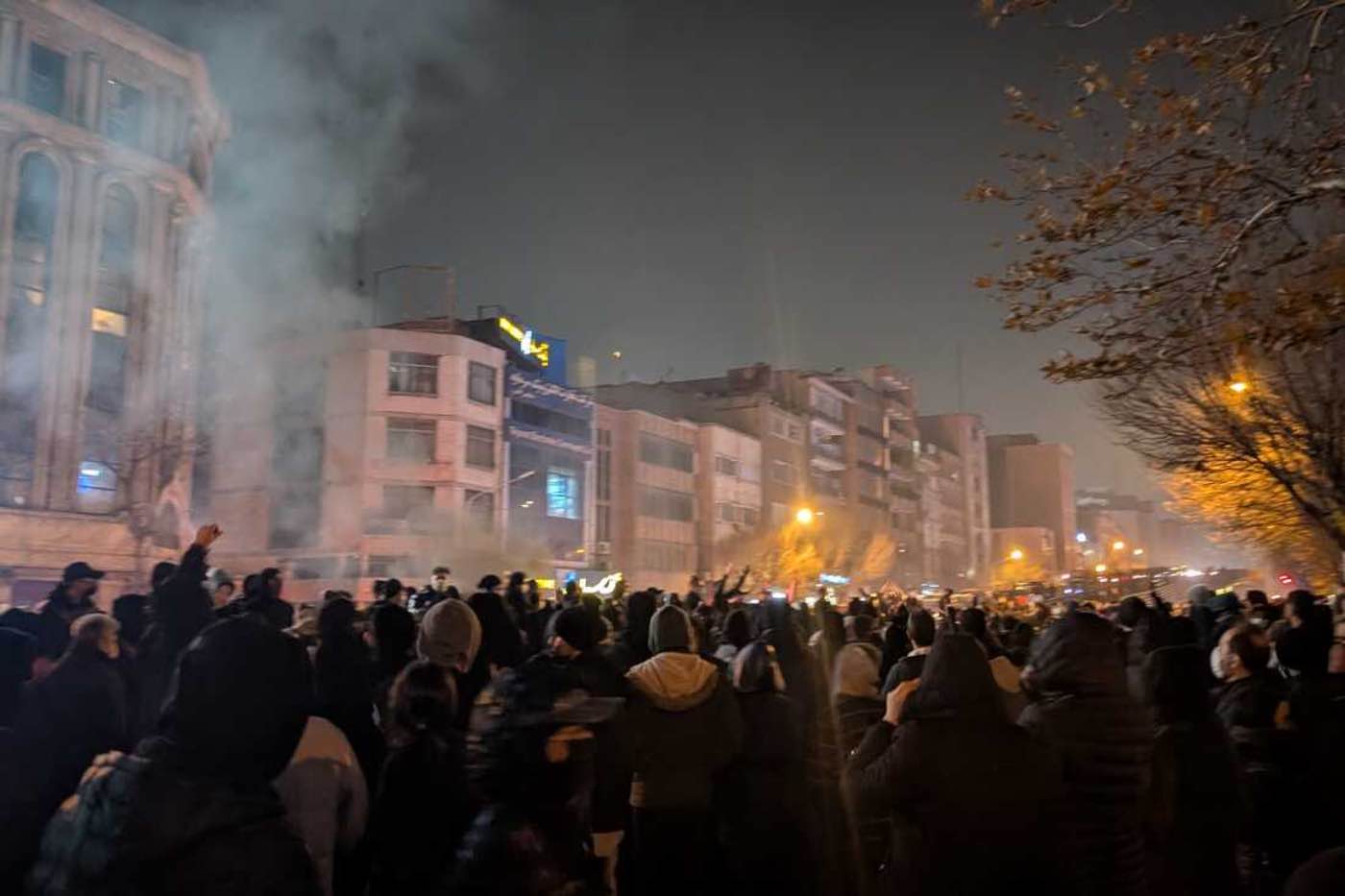
The primary medium for street-level coordination is the internet. If an event occurs in a neighborhood, people can quickly organize online, allowing others to come to their aid. In the presence of repressive forces, protesters coordinate by sharing real-time information—for example, reporting which highways security forces are using—so that some can block the highways while others continue activities in the streets.
At the level of political organizations, there is effectively no formal leftist presence due to decades of heavy repression. The main exception is Mujahedeen (MEK), though it remains marginal and lacks broad support for historical reasons. In this uprising, monarchist-aligned groups appear to be gaining influence. They maintain a strong anti-left discourse, positioning themselves against the 1979 revolution. They have substantial resources and financial backing from Saudi Arabia and Israel. According to media reports, Iran International received approximately US $250 million in start-up funding from Saudi Arabia during its founding phase.
Most of what I am describing applies mainly to central geographies, not the peripheries. Kurdistan and other marginalized regions have very different forms of organization not only because of decades of repression, but also deriving from decades of organizing. The tactics used on the streets—how to confront police, Basij [a paramilitary volunteer militia within the Islamic Revolutionary Guard Corps, IRGC], and IRGC forces—can only come from marginalized bodies, bodies that confront state violence on a daily basis, especially people working in the informal economy. Manual labor also matters in this context, because the capacity to engage in direct physical confrontation is part of the subjectivity produced by this class position.
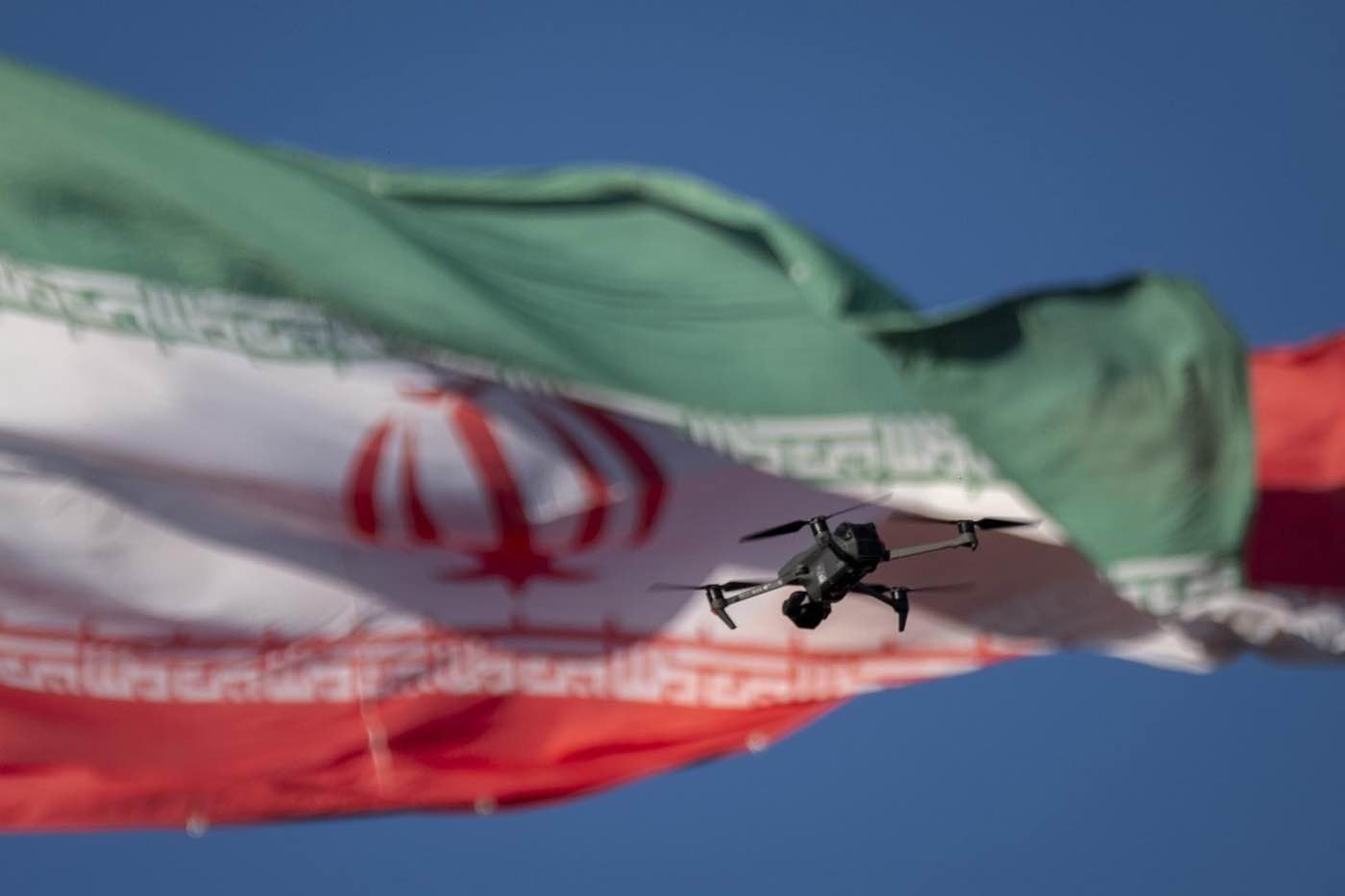
Two groups were especially important in street-level organization. The first was technical workers, especially mechanics. They have specific tools and skills that became extremely important for building barricades and blockades. For example, mechanics used the same instruments they normally use to fix cars to sabotage electricity towers on the streets, creating very strong barriers against repressive forces. The second group consisted mainly of young people, often between 18 and 25, who were very familiar with digital technologies. They knew how to smash surveillance cameras on the streets—the cameras that function as the eyes of the state. Many of these cameras were imported from China.
cdn.crimethinc.com/assets/articles/2026/02/18/4.jpg
Roja: In terms of broader organization, three forms were dominant during this cycle: street mobilization, university-based organization, and bazaar or merchant strikes. On the day that the internet blackout started, shopkeepers in more than 55 cities went on strike. Even conservative segments of the petite bourgeoisie joined. Kurdish parties called for a general strike, and all te shops were closed in Kurdistan. The strike extended even to Western Azerbaijan, where both Kurdish and Turkish-speaking populations participated.
Over the past ten years, union-based organizations—teachers, workers, nurses, truck drivers—have repeatedly protested and gone on strike. One persistent problem has been how to synchronize the temporality of union struggles with the sudden eruption of street uprisings. The only group that consistently kept pace with street mobilizations were university students. Students never let a mobilization opportunity on the streets pass them by.
Compared with previous movements, why have Pahlavi monarchists appeared to gain disproportionate influence in this uprising, despite lacking broad support or grassroots organization on the ground?
Leila: As a result of the heavy repression of leftists since the beginning of the Islamic Republic, there is no strong leftist revolutionary organization inside Iran. Monarchists seem to have the upper hand in this uprising, but not because they represent the majority of people or because they are more organized on the ground.
They have money and media. They have their media and all of the main media outlets are outside the country. They have strong connections with foreign countries, and of course they are able to organize in exile.
“Iran International” is present in almost every house through satellite television, even more professional than BBC Persian. With this media power, they are able to shape what people see and hear. There are documented cases where slogans are edited, where the sound of chants is changed, and where one person shouting a monarchist slogan is shown as if the whole crowd is chanting it. If you look carefully at some of these videos, people are actually chanting something else. There was a video of Kurdish people dancing in Punak square in Tehran and there was only one person chanting pro monarchist slogans, but the media manipulation was such that it suggested the whole population is supporting Pahlavi in Tehran.
Roja: In central cities, especially Tehran, monarchist slogans are heard and seen more often. But in peripheral and marginalized regions—Kurdistan, Baluchistan, Khuzestan—there is much more hesitation and in many cases rejection.
In some places, people did not come to the streets precisely because they felt alienated by monarchist narratives. They felt that their struggles were not represented and that everything was being rewritten through one dominant media voice.
There is also a very dangerous political logic in this rhetoric. Monarchists say that there is no other opposition in Europe. Anyone who criticizes monarchy is accused of supporting the Islamic Republic. If you talk about ethnic minority rights, you are labeled a separatist. If you talk about leftist politics, you are equated with the regime. This logic is very familiar. It resembles the way political plurality was eliminated after 1979.
cdn.crimethinc.com/assets/articles/2026/02/18/8.jpg
During the blackout of the internet in Iran, which began on the night of January 8, do you still hear anything from friends and families? How did the regime’s shift from selective internet shutdowns to total communication blackout fundamentally change both the experience of repression and the possibility of collective action?
Roja: Just before this meeting (January 23), my family called me. For the first time since everything happened, my siblings and cousins were all on the phone together. It was very intense. They described how the internet shutdown completely cut people off—families, friends, even neighbors couldn’t reach each other, and many didn’t know if their loved ones were safe.
After protests, people deleted everything on their phones out of fear. Police randomly stopped people in the streets and checked their phones, even if they had never protested. Fear was everywhere.
For short moments, Instagram briefly worked, then went down again. People felt this was deliberate—creating the impression that the internet was back while real communication remained impossible. ATMs and digital payments also stopped working. Anything dependent on the internet shuts down. As my cousin put it, it felt like living in prison—cut off from normal life.
Leila: During previous cycles of uprising—for example, in 2019—the international internet was shut down, while the national internet, often referred to as the “intranet,” remained operational. People were able to use the national network to coordinate, they could inhabit whatever digital space was still available. They would use state-sponsored or IRGC-affiliated Telegram channels and communicate in coded language to share information about conditions in different cities. Someone might write, “In Shiraz, the weather is still rainy,” while another would respond, “Isfahan is sunny now.” Everyone knew this was not about the weather. It was a way of talking about repression, about violence, about how intense things were in different cities, without saying it openly.
But this time, the whole network was shut down. After January 8, the government didn’t just cut the international internet. They cut the national internet as well. Every means of communication was shut down at the same time. This had never happened like this before.
Roja: Even Starlink didn’t function during the blackout. Starlink equipment is extremely expensive, given the national currency depreciation, and it is illegal to have it. Only very few people have access to it. But even those people could not access the internet this time. There are reports that the Islamic Republic used some kind of noise or interference to block satellite signals, a new technology often associated with China and Russia. This is the first time the Islamic Republic has used this kind of technology on the population as a whole, to isolate people completely.
Iran and China have a 25-year cooperation agreement. Iran has continued selling much of its oil to China, bypassing US sanctions, often at significant discounts—sometimes reported at around 20% below global market prices, though the exact figures vary and are difficult to verify. Some observers believe Iran has long sought to develop a China-style national internet and acquire related filtering and control technologies, but until now it has not been able to implement such a system fully. Many people saw the current shutdown as a test—or as a demonstration of more advanced restrictions than before.
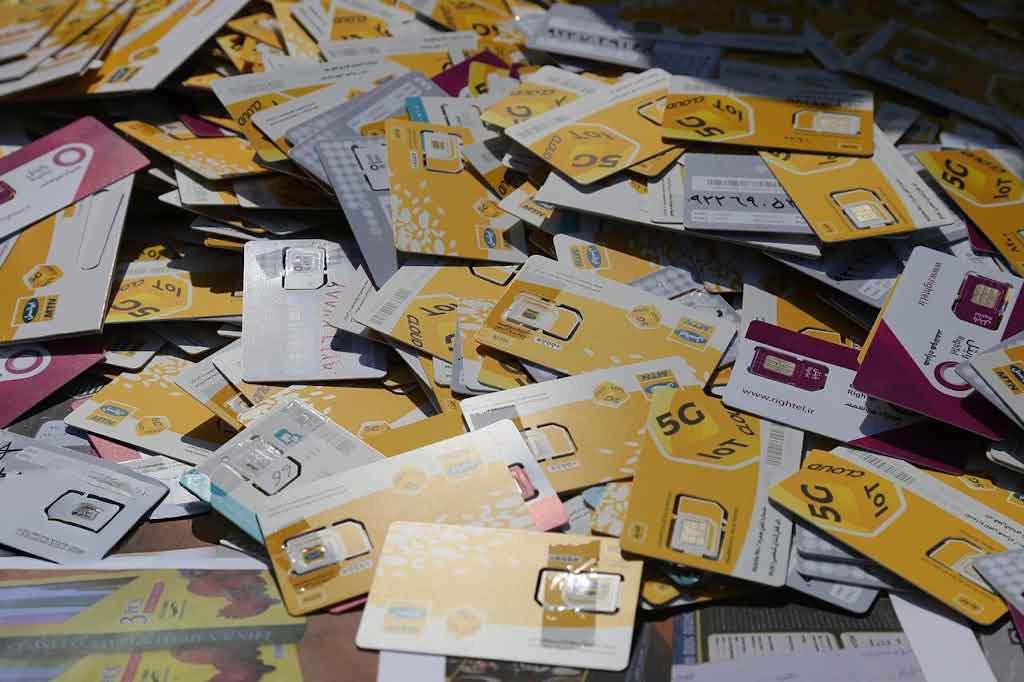
White SIM cards are part of this system. These are SIM cards with no filtering and no censorship. In Iran, most websites and platforms are blocked, and people need VPNs. White SIM cards can bypass all of that. For a long time, only people close to the core of the regime had received them. After the twelve-day war with Israel, a limited number of journalists also received them, even including some who were critical to the regime.
But during this uprising, even the white SIM cards didn’t work. Nothing worked. At one point, even government websites were down. This is why many people say this moment is radically different from anything they experienced before.
Many people, including ex-political prisoners, described the feeling during the blackout as like being in solitary confinement. Not as a metaphor, but as a lived condition. What happened in Iranian prisons in the early years of the Islamic Republic, especially the massacres of leftists in the 1980s, seemed to come out of the prisons and spread across society. The logic of the prison expanded and surrounded everyday life.
cdn.crimethinc.com/assets/articles/2026/02/18/5.jpg
Can you share more about the massacre of civilians on January 8? How did people respond to that inside Iran?
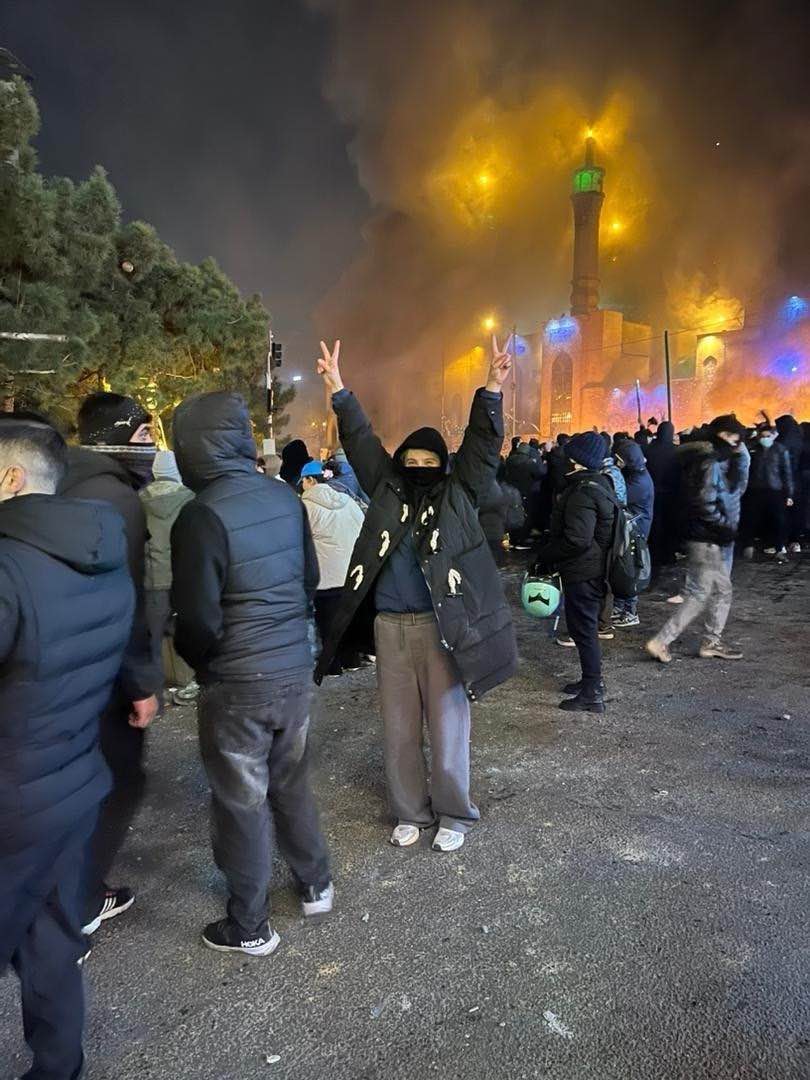
Roja: There is ongoing debate over how many people have been killed since the internet blackout, particularly during the two nights of Thursday and Friday, January 8 and 9, when people started to flood the streets, taking control of many cities across the country. Some say five thousand; some say ten thousand; others say twenty thousand, even thirty thousand. At the same time, official figures have announced roughly 2000 deaths, many of which they claim were members of their own security forces, effectively replacing the victim with the aggressor. More than 25,000 people have been arrested on the streets, many of whom face the risk of execution.
For people inside Iran, the exact number doesn’t really change anything. Whatever the figure, the Islamic Republic of Iran—particularly the IRGC and its paramilitary branch, the Basij—has carried out a qualitatively distinct form of violence, shocking and horrific even by the standards of Iran’s long, bloody history of state repression. The only proper name for this scale and systematic targeting of protesters is massacre.
According to eyewitness testimony from protesters, accounts from medical staff in hospitals and clinics, and records from medical facilities, live ammunition and shotguns were used systematically—not randomly—with shots aimed directly at vital organs: people’s eyes, heads, hearts, and torsos. One of the most visible and devastating forms of injury has been the loss of eyesight suffered by large numbers of people—something that was also used on a massive scale during the Woman, Life, Freedom uprising in 2022.
This level of repression is also a form of punishment that marks collective bodies. It is oriented toward the future as well, so that the next time you begin conquering cities through mass uprising, you will remember that you were massacred—so you never forget what happened to you. The punishment is therefore inscribed on the body and marks collective memory.
One of the crucial differences between the current uprising and previous ones is that, for the first time, the Islamic Republic of Iran is using the lexicon of “terrorism” to describe protesters. In the past, the term “rioter” (اغتشاشگر) was used to draw a distinction between “legitimate” protesters and those portrayed as seeking to destabilize the government—the latter of whom were often accused by security and intelligence services, as well as officials (including the Supreme Leader), of being linked to the US or Israel. Today, “terrorist” has become the official keyword for anyone protesting in the streets. People on the streets are no longer treated as citizens—or even as “criminals” to be policed. Instead, they are cast as outside agitators and terrorists, against whom the state claims the right to wage war.
While Western imperialists instrumentalize the Islamic Republic’s brutal repression to justify their own regime-change agenda, supporters of the so-called “axis of resistance” often seek to deny or downplay this repression and the mass killing it entails. This denial—common among campists, who support any force opposed to Western imperialism regardless of its own internal repression, class relations, and geopolitical interventions—is not a neutral error. It is an anti-imperialism of fools, inside Iran and abroad: so fixated on the goal of opposing imperialism that it refuses to recognize the state violence enacted under the guise of anti-imperialism. In that sense, they are not merely mistaken but complicit.
Could you say more about how the Islamic Republic understands the current uprising as a war?
Roja: Many who participated in the current revolutionary uprising describe their experience on the streets—what is happening now—as a war. Many non-Iranian commentators, based on a quantitative argument, argue that during the Twelve-Day War, one thousand were killed, but that in just two days inside Iran tens of thousands of people were killed. People even compare this to the eight-year Iran–Iraq War. Now, they say, in two days, the number is even higher.
Arguments about the “quantitative scale” of war have historically served as tools of imperialist warfare. During World War II, the United States relied on precisely this logic when it bombed Hiroshima: if the war continued, one million people would die; if the atomic bomb were dropped now, fewer people would be killed. It was this reasoning that led to the use of nuclear weapons. The same type of argument has repeatedly been used to justify imperialist wars.
So we need to be careful with the lexicon of “war.” Western imperialism often mobilizes the language of war to frame the Islamic Republic’s bloody repression in ways that serve imperial interests. That framing helps justify and normalize Western military intervention as a “response”—cast as support for the Iranian people, or even as a humanitarian necessity to “save” them. On the other hand, when the Islamic Republic calls protesters “terrorists” and “Mossad agents,” treating them as enemies, it effectively launches a war against its own subject populations. This has exposed Iranian society to outside imperial intervention through the unprecedented violence it has deployed against repeated cycles of uprising. In this sense, the Islamic Republic and imperialist powers reinforce each other. They are not equal forces, we are not equating them, but they operate in a mutual dynamic. One uses the threat of the other to justify repression. The other uses repression to justify intervention. Caught in between, real internationalist solidarities are weakened.
Between Western imperialism and the Islamic Republic of Iran, there is a very narrow path. The whole difficulty is navigating between the two narratives without falling in line with either campism or imperialism. Roja has been trying its best to navigate this path through internationalism from below that prioritizes liberation struggles.
Today, many Iranians—deeply opposed to imperialist war—nevertheless say that a war is already underway: a war waged by the Islamic Republic against society itself. In this context of continuous internal violence, exhaustion, and blocked horizons of change, the logic of “lesser destruction” reappears in a tragic inversion. War from the outside comes to be imagined not as disaster, but as rescue. This is how a society pushed to the edge begins, desperately, to wait for a war imposed upon it.
cdn.crimethinc.com/assets/articles/2026/02/18/3.jpg
II. On the Anti-Imperialism of Fools: Sovereignty for Whom?
In many Western anti-imperialist narratives, Iranians are framed as having only two options: a “sovereign” Iran or an Iran occupied by external powers. What’s your response to the claim that “sovereignty is a precondition for liberation”?
Roja: Before turning to the question of “sovereignty”—which I understand to mean the state’s territorial integrity and “national security”—let me first say a few words about how the Islamic Republic presents itself internationally as an anti-imperialist force and a supporter of Palestinian liberation.
Since the 1979 Revolution, the Islamic Republic of Iran has appropriated anti-imperialist rhetoric to justify both internal repression and regional interventions. It often deploys the language of “anti-imperialism” as a legitimating mask for domestic coercion. Compulsory veiling, for example, was violently imposed on women’s bodies in the aftermath of the Revolution and repeatedly framed as the embodied ideal of the Islamic woman—defined in opposition to “Western” values. Furthermore, in the aftermath of the 12-Day War, many people were executed on charges of spying for Israel. Today, protesters are routinely smeared as Mossad agents—a charge that functions less as a factual claim than as a political technology for criminalizing dissent and legitimizing violence.
Against the arguments advanced by campists, nationalists, and some decolonial accounts, Iran’s internal repression cannot be politically severed from its self-proclaimed opposition to imperialism. In the Islamic Republic’s political logic, “anti-imperialism” is not merely a foreign-policy stance; it is also a domestic governing strategy that records demands for freedom and equality as threats to “national security.” In this sense, geopolitics and internal repression are not parallel tracks but mutually reinforcing projects.
Geopolitically, the Islamic Republic has played an active role in shaping the Middle East through what it calls the “Axis of Resistance.” The case of Syria is illuminating: Iran—together with Hezbollah and Russia—helped sustain the dictatorship of Assad, whose methods of repression only became fully visible after its collapse. The Islamic Republic has long told society, “We fight in Syria so that we don’t have to fight inside Iran,” a claim that has no meaning after the 12-Day War. The logic of “national security first” implies that Syrian lives and Syrian blood did not matter because they were not Iranian.
As these two interlinked processes—domestic repression and regional intervention—have repeatedly been legitimatized in the name of anti-imperialism, many inside Iran have become alienated from anti-imperialist politics and struggles. This is the case despite the fact that anti-imperialism was a crucial dimension of the 1979 Revolution.
Now let us return to the question of “sovereignty” in the state sense of the term. The discourse of “national security” has become increasingly dominant since the Syrian war and October 7 [2023], and especially after the 12-Day War. Certain campist and nationalist positions prioritize the form of the nation over its substantive content. If we understand the nation substantively, it implies social rights, democratic representation, collective autonomous self-determination, and the coexistence of different peoples. This is fundamentally different from understanding the nation as mere form—territorial integrity, centralized sovereignty, and national security.
Both the Islamic Republic and its campist supporters have mobilized around this formulation—“national security” and “territorial integrity”—granting it absolute primacy and relegating all other struggles to the margins. But this primacy is false, because it evades the basic question: security for whom, and why is only one form of security prioritized? What about economic security? As we recently wrote,
While the state speaks relentlessly in the name of “national security,” it has itself become a central producer of insecurity: intensified insecurity of life through an unprecedented surge in executions, the systematic mistreatment of prisoners, and intensified economic insecurity through the brutal reduction of people’s livelihoods.
We are repeatedly told: “This is not the time to protest; this is not the time to rebel—otherwise, we will become Syria; otherwise, we will face the same fate as Libya.” The real question is how to confront these contradictions. On the one hand, war and the imperialist fragmentation of society are real dangers. On the other hand, they must also struggle against the Islamic Republic. You cannot simply deny the right of people who have been stripped of any meaningful sense of life—whose lives barely differ from death—to speak and to act, by telling them, “Now is not the time, because national security comes first.”
How is the idea of sovereignty contested inside Iran, especially in the Persian-dominated center by comparison with the non-Persian peripheries?
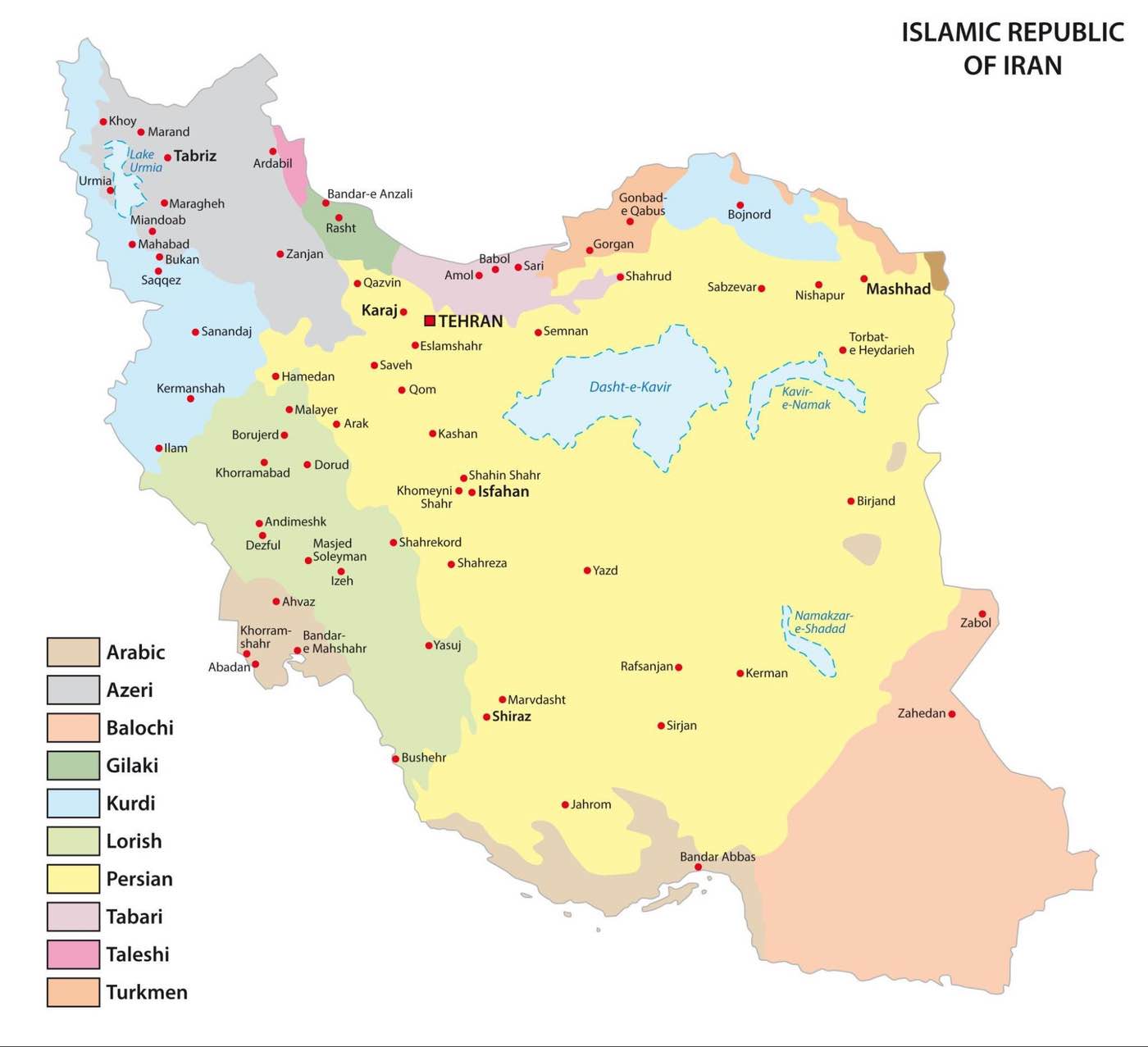
Roja: Everything depends on who we are talking about—for whom sovereignty serves as protection, and for whom it manifests as violence. Multiple nations live within the Islamic Republic, and the lived experience of “sovereignty” across these populations is profoundly uneven.
Take Baluchistan, for example. People there live under conditions of “internal colonialism.” They have been stripped of even formal citizenship. In Baluchistan, there are thousands of people who are not recognized within the state’s official system at all; some do not even have birth certificates and are deprived of the most basic conditions of life. For Baluch people, the relationship with the Islamic Republic is an extractive one, accompanied by an extremely securitized presence. When the state itself is experienced as colonial, violent, and occupying, telling people that sovereignty is more important than their lives makes no sense. This is why the claim that “sovereignty is a precondition for liberation” can only be understood—if at all—within the complex dynamics of center–periphery relations and the question of ethnic-minority self-determination.
The “primacy” of “territorial integrity” comes out of a very strong nationalist tradition in Iran. Since the construction of the modern nation-state, sovereignty has been treated as the supreme, untouchable principle. Even nationalist leftists have often placed sovereignty above everything else. This was already a major point of division after the 1979 revolution, and it remains so today.
Even during the 2022 Jina uprising, much of the backlash centered on it: those at the forefront were repeatedly labeled separatists, accused of wanting to bring civil war into the country. Today, this same framing is used to justify a false binary—you must choose between the Islamic Republic or civil war—with civil war presented as a threat to sovereignty. This discourse shuts down any possibility for change from below.
More importantly, this argument does not hold up empirically. Throughout the entire post-revolutionary period—from the 1980s until today—there has been no political force in Iran genuinely seeking to break the country apart. Even Kurdish political forces, in their official statements and positions, have never demanded separation from Iran. This claim is a narrative produced by the regime and by nationalist forces, not reflective of reality.
In this sense, the sovereignty discourse also ends up reinforcing the Islamic Republic, because it mirrors the regime’s own logic. Over the past decade—especially since 2011—the regime has repeatedly told society: “You may have nothing, but you have security. You have not become Syria because of us, because we guarantee national sovereignty and national security.” This argument has been consistently used to delegitimize every uprising. Since 2017, whenever people have taken to the streets, this argument has returned: “We don’t want to become another Syria.” But the question is: why must that be the outcome? Why couldn’t there be a democratic revolution? This is not a purely imaginary fantasy; it is tied to real struggles and to democratic political imagination.
This also helps explain why in this uprising, the calls for figures like [Reza] Pahlavi are heard more often in central regions. Ethnic minorities make up roughly 35-40% of the population. This is crucial. So when people say “Iranians think this way,” we must ask: which Iranians? Many people in peripheral regions do not share this “sovereignty-first” perspective. The claim that “the Iranian people think this way” simply does not hold.
cdn.crimethinc.com/assets/articles/2026/02/18/2.jpg
III. On Palestine: “State Property” of the Islamic Republic
The Palestinian struggle and the Iranian struggle are often pitted against each other—both in Western anti-imperialist narratives (such as the “Axis of Resistance” vs. “Zio-America” framing) and in liberal narratives (for example, slogans like “Neither Gaza nor Lebanon, My Life for Iran”). Inside Iran, how has the state’s monopolization and instrumentalization of Palestine shaped popular perceptions and solidarities? What has caused the two struggles to become disconnected—or even appear contradictory—and what does grassroots Iranian solidarity with Palestinian liberation look like beyond state propaganda, military alliances, and the “Axis of Resistance” framework?
Leila: When it comes to Palestine, the situation is very complicated. At a general level, among large parts of the population in Iran, sympathy for Palestine is low right now. This is not because people suddenly became pro-Israel, but because of how tensions have been mediated and instrumentalized by the state.
Many people feel that the Islamic Republic depletes the public budget and invests it into military apparatuses operating across the region instead of investing in social welfare. People are struggling with severe economic problems. Prices are going up. Subsidies are being removed. Hospitals are being privatized. The health care system is collapsing. In this situation, people attribute the state’s corruption to the Islamic Republic’s support for the Palestinian Resistance. It is a very widespread misconception.
This perception also depends very much on who we are talking to. If we move away from the central, urban, middle class, and look toward working class and marginalized regions, the picture changes. Age matters. Geography matters.
There was a moment during the uprising when someone from a peripheral area called me and said that the catastrophe they were experiencing could only be described in one way. They said the city looks like Gaza. So Gaza became the reference. For that person, Gaza was not an abstract geopolitical symbol. It was a concrete way to describe what state violence looks like.
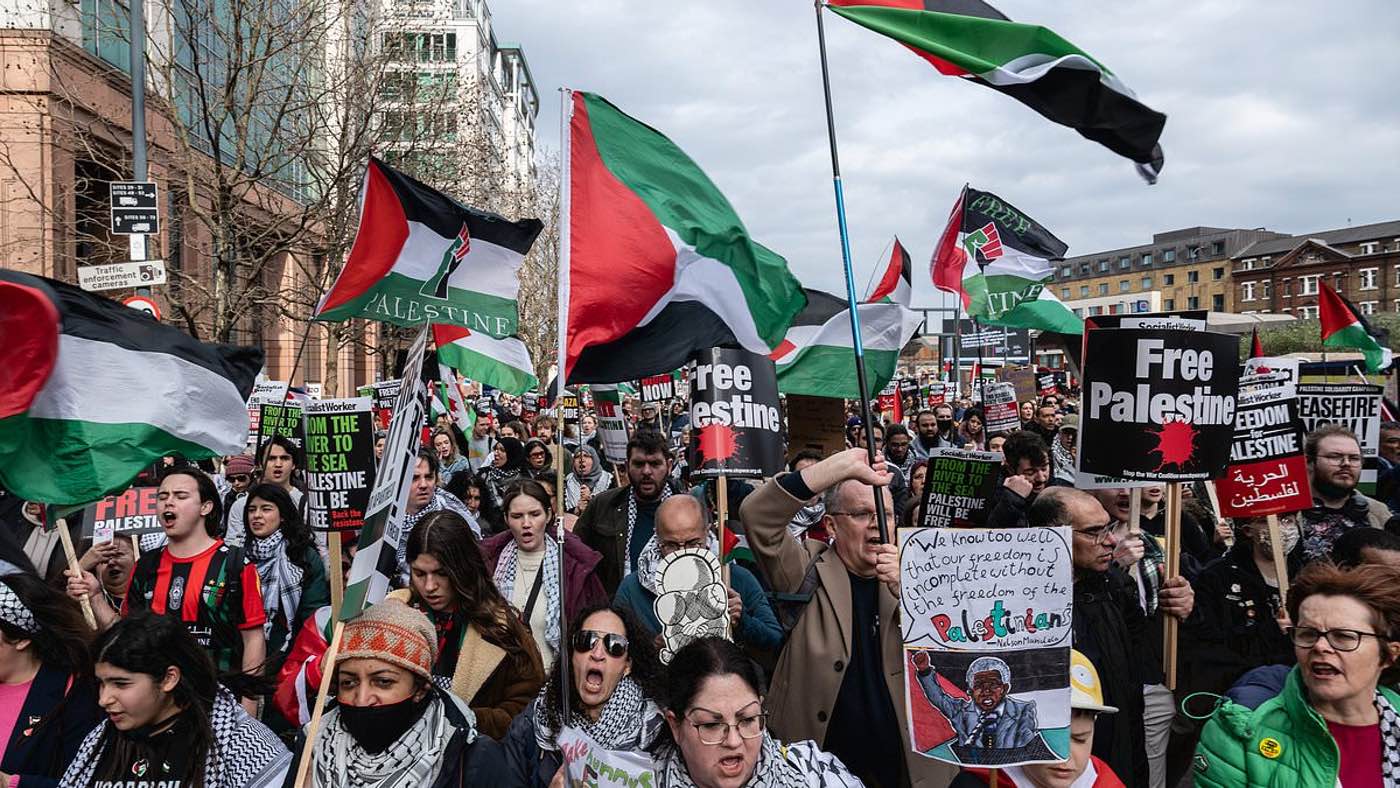
Roja: In Arab regions such as Khuzestan, there is strong sympathy with Palestine—and not only sympathy, but a strong connection. Palestine has been a source of inspiration for their own struggles, and their activists have been linked to Palestinian struggles. Because of this, they have been crushed repeatedly. People have been arrested simply for holding Palestinian flags or expressing solidarity. The state does not tolerate anyone else holding the Palestinian cause; it wants to monopolize it.
This is one of the main contradictions. Even leftists inside Iran who are committed to Palestinian liberation find it almost impossible to organize any independent action in solidarity with Palestine. If they try to act publicly, they are either immediately repressed or their actions are absorbed and re-framed by the state narrative. Palestine becomes state property.
The Islamic Republic’s relationship to Palestine—even if one accepts that it materially sustains certain forms of resistance—is fundamentally grounded in its own geopolitical and national interests, rather than in a commitment to Palestinian liberation as such. Officials themselves repeatedly invoke the notion that we fight outside our borders so that we do not fight inside. “If we don’t fight in Syria, we will have to fight inside Iran.” Palestine is treated within the same framework.
There is a deep contradiction here. A state that massacres its own people cannot be a force of liberation for others. A state that kills people in the streets, blinds them, imprisons them, executes them, cannot claim to be fighting for justice elsewhere.
How are these debates around Palestine and anti-imperialism experienced differently in Kurdistan and other marginalized regions?
Roja: For Kurdish people, the question of Palestine has always carried a lot of tension. It does not come from theory. It comes from political memory and lived experience. It comes from genocides.
There are historical moments such as genocide that shape Kurdish political memory deeply. The first one is the “Anfal campaign.” It was carried out by Saddam Hussein during the Iran–Iraq war in Iraqi Kurdistan. Around one hundred and eighty thousand Kurdish people were killed—merely because they were Kurdish. The allegation to justify the genocide was that they collaborated with Iran.
What matters is not only the genocide itself, but also the reaction of some parts of the Arab world at the time. The majority of Arab states supported Saddam Hussein. And the Palestinian leadership supported Saddam during the Anfal campaign. Arafat supported him openly. Even Edward Said denied the Anfal campaign in his writing in the early 1980s. For Kurdish people, this created a very deep wound. It was not just betrayal. It was erasure.
Then there is Afrin in Syria. In 2018, Afrin, which is part of Rojava, was occupied by the Turkish army. The occupation involved systematic violence against civilians, including women and children. It involved displacement and destruction.
During this occupation, representatives of Hamas went to Afrin while the Turkish army was occupying the city. They celebrated together with the Turkish army and they said this very clearly. They said this is an example for the Middle East. They said this is something that should be replicated. For Kurdish people, that moment was devastating.
As a result, a deep rupture has long existed between Kurdish political struggles and both Arab and Persian nationalism, as well as parts of the self-described anti-imperialist left, which have often failed to recognize the Kurdish struggle.
At the same time, it is important to say that historically, Kurdish movements were among the strongest supporters of Palestinian liberation. The first generation of Kurdish revolutionary organizations, especially in the 1980s, declared armed struggle side by side with Palestinian and Lebanese revolutionary movements. There was an organic political and military relationship.
But today, in the consciousness of Kurdish people, questions have arisen. Why are Kurdish genocides not recognized, while other genocides are recognized? Why does nobody care when Kurdish people are killed? Why are Kurdish lives always treated as secondary?
This is not only about the past. It is happening again now. In demonstrations in Europe, Kurdish people have seen photos of Saddam Hussein carried in pro-Palestine protests. Friends who recently returned from Syria say that Saddam’s image is appearing again there, being displayed and celebrated. For Kurdish people, this is unbearable. The person who carried out genocide against us is being brought back in the name of resistance.
If we accept the argument that, in conditions of existential threat, a people may seek support wherever it is materially available—regardless of the nature of the supporting state—then the question must be posed consistently. Many defenders of Palestinian resistance justify tactical alignments with regional powers on the grounds of survival under siege, not because those powers are emancipatory or democratic. If that logic is considered legitimate in one case, why is it rejected so categorically when applied to the Kurds, who have likewise faced annihilation, statelessness, and repeated abandonment?
The issue, then, is not the purity of allies, but the selective application of moral and political standards, standards that shift depending on geopolitical alignment rather than on the concrete conditions of survival faced by oppressed peoples.
I realized this clearly when a Syrian friend of mine, a member of the Druze minority that recently experienced massacres at the hands of Al-Jolani, the head of the new Syrian factional government, told me something. She said, “I have always been anti-Israel my whole life.” She was crying, showing me the Palestinian keffiyeh around her neck, and said, “I always wear the Palestinian keffiyeh wherever I go. But I have to admit, if it weren’t for Israeli support during Al-Jolani’s recent attacks on the Druze in Syria, my people would have been completely massacred. How can I allow myself to say that my people are allowed to be massacred, but should not take help from Israel?” I think she is right. Just as we, as Iranians, have no right to tell Palestinians that it’s okay to be massacred but not take help from Iran or any other repressive state. What we can say, however, is that the compulsion to accept aid in a survival situation does not mean we are endorsing the policies of Israel, Iran, or the US. It doesn’t mean we ignore the crimes these countries commit against other people. This is the logic I am talking about, and it should not be a double standard.
cdn.crimethinc.com/assets/articles/2026/02/18/6.jpg
Now that many activists are in exile, what can actually be done from outside Iran, and what limits and responsibilities shape diasporic organizing today?
Roja: As the Iranian far right is becoming a real threat to democracy, other progressive and leftist groups in the diaspora are ready to work together, which was not the case before. This common enemy (Pahlavi as well as IR) is contributing to the formation of united fronts and blocs of all sorts.
We also work to maintain long-term connections with different collectives and organizations from Palestine to East Asia, particularly the new generation in China, Taiwan, and Bangladesh. We are building links between Baluchistan, Kurdish, and Iranian groups.
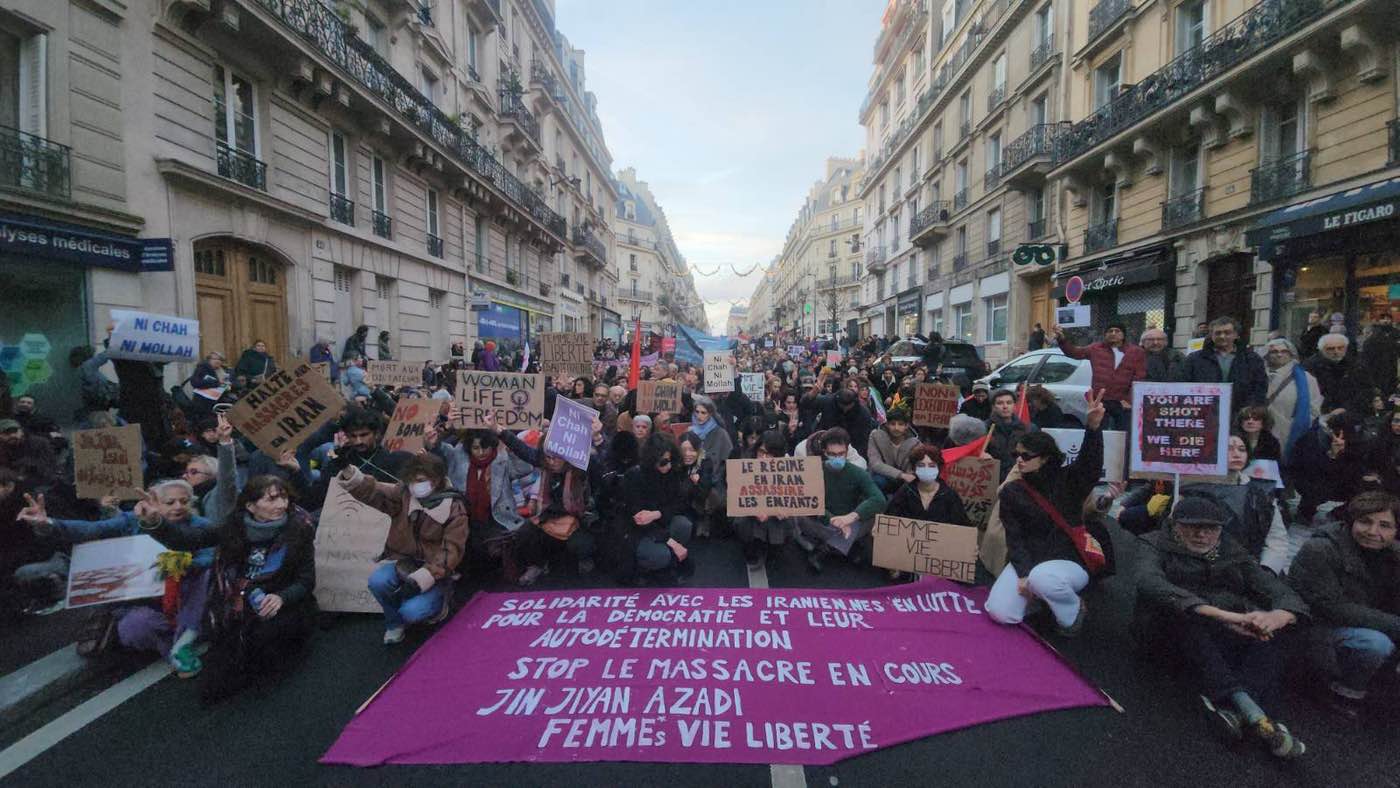
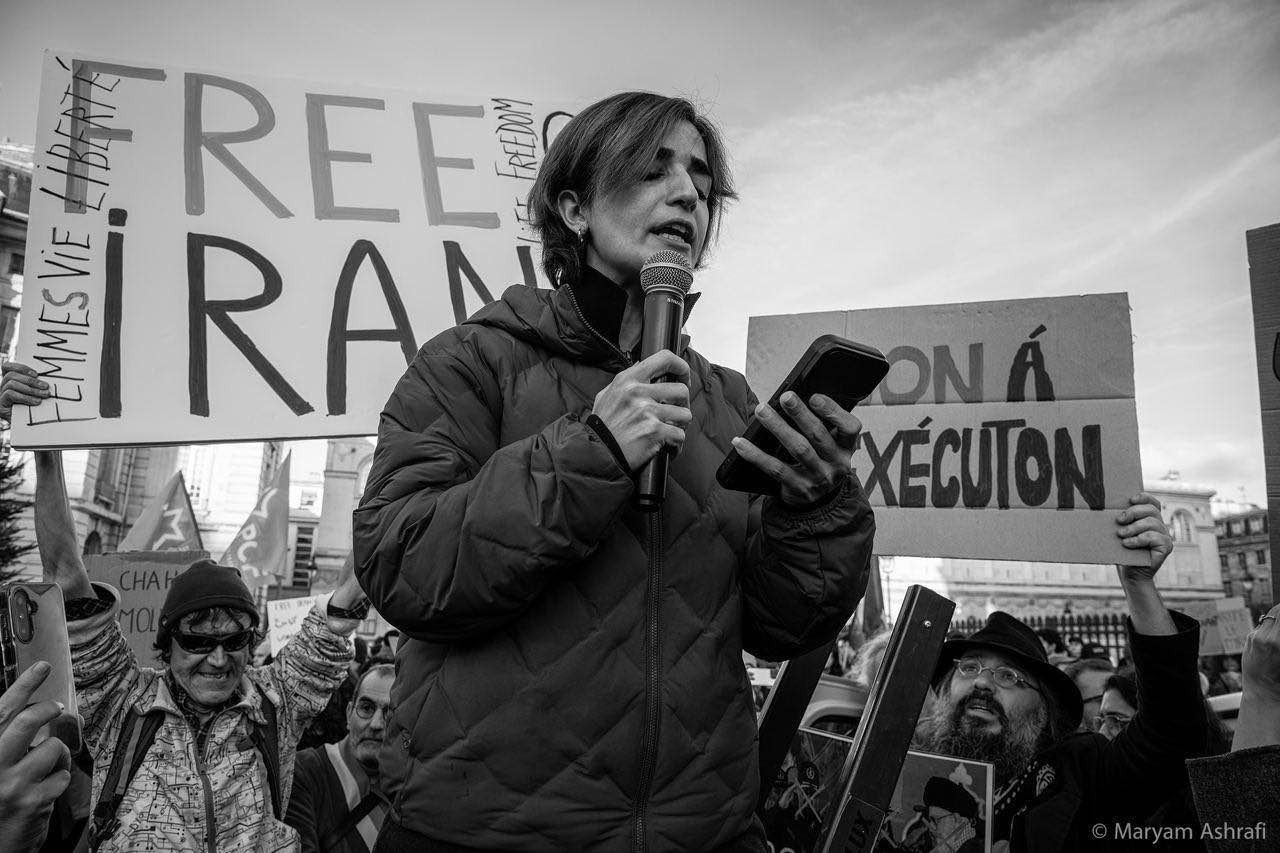
For the first time, we organized a large, explicitly anti-monarchist demonstration against the Islamic Republic in Paris. This showed that a progressive, leftist, anti-war opposition also exists in Europe. Afterward, activists from other cities reached out, encouraging us to build broader, less dogmatic alliances capable of organizing opposition both to monarchy and to the Islamic Republic.
In the diaspora, we are in a privileged position to fight on multiple fronts at the same time. One front is against Western imperialism. Another front is against the Islamic Republic. Another front is against the campist supporters of the Islamic Republic who deny or delegitimize the uprising.
More importantly, we try to insist that the oppressed people and classes in the Middle East have shared destinies—that struggles in Iran, in Kurdistan, in Palestine, in Lebanon are connected, and we need to learn from each other and develop an internationalist politics based on common ground and articulations of social struggles.
Internationalism is precisely about this: I care about Palestine because it is directly and immediately connected to our lives and also shapes the destiny of social struggles. Your struggle is mine, mine is yours, despite all the differences and contradictions. It is around these questions that we in Roja are organizing today.