Filter Blockades
:A Tactic from the Twin Cities to Fight ICE and Defend Your Neighborhood


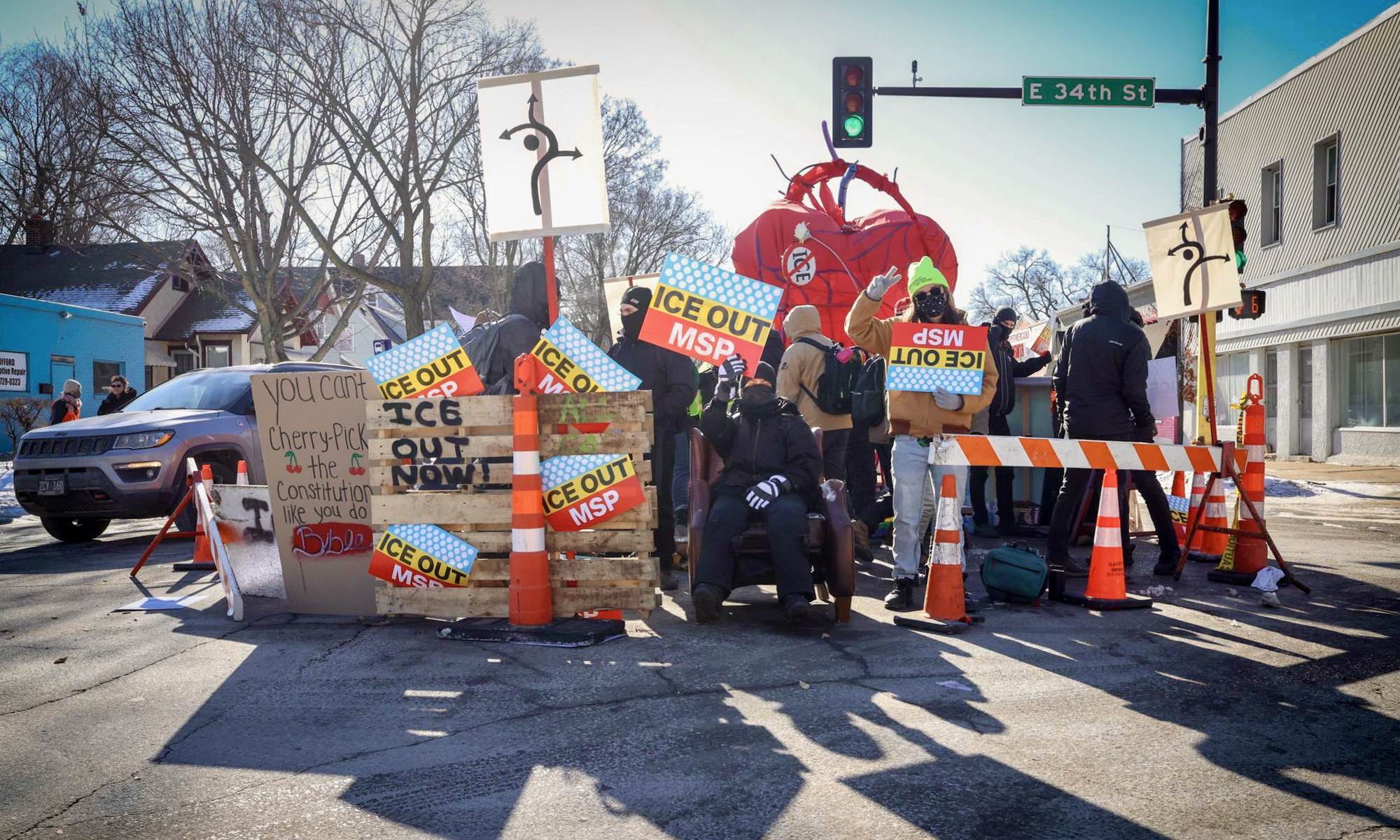
This week, demonstrators in the Twin Cities have been experimenting with filter blockades, a means of monitoring traffic for federal agents and, in some cases, obstructing their activities. Here, we present a guide to maintaining filter blockades, share accounts from filter blockades in the Twin Cities this past week, and conclude with a broader look at the history and potential of the model.
You can find updates about the use of filter blockades in the Twin Cities here.
Filter Blockades
Winter 2026 has seen a protracted struggle in The Twin Cities. On one side are the mercenaries of Immigration and Customs Enforcement, Donald Trump’s attempt to build a federal police force answerable only to him for the immediate purpose of committing ethnic cleansing and the longer-term purpose of terrorizing all opposition. On the other side are the people of the Twin Cities who are moved by their consciences to protect their neighbors and defy tyranny. Their resistance has emerged as rapid response networks tracking ICE movements and impeding their attempts to kidnap people. It has also given rise to blockades at the federal building, a general strike, and riots that have forced ICE and police to withdraw from neighborhoods.
Over the past week and a half, we have witnessed the emergence of a new tactic: the filter blockade.
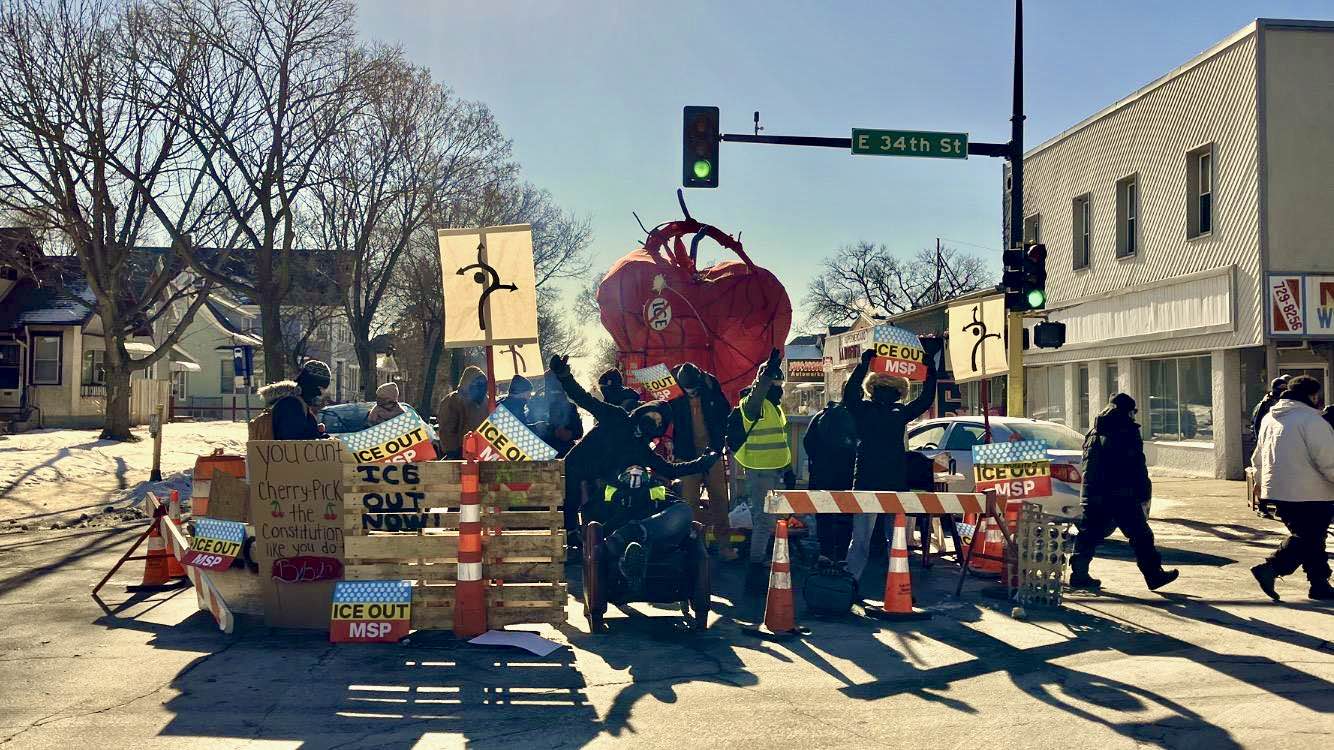
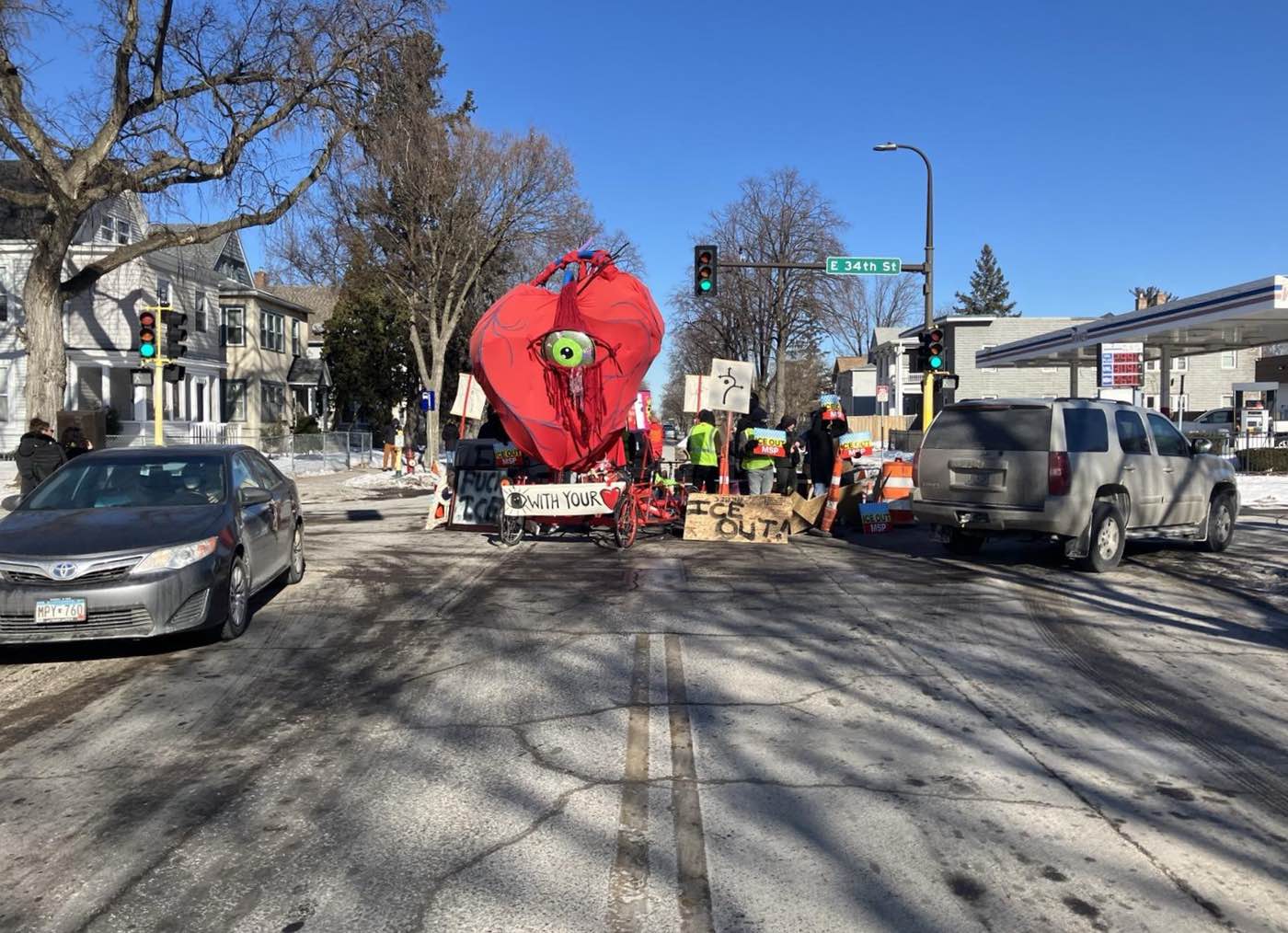
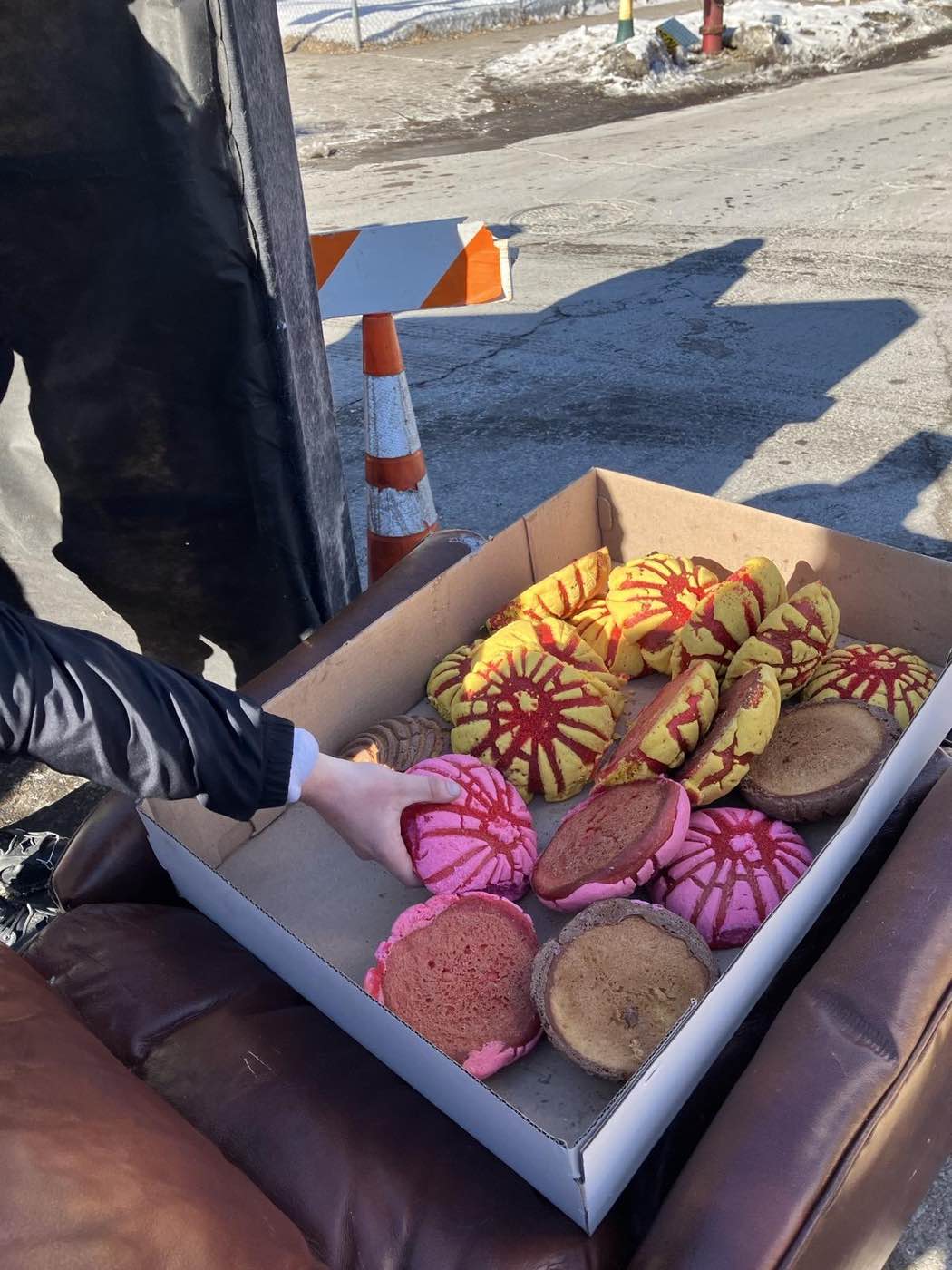
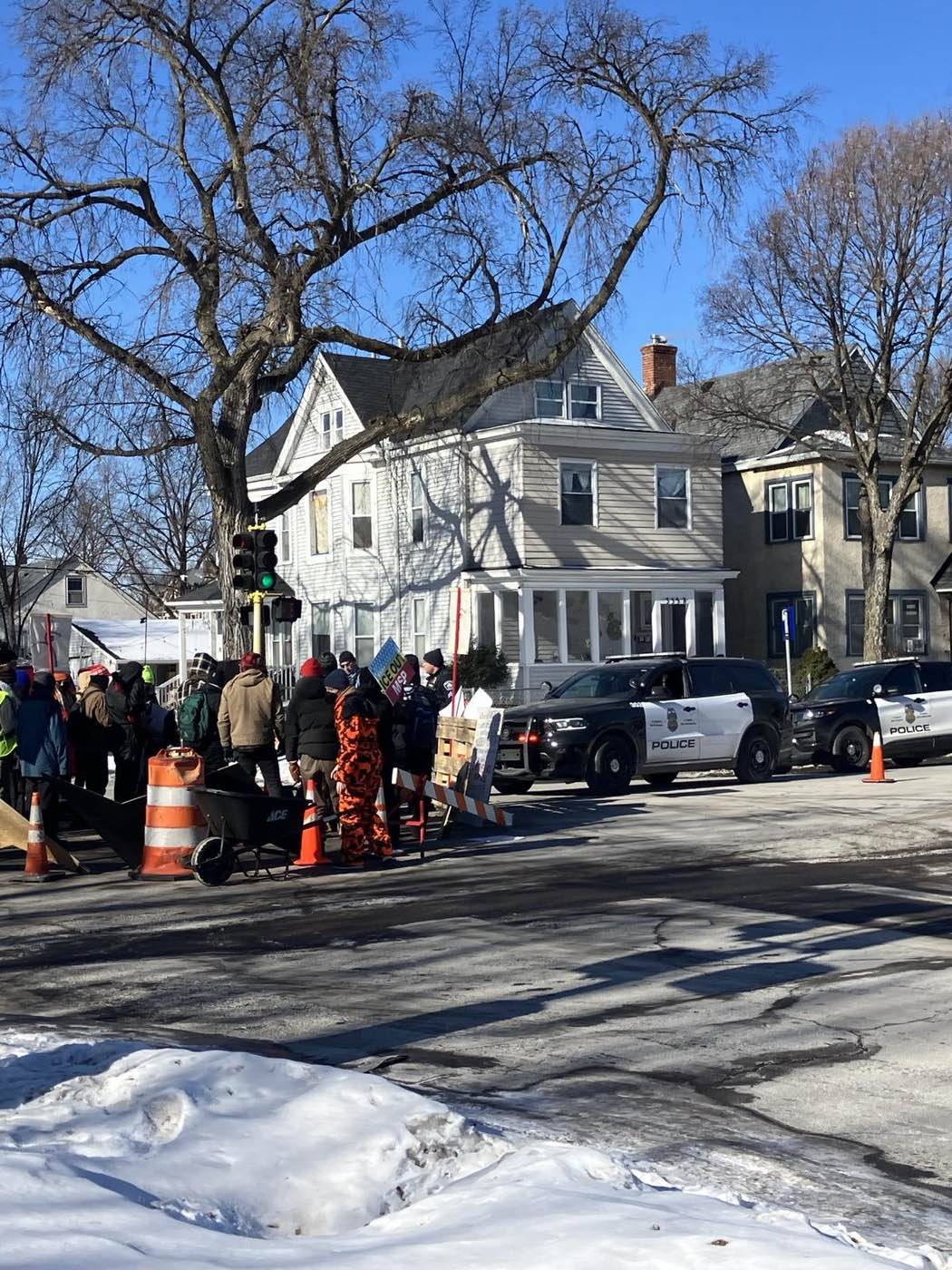
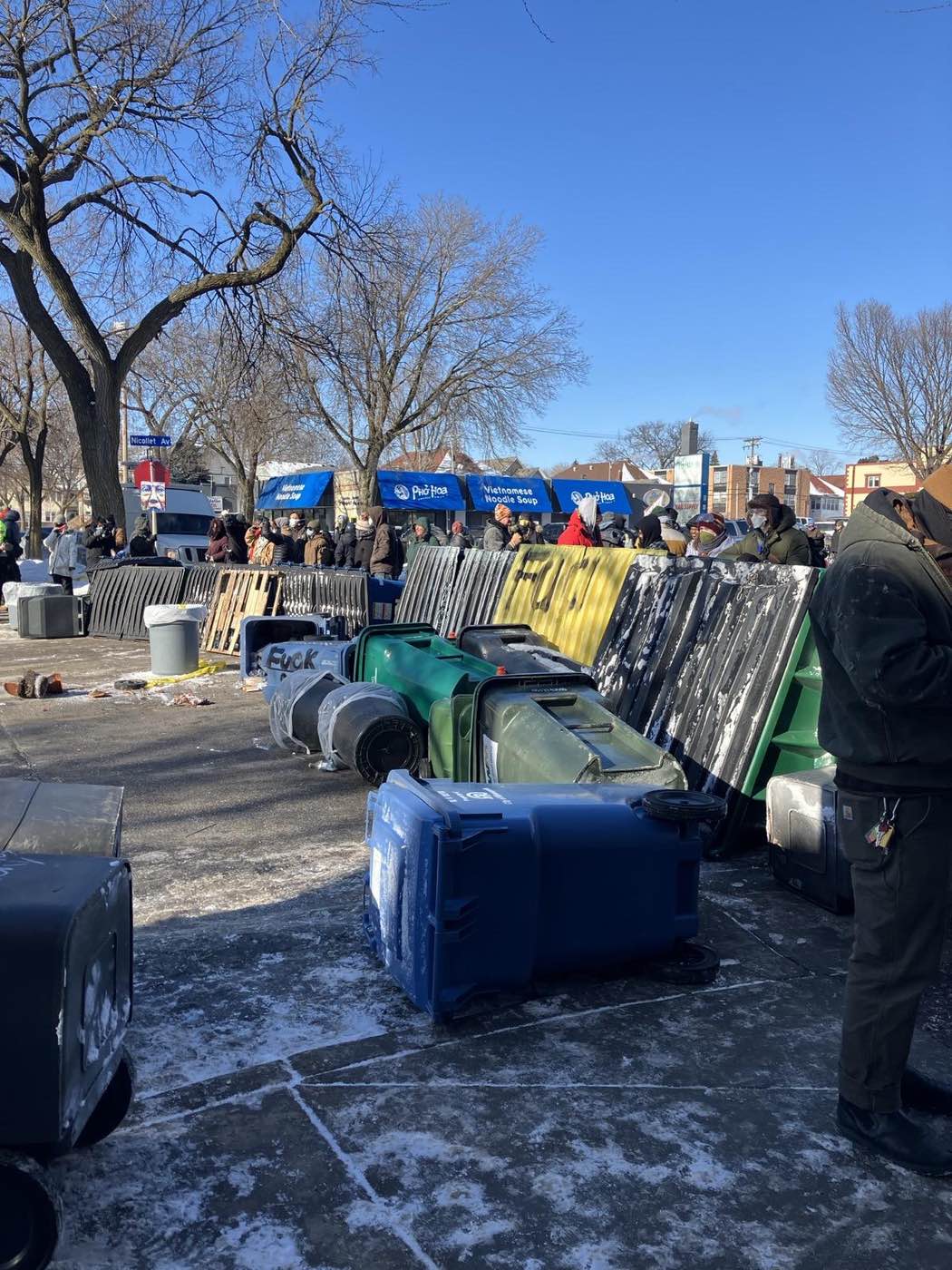
As seen in the Twin Cities, filter blockades are barricades that turn intersections into roundabouts, crewed by rapid responders who check for ICE vehicles. The filter blockades function to slow or stop occupying forces; everyone else is waved through with a smile. In addition to this “filtering” function, they also serve as informal hubs for sharing food, meeting neighbors, creating art, performing music, making plans, and meeting other immediate needs for camaraderie and connection.
This tactic has provoked the ire of ICE and local police—an indicator of its effectiveness. In order that this model might proliferate, we present a how-to guide, a brief overview of the recent history of this tactic, and some lessons learned from prior filter blockades, illustrated with accounts from the past week’s experiments.
cdn.crimethinc.com/assets/articles/2026/02/06/10.jpg
A Step-by-Step Guide
Filter blockades are a simple and effective way to resist the occupation of our communities. All you need is a few determined friends or neighbors and some widely available materials. The goal is to slow traffic, without fully blocking it, in order to identify potential ICE vehicles. The more filter blockades, the more effective the strategy becomes.
Materials
- Traffic barriers such as traffic cones or road blocks
- Old furniture or pallets to fortify
- Hi-vis vests for safety in traffic
- Signage to direct traffic properly and express opposition to ICE
Roles
- Scanners watching passing cars and checking license plates against a database of known vehicles that ICE uses; one per direction of traffic
- Senders to assist in directing traffic; again, one per direction of traffic
- Comms communicating with rapid response signal threads
- Coordinator to ensure that all roles are filled at all times
- Reinforcements to blockade ICE vehicles if need be
The more participants, the better, but even a small determined group can operate an effective blockade. Make sure to discuss ahead of time what to do when you encounter ICE—whether that means blocking the intersection or just passing on news of the sighting to everyone who needs to know.
cdn.crimethinc.com/assets/articles/2026/02/06/4.jpg
Lessons from the Twin Cities
While filter blockades are a relatively new tactic in the resistance to “Operation Metro Surge,” barricades have already taken a variety of forms in the Twin Cities. After police murdered George Floyd in 2020, mourners transformed the site into George Floyd Square, maintaining a self-organized autonomous zone. At the same time, several groups took community safety into their own hands, including Rocksteady Alliance, Powderhorn Safety Collective, Little Earth Protectors, and the Brown Berets. Some set up checkpoints around their neighborhoods.
During the rebellion in Whittier in response to the murder of Alex Pretti on January 24, people built barricades on several roads. This inspired both the barricading of University Avenue at the noise demonstration at Home2 hotel the following night and the filter blockades that appeared thereafter.
The first filter blockades of 2026 emerged out of rapid response foot patrols. Shortly after the beginning of Operation Metro Surge, rapid responders who chose not to pursue ICE vehicles by car or bike began to take up positions on street corners, intersections, and sidewalks throughout their neighborhoods—particularly in areas with populations that were targeted for ICE harassment. These foot patrols served both to monitor ICE activity continuously in a given area and to create a mobile standby force capable of documenting, engaging, and interfering with the operations of ICE agents when they entered neighborhoods.
Some of the most spectacular moments of opposition thus far during Operation Metro Surge emerged as spontaneous responses from foot patrollers and rapid responders who bravely sought to defend their neighbors from abduction. Because of ICE’s high-speed snatch-and-grab tactics, the success of these defenses relied on community members either arriving at the scene of ICE activity incredibly quickly or already having defenders in the area.
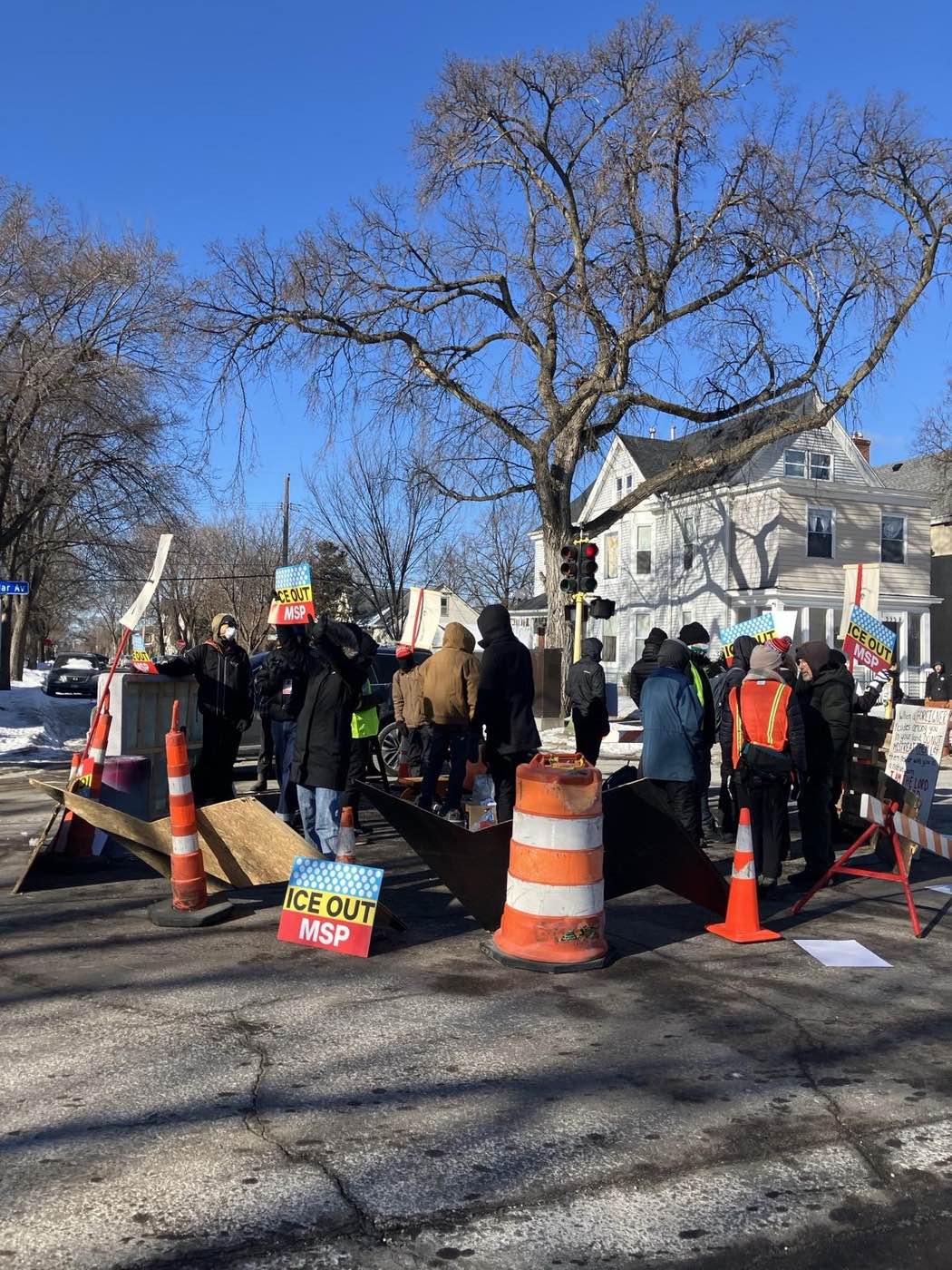
The earliest filter blockades blossomed in areas where foot patrols and neighborhood defenders gathered in roundabouts and side streets, often around fire pits, where multiple people could keep a watchful eye out for vehicles driven by ICE agents. These first filter “blockades” were essentially occupied roundabouts. Their purpose was primarily to slow down traffic, giving neighborhood defenders time to look inside vehicles for ICE agents. At first, there were no real mechanisms for actually halting ICE vehicles. Nonetheless, there are reports of ICE vehicles turning around and abandoning particular routes after seeing them staffed by neighborhood patrollers.
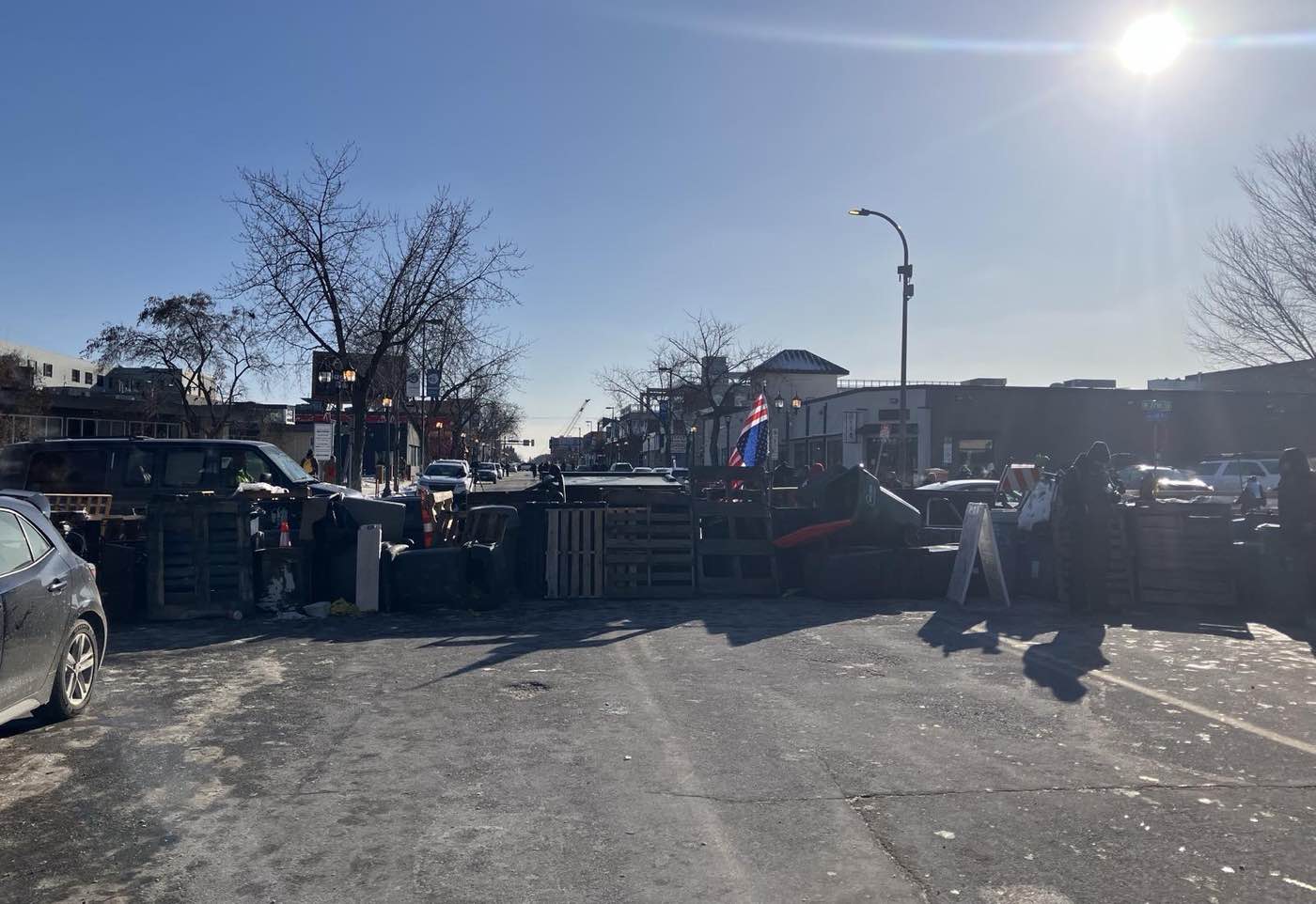
Starting at the beginning of February, community defenders in South Minneapolis have taken a more confrontational stance with the filter blockades. While filters had previously only been deployed in residential side streets, organizers began to move roundabout barricades into more populated thoroughfares that were known to be used regularly by ICE agents. Whereas previous blockades only had to contend with a limited number of vehicles, moving into larger streets meant that the barricades had to process hundreds of vehicles per hour while remaining vigilant for potential ICE activity.
Following a direct intervention by the Trump Administration’s border Czar Tom Homan, Minneapolis police stormed the three most prominent barricades, temporarily shutting all of them down. However, it is easy to rebuild a filter blockade.
Barricades around the site where ICE murdered Alex Pretti on January 24, 2026.
Here are a few takeaways for future community defenders who find themselves at the barricades.
Set Your Intentions and Plan Accordingly
For those who are primarily interested in documenting ICE activity and relaying it to rapid response threads, a simple roundabout is likely enough to slow ICE vehicles down long enough to identify them or potentially deter them from attempting to drive down a street. Others focused on community building have made blockades that become block parties, serving as both monitoring points and spaces for community building.
However, if you want to halt ICE vehicles and repel them from an area, you must prepare ahead of time and design your blockade accordingly. At one of the larger filter blockades, two vehicles containing ICE agents were able to pass through because the blockaders were not prepared to halt them. Community members adapted by deploying makeshift gates constructed out of pallets, which they moved into the road to halt cars long enough to run their plates through an ICE database. They reinforced these by readying furniture, pallets, and other materials and resolved to challenge ICE directly. The next day, when an ICE vehicle came through, they confronted the driver and eventually compelled him to flee the area.
Kindness and Community Are Everything
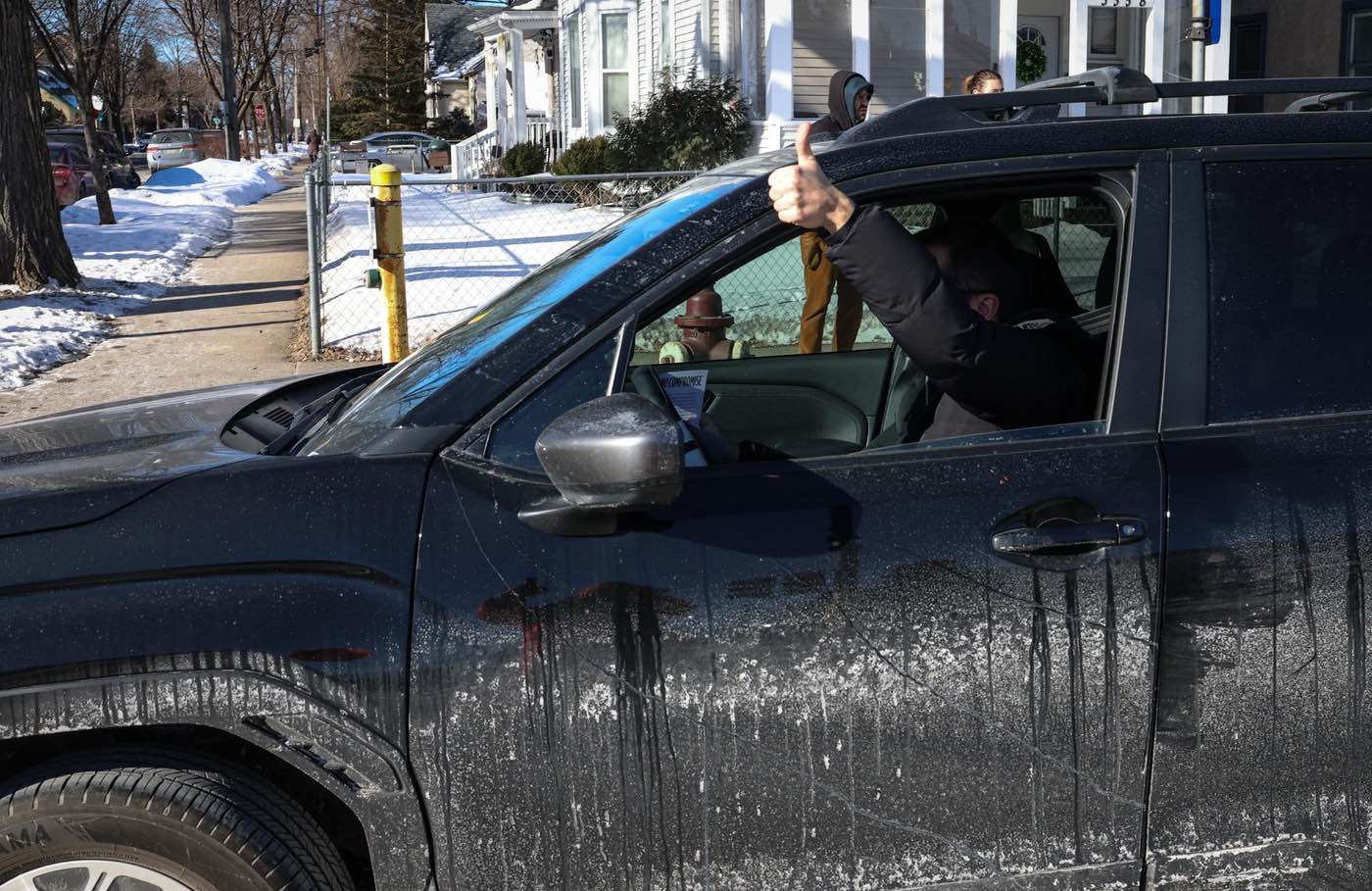
Community defense hinges on community consent. Especially when deploying more assertive strategies like checkpoints, organizers should be friendly and welcoming to drivers and passerby alike. Thus far, the filter blockades have been popular in the Twin Cities, receiving widespread support in the form of encouragement, food, and supplies. Groups seeking to set up filter blockades should do so with the broadest possible coalition of community support, taking every measure to ensure that the blockades don’t disrupt everyday life in ways that people don’t appreciate.
Photograph courtesy of Minneapolis Spring.
Roles, Roles, Roles
Once you have established what you are trying to achieve, make sure that everyone has a clearly defined role. When ICE arrives, what happens will be fast, loud, and intense. At that point, it will be too late to discuss what to do. The response of a blockade is only as good as the response of each individual; preventing access in such a situation means moving with speed, precision, and coordination.
Who is running license plates? Who is communicating with rapid response threads about ICE sightings in the area? Who is crewing the pallet gates at the checkpoint? Who is tending the fire? These are questions that any neighborhood group should ask themselves ahead of time and revisit throughout the duration of the blockade. Don’t be afraid to adapt and switch roles as needed. Situations change—so can we.
Choose Your Site According to Your Goals
Larger blockades on bigger streets are more likely to wind up directly confronting ICE agents. However, that may not be your goal. Smaller blockades on residential streets can disrupt operations on a smaller scale or protect specific locations.
While larger blockades are flashier, they are also more likely to face pressure from local law enforcement groups that are collaborating with federal occupiers. For community groups that seek to challenge ICE directly or expose the complicity of local and state authorities, this may be welcome; for others, it could be unnecessary.
cdn.crimethinc.com/assets/articles/2026/02/06/9.jpg
Fight ICE, Not Each Other
The goal of filter blockades is simple: protect neighbors and establish a culture of resistance to injustice. It is almost inevitable that someone will respond to this with anger, but it is not the task of community defenders to convince them or engage in conflict with them. If this person is not affiliated with or collaborating with law enforcement, those holding the barricades should simply let them through. Choosing your battles is a fundamental part of strength. To be effective, a culture of resistance to the state must cultivate a culture of respect for our neighbors—even the ones we experience as annoying, rude, or wrong. This mindset is crucial to cultivating a popular struggle.
Likewise, some people will push back against direct action tactics, framing their concerns in the language of safety or deescalation. Yet choosing not to resist ICE is also a decision with serious consequences. Those organizing in a particular context must make their own decisions on the basis of how they understand the specific dynamics at play within their communities. We may not be able to win over everyone, but centering an ethic of participatory community defense, we can proceed with clear minds, strong hearts, and the knowledge that nothing they can throw at us is greater than the spirit of people who have chosen, against all odds, to resist.
Photograph courtesy of Minneapolis Spring.
Account I: February 2, 2026
We put the checkpoint up around 8:30 am. After about 30 minutes, one ICE car slipped through unbeknownst to us. A few minutes after it passed, it was radioed in as confirmed ICE and to be on the lookout for it.
Shortly thereafter, another ICE vehicle came speeding toward the checkpoint, veered into the opposite lane of traffic to avoid being stopped, and sped away.
Around 10 am, we heard whistles and car horns, the signal warning that ICE was in the neighborhood. At least half a dozen people ran to address it. The vehicle escaped, but accidentally sped toward the checkpoint. When the driver realized this, they turned around, running right back into the crowd. The vehicle came away with some light damage to the taillight and driver-side mirror.
cdn.crimethinc.com/assets/articles/2026/02/06/8.jpg
Account II: February 2, 2026
I joined a group of neighbors curious about the filter barricade on 32nd and Cedar. We wanted to learn more about what they were doing, what their goals were, and to figure out if we could do something similar in our own neighborhood.
We drove through in the car to see what sort of vibe they were putting out. Was this a checkpoint, a filter, a stationary patrol point, or something else entirely? The people standing in the middle of Cedar with pallets gave us a wave and we responded with a few honks in solidarity. Their traffic circle functioned as a deterrent, something like a store greeter, except with more warmth than you can expect from customer service.
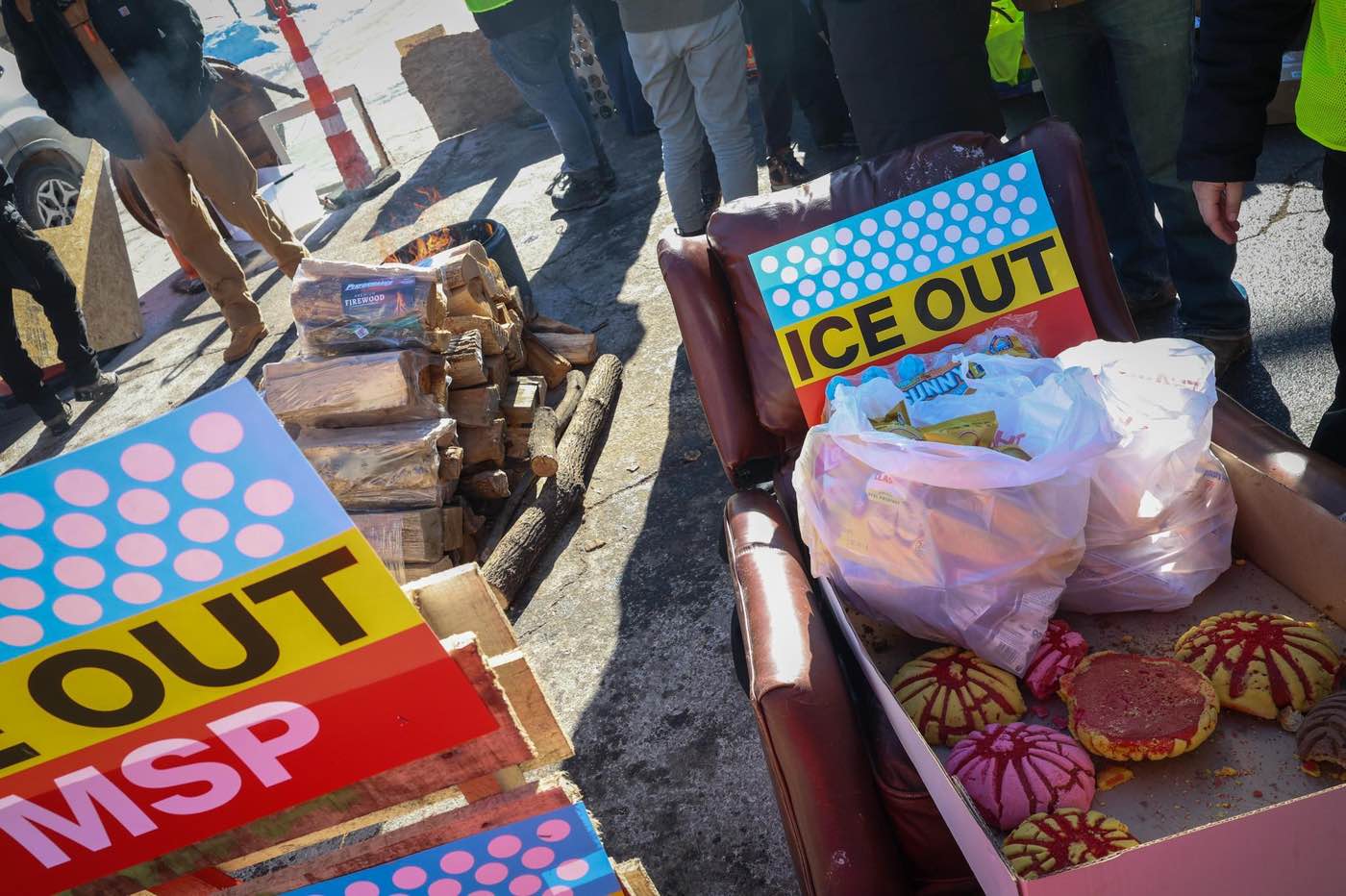
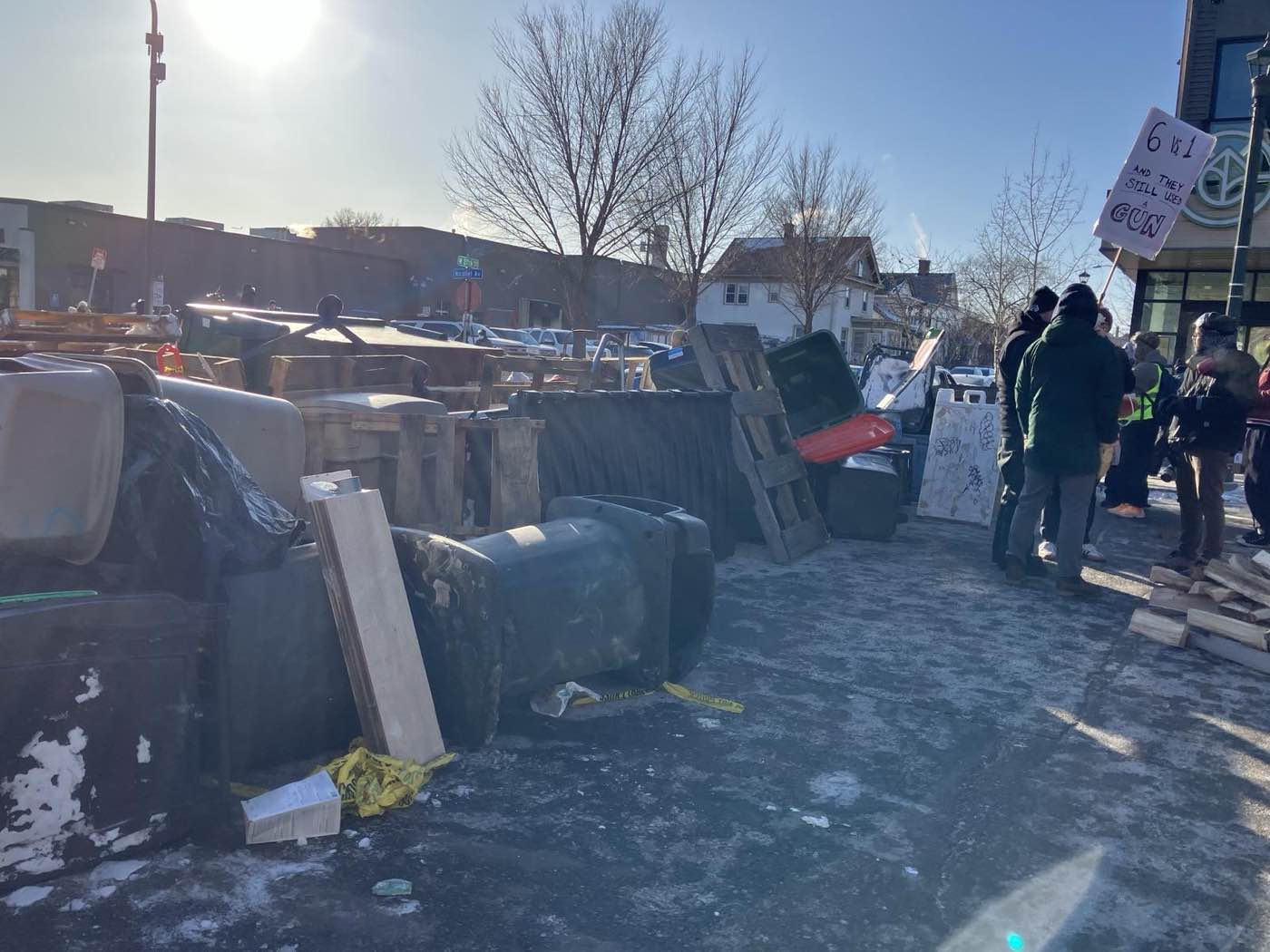
When we arrived, there were a half dozen people there doing barricade work, two on either side of the intersection on Cedar (the thoroughfare street) and two in the middle relaying plate checks/rapid response SALUTE reports to the people stationed on Cedar. The outer ring of the barricade was made of an amalgamation of wood pallets, traffic equipment, furniture, shopping carts, and tarps. Inside that there was seating and makeshift tables offering posters, PPE, and lots of snacks and drinks. At the center was a firepit, offering a modest but well-stoked fire to warm the patrollers and anyone else who happened by.
In stark contrast to the checkpoints that the National Guard set up, it really felt like they brought the community out. When we walked up to the edge of the barrier, they welcomed us in right away. If you’ve done any ICE watch, it gets easier to just walk up and start a conversation asking what’s going on, does anyone need assistance or a supply run? Obviously, you’ll be treated better if you’re trying to be helpful, but the mutual aid bug is part of how we distinguish ourselves from ICE (since we, too, hide our faces).
The two guys in the middle were doing fine on supplies—they said more and more people were bringing stuff or just handing it off as they passed by in their cars. We stood around the middle talking shop a bit. Eventually, I went off to talk to some of the people standing on the south side of Cedar.
The person holding up the piece of plywood he’d just spray-painted to read “ICE OUT” told me that he’d been out there for about three hours; the other person had walked over about an hour earlier and decided to help out. After we talked for a bit, he let me know that he needed to leave soon, so I took over his position and stood on Cedar with a walkie-talkie. We didn’t get any confirmed plates while I was there.
While I was on Cedar, one guy drove up and gave us three pizzas. Another, driving a car hand-painted with a mural, handed me a three-dimensional cardboard representation of a middle finger on a stick with the inscription FUCK ICE. Neither said a word. Another dude slowed his car down, rolled down his window, and asked if we needed anything. After the person tending the fire asked for more wood, the man gave a thumbs up and returned ten minutes later with a massive trash bag of firewood, like he was Santa Claus.
About 90% of the interactions I had there were positive: honks of solidarity, waves, salutes, people rolling down their windows to thank us or ask if we needed anything. Every single school bus driver that drove by opened their window to thank us.
The only negative interactions were with a few larger vehicles. No 18-wheelers came through, but some truck drivers didn’t appreciate the tight squeeze. Nonetheless, we experienced no verbal or physical altercations.
We did see a couple police officers pass through the roundabout without issue, offering a slight nod or a polite wave off the steering wheel. I assume that those gestures just represented those individual officers’ opinions.
Later, I saw a sheriff’s truck with its lights on across the South end of Cedar, blocking off the road. I told my buddy to report it to the center, and I left my spot to go ask what was happening. The officer was outside the truck directing traffic off Cedar.
“Hey are you shutting down this road to destroy the barricade?”
“Yeah, sorry, some residents complained, so we have to get rid of it.”
When I got back to the barricade, the fire was extinguished and everyone was on the sidewalk. A single officer pushed over anything left standing. Cruisers were blocking off the intersection, along with a van full of geared-up officers. A garbage truck rolled in after them and they threw everything they could into it. We gathered all we could, saving food and mutual aid supplies. They left as fast as they arrived.
It didn’t make the dent in morale I think they wanted. We lost a lot of stuff, yet the thought in our minds was—how can we do better?
cdn.crimethinc.com/assets/articles/2026/02/06/5.jpg
A Short History of Obstruction
The practical impulse on the part of an insurgent population to assert control over space through the use of barricades is likely as old as cities themselves. The barricade is the political expression of a basic mechanical principle: with the right means, every flow or throughway can be interrupted. The castle has the castle door and drawbridge, the city its walls, and so on.
In the past decade of social and ecological struggle, this strategy has assumed various forms. On the ZAD (Zone à Défendre, “zone to defend”) at Notre-Dame-des-Landes, where a popular squatting movement sought to prevent the government and private construction companies from paving over historic farmlands to make an international airport, the occupation of the territory led to a proliferation of diverse barricades, including trenches and even the excavation of entire stretches of road. Several regions of the Zone consequently became inaccessible to motor vehicles, while others were only accessible with varying levels of difficulty. While no two barricades were exactly alike, the trend was away from temporary, ephemeral structures toward more durable constructions.
During that same period, an explosive teachers’ struggle in 2016 in Oaxaca experimented with short-term, high impact takeovers of major arterial roads. The Oaxacan blockades were a radical expression of a paradigm of struggle familiar to those of us who grew up after the heyday of the classical labor movement and learned to attack the economy from positions outside it.
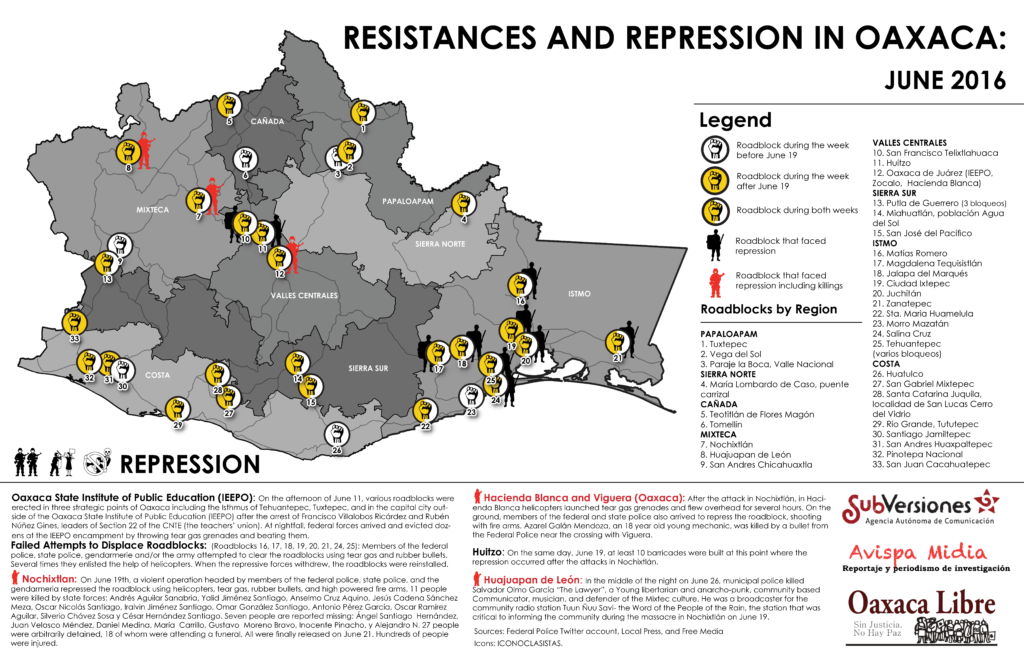
In the classical paradigm, factory strikes withhold productive labor, thereby forcing production to stop, while port worker strikes withhold circulatory labor, leaving ships and trucks unable to load and unload. However, since teaching is neither productive labor nor circulatory labor, teachers who sought to impact the bottom line of the state and the ruling class had to select a site of intervention suitable to their own initiative. Taking to freeways, the teachers and their families and supporters occupied strategic positions such as toll booths and interchanges in order to block large stretches of road. This sometimes took dramatic forms, such as burning looted semi-trucks positioned sideways across multiple lanes. The interruption of highway transit offered the teachers’ movement a means of asserting control over the circulation of commodities in order to inflict financial harm on the state and the ruling bourgeoisie. However, as one teacher observed in an interview, the stoppage was not intended to be total: they let through “cars, but not trucks hauling goods for major corporations like WalMart and Coca-Cola.” In other words, the model of this barricade was not the trench, but the filter.
A few years later, again in France, a version emerged that combined the models from the ZAD and Oaxaca. During the Yellow Vests movement of 2018-2019, thousands of residents in smaller towns took over the roundabouts, where they built shacks and cabins out of pallets. For the most part, they selected roundabouts at the entrances to their towns, beside the on-ramps to major freeways. As in Oaxaca, this strategically positioned the movement to levy the circulation of commodities via trucks; like the ZADists, their occupations also played a positive role, functioning as hubs for self-organization, sharing, and political encounter. At the roundabouts, participants in the movement were able to find each other and interact with the neighbors and friends who passed through.
Something similar occurred in Colombia in 2021, shutting down entire cities.
What is happening in the Twin Cities represents another innovative expression of the filter blockade, though leveraged against a different enemy with different aims. Rather than targeting the flow of commodities, the filter blockades of the Twin Cities respond to the need to combat fascistic state terror. To this end, they represent a development of a new strategy in an evolving dialectic of cat-and-mouse between ICE agents and the rapid response networks that have been pursuing, recording, and obstructing them. Instead of chasing after agents, the filter blockade points towards the possibility of excluding them from entire zones of the city by asserting popular control over the means of circulation.
Barricades around the site where ICE murdered Alex Pretti on January 24, 2026.
Potential for Growth
In A History of the Barricade, Eric Hazan observes that the virtue of the barricade lies in its tendency “to proliferate and form a network that crosses the space of the city.” It is this “faculty of rapid multiplication” that gives it its offensive potency: “victorious barricades,” Hazan writes, “are those that pin down the forces of repression, paralyze their movements, and end up stifling them into impotence.” Since it is easy to circumvent one or two barricades, for barricades to function effectively as a weapon, they must mushroom up all over, for it is only in conjunction with each other that they become effective at controlling enemy movements through a terrain. Although the past week of experiments with filter blockades in the Twin Cities has garnered attention online, they have only just begun to spread.
In addition to hindering enemy movements, filter blockades can serve other useful functions. While the rapid responder networks enabled individuals to act in concert through live Signal chats coordinated by dispatchers, with drivers converging together around sightings only to disperse just as quickly, the primary form of connection they facilitated was mobile, temporary, and remote. By creating consistent places for neighbors to find each other, cooperate, and collaborate, filter blockades offer a starting point to reweave the fabric of everyday life.
By contrast with the “centros” model, in which people established a presence at the sites of ICE raids targeting day laborers, filter blockades leverage the geography and resources of residential neighborhoods, enabling activities usually reserved for the private spere to take on connective political implications, while incorporating cultural activities often reserved for other venues—poetry readings, potlucks, art builds, snowball fights, hip hop performances, know your rights trainings, and the like. While their political function is circumscribed and spatial, their role in the lives of the neighbors around them is inherently open-ended and should foster a wide range of experimentation.
Barricades around the site where ICE murdered Alex Pretti on January 24, 2026.
Further Reading
- Melt the ICE: Twin Cities Protesters Blockade ICE Inside the Federal Building
- They Escalate, We Escalate: A Short History of the Fight against ICE in the Twin Cities
- The Noise Demonstrations Keeping ICE Agents Awake at Their Hotels—A Model from the Twin Cities
- Minneapolis Responds to the Murder of Alex Pretti: An Eyewitness Account
- Protesters Blockade ICE Headquarters in Fort Snelling, Minnesota: A Report from an Action during the General Strike in the Twin Cities
- From Rapid Response to Revolutionary Social Change: The Potential of the Rapid Response Networks
- Rapid Response Networks in the Twin Cities: A Guide to an Updated Model
- North Minneapolis Chases Out ICE: A Firsthand Account of the Response to Another ICE Shooting
- Minneapolis Responds to ICE Committing Murder: An Account from the Streets
- Protesters Clash with ICE Agents Again in the Twin Cities: A Firsthand Report
- Minneapolis to Feds: “Get the Fuck Out”—How People in the Twin Cities Responded to a Federal Raid